
Close Menu
Beverly Hills Examiner

    Subscribe to Updates

    Get the latest creative news from FooBar about art, design and business.

    What's Hot

    David Byrne adds more UK and Ireland shows to summer 2026 ‘Who Is The Sky?’ world tour

    February 4, 2026

    Amazon AWS CEO Matt Garman pushes back against Elon Musk’s space data centers plan

    February 4, 2026

    Trump Just Made The Most Insane Statement About Elections In The History Of The Oval Office

    February 4, 2026
    Facebook X (Twitter) Instagram
    Beverly Hills Examiner
    • Home
    • US News
    • Politics
    • Business
    • Science
    • Technology
    • Lifestyle
    • Music
    • Television
    • Film
    • Books
    • Contact
      • About
      • Amazon Disclaimer
      • DMCA / Copyrights Disclaimer
      • Terms and Conditions
      • Privacy Policy
    Beverly Hills Examiner
    Home»Science»Engineered Microbes Pull Critical Minerals from Mining Waste
    Science

    Engineered Microbes Pull Critical Minerals from Mining Waste

    By AdminOctober 1, 2025
    Facebook Twitter Pinterest LinkedIn WhatsApp Email Reddit Telegram
    Engineered Microbes Pull Critical Minerals from Mining Waste


    October 1, 2025

    5 min read

    Meet the Microbes That Munch Mountains of Mining Waste

    Biomining uses engineered microbes to harvest critical minerals
    By Vanessa Bates Ramirez edited by Sarah Lewin Frasier

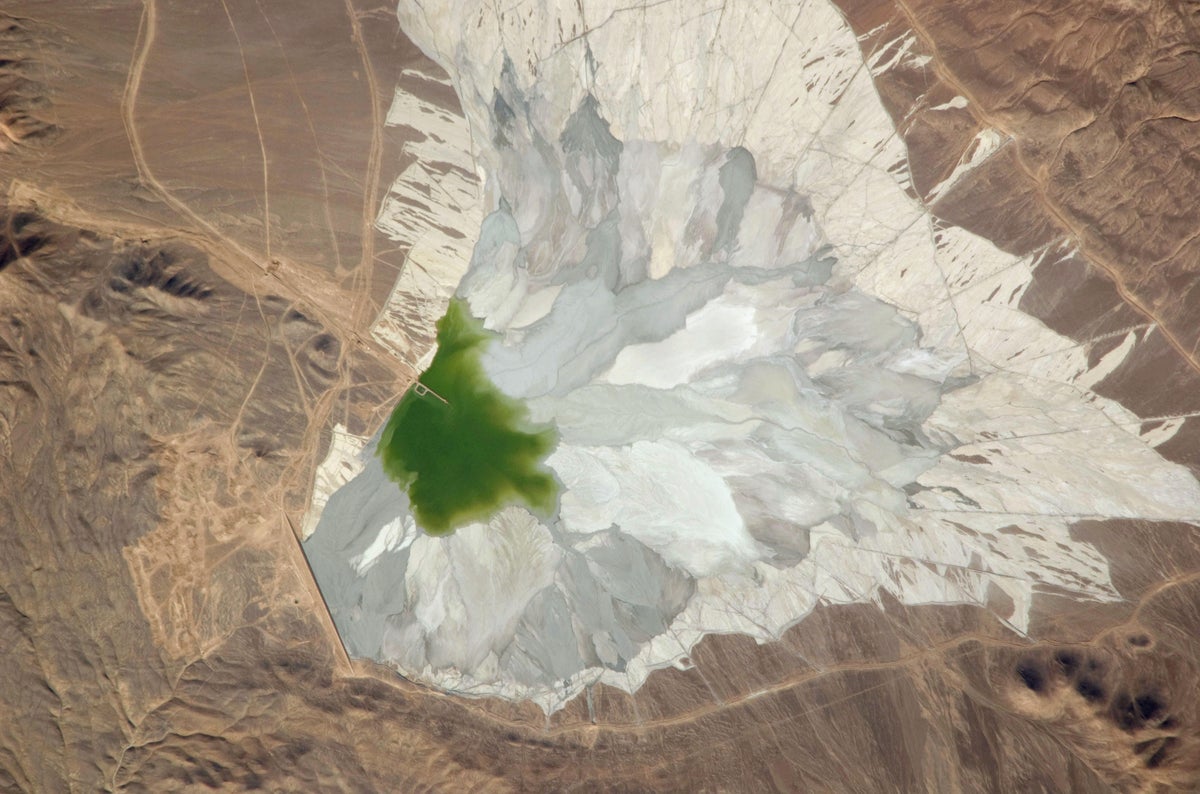
    Aerial view of copper mine, with green waste in the middle

    Escondida Mine, located in Chile’s Atacama Desert. The copper-bearing waste is poured into the impoundment area as a liquid (green region at image center) and dries to the lighter tan and gray color.

    Science History Images/Alamy Stock Photo

    At the northern edge of Chile’s Atacama Desert sits a pile of rocks that’s so big that you can see it from space—and it’s teeming with invisible activity. Billions of microbes are hard at work dissolving compounds in this giant mound of crushed ore from Escondida, the biggest copper mine on the planet.

    “Microbes are the world’s oldest miners,” says Liz Dennett, founder and CEO of the start-up Endolith Mining, based near Denver, Colo. “They’ve had billions of years to become incredibly good at eating rocks.”

    Scientists at Endolith and elsewhere are engineering microbes to get even better at this process, called biomining—to work faster, extract more copper and even pull out other kinds of minerals. Endolith tests different microbes to see which are most fit for the job and then exposes them to harsh conditions to further strengthen them. “Think of it like a superhero training camp,” Dennett says. In May the company’s engineered microbes demonstrated copper extraction superior to microbes found in nature; its first field deployments are scheduled for later this year.


    On supporting science journalism

    If you’re enjoying this article, consider supporting our award-winning journalism by subscribing. By purchasing a subscription you are helping to ensure the future of impactful stories about the discoveries and ideas shaping our world today.


    Biomining, if it can be scaled up, could make it possible to decrease reliance on global supply chains, which are becoming ever more fragile. “If we can make biomining work, we can break the monopoly that states like China have on critical metals,” says Buz Barstow, a biological and environmental engineer at Cornell University. Barstow is leading a project called the Microbe-Mineral Atlas that catalogs microorganisms, their genes and how they interact with minerals. The project’s goal is to build genetically engineered microorganisms that can effectively mine critical metals.

    As many countries transition to renewable energy, they will require fewer fossil fuels but more minerals such as lithium, cobalt, copper, nickel and zinc. These are not only needed for wind turbines, solar panels and batteries; they’re also crucial for the laptops and cell phones we use every day. Copper demand, in particular, is set to skyrocket. Forecasts show we’ll need more copper in the next 30 years than has been mined throughout all of history. Much of the low-hanging fruit—that is, high-grade ore—has been picked, and mines have to work a lot harder than before to get the same quantity.
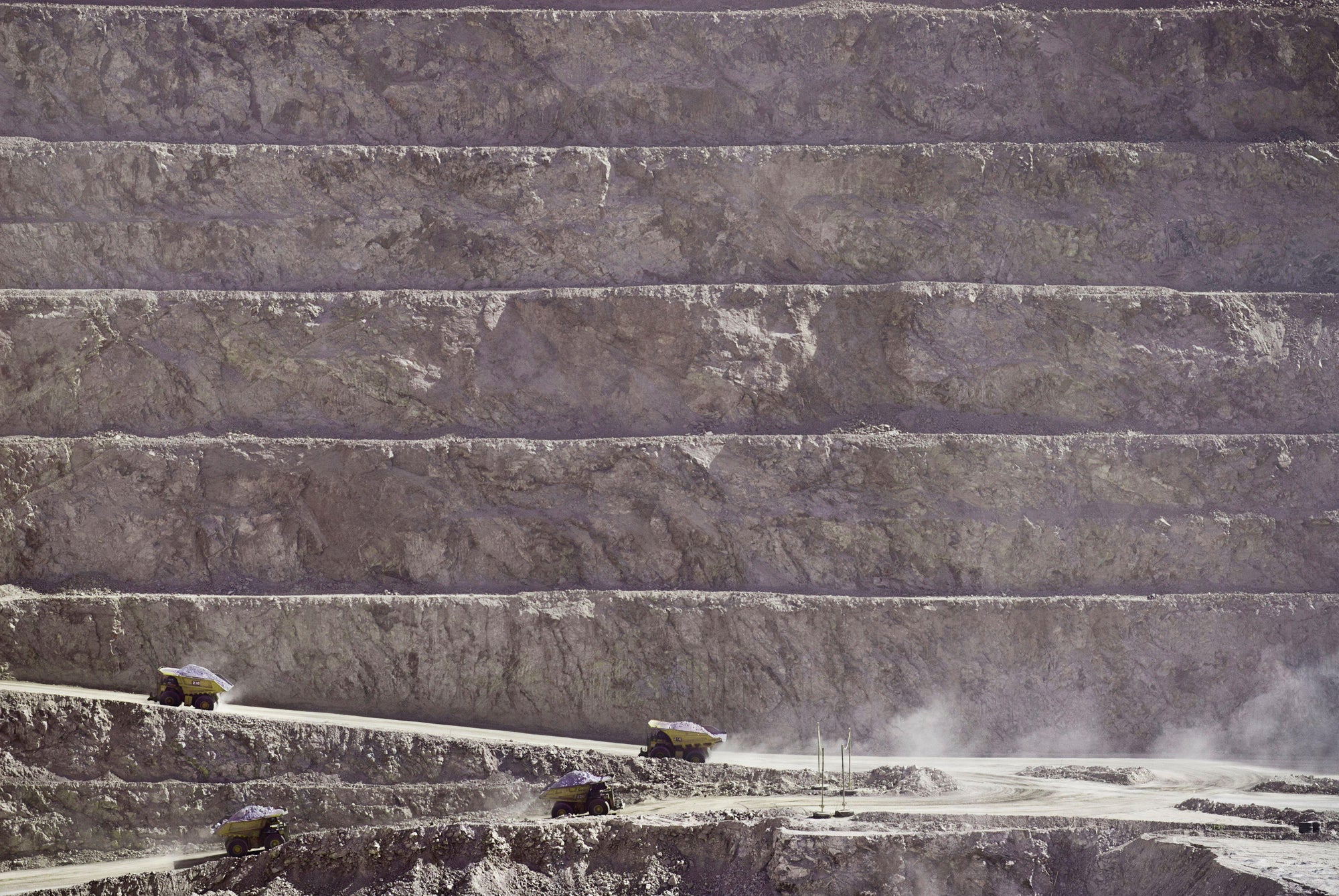
    Haul trucks haul earth from the base of Escondida Norte, an open pit copper mine in northern Chile. Part of the Minera Escondida complex, it takes the massive trucks nearly an hour round trip to haul material from the pit.

    Trucks hauling earth from Escondida.

    Cavan Images/Alamy Stock Photo

    Conventional mining techniques are resource-intensive, expensive and harmful to the environment. After using explosives and heavy machinery to extract ore from the earth, mining companies must isolate and purify the minerals in question. Often, that means breaking chemical bonds that keep minerals bound to sulfur in sulfide ores. This is most commonly done using heat through a process called smelting or acid through a process called leaching. Smelting requires extremely high temperatures, reached by burning fossil fuels or using a lot of electricity. On top of the carbon dioxide emissions this generates, burning sulfur produces toxic sulfur dioxide gas. Acid leaching, meanwhile, carries the risk of acid mine drainage, where fluids contaminate rivers or groundwater and harm the surrounding ecosystem. The sulfuric acid used for this process can cause harm before it even reaches mines. “Production of sulfuric acid is very nasty,” Dennett says. “There’s a lot of secondary and tertiary effects on the environment.”

    Microbes can do the same work as heat and acid, but their cost and environmental impact are much lower. “Microbes use at least six different mechanisms for biomining,” Barstow says. The most common is an oxidation-reduction reaction, or redox reaction, in which microbes break the chemical bonds in a sulfide ore by “eating” their sulfur and iron. This releases the minerals in the ore, breaking them down until they can dissolve in water. The mineral-rich solution is collected in a pond after it is drained from the rock and is then exposed to solvents and electricity that attract the minerals like a magnet while leaving water, acid and impurities behind.

    The microbes still need a small amount of sulfuric acid to kick-start the process of breaking down the ore. Piles of rock such as the one at Chile’s Escondida mine—called heap leaches—are sprayed with an acid-water mixture that only needs to be added once because microbes make more acid naturally as they break the ore’s chemical bonds. “Replacing [most] sulfuric acid is a big economic benefit, as it can often be the largest operating expense for a mine,” says Sasha Milshteyn, founder of Transition Biomining, a company that analyzes the DNA of microbes found in ores to develop custom additives for increased copper recovery.

    Though the process avoids toxic gas emissions, uses less energy and water than conventional methods and minimizes hazardous chemicals, it has its limitations. It’s slower than traditional mining: while smelting can take hours to days, and acid leaching takes days to weeks, microbes do their work over several months. They’re sensitive to pH, temperature, and moisture levels and can be killed off or slowed down by changes in any of these. And they still produce acidic solutions that need to be contained and treated. As Barstow puts it, “Biomining won’t be an environmental panacea; it will just be quite a bit better than what we do now.”

    The real promise of biomining is that it can squeeze more out of rocks than conventional methods do. “Modern mining technologies ‘skim the cream’ of economically valuable metals from a deposit and leave everything else behind in [waste rock called] tailings,” Barstow says.

    That waste is worth far more than it usually gets credit for. A study recently published in Science found that recovering the minerals in waste from existing U.S. mines could meet nearly all of the country’s critical mineral needs; recovering just 1 percent would substantially reduce import reliance for many elements. “If large mines just added additional recovery circuits to their process, this could bring needed minerals into production relatively quickly,” says the study’s lead author Elizabeth Holley, a mining engineer at the Colorado School of Mines.

    Copper mine waste can hold bits of tellurium, cobalt or zinc; coal ash can contain lithium, manganese and rare earth elements. The quantities are too small for conventional mines to bother with, but they’re not too small for microbes. Besides being used in heap leaches or pumped straight into the ground, microbes can be applied directly to waste streams, where they can pull out tiny amounts of minerals that can add up to be significant.

    Microbes may be the world’s oldest miners, but biomining as a technology is still new, Milshteyn notes, and doesn’t yet leverage the full complexity of microbial ecosystems. “The heaps that perform best in the field have thriving ecosystems of diverse microbes working together,” he says. “I think the next generation of biomining has to contend with that complexity.”


    Original Source Link

    Share. Facebook Twitter Pinterest LinkedIn WhatsApp Email Reddit Telegram
    Previous Article‘Satan’s Sadists’ Producer Was 85
    Next Article Oura Debuts a Ceramic Collection for Its Smart Ring and a $99 Charging Case

    RELATED POSTS

    NASA’s Artemis II moon mission engulfed by debate over its controversial heat shield

    February 4, 2026

    Dutch air force reads pilots’ brainwaves to make training harder

    February 3, 2026

    HHS Is Using AI Tools From Palantir to Target ‘DEI’ and ‘Gender Ideology’ in Grants

    February 3, 2026

    The sun just unleashed its most powerful solar flare in years

    February 2, 2026

    The best new popular science books of February 2026 include titles by Maggie Aderin and Michael Pollan

    February 2, 2026

    How to Use Physics to Escape an Ice Bowl

    February 1, 2026
    latest posts

    David Byrne adds more UK and Ireland shows to summer 2026 ‘Who Is The Sky?’ world tour

    David Byrne has added fresh UK and Ireland shows to his ‘Who Is The Sky?’…

    Amazon AWS CEO Matt Garman pushes back against Elon Musk’s space data centers plan

    February 4, 2026

    Trump Just Made The Most Insane Statement About Elections In The History Of The Oval Office

    February 4, 2026

    Judge restricts use of tear gas on protesters at Portland ICE facility

    February 4, 2026

    Epstein-linked longevity guru Peter Attia leaves David Protein, and his own startup ‘won’t comment’

    February 4, 2026

    NASA’s Artemis II moon mission engulfed by debate over its controversial heat shield

    February 4, 2026

    Twinless review – a twee showcase for actor Dylan…

    February 4, 2026
    Categories
    • Books (1,039)
    • Business (5,945)
    • Film (5,881)
    • Lifestyle (3,983)
    • Music (5,949)
    • Politics (5,950)
    • Science (5,292)
    • Technology (5,879)
    • Television (5,568)
    • Uncategorized (2)
    • US News (5,931)
    popular posts

    Loyle Carner and Ezra Collective to headline Love Supreme 2026

    Loyle Carner and Ezra Collective have been announced as headliners for Love Supreme Festival 2026.…

    The Climate Crisis Is Driving People to Substance Abuse

    September 27, 2023

    Peter Reckell Talks Bo Brady’s Return, Losing Drake Hogestyn, John Aniston, and More (Exclusive)

    May 23, 2025

    Maine cold case: Mother arrested for murder of ‘Baby Jane Doe’ after 36 years

    June 16, 2022
    Archives
    Browse By Category
    • Books (1,039)
    • Business (5,945)
    • Film (5,881)
    • Lifestyle (3,983)
    • Music (5,949)
    • Politics (5,950)
    • Science (5,292)
    • Technology (5,879)
    • Television (5,568)
    • Uncategorized (2)
    • US News (5,931)
    About Us

    We are a creativity led international team with a digital soul. Our work is a custom built by the storytellers and strategists with a flair for exploiting the latest advancements in media and technology.

    Most of all, we stand behind our ideas and believe in creativity as the most powerful force in business.

    What makes us Different

    We care. We collaborate. We do great work. And we do it with a smile, because we’re pretty damn excited to do what we do. If you would like details on what else we can do visit out Contact page.

    Our Picks

    NASA’s Artemis II moon mission engulfed by debate over its controversial heat shield

    February 4, 2026

    Twinless review – a twee showcase for actor Dylan…

    February 4, 2026

    ‘High Potential’ Boss Breaks Down Morgan’s Panic Attack and Comfort From Karadec Amid New Relationship (Exclusive)

    February 4, 2026
    © 2026 Beverly Hills Examiner. All rights reserved. All articles, images, product names, logos, and brands are property of their respective owners. All company, product and service names used in this website are for identification purposes only. Use of these names, logos, and brands does not imply endorsement unless specified. By using this site, you agree to the Terms & Conditions and Privacy Policy.

    Type above and press Enter to search. Press Esc to cancel.

    We use cookies on our website to give you the most relevant experience by remembering your preferences and repeat visits. By clicking “Accept All”, you consent to the use of ALL the cookies. However, you may visit "Cookie Settings" to provide a controlled consent.
    Cookie SettingsAccept All
    Manage consent

    Privacy Overview

    This website uses cookies to improve your experience while you navigate through the website. Out of these, the cookies that are categorized as necessary are stored on your browser as they are essential for the working of basic functionalities of the website. We also use third-party cookies that help us analyze and understand how you use this website. These cookies will be stored in your browser only with your consent. You also have the option to opt-out of these cookies. But opting out of some of these cookies may affect your browsing experience.
    Necessary
    Always Enabled
    Necessary cookies are absolutely essential for the website to function properly. These cookies ensure basic functionalities and security features of the website, anonymously.
    CookieDurationDescription
    cookielawinfo-checkbox-analytics11 monthsThis cookie is set by GDPR Cookie Consent plugin. The cookie is used to store the user consent for the cookies in the category "Analytics".
    cookielawinfo-checkbox-functional11 monthsThe cookie is set by GDPR cookie consent to record the user consent for the cookies in the category "Functional".
    cookielawinfo-checkbox-necessary11 monthsThis cookie is set by GDPR Cookie Consent plugin. The cookies is used to store the user consent for the cookies in the category "Necessary".
    cookielawinfo-checkbox-others11 monthsThis cookie is set by GDPR Cookie Consent plugin. The cookie is used to store the user consent for the cookies in the category "Other.
    cookielawinfo-checkbox-performance11 monthsThis cookie is set by GDPR Cookie Consent plugin. The cookie is used to store the user consent for the cookies in the category "Performance".
    viewed_cookie_policy11 monthsThe cookie is set by the GDPR Cookie Consent plugin and is used to store whether or not user has consented to the use of cookies. It does not store any personal data.
    Functional
    Functional cookies help to perform certain functionalities like sharing the content of the website on social media platforms, collect feedbacks, and other third-party features.
    Performance
    Performance cookies are used to understand and analyze the key performance indexes of the website which helps in delivering a better user experience for the visitors.
    Analytics
    Analytical cookies are used to understand how visitors interact with the website. These cookies help provide information on metrics the number of visitors, bounce rate, traffic source, etc.
    Advertisement
    Advertisement cookies are used to provide visitors with relevant ads and marketing campaigns. These cookies track visitors across websites and collect information to provide customized ads.
    Others
    Other uncategorized cookies are those that are being analyzed and have not been classified into a category as yet.
    SAVE & ACCEPT