
Close Menu
Beverly Hills Examiner

    Subscribe to Updates

    Get the latest creative news from FooBar about art, design and business.

    What's Hot

    David Byrne adds more UK and Ireland shows to summer 2026 ‘Who Is The Sky?’ world tour

    February 4, 2026

    Amazon AWS CEO Matt Garman pushes back against Elon Musk’s space data centers plan

    February 4, 2026

    Trump Just Made The Most Insane Statement About Elections In The History Of The Oval Office

    February 4, 2026
    Facebook X (Twitter) Instagram
    Beverly Hills Examiner
    • Home
    • US News
    • Politics
    • Business
    • Science
    • Technology
    • Lifestyle
    • Music
    • Television
    • Film
    • Books
    • Contact
      • About
      • Amazon Disclaimer
      • DMCA / Copyrights Disclaimer
      • Terms and Conditions
      • Privacy Policy
    Beverly Hills Examiner
    Home»Science»Surges of Activity in the Dying Human Brain Could Hint at Fleeting Conscious Experiences
    Science

    Surges of Activity in the Dying Human Brain Could Hint at Fleeting Conscious Experiences

    By AdminMay 3, 2023
    Facebook Twitter Pinterest LinkedIn WhatsApp Email Reddit Telegram
    Surges of Activity in the Dying Human Brain Could Hint at Fleeting Conscious Experiences


    Surges of Activity in the Dying Human Brain Could Hint at Fleeting Conscious Experiences

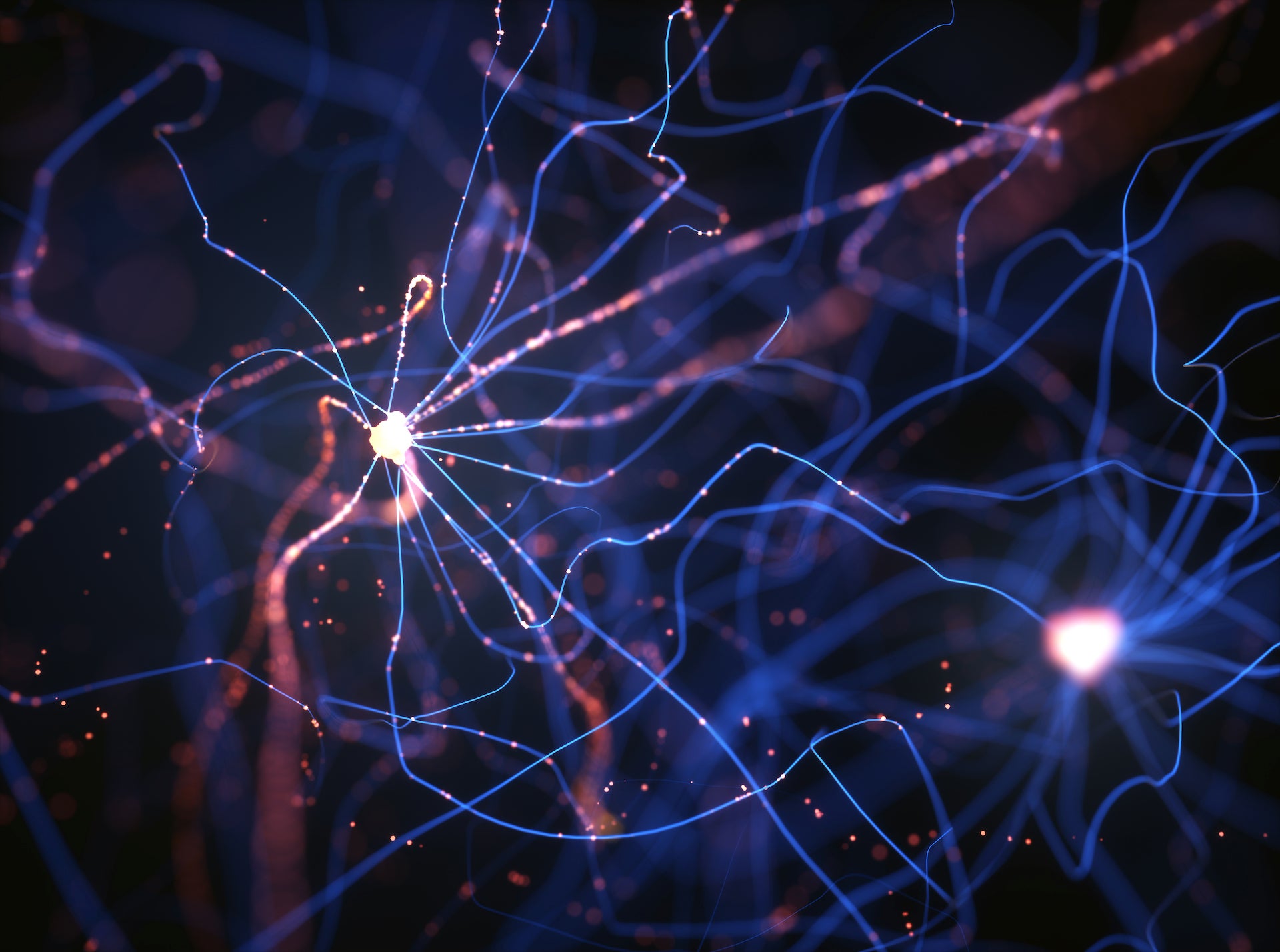
    In their last minutes of life, some people’s brains generate a surge of surprisingly organized-looking electrical activity that may reflect consciousness — although scientists aren’t entirely sure. 

    According to new research, published Monday (May 1) in the journal PNAS, this surge can sometimes occur after a person’s breathing stops but before the brain stops functioning. The activity pattern is somewhat similar to what is seen when people are awake or in dreamlike states, leading to speculation that perhaps these electrical surges reflect the otherworldly experiences reported by people who’ve had close brushes with death: A sense of looking at the body from the outside; a tunnel and white light; or a sense of reliving important memories. 

    However, since all the patients in the new study ultimately died, it’s impossible to know if they had such experiences. 

    “If you talk about the dying process, there is very little we know,” said Jimo Borjigin, a neuroscientist at the University of Michigan Medical School who led the study. It’s rare for patients to have their brains continuously monitored as they die, Borjigin told Live Science. “This is maybe the first study to really show second-by-second how the brain dies.” 

    Related: Is brain death reversible? 

    Near-death experiences 

    Some people who are brought back from the brink of death report seeing or hearing unexplained things during resuscitation or when they seem to be unconscious. The reason for these near-death experiences is unknown, and it’s not clear if they’re even specific to death. 

    International surveys suggest that only about half of what people call “near-death experiences” actually occur in life-threatening situations, said Daniel Kondziella, a neurologist at the University of Copenhagen who was not involved in the new research. The other half occur during meditation or in scary situations that don’t endanger one’s health or impact the brain’s metabolism, Kondiziella told Live Science. 

    “The thing is, from the experience itself you cannot say if someone has had a cardiac arrest or syncope [a brief loss of consciousness] or near-miss traffic accident,” Kondiziella said. 

    Because the people who survive to report a near-death experience are inherently different from the people who die — their brains don’t permanently lose function, for one thing — it’s hard to determine whether those who actually die also have these subjective experiences. 

    In 2013, Borjigin and her colleagues measured electrical activity in the brains of rats that they euthanized via cardiac arrest. They found that for about 30 seconds after the heart stopped, the brain showed a surge in what are called gamma waves, which are the highest-frequency electrical oscillations in the brain. Gamma waves are correlated with conscious experience, but don’t necessarily prove that someone is conscious; they’re just one of many indicators that someone might be aware and alert. 

    In 2022, a separate group of doctors happened to be monitoring the brain of an 87-year-old man with an electroencephalogram (EEG), which detects electrical activity on the surface of the brain, when the man unexpectedly died. Similar to Borjigin’s rats, the man’s brain showed a surge in gamma activity in the 30 seconds before and after his heart stopped.  

    ‘Reading’ the dying brain 

    In their new paper, Borjigin and her team made a deliberate effort to use EEG to capture what the brain looks like during death. 

    The researchers got permission to monitor dying patients in intensive care whose breathing support had been removed after treatment proved futile. The study included four patients total, all of whom were comatose after cardiac arrest. 

    In the 30 seconds to two minutes after their ventilators were removed, two of the four patients’ brains showed surges in gamma waves. Interestingly, this gamma activity seemed organized, in that the gamma waves in one portion of the brain were associated with predictable activity patterns in other regions. 

    The temporoparietal junction, a brain region where the temporal and parietal lobes meet, toward the back of the brain behind the ear, was particularly active with gamma waves. This region is known to be activated when people have out-of-body experiences or dreams, Borjigin said. 

    The new findings echo what was seen in the 87-year-old patient who unexpectedly died, said Raul Vicente, a neuroscientist and data scientist at the University of Tartu who co-authored the 2022 study but was not involved in Borjigin’s work. “It’s very nice to see a confirmation,” he told Live Science. 

    “The more consistent findings we have, the more evidence it is that this likely is a mechanism happening at the time of death and if we can pinpoint this down to one location, even better,” said Ajmal Zemmar, a neurosurgeon at the University of Louisville Health who also co-authored the 2022 study. 

    Zemmar and Vicente are optimistic that these signals could be signs of conscious experience at the moment of death. But reflecting the debate in the field, Kondziella is more skeptical. 

    “We know when you die a cardiac death as opposed to a brain death, that takes time,” he said. Minutes pass between the heart stopping and brain cells dying, he said. “It shouldn’t be a big surprise during those minutes, you will see aberrant electrophysiological activity in the brain.” 

    Some people may experience something like near-death experiences in these moments, Kondziella said, but we may never know for sure. And again, these experiences may not be unique to death — a more likely explanation for near-death experiences that encompasses both life-threatening experiences and non-life-threatening experiences, he said, may be “REM sleep intrusion into wakefulness,” a situation in which the brain blends waking and dreaming states. (REM sleep is marked by dreaming and brain activity patterns that are very similar to waking, including gamma waves and other, lower-frequency waves.) 

    Borjigin’s team is still collecting end-of-life data, hoping to add to the evidence that the dying brain may generate predictable gamma-wave patterns. Already, other research groups have attempted to use artificial intelligence to identify objects that people saw in their dreams based on their brain activity — similar mind-reading may be possible with unconscious and dying patients, Vicente said. 

    “This opens an opportunity at some point, if we gather enough data, to be able to decode what people in different coma states are thinking,” Vicente said. 

    Copyright 2023 LiveScience, a Future company. All rights reserved. This material may not be published, broadcast, rewritten or redistributed.


    Original Source Link

    Share. Facebook Twitter Pinterest LinkedIn WhatsApp Email Reddit Telegram
    Previous ArticleChance the Rapper, Paul McCartney Added to Tribeca Festival 2023 – The Hollywood Reporter
    Next Article The Comedian Taking on India’s New Censorship Law | WIRED

    RELATED POSTS

    NASA’s Artemis II moon mission engulfed by debate over its controversial heat shield

    February 4, 2026

    Dutch air force reads pilots’ brainwaves to make training harder

    February 3, 2026

    HHS Is Using AI Tools From Palantir to Target ‘DEI’ and ‘Gender Ideology’ in Grants

    February 3, 2026

    The sun just unleashed its most powerful solar flare in years

    February 2, 2026

    The best new popular science books of February 2026 include titles by Maggie Aderin and Michael Pollan

    February 2, 2026

    How to Use Physics to Escape an Ice Bowl

    February 1, 2026
    latest posts

    David Byrne adds more UK and Ireland shows to summer 2026 ‘Who Is The Sky?’ world tour

    David Byrne has added fresh UK and Ireland shows to his ‘Who Is The Sky?’…

    Amazon AWS CEO Matt Garman pushes back against Elon Musk’s space data centers plan

    February 4, 2026

    Trump Just Made The Most Insane Statement About Elections In The History Of The Oval Office

    February 4, 2026

    Judge restricts use of tear gas on protesters at Portland ICE facility

    February 4, 2026

    Epstein-linked longevity guru Peter Attia leaves David Protein, and his own startup ‘won’t comment’

    February 4, 2026

    NASA’s Artemis II moon mission engulfed by debate over its controversial heat shield

    February 4, 2026

    Twinless review – a twee showcase for actor Dylan…

    February 4, 2026
    Categories
    • Books (1,039)
    • Business (5,945)
    • Film (5,881)
    • Lifestyle (3,983)
    • Music (5,949)
    • Politics (5,950)
    • Science (5,292)
    • Technology (5,879)
    • Television (5,568)
    • Uncategorized (2)
    • US News (5,931)
    popular posts

    Retiring Fed President Challenged the Consensus Inside Central Bank

    The Federal Reserve is set to lose one of its more diligent skeptics when Esther…

    Plastic recycling: Bacteria and catalysts turn waste into useful chemicals

    October 14, 2022

    Ways To Cope When Your Child Gets A Life-Altering Diagnosis

    May 13, 2025

    Joy Reid Sinks Her Teeth Into Stephen Miller With Biting New Nickname

    November 14, 2023
    Archives
    Browse By Category
    • Books (1,039)
    • Business (5,945)
    • Film (5,881)
    • Lifestyle (3,983)
    • Music (5,949)
    • Politics (5,950)
    • Science (5,292)
    • Technology (5,879)
    • Television (5,568)
    • Uncategorized (2)
    • US News (5,931)
    About Us

    We are a creativity led international team with a digital soul. Our work is a custom built by the storytellers and strategists with a flair for exploiting the latest advancements in media and technology.

    Most of all, we stand behind our ideas and believe in creativity as the most powerful force in business.

    What makes us Different

    We care. We collaborate. We do great work. And we do it with a smile, because we’re pretty damn excited to do what we do. If you would like details on what else we can do visit out Contact page.

    Our Picks

    NASA’s Artemis II moon mission engulfed by debate over its controversial heat shield

    February 4, 2026

    Twinless review – a twee showcase for actor Dylan…

    February 4, 2026

    ‘High Potential’ Boss Breaks Down Morgan’s Panic Attack and Comfort From Karadec Amid New Relationship (Exclusive)

    February 4, 2026
    © 2026 Beverly Hills Examiner. All rights reserved. All articles, images, product names, logos, and brands are property of their respective owners. All company, product and service names used in this website are for identification purposes only. Use of these names, logos, and brands does not imply endorsement unless specified. By using this site, you agree to the Terms & Conditions and Privacy Policy.

    Type above and press Enter to search. Press Esc to cancel.

    We use cookies on our website to give you the most relevant experience by remembering your preferences and repeat visits. By clicking “Accept All”, you consent to the use of ALL the cookies. However, you may visit "Cookie Settings" to provide a controlled consent.
    Cookie SettingsAccept All
    Manage consent

    Privacy Overview

    This website uses cookies to improve your experience while you navigate through the website. Out of these, the cookies that are categorized as necessary are stored on your browser as they are essential for the working of basic functionalities of the website. We also use third-party cookies that help us analyze and understand how you use this website. These cookies will be stored in your browser only with your consent. You also have the option to opt-out of these cookies. But opting out of some of these cookies may affect your browsing experience.
    Necessary
    Always Enabled
    Necessary cookies are absolutely essential for the website to function properly. These cookies ensure basic functionalities and security features of the website, anonymously.
    CookieDurationDescription
    cookielawinfo-checkbox-analytics11 monthsThis cookie is set by GDPR Cookie Consent plugin. The cookie is used to store the user consent for the cookies in the category "Analytics".
    cookielawinfo-checkbox-functional11 monthsThe cookie is set by GDPR cookie consent to record the user consent for the cookies in the category "Functional".
    cookielawinfo-checkbox-necessary11 monthsThis cookie is set by GDPR Cookie Consent plugin. The cookies is used to store the user consent for the cookies in the category "Necessary".
    cookielawinfo-checkbox-others11 monthsThis cookie is set by GDPR Cookie Consent plugin. The cookie is used to store the user consent for the cookies in the category "Other.
    cookielawinfo-checkbox-performance11 monthsThis cookie is set by GDPR Cookie Consent plugin. The cookie is used to store the user consent for the cookies in the category "Performance".
    viewed_cookie_policy11 monthsThe cookie is set by the GDPR Cookie Consent plugin and is used to store whether or not user has consented to the use of cookies. It does not store any personal data.
    Functional
    Functional cookies help to perform certain functionalities like sharing the content of the website on social media platforms, collect feedbacks, and other third-party features.
    Performance
    Performance cookies are used to understand and analyze the key performance indexes of the website which helps in delivering a better user experience for the visitors.
    Analytics
    Analytical cookies are used to understand how visitors interact with the website. These cookies help provide information on metrics the number of visitors, bounce rate, traffic source, etc.
    Advertisement
    Advertisement cookies are used to provide visitors with relevant ads and marketing campaigns. These cookies track visitors across websites and collect information to provide customized ads.
    Others
    Other uncategorized cookies are those that are being analyzed and have not been classified into a category as yet.
    SAVE & ACCEPT