
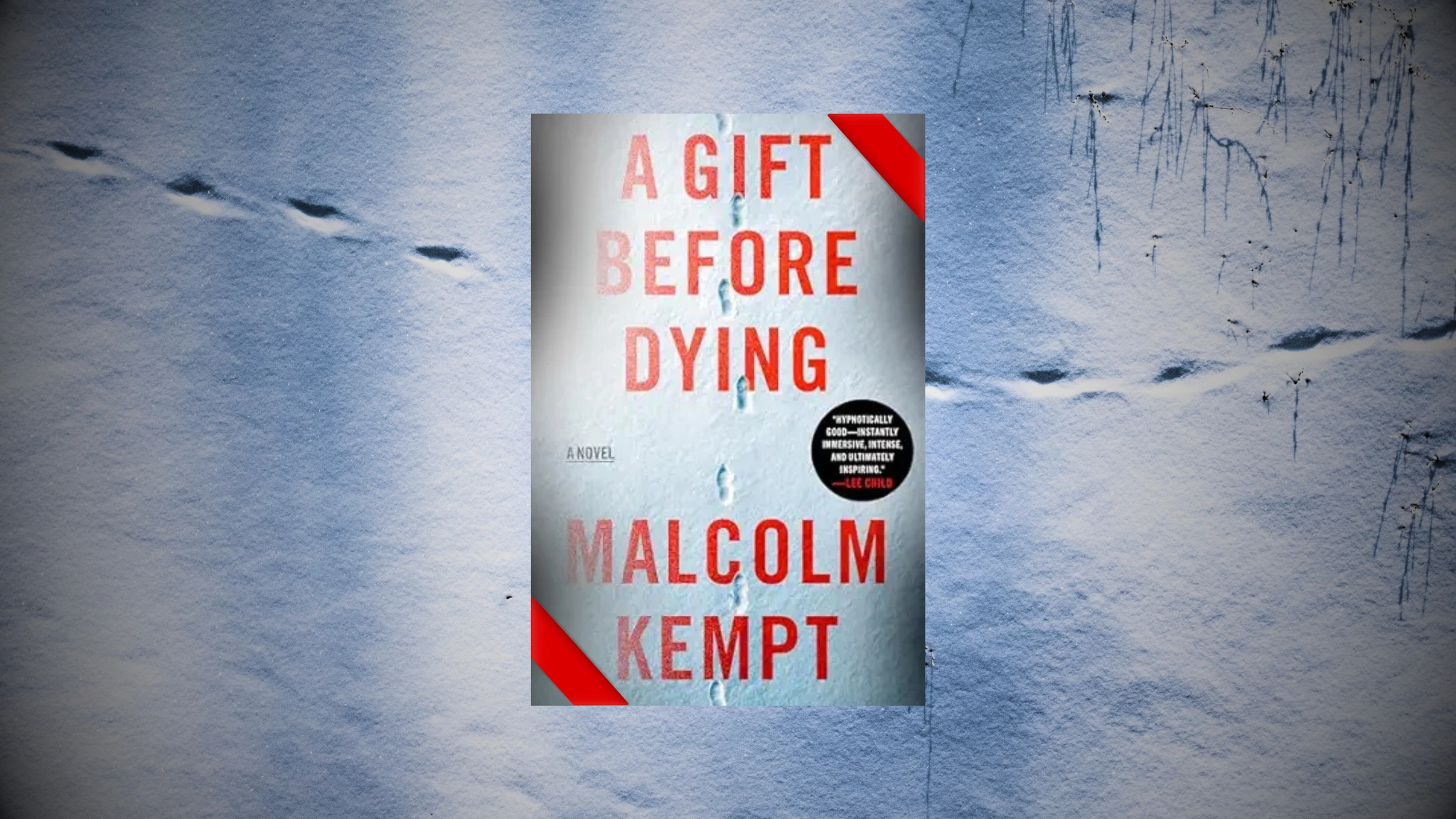
A Gift Before Dying by Malcolm Kempt
“A Gift Before Dying is a novel both haunted and haunting, a book that sweeps you along relentlessly, not only into its mysteries, but into the dark world in which they lie.”
“Accidents, murders, suicides, illnesses. Dying of old age was rare in Cape Dorset.”
Cape Dorset is a remote Arctic community, inhabited mainly by the Inuit and a few people who aren’t. Sergeant Elderick Cole is one of the latter. In Malcolm Kempt’s A Gift Before Dying, he’s part of the place’s undermanned, overworked police force, banished there after botching an investigation into the murder of a six-year-old boy in Northern Alberta, two thousand miles away. He’s being sued, his wife has left him, his daughter won’t speak to him, and he’s finding it hard to sleep in the endless night of the Arctic winter.
And now this: an Inuit girl found hanging from a pipe, an electrical cord around her neck. All signs point to suicide, though some small things bother him. “If you don’t think she hung herself,” Constable Veronica Aningmiuq tells him, “then you don’t know what it feels like to be a sixteen-year-old girl in Cape Dorset.”
A Town Full of Secrets
Cole know she’s right, but still, he’d talked to this girl just a week ago. She was smart, tough, and very determined, she said, not to be like her cousin, who’d killed himself, his demons catching up with him: “I don’t wanna end up like him.” How could that girl be here, like this?
But the more Cole pokes around, the murkier everything seems to get. Exhausted, drinking, on pain meds, the girl’s death bringing up all of his own demons, he pushes forward anyway, but he has no idea what he’s getting into. A storm is gathering, one that is both natural and manmade — and maybe something else — and it is about to burst all around him.
A Gift Before Dying is a novel both haunted and haunting, a book that sweeps you along relentlessly, not only into its mysteries, but into the dark world in which they lie. Bundle up. It’s going to be a cold winter.
Living the Arctic Nightmare
Malcolm Kempt comes by his setting honestly. He spent seventeen years as a criminal lawyer in the Arctic.
“I never intended to practice law after graduating from law school. However, when I came across a job posting in the Arctic, I knew I had to apply. Lacking the grades or the experience for the job, I decided to make my application stand out. I submitted my resume on brightly colored paper and included a photo of myself mountain climbing in the snow. To my complete surprise, I was selected for the job out of hundreds of applicants, which completely changed the course of my life. What was meant to be a one-year contract turned into an incredible seventeen-year odyssey.
“The Nunavut territory, where I worked, has one of the highest violent crime rates per capita in the world. I often spent weeks on the road, flying from town to isolated town in very small aircraft, interviewing clients and running trials. I experienced blizzards and unfathomable cold, saw polar bears and narwhals in the wild, and climbed on icebergs and glaciers. A significant portion of the population there doesn’t speak English, so I had to learn a considerable amount of Inuktitut, the Inuit language, and I frequently relied on interpreters. I was fortunate enough to travel regularly to some of the most remote areas in the Arctic, including Grise Fjord, a town with a population of fewer than 150 people, significantly further north than Barrow, Alaska. At that latitude, winter is constant darkness, and summer is perpetual daylight.
Crime, Memory and the Frozen North
“One case stands out. A client was accused of shooting up an occupied vehicle. He denied the charges, but the evidence against him was overwhelming. The passengers and witnesses claimed to have seen him point his weapon at them and heard the gunshots. One even gave a statement that they smelled the burnt gunpowder. But right before trial, forensic analysis revealed the gun was not only inoperable, but hadn’t been fired in years. He had smashed the windows out with the butt of the gun. The victims weren’t lying; they genuinely believed they he had shot at them. This was a stark lesson for me in the fragility of human perception and the malleability of human memory. I saw this repeated in many different cases over the years. While under stress, or following trauma, our minds can easily construct vivid and convincing, but entirely false memories.”
He poured all of those experiences into his book: “When I started writing in earnest, I was primarily interested in creating horror fiction. However, as a criminal lawyer living in the Arctic, I realized that a murder mystery set in the North made more sense for a debut novel. In terms of plotting, I had nearly twenty years of violent crime files to draw upon for ideas. Initially, I worried that the supernatural undertones, weird fiction elements and existential themes that I wanted to explore wouldn’t translate well into a crime novel. Most crime novels adhere to a strict timeline but having experienced the disorienting effects of polar night in the Arctic, I aimed for a more unsettling, hallucinatory sense of time. I wanted this approach to leave readers as disconnected from time as the protagonists themselves. After rewatching the brilliant first season of True Detective and reading a few wonderful books like William Peter Blatty’s Legion and Stephen Graham Jones’ All the Beautiful Sinners, I felt reassured that my odd ideas could work in a crime story. The result was A Gift Before Dying.”
It’s a brilliantly specific book. You can feel the dense chill of the ice fog, smell the stench given off by big male seals, hear the sound of ravens hopping on a metal roof at night. How did he create all that?
How the Arctic Shapes a Story
“I use journals that I call ‘waste books’, a term borrowed from the ledgers used by merchants to jot down rough notes on transactions. The name comes from the writings of Georg Lichtenberg in the 1700s. Each day, I write random notes, partial scenes and snippets of dialogue in them. I also have separate specific journals for each project. I write everything with fountain pens in different colored inks and then transfer it to Scrivener. After that, I go through a series of editing passes to enhance sensory details, mood, themes, and word choices. Once I have made the revisions, I send the work to my beta readers for feedback. After incorporating their suggestions, I read it aloud multiple times to assess how it sounds and feels, making adjustments as needed. It’s a lengthy process, but one that I truly enjoy.”
And it all paid off when it came time not only to write the book — but to get it published:
“When the pandemic restrictions became too onerous in Canada, it effectively killed my law practice and forced me to reinvent myself. Having always been a part-time writer and editor, I decided it was the perfect time to pursue my dream of writing fiction full-time. During the pandemic, the unpublished draft of my debut novel won the Percy Janes Award on my home island of Newfoundland. Shortly thereafter, I published a short story in a major anthology alongside Stephen King. Once I signed with Gideon Pine at Inkwell Management in New York, everything progressed rapidly. Within a year and a half, I’d secured a two-book deal with Crown, established foreign deals in other countries and a received a blurb from Lee Child and other prominent authors. It just keeps getting better and better.
“I am very excited to be working on my sophomore thriller for Crown. I recently had an experimental short story come out in an Arctic horror anthology from Inhabit Media. I’m hoping my debut will open more doors and allow me to pursue lots of creative projects.”
I think we can take that as a given. Kempt is an enormous new talent — and his career is just beginning.
About Malcolm Kempt:
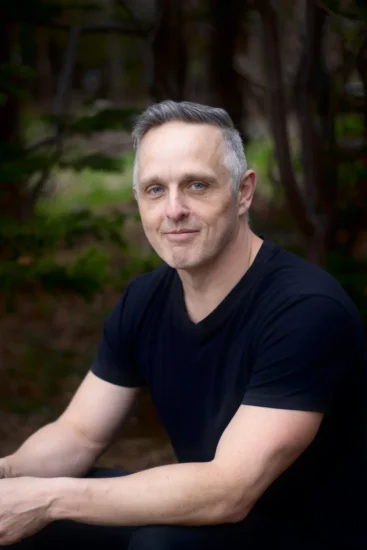 Malcolm Kempt worked as a criminal lawyer in the remote Arctic for seventeen years before leaving to write full-time. He now lives on the island of Newfoundland.
Publish Date: January 20, 2026
Genre: Thrillers
Author: Malcolm Kempt
Page Count: 272 pages
Publisher: Crown
ISBN: 978-0593801000