
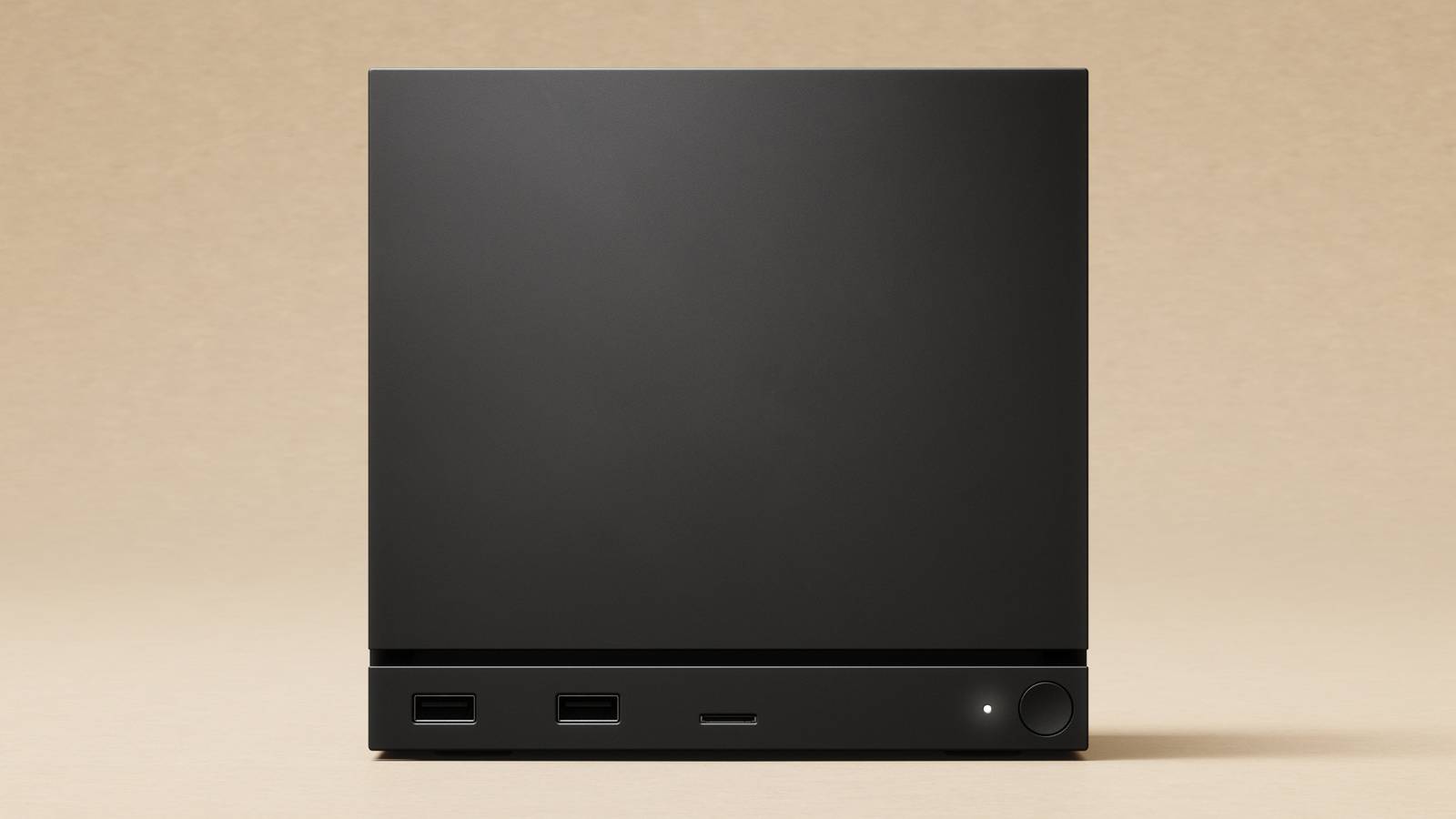
Valve is re-entering the console competition with the Steam Machine, a GameCube-esque box that could pack a serious punch. This isn’t the first thing to bear the name Steam Machine, following a previous series of PCs that never quite stuck the landing. Following the success of the Steam Deck, Valve’s new venture might have the answers that its previous hardware attempts lacked.
While certain details on the Steam Machine are still missing, Valve has already unveiled all the essential specs and details about its basic functions. You won’t be able to get your hands on one just yet, but you can still learn enough to understand what the Steam Machine will be capable of — and whether it really makes sense as an alternative to a PS5 or a typical PC.
Steam Machine Features
One of the biggest defining factors of the Steam Machine is that it runs on SteamOS, the same Linux-based operating system as the Steam Deck. While this can occasionally cause compatibility issues, the comparatively lightweight system can be more efficient at running games than a standard Windows installation. Steam is expanding its Steam Deck verification system to have a Steam Machine verified checkmark, letting buyers know which games have been specifically confirmed to run well on the hardware.
As for just how efficient that will be, the Steam Machine promises “4K gaming at 60 FPS with FSR,” AMD’s scaling solution. If you like to avoid weird artifacts in your games, you can probably expect to manage 1080p or 1440p without FSR. In full, Steam provides the following list of core features:
- SteamOS
- Small form factor (roughly 6-inch cube)
- Cool and quiet
- Extensive I/O (1 GB Ethernet port, DisplayPort 1.4, HDMI 2.0, USB-C, four USB-A ports)
- Semi-custom AMD CPU and GPU
- 512 GB and 2TB storage options with microSD expandable storage
- 2×2 Wi-FI 6E and Bluetooth 5.3
- Built-in power supply
For a broader sense of the Steam Machine’s ability, Valve is billing “over six times the horsepower of the Steam Deck,” and the library image used in advertising material shows some demanding games like Black Myth: Wukong and Metal Gear Solid Delta: Snake Eater.
Technical Steam Machine Specs

Of course, if you really want the nitty-gritty, the notes above might not be entirely satisfying. More detailed technical specs are as follows:
|
Feature |
Specifications |
|---|---|
|
CPU |
Semi-custom AMD Zen 4 6C / 12T |
|
GPU |
Semi-custom AMD RDNA3 28CUs
|
|
RAM |
16GB DDR5 + 8GB GDDR6 VRAM |
|
Power |
Internal power supply, AC power 110-240V |
|
Storage |
Two models:
High-speed microSD card slot |
|
Wi-Fi |
2×2 Wi-Fi 6E |
|
Bluetooth |
Bluetooth 5.3 dedicated antenna |
|
Steam Controller |
Integrated 2.4 GHz Steam Controller wireless adapter |
|
Display I/O |
DisplayPort 1.4
HDMI 2.0
|
|
USB |
|
|
Networking |
Gigabit Ethernet |
|
LED Strip |
17 individually addressable RGB LEDs |
|
Size |
|
|
Weight |
2.6 kg |
|
OS |
SteamOS 3 |
|
Desktop |
KDE Plasma |
A more in-depth look at these capabilities can be found on the Digital Foundry YouTube channel, which went hands-on with the Steam Machine to offer some analysis. The video concludes that some compromises are being made on the GPU end, but if the product releases at an affordable price, these limitations could be justified.
Steam Machine Release Window & Price

The release date and price of the Steam Machine are the two big areas where Valve is remaining cagey. Right now, it’s set for a 2026 launch, but which quarter the release will fall in is still a mystery. The Steam Frame and Steam Controller are likewise set for 2026, and whether they’ll launch in stages or simultaneously is equally unclear.
Likewise, there’s no information yet on the price of the Steam Machine, but it can be reasonably inferred to be competitive in the current console market. The system specs are lower than what would be expected of a typical gaming PC, which the streamlined SteamOS and targeted optimization by devs could help to make up for. For one point of reference, the Steam Deck is available in $399, $549, and $649 models, making it cheaper than competitive handheld lines like the Asus ROG Ally and Lenovo Legion Go.
More information about the Steam Machine, as well as further previews of the system, are sure to appear in the coming months. For now, it looks like a promising console alternative that could suit Steam‘s strengths, even if it isn’t gearing up to blow anyone away with raw horsepower.