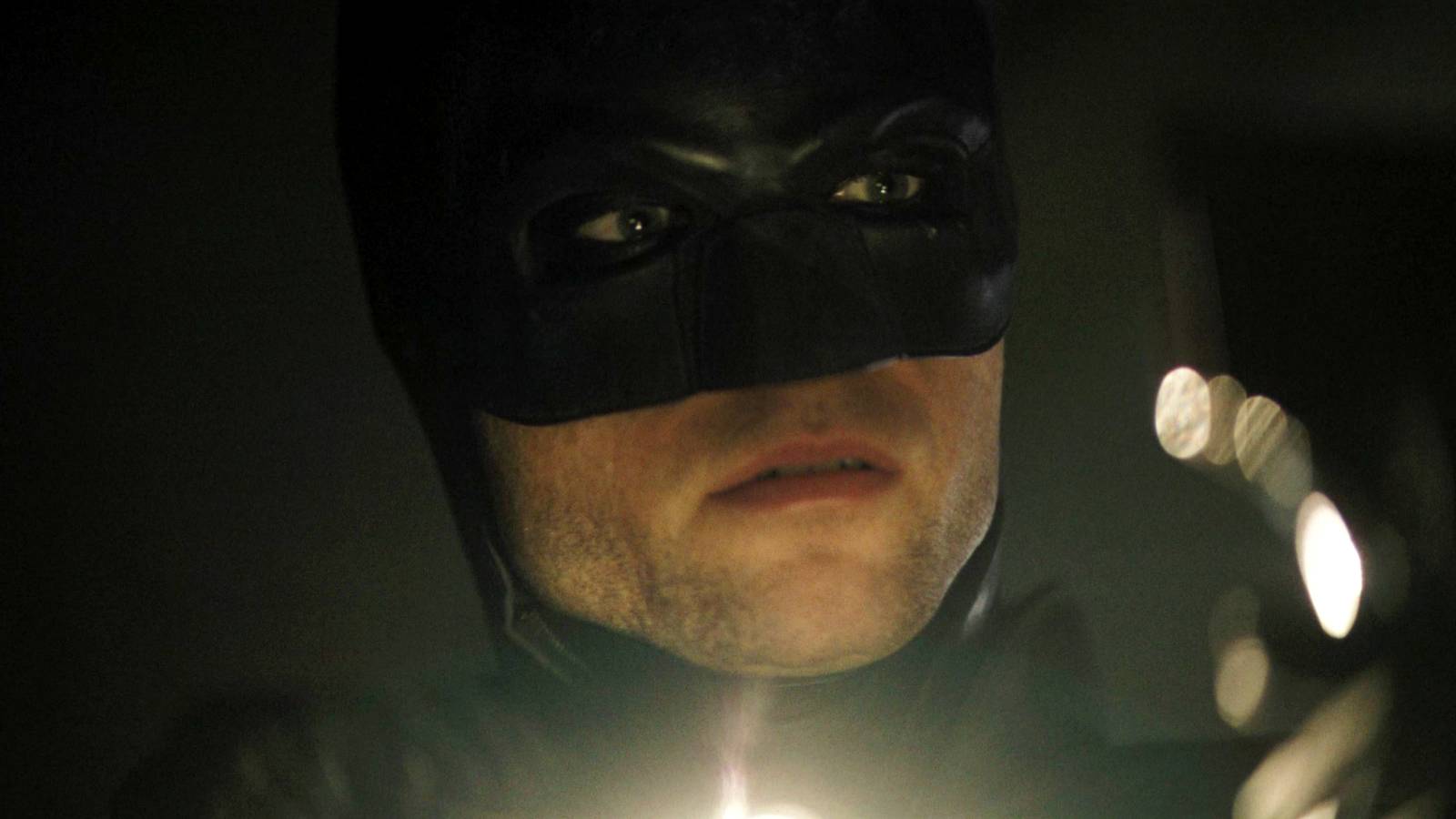
The Batcave is an essential element of Caped Crusader lore, and even Robert Pattinson’s ruthlessly realistic take in 2022’s The Batman couldn’t ignore that. Over the years, live-action Batcaves have taken many different guises, from Val Kilmer’s hi-tech lab beneath Wayne Manor to Christian Bale’s watery parking lot and underground white room.
The Batman‘s version of the iconic HQ proved to be the most distinctive live-action depiction so far. Originally dubbed Wayne Terminus, Pattinson’s Bruce Wayne did his sleuthing in an abandoned train station, complete with staircases, ornate lamps, and gothic archways. It was certainly a bold choice visually, but what really separated Pattinson’s Batcave from the litany of other live-action hideouts was its spooky real-world backstory.
What The Batman’s Train Station Batcave Was Really Based On

While Bruce Wayne’s hometown is more traditionally compared to Chicago, The Batman‘s Gotham is a fictional mirror of New York City, with “Gotham Square Garden” standing in for Madison Square Garden. The film’s Batcave also draws inspiration from New York – specifically its secret railway known as Track 61.
The Track 61 subway was originally built and used during the construction of the Grand Central Terminal across the 1900s and 1910s. When development began on the new Waldorf Astoria Hotel in 1930, the building was positioned directly above this station, allowing for discreet underground access.
Many myths, stories, and legends surround exactly who used the Waldorf Astoria’s railway entrance, as well as the reasons they used it. Franklin D. Roosevelt is said to have traveled the hidden tracks beneath New York as a means of hiding a health condition from public view (Sam Roberts, 2013).
A different rumor claims George W. Bush had the Waldorf Astoria’s train station prepared as a potential escape route in case of an emergency (New York Post).
Whatever the truth, the spookiness of an abandoned underground train station used for largely unknown purposes has tickled imaginations, including those involved with The Batman. According to production designer James Chinlund in The Art of The Batman, the romanticism of Track 61’s existence led to the idea that the Waynes would have installed a similar private escape route beneath Wayne Manor. Robert Pattinson’s Batcave was born.
Pattinson’s Batcave Origin Elevates It Above Other Live-Action Hideouts

The greatest thing about The Batman‘s vision for the Batcave was how it enhanced the main theme underpinning the movie. Yes, The Batman is a meditation on punching criminals in the face, but it’s also about elitism and social inequality. Riddler’s entire crusade was prompted by the divide between Gotham City’s wealthy upper class and the masses fighting to survive a sea of poverty and gang violence.
In the real world, we have stories of this secret New York train station supposedly used by presidents and government officials in private, keeping them away from everyday people. Whatever the truth of Track 61 might be, the stories themselves speak to The Batman‘s core message of the rich taking priority.
No other live-action Batcave has carried the same degree of narrative importance, and there are other benefits to being inspired by the Waldorf Astoria’s secret station too. The abandoned nature of the station made it feel like a ghost town, with the moody Bruce Wayne alone and isolated in the middle. It’s a clever representation of Bruce’s separation from the world, and fits perfectly with The Batman‘s noir aesthetic.

- Release Date
-
March 4, 2022
- Runtime
-
176 minutes
- Writers
-
Matt Reeves, Peter Craig, Bob Kane, Bill Finger