
Close Menu
Beverly Hills Examiner

    Subscribe to Updates

    Get the latest creative news from FooBar about art, design and business.

    What's Hot

    Alex Warren On New Album ‘Wild Child,’ Grief & Success of ‘Ordinary’

    August 26, 2026

    The $40 trillion national debt and the bond market’s revolt: how we got into this mess

    August 26, 2026

    Classic Hit Celebrates 58 Years Since Release

    August 26, 2026
    Facebook X (Twitter) Instagram
    Beverly Hills Examiner
    • Home
    • US News
    • Politics
    • Business
    • Science
    • Technology
    • Lifestyle
    • Music
    • Television
    • Film
    • Books
    • Contact
      • About
      • Amazon Disclaimer
      • DMCA / Copyrights Disclaimer
      • Terms and Conditions
      • Privacy Policy
    Beverly Hills Examiner
    Home»Science»A stealth fungus has decimated North American bats but scientists may be a step closer to treating white-nose syndrome
    Science

    A stealth fungus has decimated North American bats but scientists may be a step closer to treating white-nose syndrome

    By July 15, 2024
    Facebook Twitter Pinterest LinkedIn WhatsApp Email Reddit Telegram
    A stealth fungus has decimated North American bats but scientists may be a step closer to treating white-nose syndrome


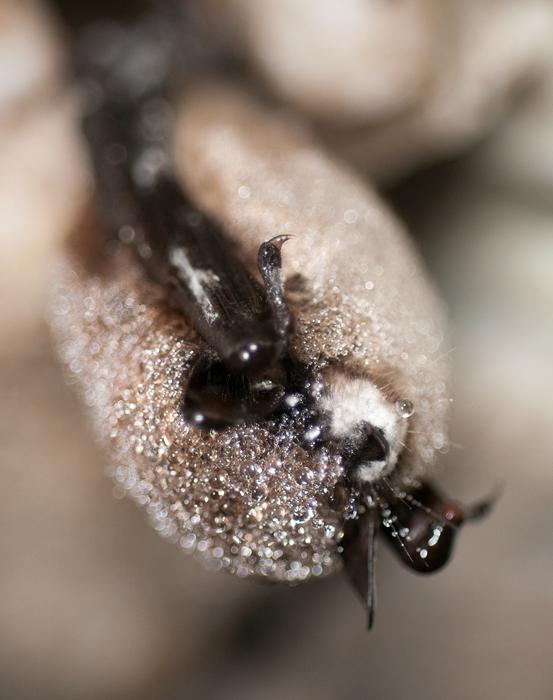
    An invasive fungus that colonizes the skin of hibernating bats with deadly consequences is a stealthy invader that uses multiple strategies to slip into the small mammals’ skin cells and quietly manipulate them to aid its own survival. The fungus, which causes the disease white-nose syndrome, has devastated several North American species over the last 18 years.

    Scientists have learned much about the fungus, Pseudogymnoascus destructans, since it was first documented in a New York cave in 2006, including where it thrives, its distribution, and clinical features. But exactly how the fungus initiates its infection has remained a “black box — a big mystery,” says Bruce Klein, a professor of pediatrics, medicine and medical microbiology and immunology at the University of Wisconsin–Madison.

    That dearth of understanding has made it challenging to develop countermeasures to treat or prevent infections.

    Now, Klein and Marcos Isidoro-Ayza, a PhD candidate at Klein’s lab, have for the first time been able to study in detail how the fungus gains entry and covertly hijacks cells called keratinocytes at the surface of bats’ skin.

    The feat is detailed in the July 12, 2024, issue of Science.

    The researchers found that P. destructans uses infected cells as a refuge and prevents the cells from dying, which in turn thwarts the bats’ immune system and allows the microbial invader to continue growing and slip into more cells.

    To do so, Klein and Isidoro-Ayza created the first-ever keratinocyte cell line from the skin of a little brown bat. Further, they successfully mimicked the conditions of hibernation, which are marked by wide body temperature fluctuations that accompany periods of torpor — when the animals’ metabolism slows and body temperature drops — and arousal.

    This is crucial to understanding P. destructans infections because the cold-loving fungus gains its foothold during the chilly conditions of torpor and is able to persist during arousal, when the bats’ body temperature increases.

    Klein and Isidoro-Ayza have already identified how the fungus gains its stealth entry into cells: by co-opting a protein on their surface called epidermal growth factor receptor, or EGFR. Mutations in the same receptor in human cells drive certain lung cancers and these cancers are treated with an existing drug called gefitinib, opening the possibility it could be used to treat or prevent white-nose syndrome.

    “Remarkably, when we inhibited the receptor with this drug, we stopped the infection,” says Isidoro-Ayza. “This is an FDA-approved drug that could potentially be used in the future for the treatment of susceptible bat species.”

    While EGFR’s precise role in infection is not yet completely clear, Klein and Isidoro-Ayza have learned much about how the fungus works.

    Its initial entry occurs during torpor, when bats’ immune systems are dormant and their body temperature is in an ideal range for P. destructans to germinate and grow. During torpor, the fungus penetrates bats’ skin cells with its hyphae — slender filaments through which it grows and gathers nutrients — without breaking the cells’ membranes. Doing so would trigger the cells’ death and expose the fungus to the bats’ immune system.

    Klein and Isidoro-Ayza also found that the fungus employs multiple strategies that allow it to continue its invasion during periods of arousal, despite the bats’ higher body temperatures and reactivated immune system.

    First, during arousal periods, the fungus manipulates the cells so they engulf the fungus in a process known as endocytosis, rather than the fungus using its hyphae to penetrate the cell.

    Second, they found that the fungus spores — microscopic particles by which it reproduces — are coated in a layer of melanin that protects them from the cells’ strategies for killing invading microbes.

    “That allows the spore to survive that period of arousal, and when the bat goes back into torpor, the spores inside of its cells start germinating again and keep colonizing the skin,” explains Isidoro-Ayza, who is a student in the UW–Madison School of Veterinary Medicine’s comparative biomedical sciences graduate program.

    P. destructans‘ final infection strategy is to block apoptosis, also known as programmed cell death, which is a defense mechanism cells use to expose pathogens so immune cells can root them out and destroy them.

    “By not killing the cells, the fungus can linger in the tissue and go into deeper layers of the skin,” says Isidoro-Ayza.

    With this new knowledge in hand, the researchers are hopeful that treatments and a potential vaccine are closer to becoming reality.

    These findings are just one product of a collaboration between Klein and Isidoro-Ayza and scientists at the U.S. Fish and Wildlife Service and U.S. Geological Survey’s National Wildlife Health Center in Madison. The effort received $2 million in funding from the National Science Foundation and Paul G. Allen Family Foundation in 2023 to search for better insight into how P. destructans causes infection and develop treatment and prevention strategies against white-nose syndrome.

    The research is valuable not only for the conservation of bats, which provide a number of benefits including as pollinators and insect predators, but because fungal pathogens are a growing problem for many species.

    “There are fungal diseases causing epidemics and pandemics in different types of organisms, including plants, invertebrate animals, amphibians, reptiles and bats,” says Isidoro-Ayza. So, any mechanism that we discover or better understand in this disease could have implications for the conservation of other species too.”

    This research was supported by funding from The U.S. Geological Survey (G20AC00050), the U.S. Fish & Wildlife Service (13190304), the Canadian Institute for Advanced Research (MSN247980), the National Science Foundation (2301729), La Caixa Foundation fellowship (ID 100010434) under agreement LCF/BQ/AA17/11610020, National Institutes of Health (T32OD010423) and the Morris Animal Foundation (D23ZO-461).


    Original Source Link

    Share. Facebook Twitter Pinterest LinkedIn WhatsApp Email Reddit Telegram
    Previous ArticleCharlize Theron Reacts to Furiosa, Planning Chat With Anya Taylor-Joy
    Next Article Influencers Are Racing to Profit From the Trump Shooting

    RELATED POSTS

    A Mutation Is Making It Easier for Drug-Resistant Malaria to Spread

    August 26, 2026

    Elon Musk’s SpaceX to expand beyond Texas Starbase with new Louisiana spaceport dedicated to Starship

    August 26, 2026

    Border Wall Construction Threatens 6,000 Years of History on Private Lands

    August 25, 2026

    ‘Extreme’ wildfire sweeps Nevada as U.S. tallies almost 51,000 wildfires so far this year

    August 25, 2026

    NASA’s New Space Telescope Is Poised to Discover Hidden Facets of the Universe

    August 24, 2026

    How “thunderquakes” could help reveal hidden structures inside the Earth

    August 24, 2026
    latest posts

    Alex Warren On New Album ‘Wild Child,’ Grief & Success of ‘Ordinary’

    Alex Warren opens up about the stories behind his new album Wild Child in this…

    The $40 trillion national debt and the bond market’s revolt: how we got into this mess

    August 26, 2026

    Classic Hit Celebrates 58 Years Since Release

    August 26, 2026

    Seven-year-old boy forced to hike Mt. Fuji alone after dad, older brother abandon him

    August 26, 2026

    Ex-Meta scientists want to bring visual AI to the factory floor

    August 26, 2026

    A Mutation Is Making It Easier for Drug-Resistant Malaria to Spread

    August 26, 2026

    Apple TV’s New Action Movie Hailed As “Best” Of The Year In First Reactions

    August 26, 2026
    Categories
    • Books (1,449)
    • Business (6,353)
    • Cover Story (9)
    • Film (6,292)
    • Lifestyle (4,351)
    • Music (6,363)
    • Politics (6,337)
    • Science (5,703)
    • Technology (6,288)
    • Television (5,985)
    • Uncategorized (3)
    • US News (6,338)
    popular posts

    The Best Men’s Sunglasses To Turn Heads This Summer (And Why They Change Your Look Instantly)

    We independently evaluate all recommended products and services. Any products or services put forward appear…

    Wonderama Welcomes SohoJohnny

    July 26, 2022

    Netflix boss Ted Sarandos draws fire after defending Dave Chappelle and Ricky Gervais amid trans backlash

    May 30, 2022

    5 Best Watches Under $500 You Haven’t Heard Of (Yet)

    October 23, 2024
    Archives
    Browse By Category
    • Books (1,449)
    • Business (6,353)
    • Cover Story (9)
    • Film (6,292)
    • Lifestyle (4,351)
    • Music (6,363)
    • Politics (6,337)
    • Science (5,703)
    • Technology (6,288)
    • Television (5,985)
    • Uncategorized (3)
    • US News (6,338)
    About Us

    We are a creativity led international team with a digital soul. Our work is a custom built by the storytellers and strategists with a flair for exploiting the latest advancements in media and technology.

    Most of all, we stand behind our ideas and believe in creativity as the most powerful force in business.

    What makes us Different

    We care. We collaborate. We do great work. And we do it with a smile, because we’re pretty damn excited to do what we do. If you would like details on what else we can do visit out Contact page.

    Our Picks

    A Mutation Is Making It Easier for Drug-Resistant Malaria to Spread

    August 26, 2026

    Apple TV’s New Action Movie Hailed As “Best” Of The Year In First Reactions

    August 26, 2026

    Countertop Materials Compared on Heat, Stains and Scratches

    August 26, 2026
    © 2026 Beverly Hills Examiner. All rights reserved. All articles, images, product names, logos, and brands are property of their respective owners. All company, product and service names used in this website are for identification purposes only. Use of these names, logos, and brands does not imply endorsement unless specified. By using this site, you agree to the Terms & Conditions and Privacy Policy.

    Type above and press Enter to search. Press Esc to cancel.

    We use cookies on our website to give you the most relevant experience by remembering your preferences and repeat visits. By clicking “Accept All”, you consent to the use of ALL the cookies. However, you may visit "Cookie Settings" to provide a controlled consent.
    Cookie SettingsAccept All
    Manage consent

    Privacy Overview

    This website uses cookies to improve your experience while you navigate through the website. Out of these, the cookies that are categorized as necessary are stored on your browser as they are essential for the working of basic functionalities of the website. We also use third-party cookies that help us analyze and understand how you use this website. These cookies will be stored in your browser only with your consent. You also have the option to opt-out of these cookies. But opting out of some of these cookies may affect your browsing experience.
    Necessary
    Always Enabled
    Necessary cookies are absolutely essential for the website to function properly. These cookies ensure basic functionalities and security features of the website, anonymously.
    CookieDurationDescription
    cookielawinfo-checkbox-analytics11 monthsThis cookie is set by GDPR Cookie Consent plugin. The cookie is used to store the user consent for the cookies in the category "Analytics".
    cookielawinfo-checkbox-functional11 monthsThe cookie is set by GDPR cookie consent to record the user consent for the cookies in the category "Functional".
    cookielawinfo-checkbox-necessary11 monthsThis cookie is set by GDPR Cookie Consent plugin. The cookies is used to store the user consent for the cookies in the category "Necessary".
    cookielawinfo-checkbox-others11 monthsThis cookie is set by GDPR Cookie Consent plugin. The cookie is used to store the user consent for the cookies in the category "Other.
    cookielawinfo-checkbox-performance11 monthsThis cookie is set by GDPR Cookie Consent plugin. The cookie is used to store the user consent for the cookies in the category "Performance".
    viewed_cookie_policy11 monthsThe cookie is set by the GDPR Cookie Consent plugin and is used to store whether or not user has consented to the use of cookies. It does not store any personal data.
    Functional
    Functional cookies help to perform certain functionalities like sharing the content of the website on social media platforms, collect feedbacks, and other third-party features.
    Performance
    Performance cookies are used to understand and analyze the key performance indexes of the website which helps in delivering a better user experience for the visitors.
    Analytics
    Analytical cookies are used to understand how visitors interact with the website. These cookies help provide information on metrics the number of visitors, bounce rate, traffic source, etc.
    Advertisement
    Advertisement cookies are used to provide visitors with relevant ads and marketing campaigns. These cookies track visitors across websites and collect information to provide customized ads.
    Others
    Other uncategorized cookies are those that are being analyzed and have not been classified into a category as yet.
    SAVE & ACCEPT