
Close Menu
Beverly Hills Examiner

    Subscribe to Updates

    Get the latest creative news from FooBar about art, design and business.

    What's Hot

    Someone did the math on the Democrats first 100-day agenda: It saves $30 billion on the Iran war but ultimately adds $4.1 trillion to national debt | Fortune

    November 23, 2026

    How Notable Capital, GIC, and Baillie Gifford bet big on Anthropic before its IPO | TechCrunch

    November 23, 2026

    Why data centers are at the center of the Big Tech backlash | TechCrunch

    November 22, 2026
    Facebook X (Twitter) Instagram
    Beverly Hills Examiner
    • Home
    • US News
    • Politics
    • Business
    • Science
    • Technology
    • Lifestyle
    • Music
    • Television
    • Film
    • Books
    • Contact
      • About
      • Amazon Disclaimer
      • DMCA / Copyrights Disclaimer
      • Terms and Conditions
      • Privacy Policy
    Beverly Hills Examiner
    Home»Science»Antarctica’s ‘Doomsday Glacier’ Is Melting Even Faster Than Scientists Thought
    Science

    Antarctica’s ‘Doomsday Glacier’ Is Melting Even Faster Than Scientists Thought

    By May 29, 2024
    Facebook Twitter Pinterest LinkedIn WhatsApp Email Reddit Telegram
    Antarctica’s ‘Doomsday Glacier’ Is Melting Even Faster Than Scientists Thought

    [ad_1]

    Antarctica’s ‘Doomsday Glacier’ Is Melting Even Faster Than Scientists Thought

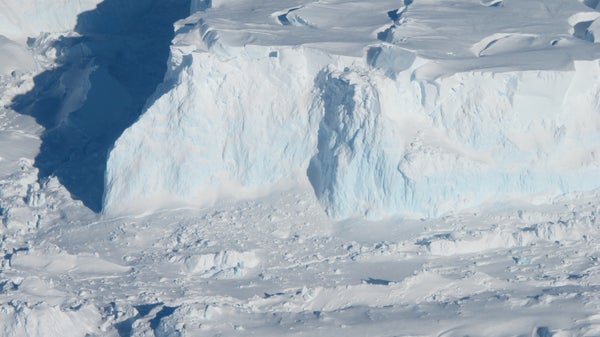
    Warming waters are reaching several miles into Antarctica’s Thwaites Glacier—nicknamed the “doomsday glacier” because of its potential impact on sea-level rise
    By Sachi Kitajima Mulkey & Grist

    Antarctica’s ‘Doomsday Glacier’ Is Melting Even Faster Than Scientists Thought

    At the bottom of the Earth sits a massive bowl of ice you may know as the West Antarctic ice sheet. Each day, the ocean laps away at its base, slowly eroding the glaciers that line its rim. When they inevitably give in, the sea will begin to fill the basin, claiming the ice for its own and flooding coastlines around the world.

    Thwaites Glacier is one of the bulwarks guarding against the collapse of this critical ice sheet, most of which rests below sea level and holds enough ice to raise the ocean by 60 meters, or about 195 feet. Unfortunately, this frosty Goliath, the size of Florida, is also one of the world’s most unstable and fastest-melting glaciers. While glaciologists knew its rate of ice loss was dire, they recently discovered that it’s exposed to far more warming water than previously believed. In a study published last week, scientists using satellite imagery and hydraulic modeling found that warming tidal currents are permeating the massive block of ice at depths as great as 3.7 miles, causing “vigorous melting.”

    “We really, really need to understand how fast the ice is changing,” said Christine Dow, an associate professor of glaciology at the University of Waterloo and one of the study’s authors. “We were hoping it would take a hundred, 500 years to lose that ice.” Although the researchers do not know how much faster the ice is melting, they worry it could be gone within a few decades.

    As climate change drives global temperatures ever higher, glaciers and ice sheets in polar and mountainous regions inevitably melt. The water and dislodged ice flows into the oceans, causing them to rise. Since 1880, global sea levels have climbed roughly 9 inches, and any sudden increase could be catastrophic for coastal cities like New York, Mumbai, and Shanghai. Low-lying countries like the Marshall Islands and Tuvalu could be submerged entirely.


    On supporting science journalism

    If you’re enjoying this article, consider supporting our award-winning journalism by subscribing. By purchasing a subscription you are helping to ensure the future of impactful stories about the discoveries and ideas shaping our world today.


    Thwaites Glacier, often dubbed the “Doomsday Glacier,” already accounts for 4 percent of the planet’s sea level rise and loses 50 billion tons of ice annually. When it collapses, it could raise oceans worldwide by 65 centimeters, or just over 2 feet. “It doesn’t sound like a lot, but if you think of how much ocean water we have in the world, that’s a huge volume,” said Dow.

    The study, published in Proceedings of the National Academy of Sciences, found that the pulsing of tides, which raise and lower the ice, allow water to creep further under its shelf and weaken its anchor to the seabed. While the same team observed this phenomenon at Petermann Glacier in Greenland, it had not been recorded in Antarctica. Thwaites has about eight times the amount of ice in contact with the ocean as Petermann.

    Using high-resolution satellite images and hydrological data, the study identified high-pressure pockets where the glacier’s surface had been raised, which showed that warm water was flowing under the ice. Previous models had only used the part of the glacier that touches the ocean as the “grounding line” from which to start calculating the potential speed of ice loss from contact with warm, salty water. Now, according to the paper, researchers may have found the missing link in modeling how glaciers change.

    “This boundary is a really crucial aspect in geology with respect to the glaciers’ response to a changing climate,” said Bernd Scheuchl, an Earth systems researcher at the University of California-Irvine and an author of the paper. He says a better understanding of the way ocean water can penetrate the base of a glacier can help scientists better predict ice loss across the West Antarctic ice sheet. “The entire region is the gateway to an area that’s well below sea level.”

    Predicting the speed of ice loss and sea level rise is no easy task. Ever-shifting factors, like the amount of greenhouse gas emissions, could slow or accelerate global warming, and in turn, the rate that glaciers melt. And modeling glaciers, which are hydrologically dynamic, remote, and difficult to research, is a technological challenge that computers have only recently been able to handle, according to Dow.

    Sharon Gray, a marine scientist at the nonprofit Rising Seas Institute, says research breakthroughs like this help the world prepare for and adapt to disappearing coastlines. “It’s never going to be perfect,” she said. “But obviously, the better we can get our models, the better we get our projections that help us plan.”

    Given the complexity and uncertainty of modeling, Gray said it’s best to assume seas will rise to the highest predicted level and to prepare for worst-case scenarios. Some high-risk places, like Singapore and the Netherlands, are doing just that and have been investing in infrastructure to meet the challenge. “I think there’s hope and an opportunity in really thinking creatively and trying to wrap our heads around what’s coming and what we can do about it,” she said.

    Researchers like Dow and Scheuchl say the best way to protect glaciers is to limit carbon emissions. Although the heat that humanity has already put into the atmosphere will linger for centuries and continue to melt glaciers, curbing the amount the planet warms could buy us time to prepare for, if not prevent, the most extreme outcomes.

    “It’s never too late to make some change,” Scheuchl said. “Even if we aren’t able to stop these developments, we can slow things down and lessen their impacts.”

    This story was originally published by Grist, a nonprofit media organization covering climate, justice, and solutions.

    [ad_2]

    Original Source Link

    Share. Facebook Twitter Pinterest LinkedIn WhatsApp Email Reddit Telegram
    Previous ArticleJacqueline Stewart Exits as Academy Museum Chief
    Next Article ‘Largest Botnet Ever’ Tied to Billions in Stolen Covid-19 Relief Funds

    RELATED POSTS

    Voyager 1 Beat the Odds and Is Still Working a Light-Day Away From Earth

    November 18, 2026

    The Dark Side of the Moon Was the Brightest Part of 2026

    November 17, 2026

    Just 400 US Data Centers Use More Electricity Than Michigan

    November 16, 2026

    The EPAs Chemical-Detecting Plane Isnt Doing Its Job Anymore

    November 16, 2026

    Its Getting Too Dry for Even Cactuses to Survive

    November 15, 2026

    New Species of Giant Fungus Discovered in China Grows up to 20 Inches Tall

    November 15, 2026
    latest posts

    Someone did the math on the Democrats first 100-day agenda: It saves $30 billion on the Iran war but ultimately adds $4.1 trillion to national debt | Fortune

    While it’s the responsibility of the U.S. Department of the Treasury to finance the interest…

    How Notable Capital, GIC, and Baillie Gifford bet big on Anthropic before its IPO | TechCrunch

    November 23, 2026

    Why data centers are at the center of the Big Tech backlash | TechCrunch

    November 22, 2026

    Prince Fleet Easton Guests On “If These Walls Could Talk” With Hosts Wendy Stuart and Tym Moss Wednesday, November 25th, 2026

    November 22, 2026

    Faced with influx, prosecutor in Washington says he lacks resources to defend immigration cases

    November 22, 2026

    We lead MITs FutureTech program on the economics of AI: Dont ask if AI can do the job, ask how much it costs | Fortune

    November 22, 2026

    Heres Where to Watch the Miami Dolphins vs. Buffalo Bills Game Live Online

    November 22, 2026
    Categories
    • Books (1,624)
    • Business (6,529)
    • Cover Story (18)
    • Film (6,463)
    • Lifestyle (4,502)
    • Music (6,539)
    • Politics (6,515)
    • Science (5,869)
    • Technology (6,467)
    • Television (6,161)
    • Uncategorized (3)
    • US News (6,512)
    popular posts

    Megyn Kelly Slaps Jen Psaki Back to Reality After Claim ‘No One Supports Abortion Up Until Birth’

    [ad_1] The former White House press secretary Jen Psaki was widely ridiculed for suggesting that…

    Why It Matters Whether a Robot Is Given a Gender

    March 19, 2023

    Half of the world’s population is under 30–but they have little say over the decisions that shape their future. It’s time for young people to be seen and heard in the halls of power

    January 25, 2023

    Discovery Helps Computers Draw Intricate Two-Dimensional Animations

    December 5, 2022
    Archives
    Browse By Category
    • Books (1,624)
    • Business (6,529)
    • Cover Story (18)
    • Film (6,463)
    • Lifestyle (4,502)
    • Music (6,539)
    • Politics (6,515)
    • Science (5,869)
    • Technology (6,467)
    • Television (6,161)
    • Uncategorized (3)
    • US News (6,512)
    About Us

    We are a creativity led international team with a digital soul. Our work is a custom built by the storytellers and strategists with a flair for exploiting the latest advancements in media and technology.

    Most of all, we stand behind our ideas and believe in creativity as the most powerful force in business.

    What makes us Different

    We care. We collaborate. We do great work. And we do it with a smile, because we’re pretty damn excited to do what we do. If you would like details on what else we can do visit out Contact page.

    Our Picks

    We lead MITs FutureTech program on the economics of AI: Dont ask if AI can do the job, ask how much it costs | Fortune

    November 22, 2026

    Heres Where to Watch the Miami Dolphins vs. Buffalo Bills Game Live Online

    November 22, 2026

    Book Riots Deals of the Day for November 22, 2026

    November 22, 2026
    © 2026 Beverly Hills Examiner. All rights reserved. All articles, images, product names, logos, and brands are property of their respective owners. All company, product and service names used in this website are for identification purposes only. Use of these names, logos, and brands does not imply endorsement unless specified. By using this site, you agree to the Terms & Conditions and Privacy Policy.

    Type above and press Enter to search. Press Esc to cancel.

    We use cookies on our website to give you the most relevant experience by remembering your preferences and repeat visits. By clicking “Accept All”, you consent to the use of ALL the cookies. However, you may visit "Cookie Settings" to provide a controlled consent.
    Cookie SettingsAccept All
    Manage consent

    Privacy Overview

    This website uses cookies to improve your experience while you navigate through the website. Out of these, the cookies that are categorized as necessary are stored on your browser as they are essential for the working of basic functionalities of the website. We also use third-party cookies that help us analyze and understand how you use this website. These cookies will be stored in your browser only with your consent. You also have the option to opt-out of these cookies. But opting out of some of these cookies may affect your browsing experience.
    Necessary
    Always Enabled
    Necessary cookies are absolutely essential for the website to function properly. These cookies ensure basic functionalities and security features of the website, anonymously.
    CookieDurationDescription
    cookielawinfo-checkbox-analytics11 monthsThis cookie is set by GDPR Cookie Consent plugin. The cookie is used to store the user consent for the cookies in the category "Analytics".
    cookielawinfo-checkbox-functional11 monthsThe cookie is set by GDPR cookie consent to record the user consent for the cookies in the category "Functional".
    cookielawinfo-checkbox-necessary11 monthsThis cookie is set by GDPR Cookie Consent plugin. The cookies is used to store the user consent for the cookies in the category "Necessary".
    cookielawinfo-checkbox-others11 monthsThis cookie is set by GDPR Cookie Consent plugin. The cookie is used to store the user consent for the cookies in the category "Other.
    cookielawinfo-checkbox-performance11 monthsThis cookie is set by GDPR Cookie Consent plugin. The cookie is used to store the user consent for the cookies in the category "Performance".
    viewed_cookie_policy11 monthsThe cookie is set by the GDPR Cookie Consent plugin and is used to store whether or not user has consented to the use of cookies. It does not store any personal data.
    Functional
    Functional cookies help to perform certain functionalities like sharing the content of the website on social media platforms, collect feedbacks, and other third-party features.
    Performance
    Performance cookies are used to understand and analyze the key performance indexes of the website which helps in delivering a better user experience for the visitors.
    Analytics
    Analytical cookies are used to understand how visitors interact with the website. These cookies help provide information on metrics the number of visitors, bounce rate, traffic source, etc.
    Advertisement
    Advertisement cookies are used to provide visitors with relevant ads and marketing campaigns. These cookies track visitors across websites and collect information to provide customized ads.
    Others
    Other uncategorized cookies are those that are being analyzed and have not been classified into a category as yet.
    SAVE & ACCEPT