
Close Menu
Beverly Hills Examiner

    Subscribe to Updates

    Get the latest creative news from FooBar about art, design and business.

    What's Hot

    OpenAI unleashes hundreds more math results upon a field already in shock

    October 7, 2026

    Tenzing review – a familiar story reaches new…

    October 7, 2026

    Slugging Skincare – Better Your Living Standards

    October 7, 2026
    Facebook X (Twitter) Instagram
    Beverly Hills Examiner
    • Home
    • US News
    • Politics
    • Business
    • Science
    • Technology
    • Lifestyle
    • Music
    • Television
    • Film
    • Books
    • Contact
      • About
      • Amazon Disclaimer
      • DMCA / Copyrights Disclaimer
      • Terms and Conditions
      • Privacy Policy
    Beverly Hills Examiner
    Home»Science»Head-Banging Woodpeckers Could Give Themselves a Concussion Every Day: Here’s How They Avoid It
    Science

    Head-Banging Woodpeckers Could Give Themselves a Concussion Every Day: Here’s How They Avoid It

    By AdminJuly 14, 2022
    Facebook Twitter Pinterest LinkedIn WhatsApp Email Reddit Telegram
    Head-Banging Woodpeckers Could Give Themselves a Concussion Every Day: Here’s How They Avoid It


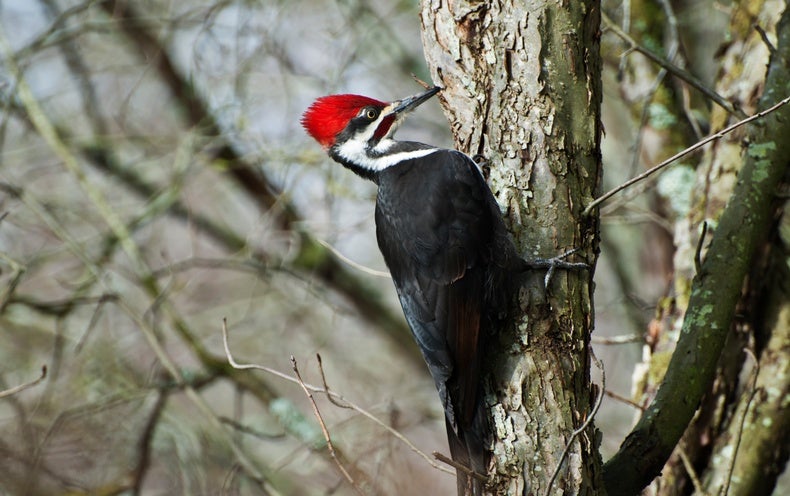
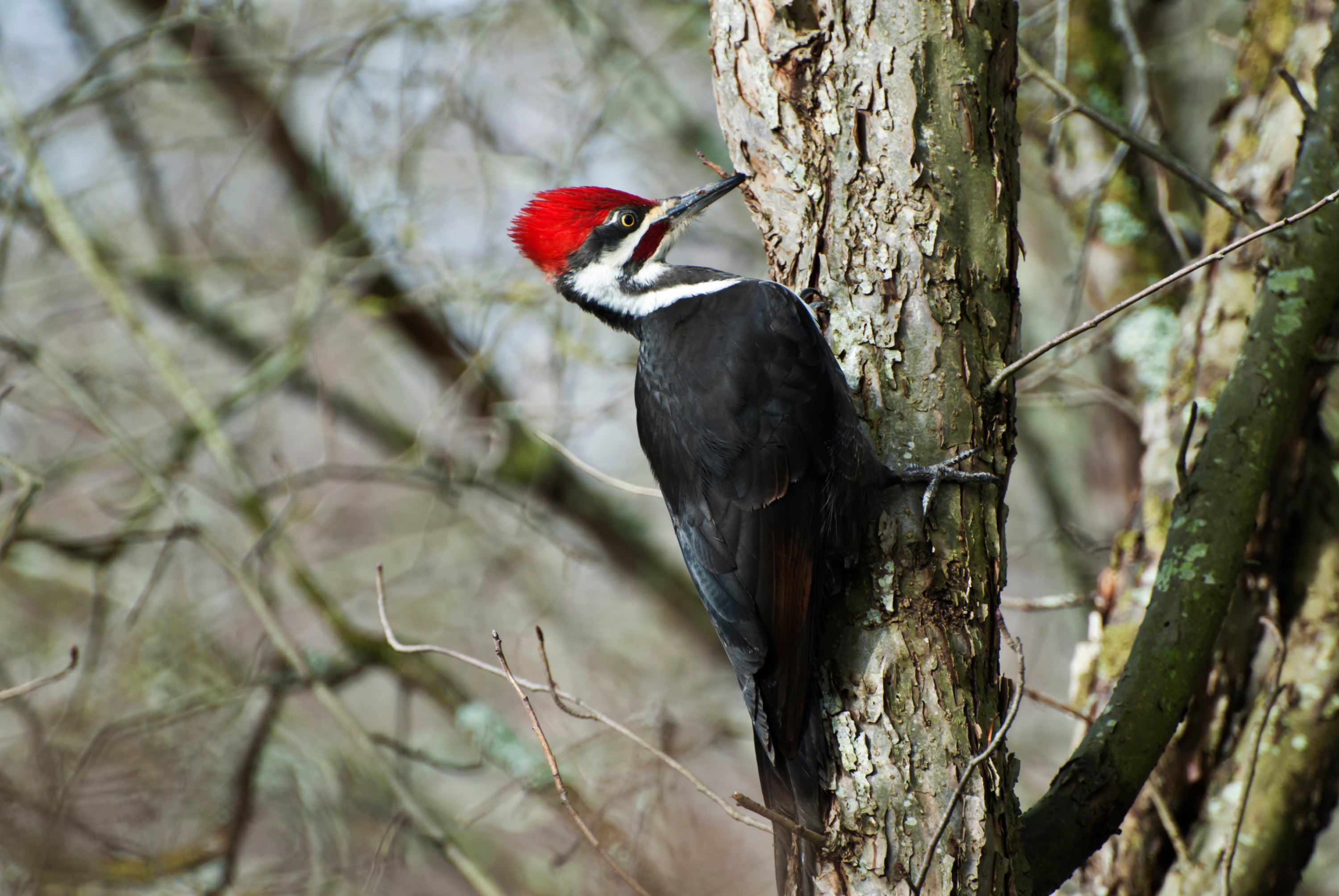
    Woodpeckers spend all day hammering their head on tree trunks, using their beak to make holes and digging insects out of those holes for a meal. The birds’ distinctive drumming and drilling had led researchers to hypothesize that the bone between woodpeckers’ beak and braincase must absorb shocks to protect their brain from concussions. But a new study suggests that their head and beak act like a stiff hammer for optimal pecking performance rather a shock-absorbing system to cushion the brain.

    “What this bird has to do during the entire day is dig holes into the wood. It’s very important that this business be very efficient,” explains Sam Van Wassenbergh, an evolutionary biomechanicist at the University of Antwerp in Belgium, who led the new study. If the woodpecker absorbs some of the energy it directs at the tree, then less energy is imparted to the tree trunk, and it has to peck even harder to make holes. “So the more you think about it, the less it made sense that there was any shock absorption going on,” Van Wassenbergh says. “But it had to be tested.”

    To investigate this question, European and Canadian researchers used high-speed video of three species of woodpeckers in action. They tracked the motion of different parts of the woodpeckers’ head as the birds hammered the trees and hypothesized that if there was any cushioning going on, it could be confirmed by detection of slower deceleration of the braincase in comparison with the beak upon impact with the wood. But that’s not what the team found. Instead the head functioned like a stiff hammer, with little to no dampening of vibrations. The results were reported on July 14 in Current Biology.

    Previous work in the 1970s had examined this question from a theoretical perspective, but this study is the first to capture high-speed video to determine how much force is being loaded onto the woodpeckers’ bill and separately onto their brain, says neurobiologist Dan Tobiansky, who studies woodpeckers at St. Mary’s College of Maryland and was not involved in the study.

    So how do woodpeckers avoid concussions? The researchers used simulations to calculate the impact on the brains of the birds and compared it with thresholds for concussion-causing forces in humans. For people, an impact of about 135 g’s produces a concussion. But woodpeckers are much smaller. The length of their brain is about one seventh that of a human, which means that they can withstand forces that are seven times higher, Van Wassenbergh explains. Based on the models, the forces woodpeckers’ brain sustains are below the danger threshold by a factor of two. So “they could hit the tree at higher speeds and still not suffer a concussion,” he says. “The key is that the head of the woodpecker is just much smaller than that of a human.”

    But Tobiansky notes that among football players, the brain injury chronic traumatic encephalopathy (CTE) is most commonly found in offensive linemen who receive repeated, subconcussive shocks. So even subconcussive events can have a detrimental effect on the brain, and woodpeckers may have some yet-to-be-determined physiological mechanisms that protect their brain from these repeated subconcussive insults. The work of Tobiansky and his colleagues suggests that steroid hormones such as androgens and estrogens may have protective effects on the birds’ brain.

    The physiology of brain protection is not yet well understood. It seems clear, however, that, given these unknowns, the woodpecker braincase is not a good model to inspire the design of helmets for humans. Surprisingly, perhaps, a crustacean, a member of a class of animal that specializes in a hardened exterior, might provide better insight on how to proceed.

    The most distinctive feature of the bigclaw snapping shrimp (Alpheus heterochaelis), a small coastal marine crustacean that lives in tropical and subtropical waters, is its snapping claw—a weapon the territorial animal frequently uses to battle invaders and defend its home. The claw, made of a plunger and a hole, operates with a latch mechanism that shoots the plunger through the hole at blistering speed. That causes a jet of water to shoot out, creating an area of low pressure where the jet is boiled into a bubble of air. That so-called cavitation bubble collapses, creating a snapping sound and a brief burst of light. But the primary product of the snapping claw is a high-amplitude pressure wave that can cause damage to soft tissues such as those of the brain.

    When two of the shrimp engage in combat, each snaps within a centimeter of its opponent, trying to intimidate it in a hydraulic game of chicken. The pressure waves from the snaps can inflict brain damage.

    A team of researchers at the University of South Carolina and the University of Tulsa have now revealed these snapping shrimps’ secret to coping with the constant onslaught. They are equipped with a transparent, gogglelike structure, known as an “orbital hood,” which covers their eyes and protects their brain from the pressure waves. The researchers reported their findings on July 5 in Current Biology.

    “There’s been tons of work on the evolution of weapons and relatively little work on ‘How do you defend against them?’” says Melissa Hughes, who studies snapping shrimp at the College of Charleston in South Carolina and was not involved in the study. In this case, the question is particularly interesting because the weapon makes a snap, which can be harmful to the shrimp itself, as well as to its opponent. “And so you need double protection—protection from others coming at you but also from your own use of the weapon,” she explains.

    To understand how the snapping shrimp cope with frequent exposures to shock waves generated by rivals (and their own claws), researchers surgically removed the orbital hoods from some of the animals. The team exposed the hoodless shrimp to shock waves from other shrimp and found that they became disoriented and lost motor control of their limbs, sometimes permanently, an indicator of brain damage. In contrast, intact animals exposed to shock waves did not have these problems and showed normal behaviors.

    Next, the researchers used tiny sensors to measure the pressure inside and out of the orbital hoods as the shrimp were exposed to a snap. They found that, on average, the orbital hoods cut the magnitude of the shock waves in half. “When we have an animal that has their helmet on, it’s pretty effective at dampening those shock waves, so we get less energy reaching the brain underneath the hood,” explains Alexandra Kingston, a biologist at the University of Tulsa and the study’s lead author. But when the hood is removed, the shock waves reach the brain at full strength, which translates into “no hood means no protection.”

    How, exactly, are the goggles so effective at protecting the animals’ brain? Kingston and her colleagues hypothesized that a shock wave forces water out of the orbital hood, thus transferring its energy to water expelled down and away from the animal instead of traveling through its tissues.

    To test this idea, they glued the goggles shut on some snapping shrimp, preventing water from exiting the orbital hood. The team found that when these shrimp were exposed to a shock wave, it propagated through the sealed goggles and hit the brain as if the orbital hood wasn’t really there. This showed that the ability to expel water out of the bottom of the orbital hood is critical to protecting the brain.

    Understanding how these tiny helmets work could inspire the design of equipment that will protect humans from traumatic brain injuries, the researchers say. Shock waves from an explosion can cause devastating brain damage to a bystander. Mild traumatic brain injuries are some of the most common types to occur in military personnel. Even armored vehicles do not protect against shock waves. “They go right through them,” explains Dan Speiser, a visual ecologist at the University of South Carolina and senior author of the study.

    Woodpeckers and snapping shrimp are “the two animals that seem to risk brain damage all day, every day,” Speiser says. But luckily, their physiological and biomechanical tricks to protect their brains may inspire new medical or engineering solutions to prevent brain injuries in soldiers and athletes, too.


    Original Source Link

    Share. Facebook Twitter Pinterest LinkedIn WhatsApp Email Reddit Telegram
    Previous ArticleAll Versions Of Doctor Strange In Multiverse Of Madness Explained
    Next Article Motorola RAZR 2022 Folding Smartphone Teased in New Trailer, Dual Cameras Included

    RELATED POSTS

    OpenAI unleashes hundreds more math results upon a field already in shock

    October 7, 2026

    A New Neurotech Startup Launches to Rival Sam Altman’s Merge Labs

    October 6, 2026

    United Arab Emirates to launch spacecraft to probe seven asteroids in 2028

    October 6, 2026

    Elusive ‘Geoneutrinos’ Are Building a New Map of Earth’s Volatile Interior

    October 5, 2026

    How attachment theory can help us understand AI relationships

    October 5, 2026

    Rural Data Centers Are in for a Big Federal Tax Break

    October 4, 2026
    latest posts

    OpenAI unleashes hundreds more math results upon a field already in shock

    The floodgates are open. Right on the heels of OpenAI’s new large language model producing…

    Tenzing review – a familiar story reaches new…

    October 7, 2026

    Slugging Skincare – Better Your Living Standards

    October 7, 2026

    Fans Shocked By ‘DWTS’ Elimination On Mariah Carey Night

    October 7, 2026

    New Mystery and Thriller Books to Read | October 6

    October 7, 2026

    Josh Homme Announces Benefit Concert in LA with Weird Al, Jack Black

    October 6, 2026

    Taiwan opens Phoenix office as $265 billion chip investment in AZ grows, over China’s objections

    October 6, 2026
    Categories
    • Books (1,532)
    • Business (6,435)
    • Cover Story (14)
    • Film (6,373)
    • Lifestyle (4,421)
    • Music (6,445)
    • Politics (6,422)
    • Science (5,786)
    • Technology (6,371)
    • Television (6,072)
    • Uncategorized (3)
    • US News (6,420)
    popular posts

    California Parole Board Denies Parole for Erik Menendez

    This article was originally published  by The Epoch Times: California Parole Board Denies Parole for…

    Magoo, Early Timbaland Collaborator, Dies at 50

    August 14, 2023

    Novitec Ferrari SF90 Stradale with 1109HP Revealed, Has Lots of Carbon Fiber Parts

    July 4, 2022

    Olivia Rodrigo, Sampha, Tainy, and More: This Week’s Pitchfork Selects Playlist

    July 5, 2023
    Archives
    Browse By Category
    • Books (1,532)
    • Business (6,435)
    • Cover Story (14)
    • Film (6,373)
    • Lifestyle (4,421)
    • Music (6,445)
    • Politics (6,422)
    • Science (5,786)
    • Technology (6,371)
    • Television (6,072)
    • Uncategorized (3)
    • US News (6,420)
    About Us

    We are a creativity led international team with a digital soul. Our work is a custom built by the storytellers and strategists with a flair for exploiting the latest advancements in media and technology.

    Most of all, we stand behind our ideas and believe in creativity as the most powerful force in business.

    What makes us Different

    We care. We collaborate. We do great work. And we do it with a smile, because we’re pretty damn excited to do what we do. If you would like details on what else we can do visit out Contact page.

    Our Picks

    Josh Homme Announces Benefit Concert in LA with Weird Al, Jack Black

    October 6, 2026

    Taiwan opens Phoenix office as $265 billion chip investment in AZ grows, over China’s objections

    October 6, 2026

    Trump Ordered The FBI To Investigate Peaceful Protesters

    October 6, 2026
    © 2026 Beverly Hills Examiner. All rights reserved. All articles, images, product names, logos, and brands are property of their respective owners. All company, product and service names used in this website are for identification purposes only. Use of these names, logos, and brands does not imply endorsement unless specified. By using this site, you agree to the Terms & Conditions and Privacy Policy.

    Type above and press Enter to search. Press Esc to cancel.

    We use cookies on our website to give you the most relevant experience by remembering your preferences and repeat visits. By clicking “Accept All”, you consent to the use of ALL the cookies. However, you may visit "Cookie Settings" to provide a controlled consent.
    Cookie SettingsAccept All
    Manage consent

    Privacy Overview

    This website uses cookies to improve your experience while you navigate through the website. Out of these, the cookies that are categorized as necessary are stored on your browser as they are essential for the working of basic functionalities of the website. We also use third-party cookies that help us analyze and understand how you use this website. These cookies will be stored in your browser only with your consent. You also have the option to opt-out of these cookies. But opting out of some of these cookies may affect your browsing experience.
    Necessary
    Always Enabled
    Necessary cookies are absolutely essential for the website to function properly. These cookies ensure basic functionalities and security features of the website, anonymously.
    CookieDurationDescription
    cookielawinfo-checkbox-analytics11 monthsThis cookie is set by GDPR Cookie Consent plugin. The cookie is used to store the user consent for the cookies in the category "Analytics".
    cookielawinfo-checkbox-functional11 monthsThe cookie is set by GDPR cookie consent to record the user consent for the cookies in the category "Functional".
    cookielawinfo-checkbox-necessary11 monthsThis cookie is set by GDPR Cookie Consent plugin. The cookies is used to store the user consent for the cookies in the category "Necessary".
    cookielawinfo-checkbox-others11 monthsThis cookie is set by GDPR Cookie Consent plugin. The cookie is used to store the user consent for the cookies in the category "Other.
    cookielawinfo-checkbox-performance11 monthsThis cookie is set by GDPR Cookie Consent plugin. The cookie is used to store the user consent for the cookies in the category "Performance".
    viewed_cookie_policy11 monthsThe cookie is set by the GDPR Cookie Consent plugin and is used to store whether or not user has consented to the use of cookies. It does not store any personal data.
    Functional
    Functional cookies help to perform certain functionalities like sharing the content of the website on social media platforms, collect feedbacks, and other third-party features.
    Performance
    Performance cookies are used to understand and analyze the key performance indexes of the website which helps in delivering a better user experience for the visitors.
    Analytics
    Analytical cookies are used to understand how visitors interact with the website. These cookies help provide information on metrics the number of visitors, bounce rate, traffic source, etc.
    Advertisement
    Advertisement cookies are used to provide visitors with relevant ads and marketing campaigns. These cookies track visitors across websites and collect information to provide customized ads.
    Others
    Other uncategorized cookies are those that are being analyzed and have not been classified into a category as yet.
    SAVE & ACCEPT