Close Menu
Beverly Hills Examiner

    Subscribe to Updates

    Get the latest creative news from FooBar about art, design and business.

    What's Hot

    La Paciencia, No. 1 Latin Producer, on Bad Bunny & What’s Next

    December 31, 2025

    ‘Quiet luxury’ is coming for the housing market, The Corcoran Group CEO says

    December 31, 2025

    Trump Issues First Vetoes of Second Presidential Term

    December 31, 2025
    Facebook X (Twitter) Instagram
    Beverly Hills Examiner
    • Home
    • US News
    • Politics
    • Business
    • Science
    • Technology
    • Lifestyle
    • Music
    • Television
    • Film
    • Books
    • Contact
      • About
      • Amazon Disclaimer
      • DMCA / Copyrights Disclaimer
      • Terms and Conditions
      • Privacy Policy
    Beverly Hills Examiner
    Home»Science»Here’s What the Supreme Court’s Clean Water Act Ruling Means to You
    Science

    Here’s What the Supreme Court’s Clean Water Act Ruling Means to You

    By AdminJune 15, 2023
    Facebook Twitter Pinterest LinkedIn WhatsApp Email Reddit Telegram
    Here’s What the Supreme Court’s Clean Water Act Ruling Means to You


    Here’s What the Supreme Court’s Clean Water Act Ruling Means to You

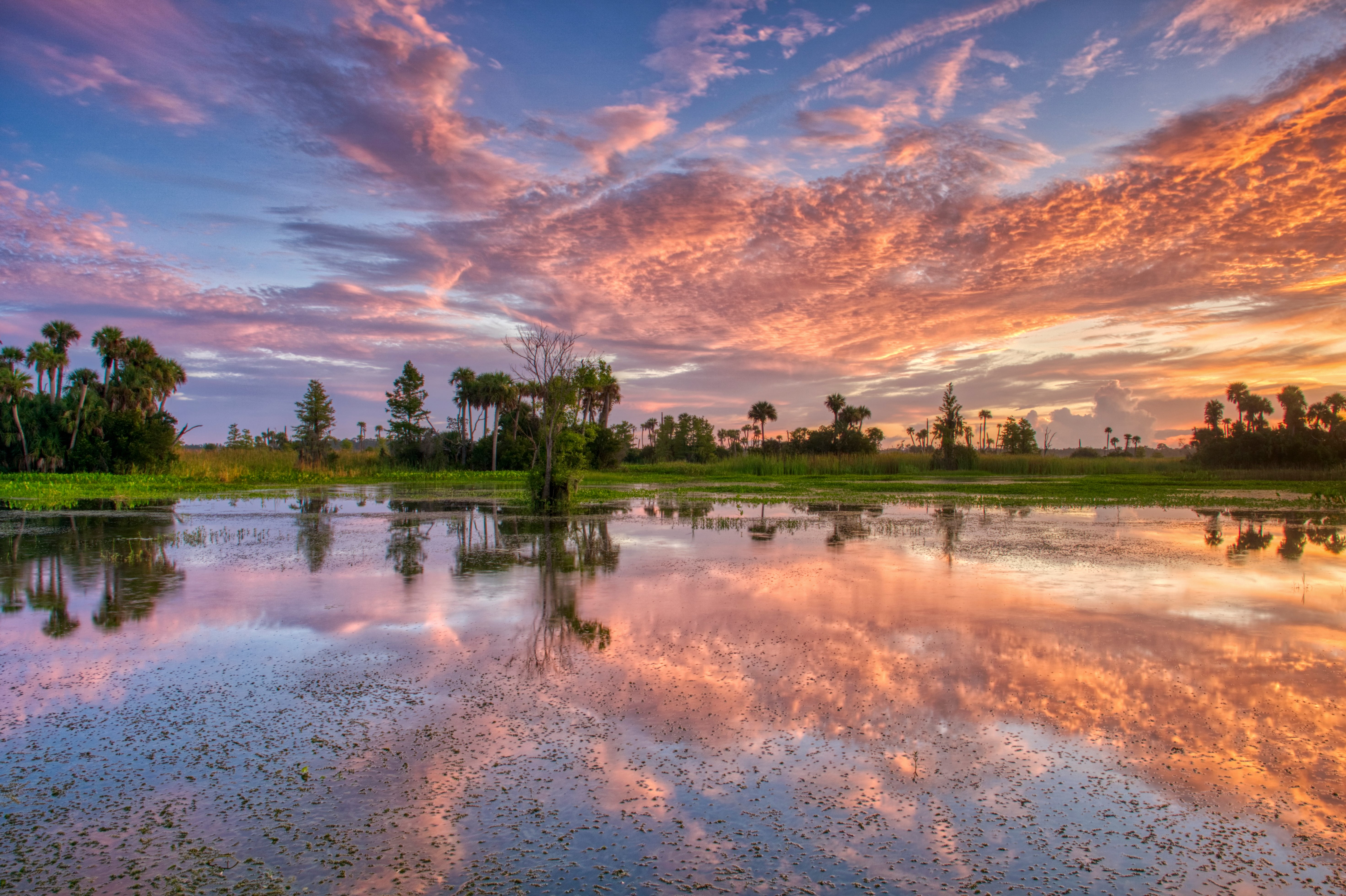
    If you ever drank a glass of clean water, caught a freshwater fish, swam in a lake or even maybe avoided a flood, you have directly benefited from wetlands. But those benefits are drying up, thanks to a Supreme Court decision that has overturned five decades of wetland protections.

    The 1972 federal Clean Water Act (CWA) protects the physical, chemical and biological health of the nation’s surface waters. That includes wetlands, swamps, prairie potholes and other saturated places at the transition from dry land to surface waters. Wetlands serve as buffers against pollution, especially by storing and treating contaminated runoff. They contain floodwaters, dissipate coastal surges, recharge aquifers and help keep nature healthy, supporting biodiversity and the life cycles of many recreational fish species.

    It may seem straightforward, then, that our nation’s wetlands deserve federal protection. While that has been uncontroversial for decades among scientists and regulators, the courts haven’t been so sure. While the CWA limits dredging and filling of wetlands and pollutant discharges, this does not apply to every wet patch in your backyard or divot in the forests. Instead, the act’s jurisdiction—the legal extent of its regulation of wetlands—is limited to locations where these places are essential to the health and integrity of the nation’s surface waters. For more than 50 years, federal agencies, courts and landowners have debated exactly where this jurisdiction ends.

    In May, the Supreme Court issued a remarkably bad decision in Sackett v. EPA, which eschewed the best available science, ignored both court precedent and judicial restraint, and discounted the very scientists that federal agencies have entrusted to implement the CWA. The Court slashed federal wetlands protections, leaving them at their weakest in the act’s history. In the aftermath, Americans should expect more floods and droughts, worse drinking-water quality and degraded ecosystems, all springing from the inevitable loss of the now-unprotected wetlands adjacent to our bays, lakes and rivers.

    In 1977, when Congress last weighed in on the intended scope of the CWA, lawmakers adopted the definition developed by federal agencies, explicitly using the term “adjacent” (meaning those neighboring streams, ponds, rivers, lakes, bays and the like) to describe the wetlands that deserved protection. Hydrologically speaking, “adjacent” acknowledges that there can be some distance between a wetland and lake where water connects the two by flowing underground, below a dike, levee, berm or some other short distance of otherwise dry land. The idea that connectivity through the subsurface matters was most recently reaffirmed by the Supreme Court in their Maui decision, in 2020, which readily acknowledged that we must allow the CWA to include some amount of nearby groundwater. If not, any pollutant could be discharged into a small pile of gravel, making it a subsurface release exempt it from regulation. Clearly, that would be a step backwards.

    Today, guidance drafted in 1986 is enforced after a series of repealed (Obama-era), vacated (Trump-era) and suddenly out-of-step-with the courts (Biden-era) rules have been mired in legal cases. Still, through eight consecutive administrations and all of these rules, one point has remained clear: adjacent wetlands were jurisdictional. That is, until the Sackett v. EPA decision.

    The Sackett decision was unanimous. All nine justices agreed that the agency’s most recent efforts were too expansive and some limitations must exist. At stake, then, is just how far “adjacent” should mean in protecting wetlands through the CWA. Writing for the majority, Justice Alito adopted the most stringent definition in the history of the CWA and associated rules, which would require wetlands to have a “continuous surface connection” to streams, ponds and waters with similarly agreed-upon protections. This requirement of a wetland being visually indistinguishable from surface water is best described as “adjoining,” a much more stringent requirement that has ever been used by Congress, the courts or the agencies in any of their rulemaking efforts. Thus, the Court has failed to exercise judicial restraint, instead inventing a criterion of “adjoining” that was never specified by lawmakers and is more narrow than any prior definition from Congress, the agencies or the Court itself. 

    You might think of “adjacent” and “adjoined” as synonyms, but they manifest quite differently on the landscape. In an example used by the Court, two homes are adjacent (or neighboring) even when separated by a strip of grass or a sidewalk. In contrast, the brick facade shared by two townhomes might be described as “adjoining,” a more rigorous requirement of sharing a border with no clear discontinuity between them. While over 50 years of enforcement have protected adjacent wetlands, the requirement of an adjoining, continuous surface connection is new, and narrower than we’ve ever seen.

    Just how many wetlands are we talking about? The courts and agencies don’t actually know, but you might be surprised to see my and colleagues’ estimates. The agencies have declined to quantify or map implications of their rulemaking, but we do have a few data points. For example, our recent study of New York state estimates that only 49.4 percent of wetlands are within 100 feet of surface waters, meaning more than half are certain to be nonadjoining (i.e., not protected). I expect that only a fraction of wetlands within 100 feet of surface waters would actually pass the “continuous surface connection” test, functionally removing their federal protection.

    First and foremost, this decision leaves many of America’s remaining wetlands—what’s left after more than 50 percent were destroyed since European arrival— vulnerable. Formerly jurisdictional “adjacent” wetlands in more than half of the states may be dredged or filled if their federal protections are stripped. States and municipalities may step into the breach, but, when the Trump administration proposed a narrowing of CWA jurisdiction (notably still much more expansive than the Sackett decision), only 11 states or territories saw fit to improve state protections. (A timely reminder: this is an opportunity for you to engage in local governance, where your city, county and state can extend protections beyond federal ones.)

    Next, despite the agency rulemaking and court cases, the science on wetlands and surface waters is settled. Wetland connectivity to surface waters is meaningful, persistent and critical to the health of the nations’ waters. The science was clear when Congress drafted and amended the CWA. Indeed, nationwide assessments of wetland connectivity are available for the first time as of April 2023. These well-understood, consistent and fact-based definitions should be the basis for implementing the intent of Congress, not a supplantation of science from an activist Court.

    Finally, consistency and clarity are needed for robust protection of waters in the future. The CWA has been among the Supreme Court’s most-heard environmental regulations because of vague language. In the face of silence from Congress, the last three administrations have revised its jurisdiction, leading to legal cases. The lack of consistency is incredibly difficult for landowners, with some wetlands oscillating between protected and unprotected multiple times during the duration of a typical home mortgage.

    More than 50 years ago, a bipartisan Congress overrode President Richard Nixon’s veto to pass the CWA, putting the health of the nation’s water above partisan differences. The agencies have since applied the best available science and iterated their definitions through the courts. The extreme change made in the Sackett decision should prompt lawmakers to act. A silent Congress is complicit in stripping wetland protections, and lawmakers should clarify their intent. Even if this were to affirm Alito’s interpretation, that would send a clear signal of their priorities and demand states step up to protect clean water.   

    This is an opinion and analysis article, and the views expressed by the author or authors are not necessarily those of Scientific American.


    Original Source Link

    Share. Facebook Twitter Pinterest LinkedIn WhatsApp Email Reddit Telegram
    Previous ArticleRick & Morty Season 7’s Justin Roiland Recast Will Be So Good Audiences Won’t Even Notice
    Next Article Glystn enables creators to mass reply to multiple followers across social media platforms

    RELATED POSTS

    NASA Telescopes Capture Colliding Spiral Galaxies in Sparkling Detail

    December 31, 2025

    Star that seemed to vanish more than 130 years ago is found again

    December 31, 2025

    The Great Big Power Play

    December 30, 2025

    15 Million Years before the Megalodon, This Giant Ancient Shark Prowled the Oceans

    December 30, 2025

    Mathematicians unified key laws of physics in 2025

    December 29, 2025

    People Who Drink Bottled Water on a Daily Basis Ingest 90,000 More Microplastic Particles Each Year

    December 29, 2025
    latest posts

    La Paciencia, No. 1 Latin Producer, on Bad Bunny & What’s Next

    For Roberto Rosado, better known as La Paciencia, the key to his craft has always…

    ‘Quiet luxury’ is coming for the housing market, The Corcoran Group CEO says

    December 31, 2025

    Trump Issues First Vetoes of Second Presidential Term

    December 31, 2025

    Putin accuses Ukraine of drone attack on residence as peace talks falter

    December 31, 2025

    Factor Meal Delivery Promo: Free $200 Withings Body-Scan Scale

    December 31, 2025

    NASA Telescopes Capture Colliding Spiral Galaxies in Sparkling Detail

    December 31, 2025

    ARC Raiders’ Latest Exploit Is Giving Players Instant Kills

    December 31, 2025
    Categories
    • Books (969)
    • Business (5,877)
    • Film (5,811)
    • Lifestyle (3,914)
    • Music (5,879)
    • Politics (5,881)
    • Science (5,223)
    • Technology (5,810)
    • Television (5,496)
    • Uncategorized (2)
    • US News (5,862)
    popular posts

    JUST IN: Suspect in Deadly Vancouver Lapu Lapu Festival Attack Identified | The Gateway Pundit

    Deadly attack on Vancouver’s Lapu Lapu festival / screen image 30-year-old Kai-ji Adam Lo was…

    Tool Fan Gets Job After Wearing Band’s Shirt During Interview

    July 8, 2022

    Godland review – There Will Be Mud

    April 5, 2023

    Watch Olly Alexander join Pet Shop Boys at Glastonbury 2022

    June 26, 2022
    Archives
    Browse By Category
    • Books (969)
    • Business (5,877)
    • Film (5,811)
    • Lifestyle (3,914)
    • Music (5,879)
    • Politics (5,881)
    • Science (5,223)
    • Technology (5,810)
    • Television (5,496)
    • Uncategorized (2)
    • US News (5,862)
    About Us

    We are a creativity led international team with a digital soul. Our work is a custom built by the storytellers and strategists with a flair for exploiting the latest advancements in media and technology.

    Most of all, we stand behind our ideas and believe in creativity as the most powerful force in business.

    What makes us Different

    We care. We collaborate. We do great work. And we do it with a smile, because we’re pretty damn excited to do what we do. If you would like details on what else we can do visit out Contact page.

    Our Picks

    NASA Telescopes Capture Colliding Spiral Galaxies in Sparkling Detail

    December 31, 2025

    ARC Raiders’ Latest Exploit Is Giving Players Instant Kills

    December 31, 2025

    Disorders From TLC Show Explained

    December 31, 2025
    © 2025 Beverly Hills Examiner. All rights reserved. All articles, images, product names, logos, and brands are property of their respective owners. All company, product and service names used in this website are for identification purposes only. Use of these names, logos, and brands does not imply endorsement unless specified. By using this site, you agree to the Terms & Conditions and Privacy Policy.

    Type above and press Enter to search. Press Esc to cancel.

    We use cookies on our website to give you the most relevant experience by remembering your preferences and repeat visits. By clicking “Accept All”, you consent to the use of ALL the cookies. However, you may visit "Cookie Settings" to provide a controlled consent.
    Cookie SettingsAccept All
    Manage consent

    Privacy Overview

    This website uses cookies to improve your experience while you navigate through the website. Out of these, the cookies that are categorized as necessary are stored on your browser as they are essential for the working of basic functionalities of the website. We also use third-party cookies that help us analyze and understand how you use this website. These cookies will be stored in your browser only with your consent. You also have the option to opt-out of these cookies. But opting out of some of these cookies may affect your browsing experience.
    Necessary
    Always Enabled
    Necessary cookies are absolutely essential for the website to function properly. These cookies ensure basic functionalities and security features of the website, anonymously.
    CookieDurationDescription
    cookielawinfo-checkbox-analytics11 monthsThis cookie is set by GDPR Cookie Consent plugin. The cookie is used to store the user consent for the cookies in the category "Analytics".
    cookielawinfo-checkbox-functional11 monthsThe cookie is set by GDPR cookie consent to record the user consent for the cookies in the category "Functional".
    cookielawinfo-checkbox-necessary11 monthsThis cookie is set by GDPR Cookie Consent plugin. The cookies is used to store the user consent for the cookies in the category "Necessary".
    cookielawinfo-checkbox-others11 monthsThis cookie is set by GDPR Cookie Consent plugin. The cookie is used to store the user consent for the cookies in the category "Other.
    cookielawinfo-checkbox-performance11 monthsThis cookie is set by GDPR Cookie Consent plugin. The cookie is used to store the user consent for the cookies in the category "Performance".
    viewed_cookie_policy11 monthsThe cookie is set by the GDPR Cookie Consent plugin and is used to store whether or not user has consented to the use of cookies. It does not store any personal data.
    Functional
    Functional cookies help to perform certain functionalities like sharing the content of the website on social media platforms, collect feedbacks, and other third-party features.
    Performance
    Performance cookies are used to understand and analyze the key performance indexes of the website which helps in delivering a better user experience for the visitors.
    Analytics
    Analytical cookies are used to understand how visitors interact with the website. These cookies help provide information on metrics the number of visitors, bounce rate, traffic source, etc.
    Advertisement
    Advertisement cookies are used to provide visitors with relevant ads and marketing campaigns. These cookies track visitors across websites and collect information to provide customized ads.
    Others
    Other uncategorized cookies are those that are being analyzed and have not been classified into a category as yet.
    SAVE & ACCEPT