
Close Menu
Beverly Hills Examiner

    Subscribe to Updates

    Get the latest creative news from FooBar about art, design and business.

    What's Hot

    Actor Robert Carradine’s Family Sues UCLA Hospital Leaders After Death: Reports

    August 10, 2026

    An airline canceled a flight and rebooked passengers because a child wouldn’t sit down and buckle up

    August 10, 2026

    Boat Carrying 14 Overturns Near Statue of Liberty Killing Mother and 5-Month-Old Baby – Captain Arrested as Authorities Investigate Possible Illegal Charter

    August 10, 2026
    Facebook X (Twitter) Instagram
    Beverly Hills Examiner
    • Home
    • US News
    • Politics
    • Business
    • Science
    • Technology
    • Lifestyle
    • Music
    • Television
    • Film
    • Books
    • Contact
      • About
      • Amazon Disclaimer
      • DMCA / Copyrights Disclaimer
      • Terms and Conditions
      • Privacy Policy
    Beverly Hills Examiner
    Home»Science»How Climate Change Is Leaving Some Species with ‘Nowhere Left to Go’
    Science

    How Climate Change Is Leaving Some Species with ‘Nowhere Left to Go’

    By AdminJuly 5, 2022
    Facebook Twitter Pinterest LinkedIn WhatsApp Email Reddit Telegram
    How Climate Change Is Leaving Some Species with ‘Nowhere Left to Go’


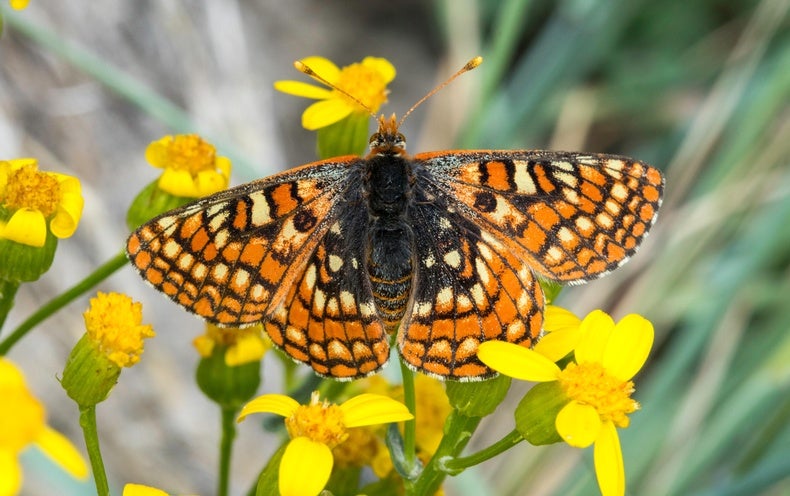
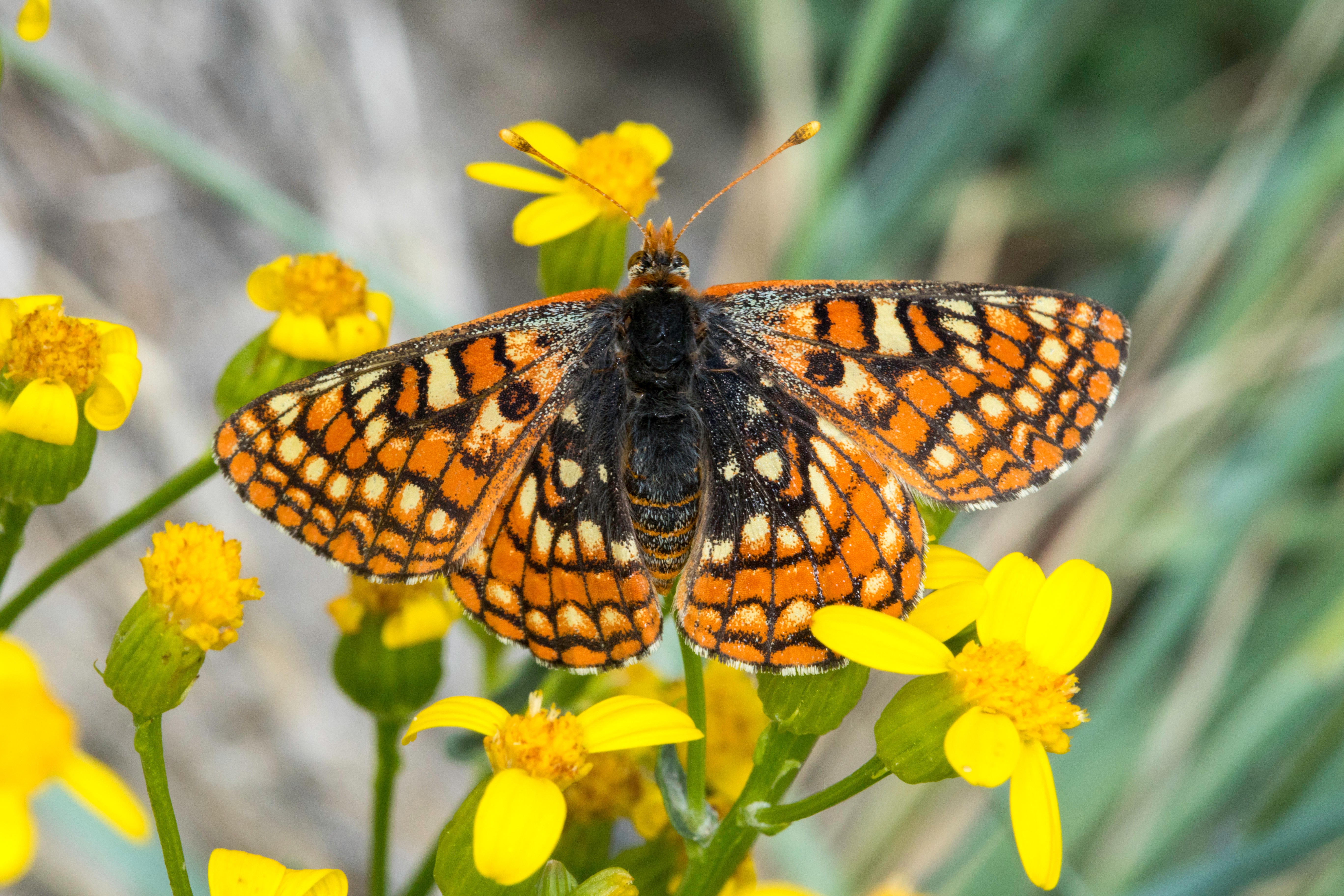
    For millennia, many animals and plants have coped with occasional climate changes by moving into new areas. But humans’ relatively recent burning of fossil fuels is pushing global temperatures upward at an exceptionally rapid rate, placing many species on what a new book by science journalist Benjamin von Brackel notes has been called an “escalator to extinction”—and raising the question of whether migration can save them this time. It is estimated that land-dwelling animals are now moving toward the poles at a rate of an average of about 17 kilometers (more than 10 miles) per decade and that the front line of ocean dwellers is now doing so at a rate of 72 kilometers (45 miles) per decade. Some plant and animal species—such as the Edith’s checkerspot butterfly and the Scots pine—are shifting to higher, cooler elevations in the mountains as well. What happens when they all run out of places to flee the heat?

    His book Nowhere Left to Go: How Climate Change Is Driving Species to the Ends of the Earth (The Experiment Publishing) came out on July 5. In it, von Brackel examines this question and others that have arisen from the massive migrations spurred by global warming. The book discusses the research into how ecosystems might change as old species leave and new ones arrive, as well as the substantial implications for human societies.

    Scientific American spoke with von Brackel about what science is telling us we can expect from having so many species on the move and how we might help some persist in the face of climate change.

    [An edited transcript of the interview follows.]

    Where did the idea for this book come from?

    It was a couple of years ago, when I had been reading a study on ocean acidification, and there was this passing mention that cod are moving hundreds of kilometers north in the North Sea. I had to read the sentence twice. I thought, “Okay, wow, if the cod is doing this, maybe other fish species are doing this, too, and maybe other land-dwelling creatures also—and maybe all species on Earth.” In my mind’s eye I saw some kind of living tsunami rolling over the planet and confronting human societies. I thought, “Okay, wow, this could be huge.” When I found out that this is actually happening—and except for the scientists dealing with this, nobody knows about the extent of this phenomenon—I thought, “Okay, well, I have to immerse myself in it.”

    What happens to species that can’t move anymore?

    The species that are not able to move and to conquer new places, they have a high risk of becoming extinct—that’s it. Right now many species can move poleward. In latitudes like Europe or North America, species are expanding, so they can have new ranges. But the problem is in the tropics. There you have tropical mountains, where we now see the first species becoming extinct because they are at some point at the summit, so they can’t move anywhere. It’s a dead end.

    The book talks about how insects and animals moving into new areas can bring health threats to humans. What are some of those potential threats?

    I think it’s one of the issues we should be most concerned about in terms of species range shifts. Let’s take the Asian tiger mosquito [which can spread pathogens, including the dengue viruses and West Nile virus]. This insect is already conquering much of the U.S. and Europe. They initially came from Asia via international shipping to the U.S. in, I think, the 1980s—and then, afterward, to Italy in the 1990s. It was funny, because, two weeks ago, I was in Italy, and I wondered, “What are all these little mosquitoes biting me all the time?” Then I took a close look and I saw the zebralike white stripes on it. They actually were Asian tiger mosquitoes and, oh my God, I clobbered so many of them.

    What are the possible economic impacts of these mass migrations?

    There are already a lot. For example, in Germany, the two most important tree species for timber production are the Scots pine and European spruce, and their ranges are both retracting because of climate change. So they retract up the mountains, and they retract to Scandinavia. This has huge impacts, because models say that by the year 2100, 20 to 60 percent of the forest land will only be suitable for Mediterranean oak forest types—and they have much lower economic output.

    Are there species that might leave a cultural loss as they move away?

    Probably the people most affected by species shifts are Indigenous people, and that’s because they live close to nature, and many of them depend on specific animals or plants. Many of them have circled their whole culture around just one species—like the Inupiat in Alaska, who hunt bowhead whales. Bowhead whales now migrate much farther north. That’s a big problem for the Inupiat. Everything is changing, and they can’t easily adapt by choosing another species as their main species.

    Is there a similar situation with the disappearing kelp forests in Japan? That was another example you mention in the book that seems like a big shift, considering how central kelp and the fish species found in kelp forests are to Japanese culture and cuisine.

    The kelp forests, on one hand, are so important for the Japanese as a food resource but also culturally. They do everything to protect them, but in the end, they can’t stop this process. Maybe one good thing is that the species that follow the kelp forests are corals, so they have new coral reefs emerge. I find that kind of magical.

    That was actually something that I took away as a glimmer of hope: some of the most at-risk species are moving, so maybe they won’t go extinct.

    I think this is the main message in the book: that species are able to respond to climate change. So this is a positive thing. In the last 2.6 million years of the ice age, there were many times that species had to respond to climate warming and climate cooling. And the interesting thing is that every time there were not many species that did go extinct. So they managed to do this. And this is a very hopeful thing.

    What is different about today?

    The thing that’s different today is us. First of all, we have occupied so many places on Earth—about half the surface of Earth—with agricultural land and cities. And we also crisscrossed the land with streets and canals. That makes it very hard for many species to move to respond to climate change.

    How can we help species adapt to this very drastic change in climate?

    So the most important and most obvious thing is to curb emissions. Without stopping climate change and curbing emissions fast enough, species don’t have a chance. But on the way to do this, we can do a lot of other things. In general, we have to give species the room to respond to climate change and to create enough conservation areas where they can thrive and to connect them with enough wildlife corridors—and that’s starting to happen already. Some scientists recommend protecting about 30 percent of Earth’s surface and some even more—around 50 percent. In fact, at the United Nations Biodiversity Conference, coming up in autumn, nations are about to decide on [how much land to protect]. So this is a real possibility, and I think this will be an important first step. But afterward, one has to see, “Okay, where are the conservation areas built?” and “Will this be implemented?”

    Can individual people help by, for example, not growing lawns?

    I think everybody who has a garden can help species to create a stepping-stone so that they can move to higher latitudes. And yeah, as you said, a lawn isn’t very helpful. Here in Berlin, I see many gardens that are even paved or full of gravel—and that’s also not very helpful. What you can do is to have a hedge instead of a fence, to have fruit trees and berry bushes where bumblebees or honeybees can thrive or have little branch piles so birds and rodents can hide. You can do a lot with the garden.


    Original Source Link

    Share. Facebook Twitter Pinterest LinkedIn WhatsApp Email Reddit Telegram
    Previous ArticleHenry Cavill As Wolverine Looks Like A Horror Movie Villain
    Next Article Twitter sues India’s government over content takedown orders – TechCrunch

    RELATED POSTS

    Spokane Shows What the New Era of Wildfires Looks Like

    August 10, 2026

    Europe’s wildfires are igniting forgotten WWII and Cold War bombs

    August 9, 2026

    Here Are the First Images of the Crater Left on the Moon by SpaceX’s Rocket

    August 9, 2026

    Hank Green AI controversy raises questions for science communicators

    August 8, 2026

    Latest Pentagon UFO files release includes video of mysterious ‘cold orbs’

    August 8, 2026

    Scientists Used AI to Create 16 New Viruses

    August 7, 2026
    latest posts

    Actor Robert Carradine’s Family Sues UCLA Hospital Leaders After Death: Reports

    The family of actor Robert Carradine has sued the regents of the University of California…

    An airline canceled a flight and rebooked passengers because a child wouldn’t sit down and buckle up

    August 10, 2026

    Boat Carrying 14 Overturns Near Statue of Liberty Killing Mother and 5-Month-Old Baby – Captain Arrested as Authorities Investigate Possible Illegal Charter

    August 10, 2026

    Brooks Koepka calls his season pathetic after missing FedExCup Playoffs

    August 10, 2026

    The Complicated Case of Passing On Your Digital Estate

    August 10, 2026

    Spokane Shows What the New Era of Wildfires Looks Like

    August 10, 2026

    Major House Of The Dragon Death Seals Rhaenyra’s Fate, Star Explains

    August 10, 2026
    Categories
    • Books (1,416)
    • Business (6,320)
    • Cover Story (9)
    • Film (6,259)
    • Lifestyle (4,318)
    • Music (6,330)
    • Politics (6,303)
    • Science (5,669)
    • Technology (6,254)
    • Television (5,950)
    • Uncategorized (3)
    • US News (6,305)
    popular posts

    Guardians of the Galaxy 3’s Cosmo the Spacedog Actor Revealed

    Cosmo the Spacedog is getting an expanded role in the upcoming Guardians of the Galaxy…

    Trump Blasts Biden and Weak American Leadership as No U.S. Citizens Are Among Hostages Released by Hamas | The Gateway Pundit

    November 26, 2023

    Senators Introduce American Music Fairness Act Companion Bill – Billboard

    September 22, 2022

    The 1975’s Matty Healy talks past controversies at Finsbury Park gig

    July 3, 2023
    Archives
    Browse By Category
    • Books (1,416)
    • Business (6,320)
    • Cover Story (9)
    • Film (6,259)
    • Lifestyle (4,318)
    • Music (6,330)
    • Politics (6,303)
    • Science (5,669)
    • Technology (6,254)
    • Television (5,950)
    • Uncategorized (3)
    • US News (6,305)
    About Us

    We are a creativity led international team with a digital soul. Our work is a custom built by the storytellers and strategists with a flair for exploiting the latest advancements in media and technology.

    Most of all, we stand behind our ideas and believe in creativity as the most powerful force in business.

    What makes us Different

    We care. We collaborate. We do great work. And we do it with a smile, because we’re pretty damn excited to do what we do. If you would like details on what else we can do visit out Contact page.

    Our Picks

    Spokane Shows What the New Era of Wildfires Looks Like

    August 10, 2026

    Major House Of The Dragon Death Seals Rhaenyra’s Fate, Star Explains

    August 10, 2026

    ‘The Voice’ Celebrity Abruptly Drops Out Of Season

    August 10, 2026
    © 2026 Beverly Hills Examiner. All rights reserved. All articles, images, product names, logos, and brands are property of their respective owners. All company, product and service names used in this website are for identification purposes only. Use of these names, logos, and brands does not imply endorsement unless specified. By using this site, you agree to the Terms & Conditions and Privacy Policy.

    Type above and press Enter to search. Press Esc to cancel.

    We use cookies on our website to give you the most relevant experience by remembering your preferences and repeat visits. By clicking “Accept All”, you consent to the use of ALL the cookies. However, you may visit "Cookie Settings" to provide a controlled consent.
    Cookie SettingsAccept All
    Manage consent

    Privacy Overview

    This website uses cookies to improve your experience while you navigate through the website. Out of these, the cookies that are categorized as necessary are stored on your browser as they are essential for the working of basic functionalities of the website. We also use third-party cookies that help us analyze and understand how you use this website. These cookies will be stored in your browser only with your consent. You also have the option to opt-out of these cookies. But opting out of some of these cookies may affect your browsing experience.
    Necessary
    Always Enabled
    Necessary cookies are absolutely essential for the website to function properly. These cookies ensure basic functionalities and security features of the website, anonymously.
    CookieDurationDescription
    cookielawinfo-checkbox-analytics11 monthsThis cookie is set by GDPR Cookie Consent plugin. The cookie is used to store the user consent for the cookies in the category "Analytics".
    cookielawinfo-checkbox-functional11 monthsThe cookie is set by GDPR cookie consent to record the user consent for the cookies in the category "Functional".
    cookielawinfo-checkbox-necessary11 monthsThis cookie is set by GDPR Cookie Consent plugin. The cookies is used to store the user consent for the cookies in the category "Necessary".
    cookielawinfo-checkbox-others11 monthsThis cookie is set by GDPR Cookie Consent plugin. The cookie is used to store the user consent for the cookies in the category "Other.
    cookielawinfo-checkbox-performance11 monthsThis cookie is set by GDPR Cookie Consent plugin. The cookie is used to store the user consent for the cookies in the category "Performance".
    viewed_cookie_policy11 monthsThe cookie is set by the GDPR Cookie Consent plugin and is used to store whether or not user has consented to the use of cookies. It does not store any personal data.
    Functional
    Functional cookies help to perform certain functionalities like sharing the content of the website on social media platforms, collect feedbacks, and other third-party features.
    Performance
    Performance cookies are used to understand and analyze the key performance indexes of the website which helps in delivering a better user experience for the visitors.
    Analytics
    Analytical cookies are used to understand how visitors interact with the website. These cookies help provide information on metrics the number of visitors, bounce rate, traffic source, etc.
    Advertisement
    Advertisement cookies are used to provide visitors with relevant ads and marketing campaigns. These cookies track visitors across websites and collect information to provide customized ads.
    Others
    Other uncategorized cookies are those that are being analyzed and have not been classified into a category as yet.
    SAVE & ACCEPT