

[ad_1]
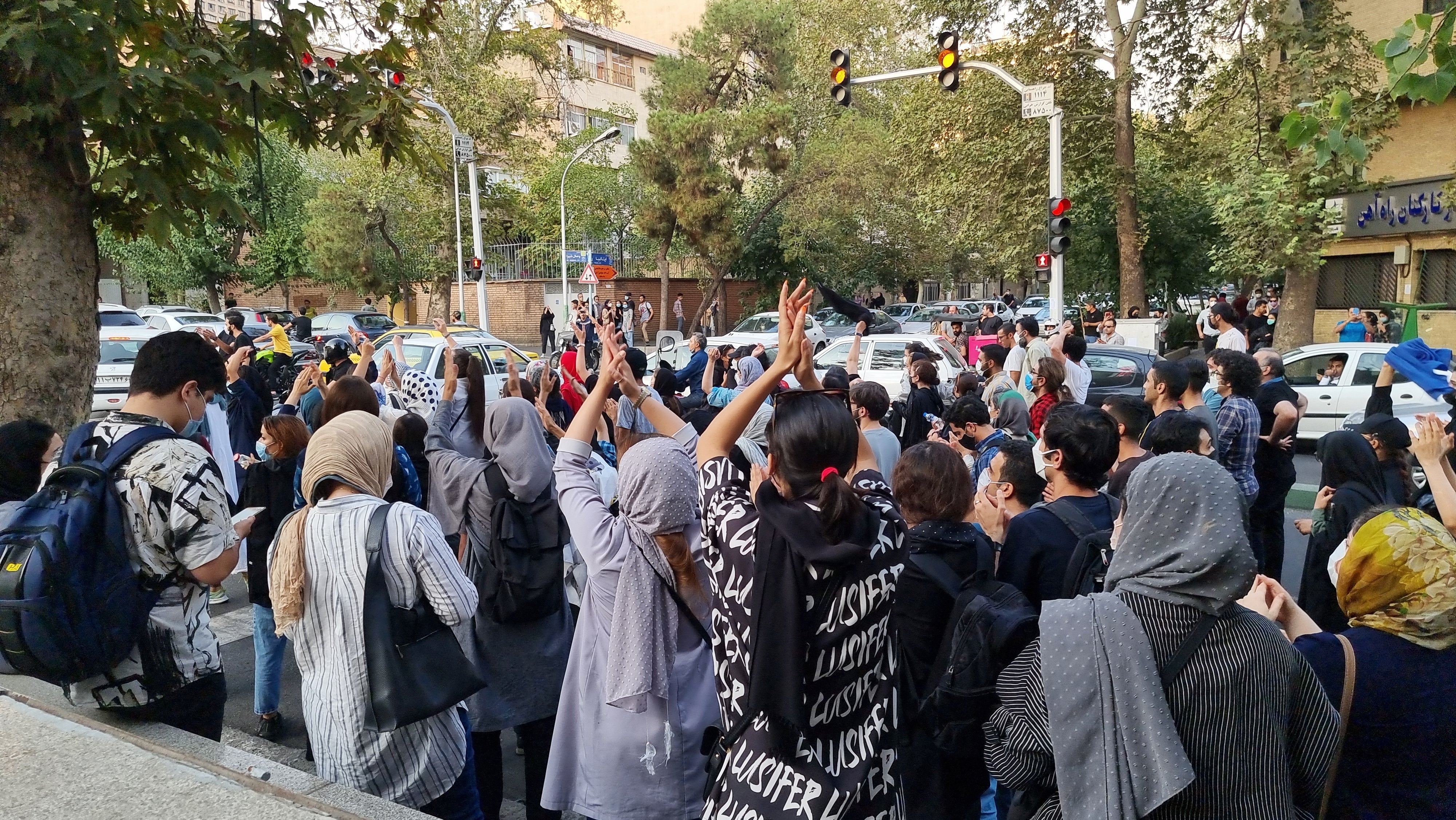
For nearly a month Iranians have been fiercely and relentlessly protesting against their government. Sparked by the death of a 22-year-old woman in the custody of the country’s “morality police,” who arrested her for “inappropriate attire,” the demonstrations have been led by young women who refuse to accept restrictive laws such as hijab requirements. Authorities have been suppressing the protests with violence, as well as less tangible techniques. Amir Rashidi is director of digital rights and security at Miaan Group, an Austin, Tex.–based advocacy organization working to improve human rights in Iran. Rashidi, an Iranian who left the country in 2010, told Scientific American how its government has been using technology such as facial recognition and Internet shutdowns against its citizens.
[An edited transcript of the interview follows.]
How is Iran’s government using facial-recognition technology?
During the pandemic, we became aware that Iran is doing facial recognition. The Minister of Health announced that, in collaboration with the traffic police, they were using cameras in the street to take a picture of people who are not wearing masks properly and find them. Then [more than] two weeks [before] the protests, [an official] mentioned the use of facial recognition during the pandemic, and he [essentially] said, “We’re going to do the same with women, taking pictures of those who are not wearing proper hijab and then finding them.”
Iranian government officials are proud of having this kind of technology, always talking about it, and people are sensitive. If you look at a couple of videos of the protesters, they were attacking cameras. There is a fear that [facial recognition has been] implemented and is working. Not only are protesters more careful to not look at the camera and put the camera behind them, wearing masks and things like that; also the media are very careful to blur all the faces.
Can any techniques prevent facial recognition from working?
Looking at the experience of other countries, there are other techniques: shirts that you can wear with some specific graphic that can make [visual] “noise” on cameras or other methods. But none of them can be really promising right now in Iran because of the lack of information. Because we don’t know what kind of algorithm [the government is] using, we don’t know which solution we can use. One thing that we know is: there is a collaboration between the Iranian and Chinese governments regarding technology. Based on that, I can imagine that Iran is relying on China a lot for facial recognition. The model of Internet censorship in Iran is very much like Chinese models, so I wouldn’t be surprised if China provided that technology to Iran.
What is that model of Internet censorship?
What Iran is doing with the Internet is quite unique but, again, follows the same model as China. But I think what Iran is doing is way more advanced than what China or Russia are doing. The main goal is having a local network. Iranian government officials call it the National Information Network, or NIN. Usually in regular conversation, we refer to it as a “national Internet.” It is literally an intranet: a local network that is providing connection among different services inside the country, being independent from the rest of the world. So when [authorities] shut down the Internet, this local network is operating, but you don’t have access to the [global] Internet. The Russian government passed a law to create such a network [in 2019], but so far we are not seeing implementation.
This infrastructure also needs more tools and components to be functional. For example, [it requires] data centers. On the application layer, it needs messaging apps, e-mail services, search engines. China’s doing the same: it has Baidu, WeChat—these [services and] apps are under a lot of surveilling censorship. The Iranian government has its own YouTube, its own national search engine, e-mail service, messaging app, data centers, all of these things that make [online] infrastructure functional without being connected to the Internet. And finally, Iran is also passing a lot of laws to establish different bodies [that will] dictate how to use this infrastructure and these tools to achieve the main goal that it has, which is information control. It’s very much like the Chinese model in terms of localization, but because of that infrastructure and those policy-making bodies, it’s more advanced—and more successful in terms of censorship and information control. But I want to be careful [about making that claim] because I’m not an expert on China or Russia.
Are people using this national network when the government shuts down Internet access?
One of the things that the Iranian government is doing during the shutdown is taking advantage of violating people’s rights by encouraging them to use the local services. The Minister of [Information and Communications Technology] was on the TV, looking like he was proud and essentially saying, “We blocked WhatsApp because they violate our laws, so if you are concerned about your business, you have to move onto the national messaging app.” One national application is called Rubika…. We call these kinds of applications [such as Rubika and the Chinese program WeChat] “super apps” because you can do everything: purchase tickets, pay your bills, do live streaming, watch TV. They are [using the app to do] mass surveillance, and it’s not something that they want to hide! There is video of the head of Rubika explaining how its AI machine is so good that it can catch sensitive content on a chat between two people, and it can immediately remove [that content] from the platform. This is concerning, obviously. And I would say that’s the last line of defense against the national Internet: So far people are not using it because they’re concerned about privacy and security. But if the government is successful….
[Iran is also] encouraging people to use local services [through a unique] violation of net neutrality: separating local and international traffic. If you’re using local services, you have access to the faster network and cheaper traffic, almost half the price. If you want to use international traffic, it is slower and more expensive. With all of these things together, there is a chance that people, in particular during this economic crisis, feel, “Yeah, let’s move on to those local services.”
Are there techniques for getting around the Internet shutdowns?
In Iran, there is no promising solution. There are lots of conversations around using satellite Internet, but when the government doesn’t want people to have access to the satellite Internet, that’s not a reliable solution. Another solution is not Internet; it’s “data casting,” which is [used in] a project by NetFreedom Pioneers, an organization based in Los Angeles. [The organization is] sending data over normal satellite TV. A user in Iran can just connect the USB to their receiver, download the data and build a special application to unpack the data. And in that package, there are news and all of these circumvention tools that we are recommending to people. So there are some solutions. Unfortunately, they are not reliable to be distributed in a massive scale. But we need to dedicate and find more resources in terms of manpower, technologies, and money to study and see how we can find a solution that can actually be usable on a massive scale.
We have to study this national network and see how we can bypass it. There are a lot of studies going on by different Internet freedom communities, and we are collaborating with them. We found some solutions—but one of the issues is: everyone’s paying attention to the Internet shutdown when it’s happening. When it’s over, everyone’s now going back to the normal life. And that’s not the kind of mentality we need to have. The most important thing we have to do for the Internet shutdown is being ready before the Internet shuts down.
What else is important to know about this situation?
The international community see this as an issue only for Iran. But the problem is: there are a lot of governments all around the world who want to violate our rights, and they learn from each other. What I’d like to see is people paying attention to what is happening as a threat to freedom, to the right to access to the Internet, and deal with it in that way. Because if tomorrow China and Russia implement the same infrastructure [as Iran], the Internet is not going to be the Internet that we know today. It would be in the shape of a bunch of isolated islands. And the philosophy behind the Internet—which is connecting people to each other—would be destroyed.
[ad_2]
Original Source Link