
Close Menu
Beverly Hills Examiner

    Subscribe to Updates

    Get the latest creative news from FooBar about art, design and business.

    What's Hot

    Watch Turnstile make ‘Saturday Night Live’ debut with ‘Birds’ and ‘I Care/Dull’ medley

    October 5, 2026

    Air Force removes all bombers from British base after a planned terror attack was foiled

    October 5, 2026

    Todd Blanche Disastrously Admits Trump’s Supreme Court Shadow Docket Scam

    October 5, 2026
    Facebook X (Twitter) Instagram
    Beverly Hills Examiner
    • Home
    • US News
    • Politics
    • Business
    • Science
    • Technology
    • Lifestyle
    • Music
    • Television
    • Film
    • Books
    • Contact
      • About
      • Amazon Disclaimer
      • DMCA / Copyrights Disclaimer
      • Terms and Conditions
      • Privacy Policy
    Beverly Hills Examiner
    Home»Science»How Networked Incitement Fueled the Jan. 6 Capitol Insurrection
    Science

    How Networked Incitement Fueled the Jan. 6 Capitol Insurrection

    By AdminJanuary 7, 2024
    Facebook Twitter Pinterest LinkedIn WhatsApp Email Reddit Telegram
    How Networked Incitement Fueled the Jan. 6 Capitol Insurrection


    How Networked Incitement Fueled the Jan. 6 Capitol Insurrection

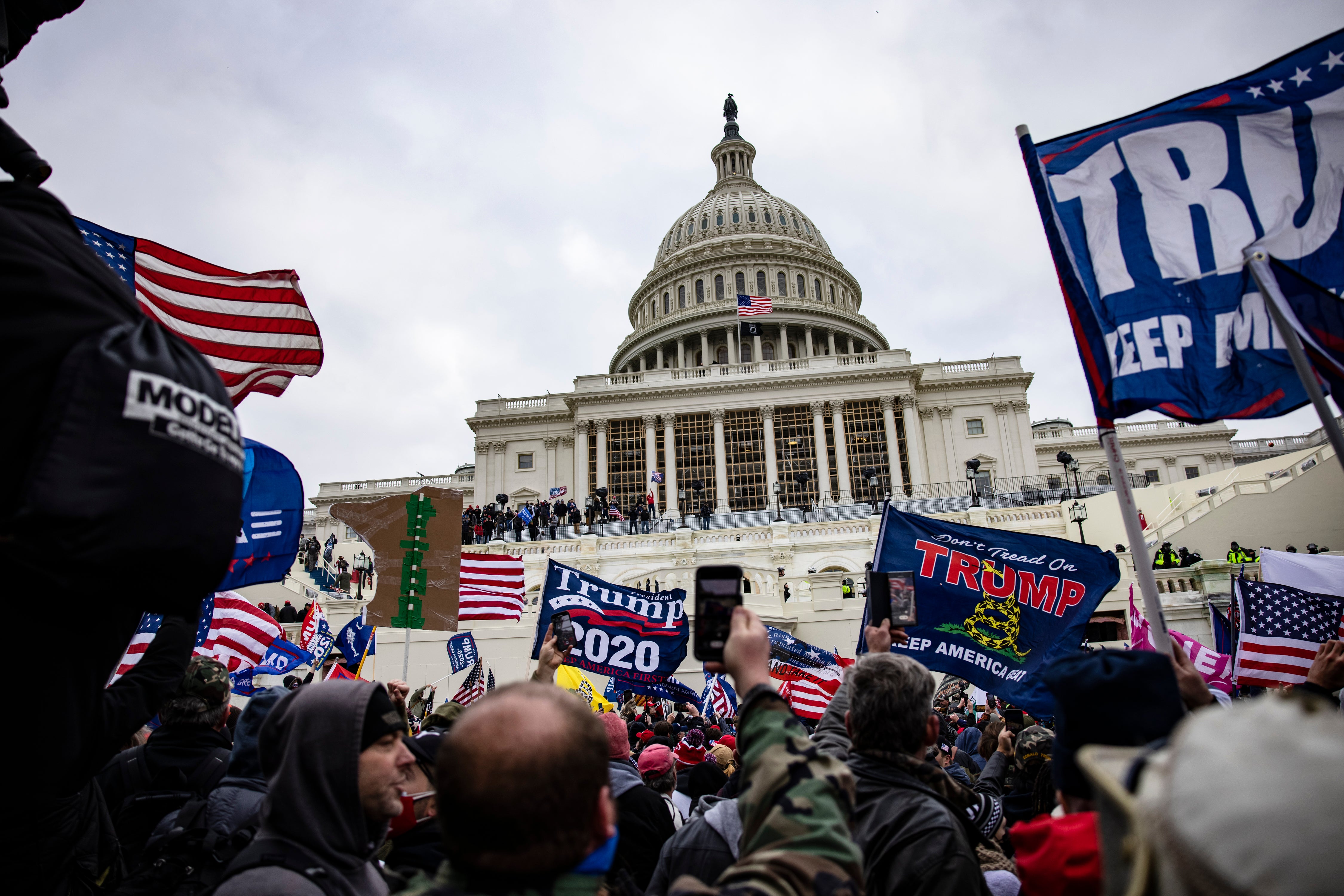
    The shocking events of Jan. 6, 2021, signaled a major break from the nonviolent rallies that categorized most major protests over the past few decades.

    What set Jan. 6 apart was the president of the United States using his cellphone to direct an attack on the Capitol, and those who stormed the Capitol being wired and ready for insurrection.

    My co-authors and I, a media and disinformation scholar, call this networked incitement: influential figures inciting large-scale political violence via social media. Networked incitement involves insurgents communicating across multiple platforms to command and coordinate mobilized social movements in the moment of action.

    The reason there was not more bloodshed on Jan. 6 emerged through investigation into the Oath Keepers, a vigilante organization composed mostly of former military and police. During their trials for seditious conspiracy, members of the Oath Keepers testified about weapons caches in hotels and vans, stashed near Washington, D.C. As one member described it, “I had not seen that many weapons in one location since I was in the military.”

    The Oath Keepers were following Washington law by not carrying the weapons in the district, while waiting for Trump to invoke the Insurrection Act, which gives the president the authority to deploy the military domestically for law enforcement.

    The militia was waiting for orders from Trump. That was all that kept U.S. democracy safe from armed warfare that day.

    Social media as command and control

    What happened in D.C. on Jan. 6, 2021, does not easily fit into typical social movement frameworks for describing mobilization. The insurrectionists behaved akin to a networked social movement, with online platforms forming the infrastructure to organize action, but its leaders were politicians and political operatives as opposed to charismatic community leaders. On that day in particular, the insurrectionists, who are closely aligned with MAGA Republicans more broadly, functioned like Trump’s volunteer army rather than a populist movement.

    Even with the availability of social media, networked social movements still need mainstream media coverage to legitimize their cause. Typically, community organizers push a particular issue – for example Black Lives Matter and #MeToo – into the media spotlight to get the public to care about their issue. Social movements tend to struggle for exposure and to frame favorable narratives.

    The insurrectionists had the advantage of betting on mainstream media coverage for Jan. 6, so they focused on gathering resources and coordinating attendance. As a result, Trump’s supporters did not need to expend much effort to bring attention to the event and, instead, concentrated on organizing ride-shares and splitting hotel costs. As in prior social movements, the networking capacity of social media proved to be an important conduit to bring strangers together for the occasion. What the insurrectionists failed to do was convince key stakeholders, such as mainstream media, Vice President Mike Pence and the U.S. Capitol Police, to join their fight.

    Networked incitement is different from the legalistic understanding of incitement, where an inflammatory statement immediately precedes unlawful acts or creates a dangerous situation. The call to action for Jan. 6 came from the president himself in a series of social media posts enticing supporters to come to D.C. for a “wild” time.

    Tweets like these from a prominent figure became social media’s equivalent of shouting fire in a crowded theater.

    Mobilizing for violence

    My colleagues and I sought data to better understand what motivated everyday folks to storm the Capitol that day under great personal risk. Using the method of qualitative content analysis, we assembled 469 charging and sentencing documents for 417 defendants and coded them for the stated reasons for attending the event. We chose these court documents because they represented the fullest narrative accounts available. The purpose of these documents was to explain the rationales and mental states of the accused, while also offering a defense or explanation for their actions.

    We analyzed the documents, looking at the multiple motivations for the insurrectionist mobilization. Overwhelmingly, insurrectionists said they were motivated by a desire to support Trump, which was equally split with a rationale to stop a rigged election. In sum, we concluded that disinformation mobilizes and incites political violence under specific conditions, such as a popular public figure calling for help.

    For example, the court documents also directly reference social media posts of the accused. On Dec. 22, 2020, Kelly Meggs, an Oath Keeper who was later convicted of seditious conspiracy and sentenced to 12 years in prison, wrote on Facebook:

    “Trump said It’s gonna be wild!!!!!!! It’s gonna be wild!!!!!!! He wants us to make it WILD that’s what he’s saying. He called us all to the Capitol and wants us to make it wild!!! Sir Yes Sir!!! Gentlemen we are heading to DC pack your shit!!”

    The reference to “it’s gonna be wild” was a rejoinder to the now infamous tweet Trump sent after a reportedly difficult six-hour meeting the president had with staff about how to proceed with the fraud inquiry and undo the election results. Oath Keeper Meggs’ tweet illustrates that even before Jan. 6, militia groups were looking for signs from Trump about how to proceed. An investigation by NPR also illustrated how Trump’s messages emboldened participants and ignited the events of that day.

    A dark future

    No sitting president before Trump had exploited the capacity of social media to directly reach citizens to command specific actions.

    The use of social media for networked incitement foreshadows a dark future for democracies. Rulers could well come to power by manipulating mass social movements via social media, directing a movement’s members to serve as the leaders’ shock troops, online and off.

    Clear regulations preventing the malicious weaponization of social media by politicians who use disinformation to incite violence is one way to keep that future at bay.

    This article was originally published on The Conversation. Read the original article.


    Original Source Link

    Share. Facebook Twitter Pinterest LinkedIn WhatsApp Email Reddit Telegram
    Previous Article‘Wonka’ Beating ‘Night Swim’ at Post-Holiday Box Office – The Hollywood Reporter
    Next Article Harvard’s robotic exoskeleton can improve walking, decrease falls in people with Parkinson’s

    RELATED POSTS

    How attachment theory can help us understand AI relationships

    October 5, 2026

    Rural Data Centers Are in for a Big Federal Tax Break

    October 4, 2026

    How the brain uses memory to imagine what might have been

    October 4, 2026

    A Decade-Long Experiment Is Unlocking the Mysteries of the Ocean’s ‘Deep Reefs’

    October 3, 2026

    Could a giant iceberg really break off Greenland? Scientists check Tom Cruise’s new movie Digger

    October 3, 2026

    There Are Plenty of Reasons to Be Concerned About Bioweapons Development—Even Without AI

    October 2, 2026
    latest posts

    Watch Turnstile make ‘Saturday Night Live’ debut with ‘Birds’ and ‘I Care/Dull’ medley

    Turnstile made their debut on Saturday Night Live last night (October 3), performing ‘Birds’ and…

    Air Force removes all bombers from British base after a planned terror attack was foiled

    October 5, 2026

    Todd Blanche Disastrously Admits Trump’s Supreme Court Shadow Docket Scam

    October 5, 2026

    Tetairoa McMillan career day spoils Jared Goff’s huge game as soft Lions defense flops on SNF

    October 5, 2026

    The Best Gifts Under $25 for Everyone on Your List (2026)

    October 5, 2026

    How attachment theory can help us understand AI relationships

    October 5, 2026

    ‘The Nice Guys’ Storyboard Artist Was 67

    October 5, 2026
    Categories
    • Books (1,528)
    • Business (6,432)
    • Cover Story (14)
    • Film (6,369)
    • Lifestyle (4,417)
    • Music (6,442)
    • Politics (6,419)
    • Science (5,782)
    • Technology (6,368)
    • Television (6,068)
    • Uncategorized (3)
    • US News (6,417)
    popular posts

    The Smarter, Gentler Way to Build Muscle at Any Age

    At 43, I’ve become far more interested in how movement makes me feel than how…

    Naked Hunter Biden Films Himself Smoking Crack Pipe, Drinking During “Detox” Stint Paid for by Joe Biden

    July 8, 2022

    ‘Young Rock’ & ‘Grand Crew’ Renewed at NBC

    May 12, 2022

    What Happened To The Money

    July 14, 2022
    Archives
    Browse By Category
    • Books (1,528)
    • Business (6,432)
    • Cover Story (14)
    • Film (6,369)
    • Lifestyle (4,417)
    • Music (6,442)
    • Politics (6,419)
    • Science (5,782)
    • Technology (6,368)
    • Television (6,068)
    • Uncategorized (3)
    • US News (6,417)
    About Us

    We are a creativity led international team with a digital soul. Our work is a custom built by the storytellers and strategists with a flair for exploiting the latest advancements in media and technology.

    Most of all, we stand behind our ideas and believe in creativity as the most powerful force in business.

    What makes us Different

    We care. We collaborate. We do great work. And we do it with a smile, because we’re pretty damn excited to do what we do. If you would like details on what else we can do visit out Contact page.

    Our Picks

    How attachment theory can help us understand AI relationships

    October 5, 2026

    ‘The Nice Guys’ Storyboard Artist Was 67

    October 5, 2026

    Dress Code: Deck | FashionBeans

    October 5, 2026
    © 2026 Beverly Hills Examiner. All rights reserved. All articles, images, product names, logos, and brands are property of their respective owners. All company, product and service names used in this website are for identification purposes only. Use of these names, logos, and brands does not imply endorsement unless specified. By using this site, you agree to the Terms & Conditions and Privacy Policy.

    Type above and press Enter to search. Press Esc to cancel.

    We use cookies on our website to give you the most relevant experience by remembering your preferences and repeat visits. By clicking “Accept All”, you consent to the use of ALL the cookies. However, you may visit "Cookie Settings" to provide a controlled consent.
    Cookie SettingsAccept All
    Manage consent

    Privacy Overview

    This website uses cookies to improve your experience while you navigate through the website. Out of these, the cookies that are categorized as necessary are stored on your browser as they are essential for the working of basic functionalities of the website. We also use third-party cookies that help us analyze and understand how you use this website. These cookies will be stored in your browser only with your consent. You also have the option to opt-out of these cookies. But opting out of some of these cookies may affect your browsing experience.
    Necessary
    Always Enabled
    Necessary cookies are absolutely essential for the website to function properly. These cookies ensure basic functionalities and security features of the website, anonymously.
    CookieDurationDescription
    cookielawinfo-checkbox-analytics11 monthsThis cookie is set by GDPR Cookie Consent plugin. The cookie is used to store the user consent for the cookies in the category "Analytics".
    cookielawinfo-checkbox-functional11 monthsThe cookie is set by GDPR cookie consent to record the user consent for the cookies in the category "Functional".
    cookielawinfo-checkbox-necessary11 monthsThis cookie is set by GDPR Cookie Consent plugin. The cookies is used to store the user consent for the cookies in the category "Necessary".
    cookielawinfo-checkbox-others11 monthsThis cookie is set by GDPR Cookie Consent plugin. The cookie is used to store the user consent for the cookies in the category "Other.
    cookielawinfo-checkbox-performance11 monthsThis cookie is set by GDPR Cookie Consent plugin. The cookie is used to store the user consent for the cookies in the category "Performance".
    viewed_cookie_policy11 monthsThe cookie is set by the GDPR Cookie Consent plugin and is used to store whether or not user has consented to the use of cookies. It does not store any personal data.
    Functional
    Functional cookies help to perform certain functionalities like sharing the content of the website on social media platforms, collect feedbacks, and other third-party features.
    Performance
    Performance cookies are used to understand and analyze the key performance indexes of the website which helps in delivering a better user experience for the visitors.
    Analytics
    Analytical cookies are used to understand how visitors interact with the website. These cookies help provide information on metrics the number of visitors, bounce rate, traffic source, etc.
    Advertisement
    Advertisement cookies are used to provide visitors with relevant ads and marketing campaigns. These cookies track visitors across websites and collect information to provide customized ads.
    Others
    Other uncategorized cookies are those that are being analyzed and have not been classified into a category as yet.
    SAVE & ACCEPT