
Close Menu
Beverly Hills Examiner

    Subscribe to Updates

    Get the latest creative news from FooBar about art, design and business.

    What's Hot

    Ryan Beatty on Beyonce, Songwriting, His Boyfriend & ‘Sweet Fortune’

    August 11, 2026

    Germany weighs options as low water levels trigger price surges

    August 11, 2026

    Trump Falls Asleep In Front Of Reporters, But Wakes Up Long Enough To Endanger Kids

    August 11, 2026
    Facebook X (Twitter) Instagram
    Beverly Hills Examiner
    • Home
    • US News
    • Politics
    • Business
    • Science
    • Technology
    • Lifestyle
    • Music
    • Television
    • Film
    • Books
    • Contact
      • About
      • Amazon Disclaimer
      • DMCA / Copyrights Disclaimer
      • Terms and Conditions
      • Privacy Policy
    Beverly Hills Examiner
    Home»Science»Humans Started Riding Horses 5,000 Years Ago, New Evidence Suggests
    Science

    Humans Started Riding Horses 5,000 Years Ago, New Evidence Suggests

    By AdminMarch 5, 2023
    Facebook Twitter Pinterest LinkedIn WhatsApp Email Reddit Telegram
    Humans Started Riding Horses 5,000 Years Ago, New Evidence Suggests


    We may never know when a human jumped on a horse and rode off into the sunset for the first time, but archaeologists are hard at work trying to understand how horses left the wild and joined humans on the trail to global domination. New research purports to have found the earliest evidence of horseback riding.

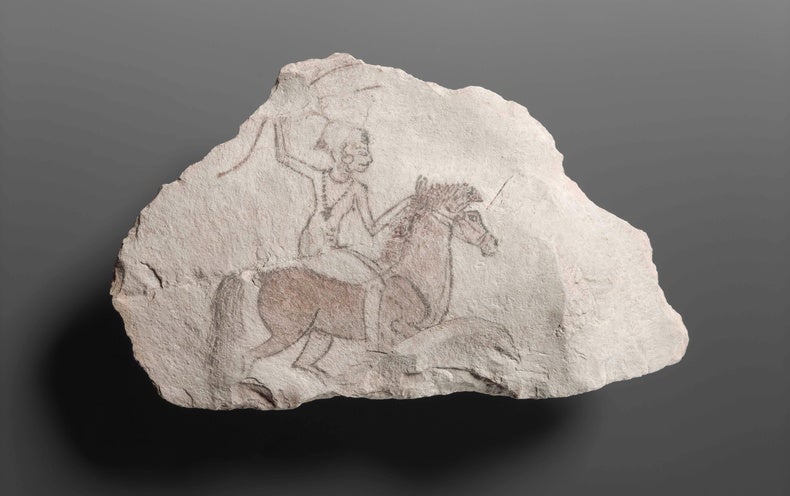
    A team of scientists reports that humans may have ridden horses as early as 3000 B.C.E.—some 1,000 years before the earliest known artistic representation of a human astride a horse. The discovery, which is described in a study published on March 3 in Science Advances, hinges on skeletal analysis of human remains found across eastern Europe.

    “I always assumed that we would find it at some point,” says Katherine Kanne, an archaeologist at University College Dublin, who was not involved with the new research, about signs that humans were riding horses earlier than previous evidence had suggested. “A lot of us suspected this for a long time, and for it to come true is really exciting to see—and gratifying for sure.”

    To date, researchers have assembled only a patchy timeline of how humans have used horses. By about 3500 B.C.E., humans appear to have been milking early domestic horses, a delicate process, which is evidence that the animals were already quite tame. But a recent genetic analysis suggests that the lineage of modern domestic horses didn’t arise until about 2000 B.C.E. That is around the same time that chariot wheels and artistic depictions of horseback riding begin to appear. Both indicate uses that would require fully domesticated animals.

    The new study tackles the challenge by focusing on human skeletons. Many of the remains it examines belong to the Yamnaya people, who have been long associated with horses by archaeologists and who swept across much of Eurasia from their origins in modern-day western Russia between 3000 and 2500 B.C.E. “The Yamnaya are extraordinary,” says the study’s co- author Volker Heyd, an archaeologist at the University of Helsinki. He notes that the group’s influence across Europe continues to this day in, for example, the Indo-European languages spoken across the continent.
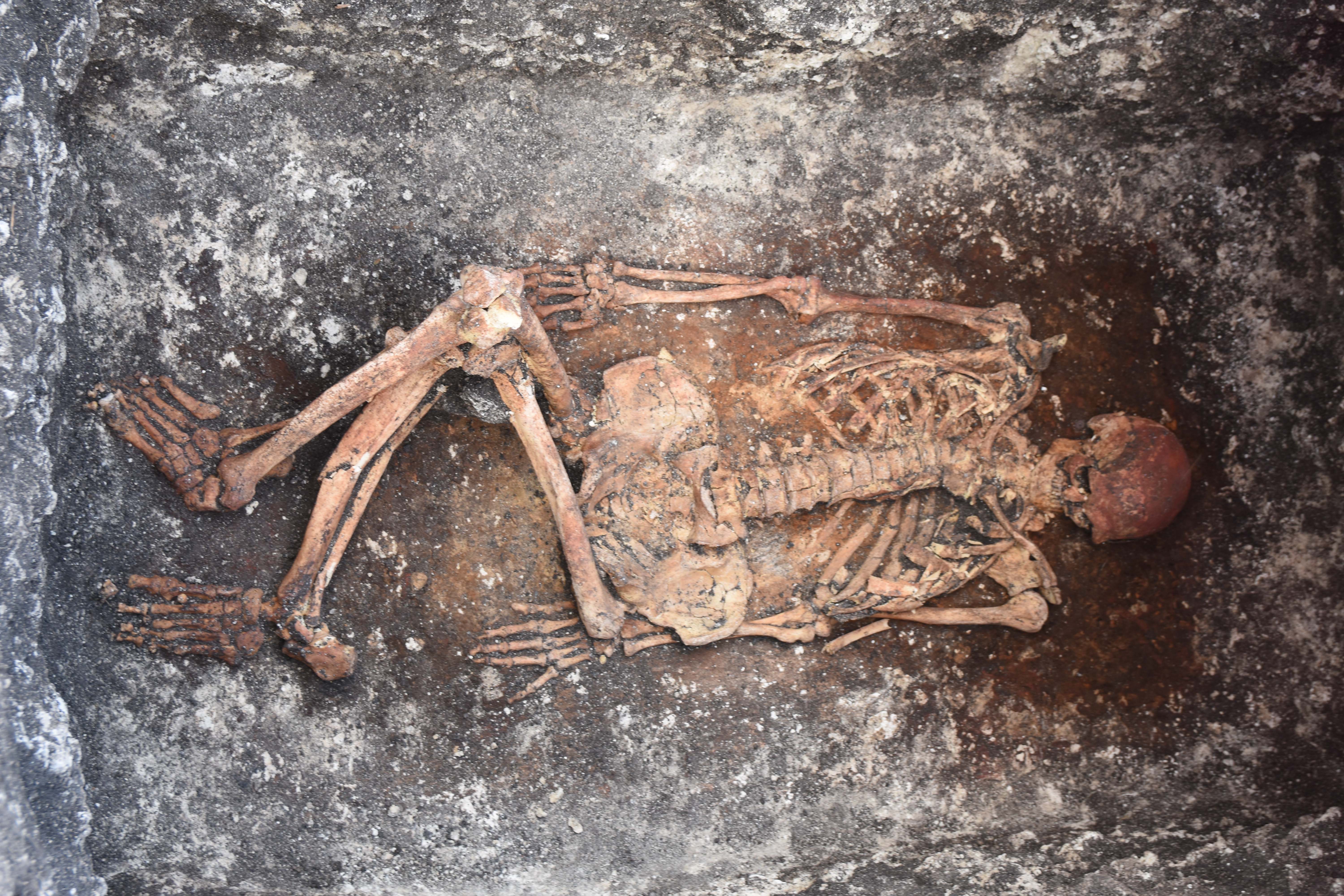
    Detail of the horse rider discovered in Malomirovo, Bulgaria. He displays the typical burial custom of the Yamnaya. The radiocarbon date puts him into the 30th century BC.
    Detail of the horse rider discovered in Malomirovo, Bulgaria. He displays the typical burial custom of the Yamnaya. The radiocarbon date puts him into the 30th century BC. Credit: Michał Podsiadło

    Heyd and a large group of his colleagues had set out to survey Yamnaya kurgans, or burial mounds, in eastern Europe. These structures and the items they contain are the only remaining traces of the culture. Co-author Martin Trautmann, an anthropologist also at the University of Helsinki, was stunned by a familiar pattern of marks associated with frequent horseback riding on the skeleton of a man in his 30s. These patterns—called “horseman syndrome”—happen as bones adapt to the biomechanical stress caused by repeated movements. “Bones are living tissue in living creatures,” Trautmann says. “You can read life histories from bones.”

    Horseman syndrome involves changes to the thigh bones, pelvis and lower spine. Trautmann had seen these alterations in countless skeletons from much later time periods. “Horseback riding is a very specific pattern of biomechanical stress,” he says. “You use muscle groups in a way you usually don’t do in everyday locomotion.”

    Trautmann initially hesitated to link the markings to horseback riding but soon found similar patterns on additional skeletons from that same time. All told, the new paper reports five Yamnaya skeletons displaying at least four of six such traits out of a total of 217 skeletons included in the kurgan survey.

    Not all the skeletons were preserved well enough to allow the researchers to evaluate every component of horseman syndrome, however, leading to some gaps in their assessments. “It’s a fascinating paper. I absolutely love it,” says Birgit Bühler, an archaeologist at the University of Vienna, who was not involved in the new research. “But I would be cautious because of these missing criteria.”

    And because the research focuses exclusively on human remains, not everyone is convinced the analysis shows that humans were riding horses specifically, despite long-standing academic association of the Yamnaya with horses. “Those pathologies might totally be involved with animal transport, but I see no real evidence here to actually link them to horses,” says William Taylor, an archaeologist at the University of Colorado Boulder, who was not involved with the new research. Unlike horseback riding, scientists don’t have a sense of the traces that riding other types of animals might leave on a human’s skeleton, a gap he says he hopes researchers begin to address.

    Trautmann says he suspects that riding animals that are similar enough to horses, such as mules, would leave signs of horseman syndrome. Although he’s satisfied by the scattered horse bones found at Yamnaya sites, he hopes someday scientists analyze those remains for corresponding skeletal signs that a horse regularly carried a rider.


    Original Source Link

    Share. Facebook Twitter Pinterest LinkedIn WhatsApp Email Reddit Telegram
    Previous ArticleBlackBerry – first-look review
    Next Article Wyze Mesh Router and Router Pro Review: Can Wyze Conquer Wi-Fi?

    RELATED POSTS

    Scientists are closer than ever to understanding the power of the vagus nerve

    August 11, 2026

    A California Program Is Bringing Down the Cost of Heat Pumps by Buying Bulk

    August 11, 2026

    World ocean temperatures hit extreme new record for July

    August 10, 2026

    Spokane Shows What the New Era of Wildfires Looks Like

    August 10, 2026

    Europe’s wildfires are igniting forgotten WWII and Cold War bombs

    August 9, 2026

    Here Are the First Images of the Crater Left on the Moon by SpaceX’s Rocket

    August 9, 2026
    latest posts

    Ryan Beatty on Beyonce, Songwriting, His Boyfriend & ‘Sweet Fortune’

    It’s the kind of day in Manhattan where subway stations turn into saunas, the air…

    Germany weighs options as low water levels trigger price surges

    August 11, 2026

    Trump Falls Asleep In Front Of Reporters, But Wakes Up Long Enough To Endanger Kids

    August 11, 2026

    Tulsa National Little League reinstated by Texas judge for Williamsport bid

    August 11, 2026

    Bumble ditches its rule that kept men from making the first move

    August 11, 2026

    Scientists are closer than ever to understanding the power of the vagus nerve

    August 11, 2026

    PlayStation Officially Announces New Hardware Alongside Impending Pre-Order Date

    August 11, 2026
    Categories
    • Books (1,419)
    • Business (6,323)
    • Cover Story (9)
    • Film (6,262)
    • Lifestyle (4,320)
    • Music (6,333)
    • Politics (6,306)
    • Science (5,672)
    • Technology (6,257)
    • Television (5,953)
    • Uncategorized (3)
    • US News (6,308)
    popular posts

    Isabella Rossellini shares her 9 beauty and style essentials

    If there’s one term Isabella Rossellini would like to erase from the beauty lexicon, it’s…

    Atos falls 16% as embattled French IT firms weighs rescue deals set to result in ‘massive dilution’

    June 3, 2024

    24 Thrifted Fall Pieces: Tales of Vintage Treasures & Handcrafted Wool

    December 20, 2024

    5 Best Italian Shoes For Men: Greatness on Your Feet in 2024

    April 29, 2024
    Archives
    Browse By Category
    • Books (1,419)
    • Business (6,323)
    • Cover Story (9)
    • Film (6,262)
    • Lifestyle (4,320)
    • Music (6,333)
    • Politics (6,306)
    • Science (5,672)
    • Technology (6,257)
    • Television (5,953)
    • Uncategorized (3)
    • US News (6,308)
    About Us

    We are a creativity led international team with a digital soul. Our work is a custom built by the storytellers and strategists with a flair for exploiting the latest advancements in media and technology.

    Most of all, we stand behind our ideas and believe in creativity as the most powerful force in business.

    What makes us Different

    We care. We collaborate. We do great work. And we do it with a smile, because we’re pretty damn excited to do what we do. If you would like details on what else we can do visit out Contact page.

    Our Picks

    Scientists are closer than ever to understanding the power of the vagus nerve

    August 11, 2026

    PlayStation Officially Announces New Hardware Alongside Impending Pre-Order Date

    August 11, 2026

    ‘Crystal Lake’ Creator Explains How Show Differs From ‘Friday the 13th’

    August 11, 2026
    © 2026 Beverly Hills Examiner. All rights reserved. All articles, images, product names, logos, and brands are property of their respective owners. All company, product and service names used in this website are for identification purposes only. Use of these names, logos, and brands does not imply endorsement unless specified. By using this site, you agree to the Terms & Conditions and Privacy Policy.

    Type above and press Enter to search. Press Esc to cancel.

    We use cookies on our website to give you the most relevant experience by remembering your preferences and repeat visits. By clicking “Accept All”, you consent to the use of ALL the cookies. However, you may visit "Cookie Settings" to provide a controlled consent.
    Cookie SettingsAccept All
    Manage consent

    Privacy Overview

    This website uses cookies to improve your experience while you navigate through the website. Out of these, the cookies that are categorized as necessary are stored on your browser as they are essential for the working of basic functionalities of the website. We also use third-party cookies that help us analyze and understand how you use this website. These cookies will be stored in your browser only with your consent. You also have the option to opt-out of these cookies. But opting out of some of these cookies may affect your browsing experience.
    Necessary
    Always Enabled
    Necessary cookies are absolutely essential for the website to function properly. These cookies ensure basic functionalities and security features of the website, anonymously.
    CookieDurationDescription
    cookielawinfo-checkbox-analytics11 monthsThis cookie is set by GDPR Cookie Consent plugin. The cookie is used to store the user consent for the cookies in the category "Analytics".
    cookielawinfo-checkbox-functional11 monthsThe cookie is set by GDPR cookie consent to record the user consent for the cookies in the category "Functional".
    cookielawinfo-checkbox-necessary11 monthsThis cookie is set by GDPR Cookie Consent plugin. The cookies is used to store the user consent for the cookies in the category "Necessary".
    cookielawinfo-checkbox-others11 monthsThis cookie is set by GDPR Cookie Consent plugin. The cookie is used to store the user consent for the cookies in the category "Other.
    cookielawinfo-checkbox-performance11 monthsThis cookie is set by GDPR Cookie Consent plugin. The cookie is used to store the user consent for the cookies in the category "Performance".
    viewed_cookie_policy11 monthsThe cookie is set by the GDPR Cookie Consent plugin and is used to store whether or not user has consented to the use of cookies. It does not store any personal data.
    Functional
    Functional cookies help to perform certain functionalities like sharing the content of the website on social media platforms, collect feedbacks, and other third-party features.
    Performance
    Performance cookies are used to understand and analyze the key performance indexes of the website which helps in delivering a better user experience for the visitors.
    Analytics
    Analytical cookies are used to understand how visitors interact with the website. These cookies help provide information on metrics the number of visitors, bounce rate, traffic source, etc.
    Advertisement
    Advertisement cookies are used to provide visitors with relevant ads and marketing campaigns. These cookies track visitors across websites and collect information to provide customized ads.
    Others
    Other uncategorized cookies are those that are being analyzed and have not been classified into a category as yet.
    SAVE & ACCEPT