
Close Menu
Beverly Hills Examiner

    Subscribe to Updates

    Get the latest creative news from FooBar about art, design and business.

    What's Hot

    Why data centers are at the center of the Big Tech backlash | TechCrunch

    November 22, 2026

    Prince Fleet Easton Guests On “If These Walls Could Talk” With Hosts Wendy Stuart and Tym Moss Wednesday, November 25th, 2026

    November 22, 2026

    Faced with influx, prosecutor in Washington says he lacks resources to defend immigration cases

    November 22, 2026
    Facebook X (Twitter) Instagram
    Beverly Hills Examiner
    • Home
    • US News
    • Politics
    • Business
    • Science
    • Technology
    • Lifestyle
    • Music
    • Television
    • Film
    • Books
    • Contact
      • About
      • Amazon Disclaimer
      • DMCA / Copyrights Disclaimer
      • Terms and Conditions
      • Privacy Policy
    Beverly Hills Examiner
    Home»Science»In Memoriam: James Lovelock (1919-2022)
    Science

    In Memoriam: James Lovelock (1919-2022)

    By AdminAugust 10, 2022
    Facebook Twitter Pinterest LinkedIn WhatsApp Email Reddit Telegram
    In Memoriam: James Lovelock (1919-2022)

    [ad_1]

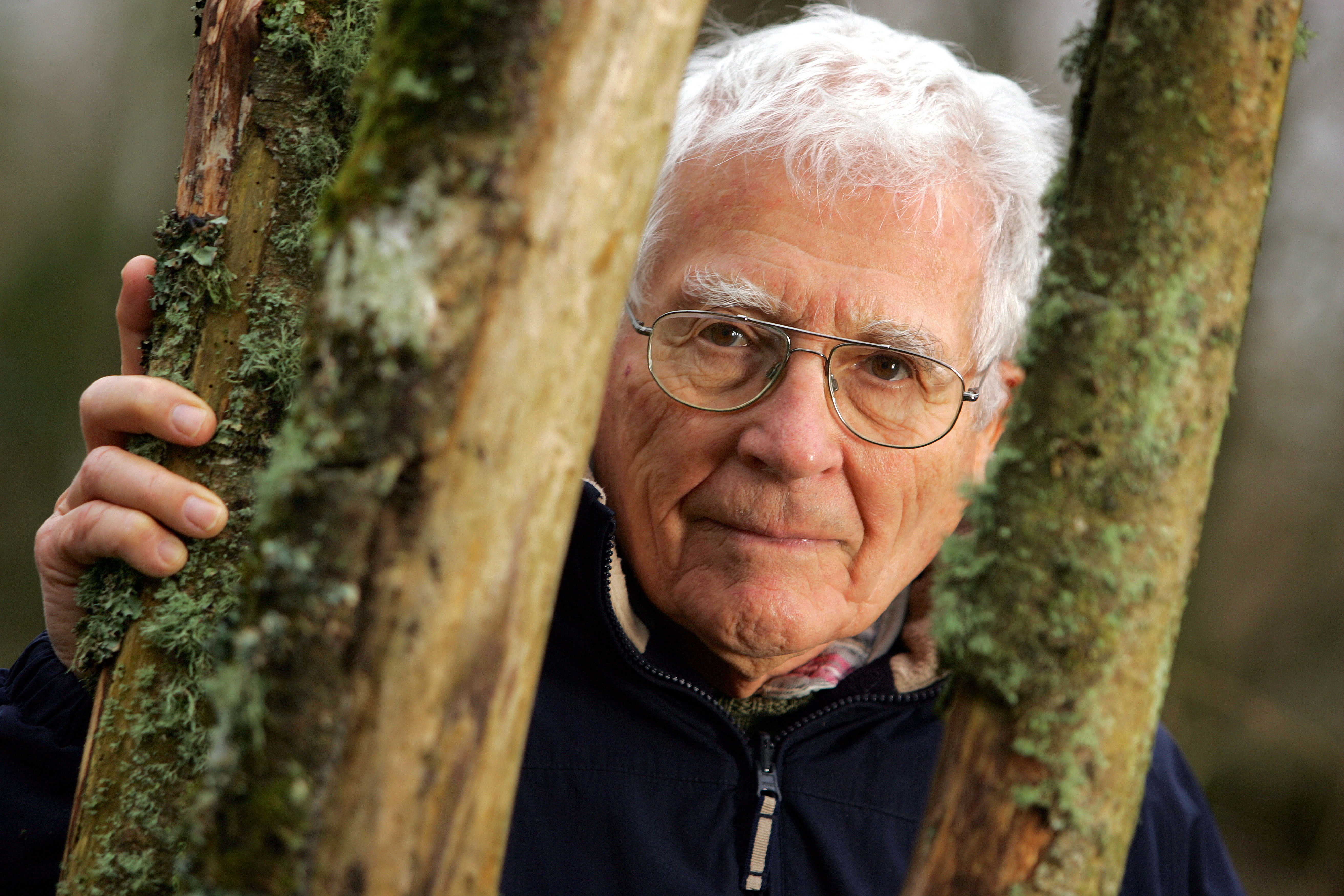
    Jim Lovelock (never ‘James’) is remembered as the father of the Gaia hypoth-esis: the idea that Earth is a self-regulating living organism. Few accepted his argument that this should be elevated to the status of a theory, even though it generated predictions about environ-mental changes that were borne out by subsequent observations. As a heuristic model, however, Gaia profoundly influenced thinking about the environment and how we interact with it, giving rise to the field of Earth-system studies.

    Lovelock was primarily an inventor, spending most of his career as an independent scientist funded by the income from his inventions and therefore free from the constraints of an academic post. His thinking about environmental issues stemmed from observations made with his inventions. His most notable device was the electron capture detector, which ‘sniffed out’ traces of compounds in the air. This unexpectedly revealed the spread of chlorofluorocarbons around the globe and the build-up of the pesticide DDT in the environ-ment, leading to restrictions on the use of these substances.

    He was working as a consultant for NASA’s Jet Propulsion Laboratory in Pasadena, California, in 1965, when French astronomers reported infrared spectra showing that the atmosphere of Mars consisted mainly of carbon dioxide in stable equilibrium. He realized that Mars must be ‘dead’, because life can exist only in systems far from equilibrium, feeding off a flow of energy. He inferred, with biologist Lynn Margulis, that living things determine the atmospheric composition of a living planet such as Earth and maintain conditions suitable for life through feedbacks. The pair published the idea in 1974 (J. E. Lovelock and L. Margulis Tellus 26, 2–10; 1974), the year that Lovelock was elected a Fellow of the Royal Society. His legacy is enshrined in the now-standard idea of searching for signs of life on exoplanets by studying their spectra — the Lovelock test.

    Lovelock was born on 26 July 1919, the result, he believed, of his parents’ celebration of the end of the First World War on 11 November the previous year. He grew up in Brixton, then a poor area of south London. Deprived of educational opportunities themselves, his parents pushed him into a grammar school, which he hated. He preferred to study popular books such as James Jeans’s 1928 Astronomy and Cosmogony. To the irritation of his teachers, he did well in exams despite refusing to bow to authority. He was determined to become a scientist, but what he later described as ‘numerical dyslexia’ meant he couldn’t handle the mathematics required for physics, his first choice. He turned to chemistry instead.

    Unable to afford university, he took a job with a photographic chemist, but attended evening classes at Birkbeck College, London, working towards a degree in chemistry. When this course was suspended after the outbreak of the Second World War, Lovelock obtained a place at what is now the University of Manchester as a full-time student, subsisting on a grant of £60 (around US$1,300 today) from the Kent county council and £15 per year from a charitable trust. Graduating in 1941, he was offered a job as a technician at the National Institute for Medical Research in London.

    He was told to study the effect of heat on skin by exposing shaved rabbits to heat radiation, but preferred to burn himself. He found that after a week or so of repeated exposure, the pain became merely a sensation of pressure — but the area of arm he used in the study remained insensitive for the rest of his life. For the next two decades, his working life followed a conventional pattern, which he later described as a 20-year apprenticeship. This included an investigation of how common colds spread; cryonic experiments involving freezing and reviving hamsters; and advising on a BBC play, where his suggestions for sound effects encouraged the formation of the BBC Radiophonic Workshop and, he claimed, thereby helped to inspire the original theme for the television series Doctor Who.

    By the mid-1960s, he was an independent scientist (in both meanings of the term), consulting for organizations such as Shell and NASA; it was the latter work that led to the Gaia idea. Lovelock developed this concept over the next decade. It gained little attention until he published his first book, Gaia, in his 60th year, 1979. This reached a wide audience thanks not only to Lovelock’s ideas, but also to his accessible style.

    Instead of a quiet retirement, Lovelock embarked on an essentially new career, promoting the idea of Gaia, developing the model and, to his dismay, becoming revered by hippy ‘environmentalists’ who thought that Gaia would ‘protect us’. He responded that “the best thing for Gaia might be to get rid of us”. He was particularly thinking of global warming, on which he acted as an informal adviser to UK prime minister Margaret Thatcher in the late 1980s. He strongly supported nuclear power as an alternative to fossil fuels.

    Helen (née Hyslop), his wife of 47 years, died in 1989. In 1991, he married Sandy Orchard, planning to settle down to a quiet life that included walking, in stages, England’s 1,000-kilometre South West Coast Path. Instead, the threat of global warming prompted him to write The Revenge of Gaia (2006) to argue that Gaia was now in crisis. He continued to travel around the globe to promote this message, and began to slow down only after his 90th birthday. Even then, he hoped to take up entrepreneur Richard Branson’s offer of a flight in the Virgin Galactic space plane, only to give up the dream on the advice of his doctors. He remained active into his 100th year. His final book, Novacene (2019), argued that humans will be supplanted as the guardians of Gaia by artificial intelligences that might, if we are lucky, keep us as pets.

    This article is reproduced with permission and was first published on August 3 2022.

    [ad_2]

    Original Source Link

    Share. Facebook Twitter Pinterest LinkedIn WhatsApp Email Reddit Telegram
    Previous Article‘They/Them’ Star Theo Germaine on Meaning Behind Peacock Movie’s Title – The Hollywood Reporter
    Next Article One of 5G’s Biggest Features Is a Security Minefield

    RELATED POSTS

    Voyager 1 Beat the Odds and Is Still Working a Light-Day Away From Earth

    November 18, 2026

    The Dark Side of the Moon Was the Brightest Part of 2026

    November 17, 2026

    Just 400 US Data Centers Use More Electricity Than Michigan

    November 16, 2026

    The EPAs Chemical-Detecting Plane Isnt Doing Its Job Anymore

    November 16, 2026

    Its Getting Too Dry for Even Cactuses to Survive

    November 15, 2026

    New Species of Giant Fungus Discovered in China Grows up to 20 Inches Tall

    November 15, 2026
    latest posts

    Why data centers are at the center of the Big Tech backlash | TechCrunch

    In his new book “Hyperscale,” journalist Paris Marx investigates the impact of data centers and…

    Prince Fleet Easton Guests On “If These Walls Could Talk” With Hosts Wendy Stuart and Tym Moss Wednesday, November 25th, 2026

    November 22, 2026

    Faced with influx, prosecutor in Washington says he lacks resources to defend immigration cases

    November 22, 2026

    We lead MITs FutureTech program on the economics of AI: Dont ask if AI can do the job, ask how much it costs | Fortune

    November 22, 2026

    Heres Where to Watch the Miami Dolphins vs. Buffalo Bills Game Live Online

    November 22, 2026

    Senate advances sweeping energy legislation in first major action since midterm elections

    November 22, 2026

    The Expedia breach shows why companies must stop holding data they do not need | Fortune

    November 22, 2026
    Categories
    • Books (1,623)
    • Business (6,528)
    • Cover Story (18)
    • Film (6,462)
    • Lifestyle (4,502)
    • Music (6,538)
    • Politics (6,514)
    • Science (5,868)
    • Technology (6,466)
    • Television (6,160)
    • Uncategorized (3)
    • US News (6,511)
    popular posts

    Weeks after raising $100M, investors pump another $180M into hot Indian startup MoEngage

    [ad_1] MoEngage, a customer engagement platform used by consumer brands across 75 countries, has raised…

    President Trump Talks About JFK Jr. In His Latest Interview with Mark Levin | The Gateway Pundit

    April 24, 2023

    Harry Styles Holds At No. 1 on Billboard Hot 100 With ‘As It Was’ & No. 1 on Billboard 200 With ‘Harry’s House’ | Billboard News

    June 6, 2022

    ESPN’s Jalen Rose blasts Phil Jackson over NBA comments: ‘When somebody shows you who they are, believe them’

    April 24, 2023
    Archives
    Browse By Category
    • Books (1,623)
    • Business (6,528)
    • Cover Story (18)
    • Film (6,462)
    • Lifestyle (4,502)
    • Music (6,538)
    • Politics (6,514)
    • Science (5,868)
    • Technology (6,466)
    • Television (6,160)
    • Uncategorized (3)
    • US News (6,511)
    About Us

    We are a creativity led international team with a digital soul. Our work is a custom built by the storytellers and strategists with a flair for exploiting the latest advancements in media and technology.

    Most of all, we stand behind our ideas and believe in creativity as the most powerful force in business.

    What makes us Different

    We care. We collaborate. We do great work. And we do it with a smile, because we’re pretty damn excited to do what we do. If you would like details on what else we can do visit out Contact page.

    Our Picks

    Senate advances sweeping energy legislation in first major action since midterm elections

    November 22, 2026

    The Expedia breach shows why companies must stop holding data they do not need | Fortune

    November 22, 2026

    You Can See Everything review – stranger than fiction

    November 22, 2026
    © 2026 Beverly Hills Examiner. All rights reserved. All articles, images, product names, logos, and brands are property of their respective owners. All company, product and service names used in this website are for identification purposes only. Use of these names, logos, and brands does not imply endorsement unless specified. By using this site, you agree to the Terms & Conditions and Privacy Policy.

    Type above and press Enter to search. Press Esc to cancel.

    We use cookies on our website to give you the most relevant experience by remembering your preferences and repeat visits. By clicking “Accept All”, you consent to the use of ALL the cookies. However, you may visit "Cookie Settings" to provide a controlled consent.
    Cookie SettingsAccept All
    Manage consent

    Privacy Overview

    This website uses cookies to improve your experience while you navigate through the website. Out of these, the cookies that are categorized as necessary are stored on your browser as they are essential for the working of basic functionalities of the website. We also use third-party cookies that help us analyze and understand how you use this website. These cookies will be stored in your browser only with your consent. You also have the option to opt-out of these cookies. But opting out of some of these cookies may affect your browsing experience.
    Necessary
    Always Enabled
    Necessary cookies are absolutely essential for the website to function properly. These cookies ensure basic functionalities and security features of the website, anonymously.
    CookieDurationDescription
    cookielawinfo-checkbox-analytics11 monthsThis cookie is set by GDPR Cookie Consent plugin. The cookie is used to store the user consent for the cookies in the category "Analytics".
    cookielawinfo-checkbox-functional11 monthsThe cookie is set by GDPR cookie consent to record the user consent for the cookies in the category "Functional".
    cookielawinfo-checkbox-necessary11 monthsThis cookie is set by GDPR Cookie Consent plugin. The cookies is used to store the user consent for the cookies in the category "Necessary".
    cookielawinfo-checkbox-others11 monthsThis cookie is set by GDPR Cookie Consent plugin. The cookie is used to store the user consent for the cookies in the category "Other.
    cookielawinfo-checkbox-performance11 monthsThis cookie is set by GDPR Cookie Consent plugin. The cookie is used to store the user consent for the cookies in the category "Performance".
    viewed_cookie_policy11 monthsThe cookie is set by the GDPR Cookie Consent plugin and is used to store whether or not user has consented to the use of cookies. It does not store any personal data.
    Functional
    Functional cookies help to perform certain functionalities like sharing the content of the website on social media platforms, collect feedbacks, and other third-party features.
    Performance
    Performance cookies are used to understand and analyze the key performance indexes of the website which helps in delivering a better user experience for the visitors.
    Analytics
    Analytical cookies are used to understand how visitors interact with the website. These cookies help provide information on metrics the number of visitors, bounce rate, traffic source, etc.
    Advertisement
    Advertisement cookies are used to provide visitors with relevant ads and marketing campaigns. These cookies track visitors across websites and collect information to provide customized ads.
    Others
    Other uncategorized cookies are those that are being analyzed and have not been classified into a category as yet.
    SAVE & ACCEPT