
Close Menu
Beverly Hills Examiner

    Subscribe to Updates

    Get the latest creative news from FooBar about art, design and business.

    What's Hot

    Senate advances sweeping energy legislation in first major action since midterm elections

    November 22, 2026

    The Expedia breach shows why companies must stop holding data they do not need | Fortune

    November 22, 2026

    You Can See Everything review – stranger than fiction

    November 22, 2026
    Facebook X (Twitter) Instagram
    Beverly Hills Examiner
    • Home
    • US News
    • Politics
    • Business
    • Science
    • Technology
    • Lifestyle
    • Music
    • Television
    • Film
    • Books
    • Contact
      • About
      • Amazon Disclaimer
      • DMCA / Copyrights Disclaimer
      • Terms and Conditions
      • Privacy Policy
    Beverly Hills Examiner
    Home»Science»Jumping ‘Numts’ from Mitochondria Can Be Fast and Deadly
    Science

    Jumping ‘Numts’ from Mitochondria Can Be Fast and Deadly

    By AdminJanuary 5, 2025
    Facebook Twitter Pinterest LinkedIn WhatsApp Email Reddit Telegram
    Jumping ‘Numts’ from Mitochondria Can Be Fast and Deadly

    [ad_1]

    January 3, 2025

    4 min read

    Jumping ‘Numts’ from Mitochondria Can Be Fast and Deadly

    Bits of DNA from mitochondria can skip surprisingly fast into our genome and may reduce lifespan
    By Martin Picard edited by Madhusree Mukerjee

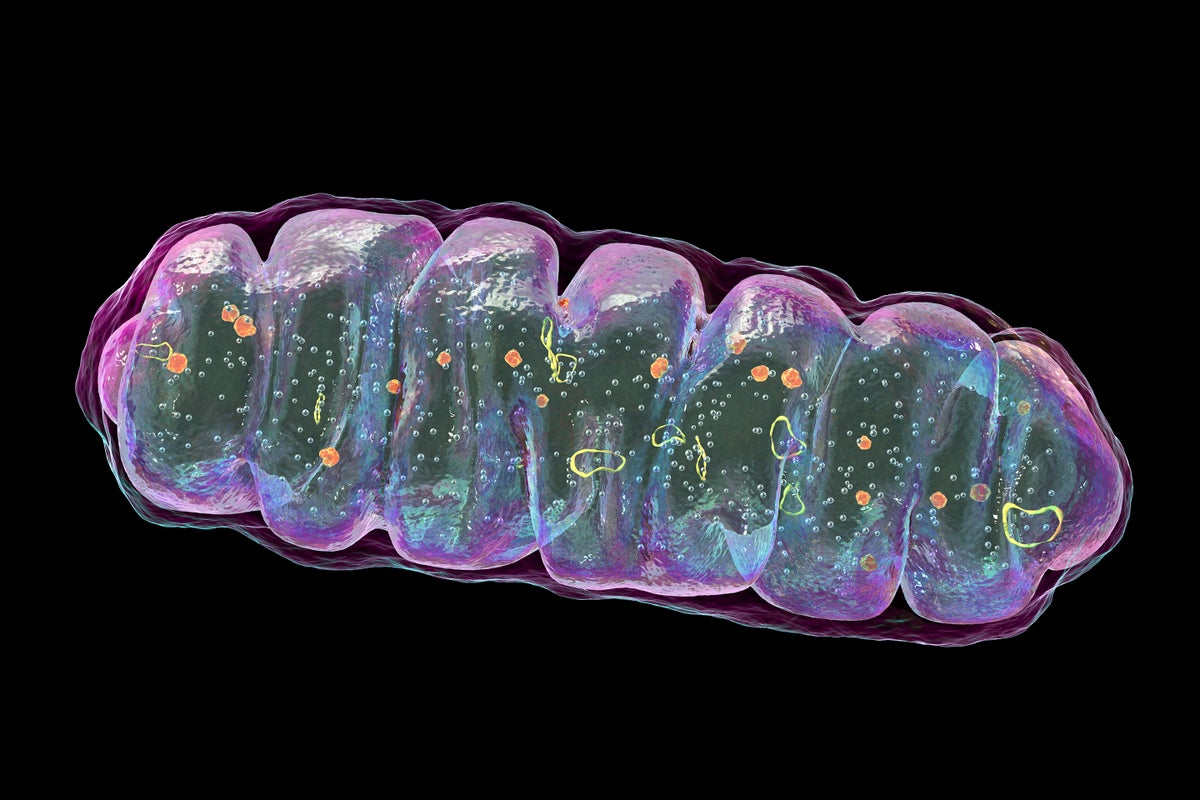
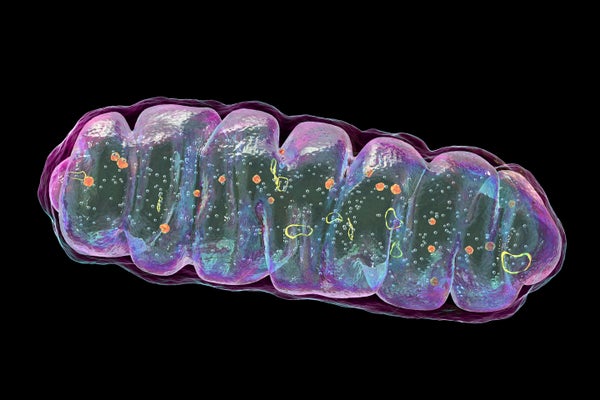
    Illustration of a mitochondrion with circular strands of DNA

    Little loops floating inside this illustration of a mitochondrion represent its DNA.

    Kateryna Kon/Science Photo Library/Getty Images

    Most of us remember two things from high school biology: that mitochondria are the powerhouses of cells and that we inherit stable sets of chromosomes from our two parents. Both truisms are only sort of true. Mitochondria do far more than produce energy—they also compress and transmit information about the state of a cell. And our chromosomes, although safely ensconced within the cell’s nucleus, are far from stable. A piece of genetic code from another chromosome, or even from a virus, can embed itself into the DNA chain, changing how it—and we—function.

    Mitochondria descend from an ancient bacterium that was swallowed, millions of years ago, by an ancestral cell from which all life descends. As living beings, they have their own genes, called mitochondrial DNA (mtDNA). Starting in the 1960s, researchers showed—first in mice and then in yeasts and humans—that pieces of mtDNA can somehow also jump into chromosomes and named these insertions nuclear mitochondrial DNA segments, or numts (pronounced “new mites”). In 2022 Patrick Chinnery of the University of Cambridge and his colleagues cataloged numts from more than 60,000 humans and found that new ones are created once in about 4,000 births. All of us walk around with numts that we’ve inherited from ancestors in our chromosomes.

    In 2024, however, Weichen (Arthur) Zhou and Ryan Mills, both at the University of Michigan, and Kalpita Karan, then at my laboratory at Columbia University, in collaboration with me and others, made an astonishing discovery. Numtogenesis, or the formation of new numts, happens not only across millennia but likely several times over during a person’s lifespan. In cultures of human cells, numtogenesis happens over days to weeks. Further, numts seem to be particularly concentrated in the brain—and may influence how long we live.


    On supporting science journalism

    If you’re enjoying this article, consider supporting our award-winning journalism by subscribing. By purchasing a subscription you are helping to ensure the future of impactful stories about the discoveries and ideas shaping our world today.


    These groundbreaking studies began at Rush University Medical Center, where a team led by neuroscientist David Bennett sequenced DNA from more than 1,000 brain samples from individuals enrolled in a long-term study of aging. Scanning these data, Zhou, Mills, Karan and their colleagues found that chromosomes in the brain cellshad many numts. Intriguingly, the prefrontal cortex, the seat of high-level rational thinking, had a particularly high concentration of these intrusions. And people with more numts in their prefrontal cortex had died earlier. People with normal cognition had lost as many as five years of life per numt. (In people with dementia caused by Alzheimer’s disease, numts didn’t seem to matter: their age at death was unrelated to how many numts they had in their prefrontal cortex.)

    All previous searches for numts had been performed using immune cells from blood samples; that is why the scientific community had missed this stunning fact for decades. Blood immune cells undergo constant quality control, so only the best cells survive to be sequenced. Presumably, immune cells with numts are eliminated—or maybe numts just don’t happen in immune cells. In the brain, bad neurons cannot be so readily discarded, which may be why neurons with genome alterations from numts persisted long enough to meet the DNA sequencer.

    You might wonder how these mtDNA fragments get inside the nucleus in the first place. Mitochondria, we now know, have many ways to release their DNA into the cytoplasm surrounding their host cell. Once there, mtDNA fragments can make their way into the nucleus either through pores in its wall or, if the cell divides, seep in while the envelope dissolves and reassembles. Either way, the release of mtDNA appears to be a process controlled by mitochondria.

    The fact that numts can adversely affect health is perhaps not so surprising. Retrotransposons, gene fragments that jump from one chromosome to another, trigger inflammation and possibly contribute to aging. In 2017 Keshav K. Singh and others at University of Alabama at Birmingham, showed that numtogenesis speeds up in cancerous cells and may contribute to cancer formation.

    But how fast can new numts arise in normal cells? To address this question in our group’s 2024 study, Karan used the Cellular Lifespan Study database developed by Gabriel Sturm, in which cells from different individuals are cultured in vitro and observed over time as they age. She found that cultured human cells accumulate one new numt every 13 days on average—a remarkable rate. Taking cells out of the body accelerates multiple hallmarks of aging, which may explain why numtogenesis happens so fast in cell cultures.

    We also discovered that stress accelerates numtogenesis. Work that Sturm, Natalia Bobba-Alves, then at Columbia, I and our colleagues published in 2023 shows that “energetic” stress, caused by energy deficiency within a cell, can compromise the health of mitochondria. Karan found that when the mitochondria were dysfunctional, as occurs in people with mitochondrial diseases (and, to lesser extent, in those with diabetes and other metabolic disorders), cells in cultures accumulated numts up to 4.7 times more rapidly. Cells with defective mitochondria showed a new numt about once in every three days.

    These findings suggest a new way in which stress can affect the biology of our cells: making mitochondria more likely to release pieces of mtDNA that then “infect” chromosomes. And they add one more way in which mitochondria shape our health beyond energy transformation: directly changing the sequence of our genome. Numtogenesis may serve to speed up evolution as a response to stress.

    Most importantly, given that people with more numts in their brain die earlier, we must also add numtogenesis to the list of mechanisms that may contribute to how long we live. Mitochondria give us energy and life, for sure, but they may also contribute to the dimming of our inner flame of life.

    [ad_2]

    Original Source Link

    Share. Facebook Twitter Pinterest LinkedIn WhatsApp Email Reddit Telegram
    Previous ArticleHollywood Flashback: When Denzel Fired Back at the Health Care System Onscreen
    Next Article AlphaTheta DDJ-FLX2 Review: A Great Entry-Level DJ Controller

    RELATED POSTS

    Voyager 1 Beat the Odds and Is Still Working a Light-Day Away From Earth

    November 18, 2026

    The Dark Side of the Moon Was the Brightest Part of 2026

    November 17, 2026

    Just 400 US Data Centers Use More Electricity Than Michigan

    November 16, 2026

    The EPAs Chemical-Detecting Plane Isnt Doing Its Job Anymore

    November 16, 2026

    Its Getting Too Dry for Even Cactuses to Survive

    November 15, 2026

    New Species of Giant Fungus Discovered in China Grows up to 20 Inches Tall

    November 15, 2026
    latest posts

    Senate advances sweeping energy legislation in first major action since midterm elections

    WASHINGTON — The Senate on Monday advanced bipartisan legislation aimed at speeding up permitting reviews…

    The Expedia breach shows why companies must stop holding data they do not need | Fortune

    November 22, 2026

    You Can See Everything review – stranger than fiction

    November 22, 2026

    Signal restricts mobile screenshots as it confronts existential threat of AI surveillance | TechCrunch

    November 21, 2026

    Here are the top AI agents that can live in your text messages  | TechCrunch

    November 21, 2026

    You either take the wheel, or were going to run into the wall: The founder who sold Wrike for $2.25 billion forced his engineers to build around AI | Fortune

    November 21, 2026

    Book Riots Deals of the Day for November 21, 2026

    November 21, 2026
    Categories
    • Books (1,622)
    • Business (6,527)
    • Cover Story (17)
    • Film (6,461)
    • Lifestyle (4,501)
    • Music (6,537)
    • Politics (6,513)
    • Science (5,867)
    • Technology (6,465)
    • Television (6,158)
    • Uncategorized (3)
    • US News (6,510)
    popular posts

    Why LearningToday Community Are Essential For Modern Education?

    [ad_1] In the current learning world dominated with a dynamic environment; teamwork is not an…

    Week 10 veto results set new drama in motion

    September 22, 2024

    Interview with Amy van Rijthoven, Author of Shadows and Black in the Light

    June 25, 2025

    Americans’ Personal Finances Worst Since The Great Recession

    February 10, 2023
    Archives
    Browse By Category
    • Books (1,622)
    • Business (6,527)
    • Cover Story (17)
    • Film (6,461)
    • Lifestyle (4,501)
    • Music (6,537)
    • Politics (6,513)
    • Science (5,867)
    • Technology (6,465)
    • Television (6,158)
    • Uncategorized (3)
    • US News (6,510)
    About Us

    We are a creativity led international team with a digital soul. Our work is a custom built by the storytellers and strategists with a flair for exploiting the latest advancements in media and technology.

    Most of all, we stand behind our ideas and believe in creativity as the most powerful force in business.

    What makes us Different

    We care. We collaborate. We do great work. And we do it with a smile, because we’re pretty damn excited to do what we do. If you would like details on what else we can do visit out Contact page.

    Our Picks

    You either take the wheel, or were going to run into the wall: The founder who sold Wrike for $2.25 billion forced his engineers to build around AI | Fortune

    November 21, 2026

    Book Riots Deals of the Day for November 21, 2026

    November 21, 2026

    Startup sues Apple in India over tap-to-share contacts feature | TechCrunch

    November 21, 2026
    © 2026 Beverly Hills Examiner. All rights reserved. All articles, images, product names, logos, and brands are property of their respective owners. All company, product and service names used in this website are for identification purposes only. Use of these names, logos, and brands does not imply endorsement unless specified. By using this site, you agree to the Terms & Conditions and Privacy Policy.

    Type above and press Enter to search. Press Esc to cancel.

    We use cookies on our website to give you the most relevant experience by remembering your preferences and repeat visits. By clicking “Accept All”, you consent to the use of ALL the cookies. However, you may visit "Cookie Settings" to provide a controlled consent.
    Cookie SettingsAccept All
    Manage consent

    Privacy Overview

    This website uses cookies to improve your experience while you navigate through the website. Out of these, the cookies that are categorized as necessary are stored on your browser as they are essential for the working of basic functionalities of the website. We also use third-party cookies that help us analyze and understand how you use this website. These cookies will be stored in your browser only with your consent. You also have the option to opt-out of these cookies. But opting out of some of these cookies may affect your browsing experience.
    Necessary
    Always Enabled
    Necessary cookies are absolutely essential for the website to function properly. These cookies ensure basic functionalities and security features of the website, anonymously.
    CookieDurationDescription
    cookielawinfo-checkbox-analytics11 monthsThis cookie is set by GDPR Cookie Consent plugin. The cookie is used to store the user consent for the cookies in the category "Analytics".
    cookielawinfo-checkbox-functional11 monthsThe cookie is set by GDPR cookie consent to record the user consent for the cookies in the category "Functional".
    cookielawinfo-checkbox-necessary11 monthsThis cookie is set by GDPR Cookie Consent plugin. The cookies is used to store the user consent for the cookies in the category "Necessary".
    cookielawinfo-checkbox-others11 monthsThis cookie is set by GDPR Cookie Consent plugin. The cookie is used to store the user consent for the cookies in the category "Other.
    cookielawinfo-checkbox-performance11 monthsThis cookie is set by GDPR Cookie Consent plugin. The cookie is used to store the user consent for the cookies in the category "Performance".
    viewed_cookie_policy11 monthsThe cookie is set by the GDPR Cookie Consent plugin and is used to store whether or not user has consented to the use of cookies. It does not store any personal data.
    Functional
    Functional cookies help to perform certain functionalities like sharing the content of the website on social media platforms, collect feedbacks, and other third-party features.
    Performance
    Performance cookies are used to understand and analyze the key performance indexes of the website which helps in delivering a better user experience for the visitors.
    Analytics
    Analytical cookies are used to understand how visitors interact with the website. These cookies help provide information on metrics the number of visitors, bounce rate, traffic source, etc.
    Advertisement
    Advertisement cookies are used to provide visitors with relevant ads and marketing campaigns. These cookies track visitors across websites and collect information to provide customized ads.
    Others
    Other uncategorized cookies are those that are being analyzed and have not been classified into a category as yet.
    SAVE & ACCEPT