
Close Menu
Beverly Hills Examiner

    Subscribe to Updates

    Get the latest creative news from FooBar about art, design and business.

    What's Hot

    Pat McAfee’s Album Is Too Boring to Be Polarizing: Review

    August 15, 2026

    People are going to lengths to stop themselves from being filmed through Meta’s ‘pervert glasses’

    August 15, 2026

    Trump Hid In A Catering Truck Because Netanyahu Scared Him

    August 15, 2026
    Facebook X (Twitter) Instagram
    Beverly Hills Examiner
    • Home
    • US News
    • Politics
    • Business
    • Science
    • Technology
    • Lifestyle
    • Music
    • Television
    • Film
    • Books
    • Contact
      • About
      • Amazon Disclaimer
      • DMCA / Copyrights Disclaimer
      • Terms and Conditions
      • Privacy Policy
    Beverly Hills Examiner
    Home»Science»Keeping a Business Safe without a Mask Mandate Requires a Nuanced Approach
    Science

    Keeping a Business Safe without a Mask Mandate Requires a Nuanced Approach

    By AdminMay 27, 2022
    Facebook Twitter Pinterest LinkedIn WhatsApp Email Reddit Telegram
    Keeping a Business Safe without a Mask Mandate Requires a Nuanced Approach


    All remaining U.S. states with COVID-related public mask requirements have recently lifted them, and in mid-April, a district judge in Florida ended a federal mask mandate on trains, planes, buses or other public transport. For the first time in about two years, consumers can shop, exercise, travel, work and lounge in public spaces without wearing a mask, despite recent surges in COVID infections.

    Since the onset of the pandemic, most restaurants, grocery stores and retail shops have followed state and national guidelines by requiring masks. But as these mandates have been lifted, companies have become responsible for determining and communicating their mask policies to customers, and a number have continued to recommend that employees and consumers mask up to prevent the spread of COVID.

    There are several reasons companies may still wish to have a store mask policy: First, the virus remains highly transmissible and unpredictable; COVID hospitalization in Maine has been high recently, despite a population vaccination rate of 80 percent. Companies may want to protect the health and safety of their workforce to avoid complications that may arise if they have a larger COVID outbreak. Second, retailers need to attract business and appeal to a wide spectrum of customers who may have varying comfort levels with going maskless. According to an Associated Press poll conducted in late April, 49 percent of U.S. adults were in favor of requiring masks for restaurant and store workers who interact with customers, and 56 percent support them for people traveling on airplanes, trains or public transit.

    As behavioral scientists studying consumer behavior, we dug deeper into public response to mask policies and found that businesses are threading a tight needle; consumers use mask policies, or lack thereof, as a proxy for a company’s political identity, leading consumers to punish or reward a business based on the sign that’s on the door. Many businesses suffered during the pandemic—many to the point of permanently closing—making it all the more crucial for businesses to avoid alienating large segments of consumers.

    Today, and for the indefinite future, COVID is still among us, and we don’t know if the next variant will be mild or deadly. In the absence of government mandates, which effectively shield businesses from being politicized for a mask policy, businesses that wish to administer a mask policy must take a nuanced approach to avoid consumer backlash. Larger companies should set their policies at the corporate level to be consistent across all stores and offices. Companies should also communicate that they are issuing a policy in order to keep their employees healthy so they can keep their business open to serve the community. Behaving consistently and communicating the apolitical motives of a policy can reduce company politicization and consumer retaliation.

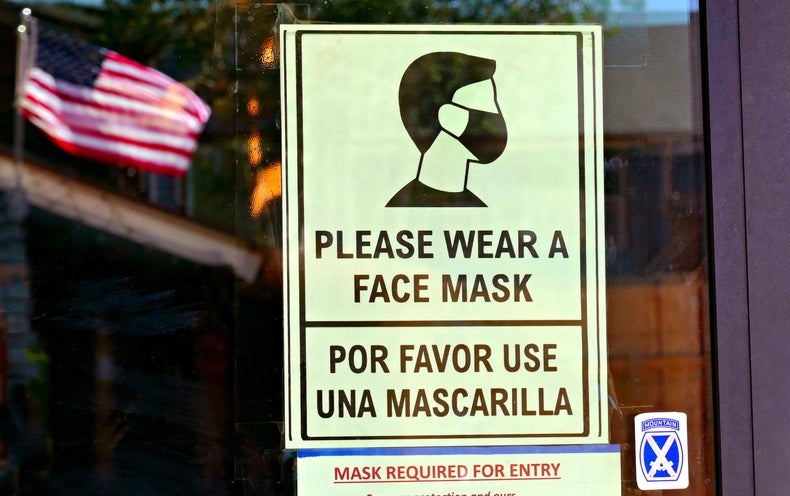
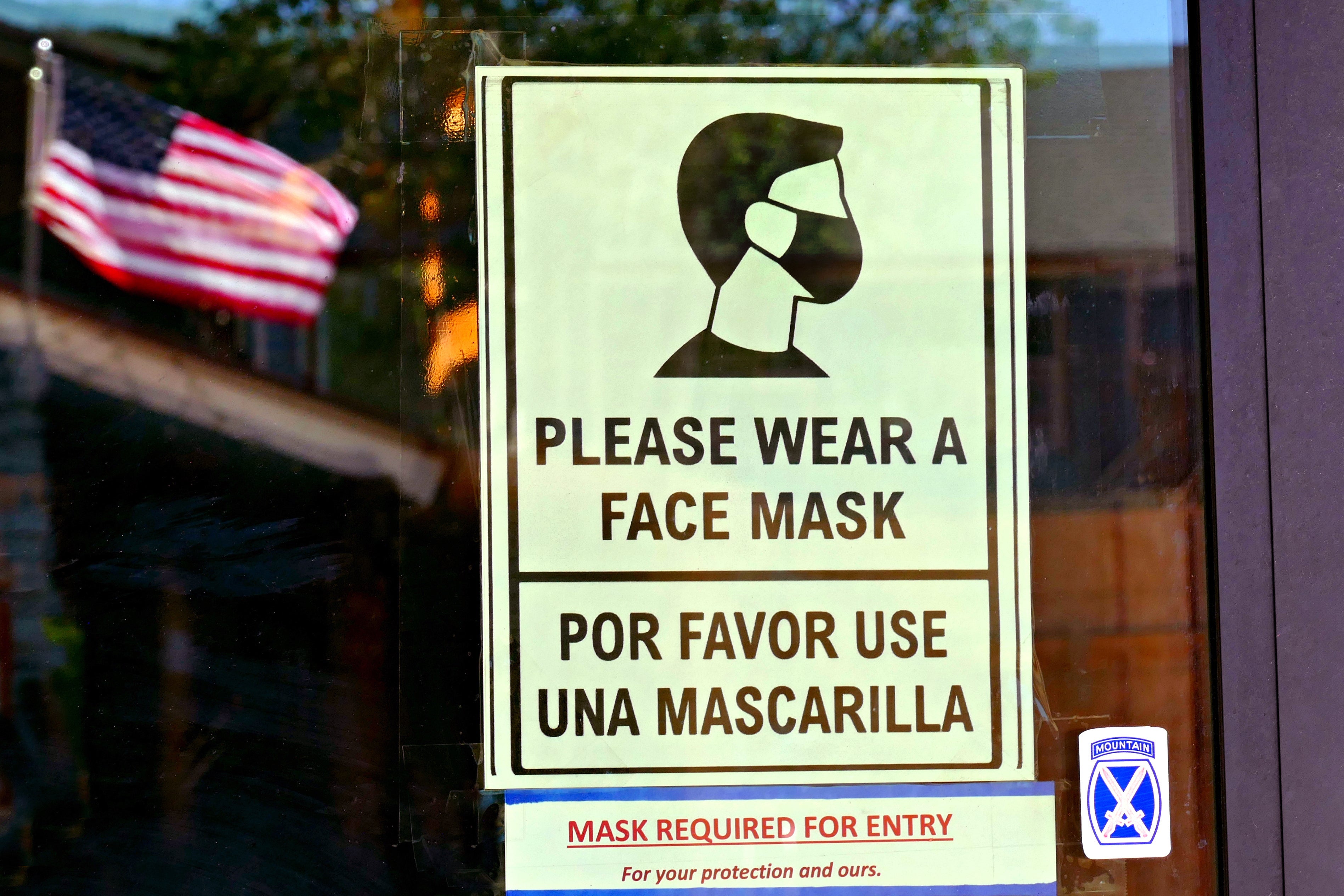
    As part of our research, we surveyed 5,560 people across eight studies during the COVID pandemic to evaluate consumer response to company policies regarding mask wearing, and how such policies influence both consumers’ beliefs about the business and their interest in shopping there. In our studies, we asked people to evaluate stores with storefront signs communicating that masks are required, recommended or not required; or where the sign does not communicate a mask policy (and simply says “we are open”).

    We consistently found that consumers inferred that stores had a political identity based on their mask policy. Stores overtly not requiring masks were perceived to be conservative, while stores with mask requirements were perceived to be liberal. Those that lacked a policy were perceived to be neither liberal nor conservative, whereas stores with a mask recommendation fell somewhere in between slightly liberal and neutral. Importantly, these perceptions were very stable across demographic groups or political ideologies. Almost everyone endorses the stereotype that a company with a mask policy is liberal.

    Despite this general belief, we also find that public responses to store policies are consistently polarized, much like partisan responses to government policies. That is, whether consumers infer that having a mask policy follows a political agenda depends on consumers’ own political ideology. Conservative consumers in the study believed that stores with mask policies were politically motivated and thus sought to punish the stores by expressing a desire not to make purchases. On the other hand, liberal consumers believed the stores were just doing the right thing for public health and thus sought to reward them with patronage.

    Responses to these mask policies have changed significantly in the past few weeks as mask mandates have been lifted. Early in the pandemic, when the norm (and the public health guideline) was a mask requirement, recommending but not requiring a mask was the most effective policy for companies: it appealed to liberal consumers by advocating mask wearing, but also appealed to conservative consumers by offering freedom of choice.

    When indoor mask mandates were issued at the state and national level, many people argued these regulations would hurt business. We observed the opposite. Since companies were being forced to administer a mask mandate, consumers did not perceive them as advocating a political stance. The companies were simply viewed as following the law. Thus, government mandates allowed businesses to effectively avoid alienating consumers, while also increasing compliance.

    Now that mask mandates have been lifted, we see that a company’s mask policy sends a much stronger political signal than it did earlier in the pandemic. Mask requirements are now viewed as more liberal and politically motivated across the spectrum, and mask recommendations are no longer the best option from a business standpoint, as they fail to appeal to conservative consumers (although they still appeal to liberals). Thus, the best way to implement COVID policies has become much more nuanced.

    There are three ways in which businesses, especially those in conservative areas, can communicate a store mask policy without being viewed as overtly political. First, a corporate-level policy. Not only does it set a precedent to treat all consumers equally, but a corporate strategy also protects managers at the local level from adverse reactions from conservative consumers. As our research shows, mask mandates are more attractive to conservatives when the policy is attributed to external sources (for example, a government mandate or a larger company policy), thus shifting the responsibility and blame away from the store itself.

    Second, companies can attribute mask policies to business concerns, such as keeping their employees healthy and their doors open. This can help consumers realize that there are nonpolitical motives at play, in turn encouraging greater patronage and compliance.

    Third, companies may also consider if their intraorganizational or operational features already signal a liberal political ideology (for example, a grocer known for organic, fair-trade goods) and communicate policies consistent with that ideology. Moreover, companies that have a mission to advance social equity and health may benefit by communicating their company mission statement alongside their mask policy. When a mask policy is aligned with a larger company belief system, it may be perceived as a company wishing to behave consistently, which can ultimately lead to greater trust and patronage.

    Since the novel coronavirus was first identified in the U.S. in early 2020, there have been more than 81 million cases and likely more than one million deaths. Although cases have dropped significantly in recent months, the virus’ unpredictable nature continues to challenge businesses’ ability to operate safely and appeal to a wide range of customers. And this requires a nuanced approach to COVID policies.

    This is an opinion and analysis article, and the views expressed by the author or authors are not necessarily those of Scientific American.


    Original Source Link

    Share. Facebook Twitter Pinterest LinkedIn WhatsApp Email Reddit Telegram
    Previous ArticleBroker – first-look review
    Next Article AstroForge Asteroid Mining Company Raises $13-Million for Future Missions Seeking Platinum-Group Metals

    RELATED POSTS

    Big Tech Wants to Harvest Your Thoughts

    August 15, 2026

    Are Electrons Driving Us Crazy? By Howard Bloom

    August 14, 2026

    The Real Reason Data Center Gas Power Plants Are So Dirty

    August 14, 2026

    There’s a Fatty Liver Epidemic. AI Could Help Get Ahead of It

    August 14, 2026

    Neuroscientists have vastly underestimated brain cells’ computing power

    August 13, 2026

    The Best Photos of the Big August Solar Eclipse

    August 13, 2026
    latest posts

    Pat McAfee’s Album Is Too Boring to Be Polarizing: Review

    Former NFL punter and current podcasting star Pat McAfee is branching out into music with…

    People are going to lengths to stop themselves from being filmed through Meta’s ‘pervert glasses’

    August 15, 2026

    Trump Hid In A Catering Truck Because Netanyahu Scared Him

    August 15, 2026

    Caitlin Clark overcomes injury scare, drops 29 points on Dallas Wings as Fever take top spot in East

    August 15, 2026

    New York City Lawmakers Push to ‘Ban the Scan’ at MSG

    August 15, 2026

    Big Tech Wants to Harvest Your Thoughts

    August 15, 2026

    Anne Hathaway Says Films Where Dogs Die Should Be Rated R

    August 15, 2026
    Categories
    • Books (1,426)
    • Business (6,330)
    • Cover Story (9)
    • Film (6,269)
    • Lifestyle (4,327)
    • Music (6,340)
    • Politics (6,314)
    • Science (5,680)
    • Technology (6,265)
    • Television (5,960)
    • Uncategorized (3)
    • US News (6,315)
    popular posts

    Conan O’Brien Singis with Austrian Extreme Metal Band: Watch

    Conan O’Brien just went to the extreme while filming a new season of his travel…

    The Wellness Gift Guide for Every Occasion

    August 23, 2022

    ‘SLOMW’ Cast Turns On Taylor Frankie Paul After Violent Incident

    March 17, 2026

    Book Riot’s Deals of the Day for August 8, 2026

    August 8, 2026
    Archives
    Browse By Category
    • Books (1,426)
    • Business (6,330)
    • Cover Story (9)
    • Film (6,269)
    • Lifestyle (4,327)
    • Music (6,340)
    • Politics (6,314)
    • Science (5,680)
    • Technology (6,265)
    • Television (5,960)
    • Uncategorized (3)
    • US News (6,315)
    About Us

    We are a creativity led international team with a digital soul. Our work is a custom built by the storytellers and strategists with a flair for exploiting the latest advancements in media and technology.

    Most of all, we stand behind our ideas and believe in creativity as the most powerful force in business.

    What makes us Different

    We care. We collaborate. We do great work. And we do it with a smile, because we’re pretty damn excited to do what we do. If you would like details on what else we can do visit out Contact page.

    Our Picks

    Big Tech Wants to Harvest Your Thoughts

    August 15, 2026

    Anne Hathaway Says Films Where Dogs Die Should Be Rated R

    August 15, 2026

    ‘Love Island USA’ Was Trinity Tatum Removed From Reunion?

    August 15, 2026
    © 2026 Beverly Hills Examiner. All rights reserved. All articles, images, product names, logos, and brands are property of their respective owners. All company, product and service names used in this website are for identification purposes only. Use of these names, logos, and brands does not imply endorsement unless specified. By using this site, you agree to the Terms & Conditions and Privacy Policy.

    Type above and press Enter to search. Press Esc to cancel.

    We use cookies on our website to give you the most relevant experience by remembering your preferences and repeat visits. By clicking “Accept All”, you consent to the use of ALL the cookies. However, you may visit "Cookie Settings" to provide a controlled consent.
    Cookie SettingsAccept All
    Manage consent

    Privacy Overview

    This website uses cookies to improve your experience while you navigate through the website. Out of these, the cookies that are categorized as necessary are stored on your browser as they are essential for the working of basic functionalities of the website. We also use third-party cookies that help us analyze and understand how you use this website. These cookies will be stored in your browser only with your consent. You also have the option to opt-out of these cookies. But opting out of some of these cookies may affect your browsing experience.
    Necessary
    Always Enabled
    Necessary cookies are absolutely essential for the website to function properly. These cookies ensure basic functionalities and security features of the website, anonymously.
    CookieDurationDescription
    cookielawinfo-checkbox-analytics11 monthsThis cookie is set by GDPR Cookie Consent plugin. The cookie is used to store the user consent for the cookies in the category "Analytics".
    cookielawinfo-checkbox-functional11 monthsThe cookie is set by GDPR cookie consent to record the user consent for the cookies in the category "Functional".
    cookielawinfo-checkbox-necessary11 monthsThis cookie is set by GDPR Cookie Consent plugin. The cookies is used to store the user consent for the cookies in the category "Necessary".
    cookielawinfo-checkbox-others11 monthsThis cookie is set by GDPR Cookie Consent plugin. The cookie is used to store the user consent for the cookies in the category "Other.
    cookielawinfo-checkbox-performance11 monthsThis cookie is set by GDPR Cookie Consent plugin. The cookie is used to store the user consent for the cookies in the category "Performance".
    viewed_cookie_policy11 monthsThe cookie is set by the GDPR Cookie Consent plugin and is used to store whether or not user has consented to the use of cookies. It does not store any personal data.
    Functional
    Functional cookies help to perform certain functionalities like sharing the content of the website on social media platforms, collect feedbacks, and other third-party features.
    Performance
    Performance cookies are used to understand and analyze the key performance indexes of the website which helps in delivering a better user experience for the visitors.
    Analytics
    Analytical cookies are used to understand how visitors interact with the website. These cookies help provide information on metrics the number of visitors, bounce rate, traffic source, etc.
    Advertisement
    Advertisement cookies are used to provide visitors with relevant ads and marketing campaigns. These cookies track visitors across websites and collect information to provide customized ads.
    Others
    Other uncategorized cookies are those that are being analyzed and have not been classified into a category as yet.
    SAVE & ACCEPT