

Close Menu
Beverly Hills Examiner

    Subscribe to Updates

    Get the latest creative news from FooBar about art, design and business.

    What's Hot

    Someone did the math on the Democrats first 100-day agenda: It saves $30 billion on the Iran war but ultimately adds $4.1 trillion to national debt | Fortune

    November 23, 2026

    How Notable Capital, GIC, and Baillie Gifford bet big on Anthropic before its IPO | TechCrunch

    November 23, 2026

    Why data centers are at the center of the Big Tech backlash | TechCrunch

    November 22, 2026
    Facebook X (Twitter) Instagram
    Beverly Hills Examiner
    • Home
    • US News
    • Politics
    • Business
    • Science
    • Technology
    • Lifestyle
    • Music
    • Television
    • Film
    • Books
    • Contact
      • About
      • Amazon Disclaimer
      • DMCA / Copyrights Disclaimer
      • Terms and Conditions
      • Privacy Policy
    Beverly Hills Examiner
    Home»Science»Loneliness Is Inflaming Our Bodies—And Our Politics
    Science

    Loneliness Is Inflaming Our Bodies—And Our Politics

    By AdminMay 19, 2025
    Facebook Twitter Pinterest LinkedIn WhatsApp Email Reddit Telegram
    Loneliness Is Inflaming Our Bodies—And Our Politics

    [ad_1]

    Loneliness Is Inflaming Our Bodies—And Our Politics

    Medical research shows that social isolation is a serious chronic stressor. You can say something similar about its impact on our political system
    By Kim Samuel

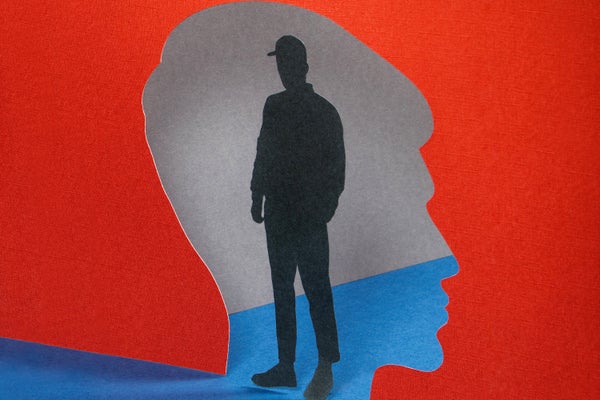
    Paper craft illustration of silhouette of human head with male figure standing inside

    Eugene Mymrin/Getty Images

    Hannah Arendt has been on my mind a lot lately. The 20th-century German-Jewish political philosopher escaped the Nazi Holocaust, and won regard as one of the world’s greatest public intellectuals at a time when few women were appointed to university faculties. She drew on history, literature and her own life to identify the conditions under which open and liberal societies turn into authoritarian states. Seven decades ago she made observations that still offer powerful insights today.

    In The Origins of Totalitarianism,Arendtemphasized one primary factor in the rise of authoritarianism that has little obvious connection to politics: loneliness. While we usually think of loneliness as not having our social needs met, Arendt defined the word as something deeper. Loneliness happens when there are no shared objective facts and no potential collective action to solve shared challenges. It’s a state of being where you can’t trust others. Loneliness, in Arendt’s telling, inflames the connective tissues of a society. It weakens the body politic so that demagogues and despots can prey. “What prepares men for totalitarian domination,” she wrote, “… is the fact that loneliness, once a borderline experience usually suffered in certain marginal social conditions like old age, has become an everyday experience.”

    Arendt—as far as I know—didn’t use the word “inflammation” to describe the effects of social isolation on a country or culture. But it’s the metaphor that, to me, gets to the essence of her warning.


    On supporting science journalism

    If you’re enjoying this article, consider supporting our award-winning journalism by subscribing. By purchasing a subscription you are helping to ensure the future of impactful stories about the discoveries and ideas shaping our world today.


    Inflammation is the body’s response to a sense of threat—a protective, contractionary response that can extend even to the cellular level. It’s a response that can inhibit healing. A community or society that faces a deficit of meaningful connectedness is similarly in a state of perpetual threat; people are unable to listen to one another, to trust each other, to maintain trust in shared institutions, or to collectively overcome divisions.

    This might sound familiar.

    From 2003 to 2022, face-to-face socializing among U.S. men fell by 30 percent. For teenagers, it was a staggering 45 percent. An estimated 12 percent of Americans report having no close friends, a fourfold increase since 1990. While social media was supposed to amplify human connection, the rise of comparison culture, social sorting into echo chambers and the rapid decline of in-person social connection have instead coincided with unprecedented levels of anxiety, depression and distrust.

    It should therefore come as no surprise that, in America, we’re seeing democratic backsliding like Hannah Arendt warned of—including mass polarization, intentional disinformation and a politics of fear, retribution and rage.

    Loneliness inflames societies.

    It just so happens that loneliness inflames the body, too.

    Two decades ago, researchers Louise Hawkley and John Cacioppo at the University of Chicago demonstrated in a landmark study that loneliness acts as a chronic stressor that triggers the body’s innate stress-response systems. Social isolation keeps the hypothalamic-pituitary-adrenal (HPA) axis in a constant state of arousal, driving persistent cortisol release. This hormonal imbalance heightens inflammation. And this can, in turn, weaken the immune system, compromise cardiovascular health and worsen vulnerability to mental health conditions such as depression and anxiety. In short, the absence of meaningful social bonds can literally recalibrate the body’s physiological mechanisms toward greater stress and illness.

    Over the past two decades, further studies have only reinforced the link between loneliness and inflammatory pathways. George Slavich of the University of California, Los Angeles, underscores that experiencing social disconnection can mimic physical threats in how our brains and immune systems respond—magnifying the release of inflammatory agents. From an evolutionary standpoint, sustained isolation disrupts our primal need for social integration—leading to inflammation and a whole host of downstream consequences.

    It’s easy to downplay the loneliness problem. When former U.S. surgeon general Vivek Murthy warned of the dangers of social isolation and proposed solutions, no meaningful government interventions ensued. Likewise, when the U.K. government appointed a minister for loneliness in 2018, many likened the move to a Monty Python sketch rather than seeing it as a serious policy intervention.

    But the medical, social and even political costs of growing social isolation mean that we can no longer afford to ignore it.

    Some solutions are straightforward. Medical innovators are now addressing social isolation through practices like “social prescribing”—wherein health professionals connect patients who are lonely with nonmedical community services, volunteer programs, exercise groups and arts activities to improve their well-being. Instead of writing prescriptions for pills, doctors can prescribe a free pass to a museum, an invitation to join a gardening club, or a support group for people facing similar struggles. A recent multiyear evaluation of nature-oriented social prescribing in the U.K. found that programs significantly helped participants reduce anxiety and improve happiness.

    Other solutions are more systemic. When Pete Buttigieg ran for president in 2020, he laid out an agenda for “belonging and healing”—emphasizing new funding and policies around mental health and addiction as well as national service to rebuild community institutions and promote environmental restoration. Leaders should propose scaling up “belonging infrastructure”—transit, green spaces, cultural venues, and mental health centers—while expanding purpose-driven national service programs like Americorps and investing in local journalism through public grants or tax incentives to restore trusted information sources and restore important foundations of community life.

    This should be a bipartisan cause. Conservatives and liberals alike have an opening to address the crisis by leveraging faith and veterans’ groups–for example, granting tax incentives or small federal matches that could help churches, synagogues, and veterans’ groups build mentoring initiatives, addiction recovery support and efforts to revitalize parks, libraries and civic spaces. There’s also growing bipartisan recognition of the role of social media in the crisis. In tackling big tech’s impact on youth, leaders across the ideological spectrum should push toward full algorithmic transparency, restrictions to exploitative design features, and mandates for robust digital well-being protections for children.

    Like inflammation in the body, social isolation weakens our civic “immune system,” fueling polarization and making us more susceptible to authoritarian impulses. But Hannah Arendt emphasized that the condition is reversible. By investing in the foundations of shared belonging, we can restore our adapt to adapt to the challenges we face—from wildfires to pandemics to misinformation. It’s time to get serious about our healing.

    This is an opinion and analysis article, and the views expressed by the author or authors are not necessarily those of Scientific American.

    [ad_2]

    Original Source Link

    Share. Facebook Twitter Pinterest LinkedIn WhatsApp Email Reddit Telegram
    Previous ArticleThe Secret Agent – first-look review
    Next Article 21 Best High School Graduation Gifts (2025)

    RELATED POSTS

    Voyager 1 Beat the Odds and Is Still Working a Light-Day Away From Earth

    November 18, 2026

    The Dark Side of the Moon Was the Brightest Part of 2026

    November 17, 2026

    Just 400 US Data Centers Use More Electricity Than Michigan

    November 16, 2026

    The EPAs Chemical-Detecting Plane Isnt Doing Its Job Anymore

    November 16, 2026

    Its Getting Too Dry for Even Cactuses to Survive

    November 15, 2026

    New Species of Giant Fungus Discovered in China Grows up to 20 Inches Tall

    November 15, 2026
    latest posts

    Someone did the math on the Democrats first 100-day agenda: It saves $30 billion on the Iran war but ultimately adds $4.1 trillion to national debt | Fortune

    While it’s the responsibility of the U.S. Department of the Treasury to finance the interest…

    How Notable Capital, GIC, and Baillie Gifford bet big on Anthropic before its IPO | TechCrunch

    November 23, 2026

    Why data centers are at the center of the Big Tech backlash | TechCrunch

    November 22, 2026

    Prince Fleet Easton Guests On “If These Walls Could Talk” With Hosts Wendy Stuart and Tym Moss Wednesday, November 25th, 2026

    November 22, 2026

    Faced with influx, prosecutor in Washington says he lacks resources to defend immigration cases

    November 22, 2026

    We lead MITs FutureTech program on the economics of AI: Dont ask if AI can do the job, ask how much it costs | Fortune

    November 22, 2026

    Heres Where to Watch the Miami Dolphins vs. Buffalo Bills Game Live Online

    November 22, 2026
    Categories
    • Books (1,624)
    • Business (6,529)
    • Cover Story (18)
    • Film (6,463)
    • Lifestyle (4,502)
    • Music (6,539)
    • Politics (6,515)
    • Science (5,869)
    • Technology (6,467)
    • Television (6,161)
    • Uncategorized (3)
    • US News (6,512)
    popular posts

    The Best Body Butters for Dry Skin, Per an Expert

    [ad_1] Baby, it’s cold outside! And while there are many joys to wintry weather, my…

    Thrilling Story, Exceptional Narration | BookTrib.

    June 8, 2026

    18 Spring Salads That Are Fresh, Flavorful, and Actually Satisfying

    May 2, 2026

    Samsung’s Affordable Galaxy A36 and Galaxy A26 Will Get 6 Years of Software Updates

    March 2, 2025
    Archives
    Browse By Category
    • Books (1,624)
    • Business (6,529)
    • Cover Story (18)
    • Film (6,463)
    • Lifestyle (4,502)
    • Music (6,539)
    • Politics (6,515)
    • Science (5,869)
    • Technology (6,467)
    • Television (6,161)
    • Uncategorized (3)
    • US News (6,512)
    About Us

    We are a creativity led international team with a digital soul. Our work is a custom built by the storytellers and strategists with a flair for exploiting the latest advancements in media and technology.

    Most of all, we stand behind our ideas and believe in creativity as the most powerful force in business.

    What makes us Different

    We care. We collaborate. We do great work. And we do it with a smile, because we’re pretty damn excited to do what we do. If you would like details on what else we can do visit out Contact page.

    Our Picks

    We lead MITs FutureTech program on the economics of AI: Dont ask if AI can do the job, ask how much it costs | Fortune

    November 22, 2026

    Heres Where to Watch the Miami Dolphins vs. Buffalo Bills Game Live Online

    November 22, 2026

    Book Riots Deals of the Day for November 22, 2026

    November 22, 2026
    © 2026 Beverly Hills Examiner. All rights reserved. All articles, images, product names, logos, and brands are property of their respective owners. All company, product and service names used in this website are for identification purposes only. Use of these names, logos, and brands does not imply endorsement unless specified. By using this site, you agree to the Terms & Conditions and Privacy Policy.

    Type above and press Enter to search. Press Esc to cancel.

    We use cookies on our website to give you the most relevant experience by remembering your preferences and repeat visits. By clicking “Accept All”, you consent to the use of ALL the cookies. However, you may visit "Cookie Settings" to provide a controlled consent.
    Cookie SettingsAccept All
    Manage consent

    Privacy Overview

    This website uses cookies to improve your experience while you navigate through the website. Out of these, the cookies that are categorized as necessary are stored on your browser as they are essential for the working of basic functionalities of the website. We also use third-party cookies that help us analyze and understand how you use this website. These cookies will be stored in your browser only with your consent. You also have the option to opt-out of these cookies. But opting out of some of these cookies may affect your browsing experience.
    Necessary
    Always Enabled
    Necessary cookies are absolutely essential for the website to function properly. These cookies ensure basic functionalities and security features of the website, anonymously.
    CookieDurationDescription
    cookielawinfo-checkbox-analytics11 monthsThis cookie is set by GDPR Cookie Consent plugin. The cookie is used to store the user consent for the cookies in the category "Analytics".
    cookielawinfo-checkbox-functional11 monthsThe cookie is set by GDPR cookie consent to record the user consent for the cookies in the category "Functional".
    cookielawinfo-checkbox-necessary11 monthsThis cookie is set by GDPR Cookie Consent plugin. The cookies is used to store the user consent for the cookies in the category "Necessary".
    cookielawinfo-checkbox-others11 monthsThis cookie is set by GDPR Cookie Consent plugin. The cookie is used to store the user consent for the cookies in the category "Other.
    cookielawinfo-checkbox-performance11 monthsThis cookie is set by GDPR Cookie Consent plugin. The cookie is used to store the user consent for the cookies in the category "Performance".
    viewed_cookie_policy11 monthsThe cookie is set by the GDPR Cookie Consent plugin and is used to store whether or not user has consented to the use of cookies. It does not store any personal data.
    Functional
    Functional cookies help to perform certain functionalities like sharing the content of the website on social media platforms, collect feedbacks, and other third-party features.
    Performance
    Performance cookies are used to understand and analyze the key performance indexes of the website which helps in delivering a better user experience for the visitors.
    Analytics
    Analytical cookies are used to understand how visitors interact with the website. These cookies help provide information on metrics the number of visitors, bounce rate, traffic source, etc.
    Advertisement
    Advertisement cookies are used to provide visitors with relevant ads and marketing campaigns. These cookies track visitors across websites and collect information to provide customized ads.
    Others
    Other uncategorized cookies are those that are being analyzed and have not been classified into a category as yet.
    SAVE & ACCEPT