
Close Menu
Beverly Hills Examiner

    Subscribe to Updates

    Get the latest creative news from FooBar about art, design and business.

    What's Hot

    Jensen Huang scheduled to testify next week in Senate following reinstatement as Nvidia CEO | TechCrunch

    November 23, 2026

    Intuit moves to sell Mailchimp for $3.68 billion as AI reshapes its growth strategy | Fortune

    November 23, 2026

    Everyone Comes Here to Be Wowed: Las Vegas Grand Prix Hits Live Music Jackpot With Backstreet Boys, Kacey Musgraves & More

    November 23, 2026
    Facebook X (Twitter) Instagram
    Beverly Hills Examiner
    • Home
    • US News
    • Politics
    • Business
    • Science
    • Technology
    • Lifestyle
    • Music
    • Television
    • Film
    • Books
    • Contact
      • About
      • Amazon Disclaimer
      • DMCA / Copyrights Disclaimer
      • Terms and Conditions
      • Privacy Policy
    Beverly Hills Examiner
    Home»Science»Map of Bushmeat Consumption Reveals Pandemic Risks
    Science

    Map of Bushmeat Consumption Reveals Pandemic Risks

    By AdminMay 8, 2023
    Facebook Twitter Pinterest LinkedIn WhatsApp Email Reddit Telegram
    Map of Bushmeat Consumption Reveals Pandemic Risks

    [ad_1]

    Map of Bushmeat Consumption Reveals Pandemic Risks

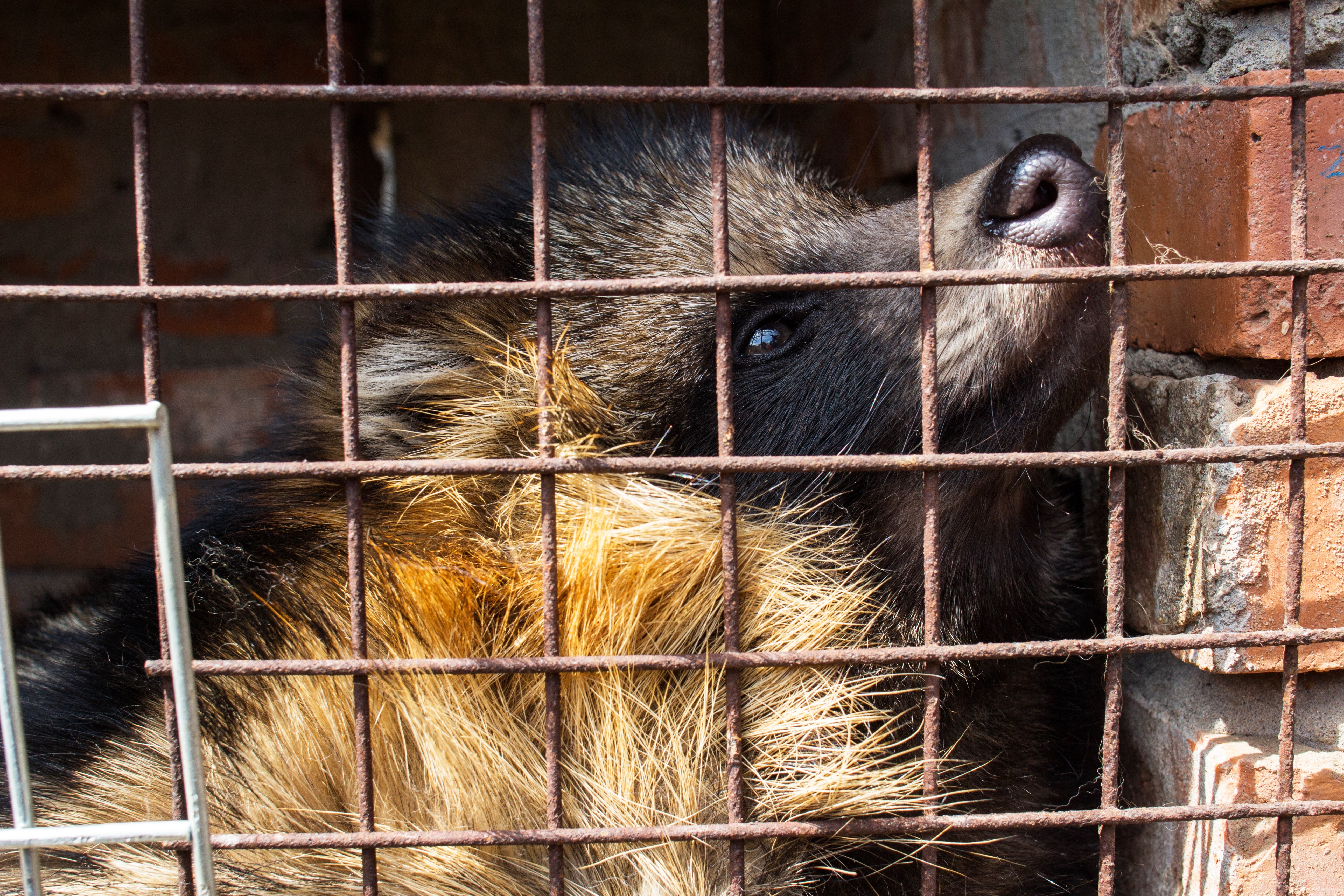
    More than three years after the COVID-causing virus first infected humans, possibly via a wild animal sold at a market in Wuhan, China, little has been done to prevent a similar event from happening in the future. Millions of people around the world consume bushmeat, or meat from wild animals—such as the raccoon dogs reported to have been sold at the Wuhan market—that has minimal regulation or monitoring. But now researchers have published a detailed database that maps and predicts the intensity of bushmeat consumption around the world based on factors that include population density, diversity of animal species and human proximity to natural habitats.

    The map generated using the model shows significant levels of bushmeat consumption across the tropics, with particularly intense activity across West Africa, Central Africa and Southeast Asia. The researchers hope this model and others like it will assist in monitoring and detecting zoonotic diseases, which are diseases that jumped into humans from other animals. The findings were published last month in the U.S. Centers for Disease Control and Prevention journal Emerging Infectious Diseases.

    From HIV/AIDS to Ebola to mpox and possibly COVID, zoonotic diseases have repeatedly battered the world. Indeed, the World Health Organization estimates that more than 70 percent of emerging diseases over the past three decades have been zoonotic. A significant number of these diseases, most notably HIV, likely arose from bushmeat butchering and consumption.

    “You can transmit disease not only from eating certain species” but from contact with blood and other bodily fluids during slaughter, processing or cooking, says Jessica Junker, a primatologist at the German Center for Integrative Biodiversity Research, who conducted a separate survey on the effect of the 2014 Ebola outbreak on bushmeat consumption in Liberia but was not involved in the new study. According to Lauren Coad, a research fellow with the Interdisciplinary Center for Conservation Science at the University of Oxford, as human populations continue to encroach on natural habitats and national appetites increase with population growth, the risk of disease spillover will likely increase.

    Soushieta Jagadesh, an infectious disease expert at the Swiss Federal Institute of Technology Zurich and one of the co-authors of the paper, says that despite the global public health threat posed by animal spillover, information about the precise locations of bushmeat processing and consumption has been sparse until now. “To get a compiled database on bushmeat is quite hard,” Jagadesh says. Earlier databases had limited usefulness because they were done “on a local scale in specific regions but never on a very large scale or a global level.”

    Using coordinates gleaned from scientific literature ranging from 2000 to 2022, the researchers compiled 221 confirmed locations across the tropics and subtropics where bushmeat had been hunted or sold. They overlaid these points on two datasets mapping mammal distribution and distance from protected habitats. This allowed them to create a global bushmeat heat map that placed locations into four categories based on probability of bushmeat consumption: very low, low, intermediate and high. Using this map, they then assessed the percentage of each studied country’s area that was a high-risk zone. Among those hotspots were Equatorial Guinea and Vietnam—countries with widely different geographies, cultures and economies. “We hope that it could help in targeted surveillance,” Jagadesh says, adding that she hopes the newly detailed map will help to direct attention to regions where bushmeat consumption has been underreported. She also believes models such as this could help predict the course of emerging diseases and future spillover events.

    This model represents an important early step in global efforts to contain infectious disease emergence. “It’s a good first attempt,” Junker says, but “we need more detailed information.” Higher-resolution maps with more concrete data points will be needed for future surveillance efforts, she adds.

    Despite the progress made by this research, surveillance is only one component of the effort to contain disease spillover from animals. As long as the bushmeat industry continues in its current form, the risk remains. Unfortunately for conservationists and epidemiologists alike, the practice of bushmeat consumption has proved difficult to uproot. “I certainly think a complete ban on bushmeat is unrealistic,” says Junker, adding that previous bans just funneled business underground. Instead, she says, we need to focus on reducing consumption and preserving endangered hunted species. Primates are probably the most familiar source of bushmeat in the public consciousness, but bushmeat consumption threatens a wide variety of species. Ungulates such as antelopes and small mammals such as porcupines are among the most commonly consumed wild animals in areas such as Nigeria and Cameroon. 

    Reducing consumption may be no easy task. Multiple factors drive the bushmeat industry, and these vary from region to region. So experts agree that any effort to combat it would have to be multipronged. “In rural regions…, it’s [people’s] primary source of protein,” Jagadesh says. Ekta Patel is a researcher at the International Livestock Research Institute in Nairobi and communications coordinator for the institute’s research under the so-called One Health approach, a strategy that was popularized in the past few decades by veterinary pathologists that recognizes the interconnectedness of human, animal and ecological health. She further notes that in at least Kenya and Tanzania, the sale of bushmeat also provides significant income. Junker concurs, adding that efforts to address this must be primarily socioeconomic. “It’s important to provide an alternative income and also protein sources, such as fish and domestic meats,” she says. Jagadesh agrees that alternative food sources such as insects or small livestock may be necessary. But raising more livestock poses the risk of encroaching on vulnerable habitat. Nevertheless, Junker says that nations such as Liberia are physically large enough to be able to accommodate an increase in meat production without posing a serious risk to ecosystems.

    Coad disagrees that transitioning rural areas to livestock consumption should be the focus, saying it is unrealistic to attempt to reduce bushmeat consumption in rural areas with limited alternatives. Instead, she suggests, the focus should be on regulating bushmeat hunting, butchering and sale in rural areas while reducing consumption in urban ones. Coad says that even though urban people eat less bushmeat per capita than their rural counterparts, the size of urban populations means their total consumption is still significant. Further, she notes that unlike bushmeat consumption in rural areas of Africa, urban bushmeat consumption in the continent is largely driven by custom. Junker claims that in many African cities, bushmeat is a “delicacy.” In contrast, Coad notes that in Southeast Asia, the wild animal trade is largely driven by demand for traditional medicine. In such regions where bushmeat is not essential for sustenance, Junker recommends public awareness campaigns, the promotion of farmed meats and the monitoring and regulation of bushmeat markets.

    Experts agree that bushmeat consumption cannot be addressed in isolation. Patel says that a One Health approach is needed if humanity hopes to combat the risks of both disease spillover and ecological collapse. Indeed, even domesticated animals pose a risk of spillover, Coad says, arguing that substituting livestock for bushmeat might not be a cure-all.

    Scientists agree that more needs to be done to combat the bushmeat trade—urgently. “I don’t think we’re doing it as fast as we need to,” Coad says. “We have a big ticking clock.”

    [ad_2]

    Original Source Link

    Share. Facebook Twitter Pinterest LinkedIn WhatsApp Email Reddit Telegram
    Previous ArticleHarka review – a remarkable powder-keg performance from Adam Bessa
    Next Article Invesco cuts Swiggy valuation by half to $5.5 billion

    RELATED POSTS

    Voyager 1 Beat the Odds and Is Still Working a Light-Day Away From Earth

    November 18, 2026

    The Dark Side of the Moon Was the Brightest Part of 2026

    November 17, 2026

    Just 400 US Data Centers Use More Electricity Than Michigan

    November 16, 2026

    The EPAs Chemical-Detecting Plane Isnt Doing Its Job Anymore

    November 16, 2026

    Its Getting Too Dry for Even Cactuses to Survive

    November 15, 2026

    New Species of Giant Fungus Discovered in China Grows up to 20 Inches Tall

    November 15, 2026
    latest posts

    Jensen Huang scheduled to testify next week in Senate following reinstatement as Nvidia CEO | TechCrunch

    Jensen Huang is scheduled to testify before the Senate Banking Committee on December 3, according…

    Intuit moves to sell Mailchimp for $3.68 billion as AI reshapes its growth strategy | Fortune

    November 23, 2026

    Everyone Comes Here to Be Wowed: Las Vegas Grand Prix Hits Live Music Jackpot With Backstreet Boys, Kacey Musgraves & More

    November 23, 2026

    Avengers: Doomsday Final Trailer Shows Major X-Men Moment

    November 23, 2026

    Someone did the math on the Democrats first 100-day agenda: It saves $30 billion on the Iran war but ultimately adds $4.1 trillion to national debt | Fortune

    November 23, 2026

    How Notable Capital, GIC, and Baillie Gifford bet big on Anthropic before its IPO | TechCrunch

    November 23, 2026

    Why data centers are at the center of the Big Tech backlash | TechCrunch

    November 22, 2026
    Categories
    • Books (1,624)
    • Business (6,530)
    • Cover Story (18)
    • Film (6,464)
    • Lifestyle (4,502)
    • Music (6,540)
    • Politics (6,516)
    • Science (5,870)
    • Technology (6,468)
    • Television (6,162)
    • Uncategorized (3)
    • US News (6,513)
    popular posts

    Major Win Against Book Censorship in Florida School District

    [ad_1] Kelly is a former librarian and a long-time blogger at STACKED. She’s the editor/author…

    Spain Advances To Women’s World Cup Final With Victory Over Sweden

    August 15, 2023

    Reed Jobs would rather talk about curing cancer than his last name

    July 12, 2026

    SoftBank plans at least 30% staff cuts to Vision Fund, source confirms

    September 29, 2022
    Archives
    Browse By Category
    • Books (1,624)
    • Business (6,530)
    • Cover Story (18)
    • Film (6,464)
    • Lifestyle (4,502)
    • Music (6,540)
    • Politics (6,516)
    • Science (5,870)
    • Technology (6,468)
    • Television (6,162)
    • Uncategorized (3)
    • US News (6,513)
    About Us

    We are a creativity led international team with a digital soul. Our work is a custom built by the storytellers and strategists with a flair for exploiting the latest advancements in media and technology.

    Most of all, we stand behind our ideas and believe in creativity as the most powerful force in business.

    What makes us Different

    We care. We collaborate. We do great work. And we do it with a smile, because we’re pretty damn excited to do what we do. If you would like details on what else we can do visit out Contact page.

    Our Picks

    How Notable Capital, GIC, and Baillie Gifford bet big on Anthropic before its IPO | TechCrunch

    November 23, 2026

    Why data centers are at the center of the Big Tech backlash | TechCrunch

    November 22, 2026

    Prince Fleet Easton Guests On “If These Walls Could Talk” With Hosts Wendy Stuart and Tym Moss Wednesday, November 25th, 2026

    November 22, 2026
    © 2026 Beverly Hills Examiner. All rights reserved. All articles, images, product names, logos, and brands are property of their respective owners. All company, product and service names used in this website are for identification purposes only. Use of these names, logos, and brands does not imply endorsement unless specified. By using this site, you agree to the Terms & Conditions and Privacy Policy.

    Type above and press Enter to search. Press Esc to cancel.

    We use cookies on our website to give you the most relevant experience by remembering your preferences and repeat visits. By clicking “Accept All”, you consent to the use of ALL the cookies. However, you may visit "Cookie Settings" to provide a controlled consent.
    Cookie SettingsAccept All
    Manage consent

    Privacy Overview

    This website uses cookies to improve your experience while you navigate through the website. Out of these, the cookies that are categorized as necessary are stored on your browser as they are essential for the working of basic functionalities of the website. We also use third-party cookies that help us analyze and understand how you use this website. These cookies will be stored in your browser only with your consent. You also have the option to opt-out of these cookies. But opting out of some of these cookies may affect your browsing experience.
    Necessary
    Always Enabled
    Necessary cookies are absolutely essential for the website to function properly. These cookies ensure basic functionalities and security features of the website, anonymously.
    CookieDurationDescription
    cookielawinfo-checkbox-analytics11 monthsThis cookie is set by GDPR Cookie Consent plugin. The cookie is used to store the user consent for the cookies in the category "Analytics".
    cookielawinfo-checkbox-functional11 monthsThe cookie is set by GDPR cookie consent to record the user consent for the cookies in the category "Functional".
    cookielawinfo-checkbox-necessary11 monthsThis cookie is set by GDPR Cookie Consent plugin. The cookies is used to store the user consent for the cookies in the category "Necessary".
    cookielawinfo-checkbox-others11 monthsThis cookie is set by GDPR Cookie Consent plugin. The cookie is used to store the user consent for the cookies in the category "Other.
    cookielawinfo-checkbox-performance11 monthsThis cookie is set by GDPR Cookie Consent plugin. The cookie is used to store the user consent for the cookies in the category "Performance".
    viewed_cookie_policy11 monthsThe cookie is set by the GDPR Cookie Consent plugin and is used to store whether or not user has consented to the use of cookies. It does not store any personal data.
    Functional
    Functional cookies help to perform certain functionalities like sharing the content of the website on social media platforms, collect feedbacks, and other third-party features.
    Performance
    Performance cookies are used to understand and analyze the key performance indexes of the website which helps in delivering a better user experience for the visitors.
    Analytics
    Analytical cookies are used to understand how visitors interact with the website. These cookies help provide information on metrics the number of visitors, bounce rate, traffic source, etc.
    Advertisement
    Advertisement cookies are used to provide visitors with relevant ads and marketing campaigns. These cookies track visitors across websites and collect information to provide customized ads.
    Others
    Other uncategorized cookies are those that are being analyzed and have not been classified into a category as yet.
    SAVE & ACCEPT