
Close Menu
Beverly Hills Examiner

    Subscribe to Updates

    Get the latest creative news from FooBar about art, design and business.

    What's Hot

    Here are the top AI agents that can live in your text messages  | TechCrunch

    November 21, 2026

    You either take the wheel, or were going to run into the wall: The founder who sold Wrike for $2.25 billion forced his engineers to build around AI | Fortune

    November 21, 2026

    Startup sues Apple in India over tap-to-share contacts feature | TechCrunch

    November 21, 2026
    Facebook X (Twitter) Instagram
    Beverly Hills Examiner
    • Home
    • US News
    • Politics
    • Business
    • Science
    • Technology
    • Lifestyle
    • Music
    • Television
    • Film
    • Books
    • Contact
      • About
      • Amazon Disclaimer
      • DMCA / Copyrights Disclaimer
      • Terms and Conditions
      • Privacy Policy
    Beverly Hills Examiner
    Home»Science»NASA directive might increase the odds of contaminating Mars
    Science

    NASA directive might increase the odds of contaminating Mars

    By AdminOctober 1, 2026
    Facebook Twitter Pinterest LinkedIn WhatsApp Email Reddit Telegram
    NASA directive might increase the odds of contaminating Mars

    [ad_1]

    A new NASA directive seeks to loosen “planetary protection” rules meant to avoid the contamination other worlds with microbial life from Earth.

    The policy shift arrived via a message to NASA personnel that was obtained and shared yesterday by the independent watchdog sites NASA Watch and Astrobiology.com. In it, NASA administrator Jared Isaacman writes that procedures for avoiding contamination “must reflect our current scientific knowledge” and argues that this knowledge has shifted since the current rules were established decades ago.

    The directive “ensures we can use our incredible data to lower costs on our missions,” says Nicky Fox, associate administrator of NASA’s Science Mission Directorate. “This process will also help increase commercial capabilities — getting more missions into space by streamlining space exploration.”


    On supporting science journalism

    If you’re enjoying this article, consider supporting our award-winning journalism by subscribing. By purchasing a subscription you are helping to ensure the future of impactful stories about the discoveries and ideas shaping our world today.


    In 1964 members of the International Council for Science’s Committee on Space Research (COSPAR), led by the United Nations–affiliated International Council of Scientific Unions (now the International Science Council), feared that the breakneck pace of the space race could lead to spacecraft accidentally contaminating alien worlds with microbial life from Earth. If those interplanetary hitchhikers were sufficiently resilient and numerous to form self-sustaining populations on Mars or other planets, they could forever alter those otherwise-pristine environments and sabotage all future efforts to discover true alien life there. So COSPAR issued a resolution that any mission to another potentially habitable or inhabited world must demonstrate a less than one-in-10,000 chance of exposing such places to terrestrial life capable of interplanetary colonization.

    The new directive notes that COSPAR subsequently tightened those rules to account for the flurry of Mars-bound missions, some carrying human crews, that were widely expected to launch in the intervening decades. Codified in 1969, those more stringent and costly restrictions have guided—and greatly limited, some critics say—Mars exploration ever since. But “human exploration did not progress as quickly as all believed,” Isaacman’s message reads, while technology for sterilizing spacecraft has improved markedly. “Our long-standing policies were designed in a different era,” he writes.

    Now, the message states, NASA’s rules will immediately be restored to the looser 1964 restriction of less than a one-in-10,000 chance of biocontamination for each Mars-bound mission. And in the meantime, NASA officials will perform a rapid-fire “modernization assessment” of the current science and technology concerning contamination risk, with a December 2026 deadline for delivering recommendations to lower that threshold even further.

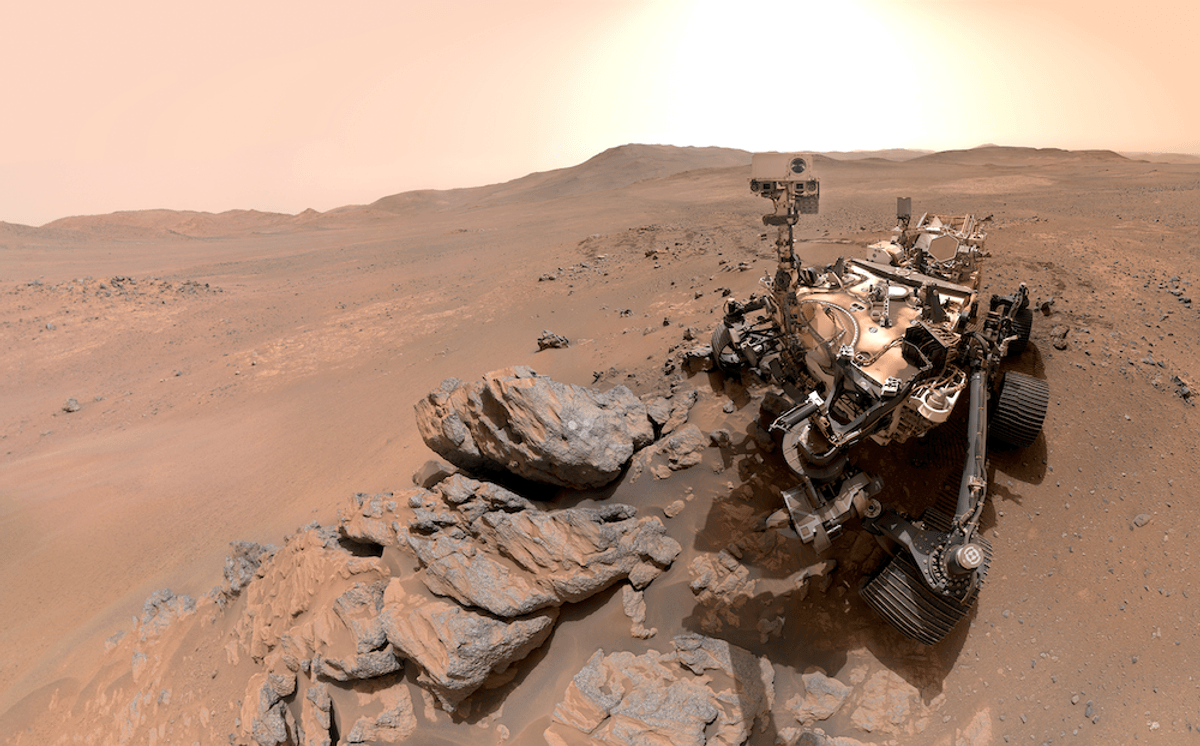
    A statement from NASA clarified that the new directive isn’t “weakening” existing planetary protection protocols so much as updating them. “This directive moves NASA toward a quantitative, performance-based approach that measures actual contamination risk and applies protections accordingly,” the statement said. Additionally, missions looking for past or present life on Mars—such as NASA’s Perseverance rover—will “continue to carry requirements appropriate to protecting those investigations.”

    Such cautions are crucial, experts say, especially since Perseverance has uncovered tantalizing hints of possible ancient biosignatures in some of the rocks it has studied; samples from those rocks are now in limbo, awaiting an as-yet-unclear ride back to Earth for further analysis.

    “We are actively seeking to learn if the organics we have found on Mars are biological in origin,” says Linday Hays, NASA’s senior scientist for Mars exploration. This policy change will not threaten that goal, she says, but “will allow us to bring decades of science from our Mars exploration to help make our processes more straightforward for robotic and, in the future, human exploration of the Red Planet.”

    Editor’s Note (9/30/26): This is a breaking news story and will be updated.

    Subscribe to Support Independent Journalism

    Great science journalism requires human expertise, time, effort and creativity. And it costs money. That’s why I and the journalists here at Scientific American hope you’ll join our community.

    When you subscribe, you are supporting staff and freelance journalists who are passionate about telling science stories that are true, important and compelling. Our editors and reporters are often experts in their fields, which means they understand the nuances of big discoveries and can untangle the breakthroughs from the hype. With a subscription, you are also supporting rigorous fact-checking to ensure the words we publish are precise and accurate. And you’re supporting original illustrations, graphics and photos that bring you closer to an advanced laboratory, an ice sheet in Antarctica or a space mission in orbit. You’re helping us craft other types of high-quality journalism as well: Our newsletters are carefully written, edited and curated by staffers you have or will come to know and love. Our Science Quickly podcast is based on original reporting, collaboration with editors and scientists and exacting production.

    Subscriptions keep this engine running so we can continue to deliver thoughtful, rigorous and independent science journalism to you. In an era of viral misinformation, this work is crucial. If you value what we do, I hope you’ll consider joining us as a subscriber

    [ad_2]

    Original Source Link

    Share. Facebook Twitter Pinterest LinkedIn WhatsApp Email Reddit Telegram
    Previous ArticleLandscape Collector: the scout behind Hollywood’s…
    Next Article Paramount+ Coupon Codes and Deals for September 2026

    RELATED POSTS

    Voyager 1 Beat the Odds and Is Still Working a Light-Day Away From Earth

    November 18, 2026

    The Dark Side of the Moon Was the Brightest Part of 2026

    November 17, 2026

    Just 400 US Data Centers Use More Electricity Than Michigan

    November 16, 2026

    The EPAs Chemical-Detecting Plane Isnt Doing Its Job Anymore

    November 16, 2026

    Its Getting Too Dry for Even Cactuses to Survive

    November 15, 2026

    New Species of Giant Fungus Discovered in China Grows up to 20 Inches Tall

    November 15, 2026
    latest posts

    Here are the top AI agents that can live in your text messages  | TechCrunch

    Rather than downloading another app, a growing number of agents can simply be texted like…

    You either take the wheel, or were going to run into the wall: The founder who sold Wrike for $2.25 billion forced his engineers to build around AI | Fortune

    November 21, 2026

    Startup sues Apple in India over tap-to-share contacts feature | TechCrunch

    November 21, 2026

    The US to become first nation to fully shun a UN Human Rights Council review

    November 21, 2026

    Bassam Tariq Says Marvels Scrapped Blade Reboot Taught Him Lifes Too Short to Make Sh** Films

    November 21, 2026

    Grimes Releases Two New Psy Opera Songs

    November 20, 2026

    Book Riots Deals of the Day for November 20, 2026

    November 20, 2026
    Categories
    • Books (1,621)
    • Business (6,526)
    • Cover Story (17)
    • Film (6,460)
    • Lifestyle (4,501)
    • Music (6,536)
    • Politics (6,512)
    • Science (5,866)
    • Technology (6,464)
    • Television (6,157)
    • Uncategorized (3)
    • US News (6,509)
    popular posts

    The Most Promising Ebola Vaccine Has Been Sitting on the Shelf for 15 Years

    [ad_1] “We thought that’s probably the one that’s least likely to pop up,” Geisbert says.…

    Queens Of The Stone Age’s raucous set

    June 26, 2023

    The Battle For Laikipia review – captures a violent story as it happens

    October 6, 2024

    Todd Blanche Disastrously Admits Trump’s Supreme Court Shadow Docket Scam

    October 5, 2026
    Archives
    Browse By Category
    • Books (1,621)
    • Business (6,526)
    • Cover Story (17)
    • Film (6,460)
    • Lifestyle (4,501)
    • Music (6,536)
    • Politics (6,512)
    • Science (5,866)
    • Technology (6,464)
    • Television (6,157)
    • Uncategorized (3)
    • US News (6,509)
    About Us

    We are a creativity led international team with a digital soul. Our work is a custom built by the storytellers and strategists with a flair for exploiting the latest advancements in media and technology.

    Most of all, we stand behind our ideas and believe in creativity as the most powerful force in business.

    What makes us Different

    We care. We collaborate. We do great work. And we do it with a smile, because we’re pretty damn excited to do what we do. If you would like details on what else we can do visit out Contact page.

    Our Picks

    Grimes Releases Two New Psy Opera Songs

    November 20, 2026

    Book Riots Deals of the Day for November 20, 2026

    November 20, 2026

    Chips can survive the space environment. Can their financing? | TechCrunch

    November 20, 2026
    © 2026 Beverly Hills Examiner. All rights reserved. All articles, images, product names, logos, and brands are property of their respective owners. All company, product and service names used in this website are for identification purposes only. Use of these names, logos, and brands does not imply endorsement unless specified. By using this site, you agree to the Terms & Conditions and Privacy Policy.

    Type above and press Enter to search. Press Esc to cancel.

    We use cookies on our website to give you the most relevant experience by remembering your preferences and repeat visits. By clicking “Accept All”, you consent to the use of ALL the cookies. However, you may visit "Cookie Settings" to provide a controlled consent.
    Cookie SettingsAccept All
    Manage consent

    Privacy Overview

    This website uses cookies to improve your experience while you navigate through the website. Out of these, the cookies that are categorized as necessary are stored on your browser as they are essential for the working of basic functionalities of the website. We also use third-party cookies that help us analyze and understand how you use this website. These cookies will be stored in your browser only with your consent. You also have the option to opt-out of these cookies. But opting out of some of these cookies may affect your browsing experience.
    Necessary
    Always Enabled
    Necessary cookies are absolutely essential for the website to function properly. These cookies ensure basic functionalities and security features of the website, anonymously.
    CookieDurationDescription
    cookielawinfo-checkbox-analytics11 monthsThis cookie is set by GDPR Cookie Consent plugin. The cookie is used to store the user consent for the cookies in the category "Analytics".
    cookielawinfo-checkbox-functional11 monthsThe cookie is set by GDPR cookie consent to record the user consent for the cookies in the category "Functional".
    cookielawinfo-checkbox-necessary11 monthsThis cookie is set by GDPR Cookie Consent plugin. The cookies is used to store the user consent for the cookies in the category "Necessary".
    cookielawinfo-checkbox-others11 monthsThis cookie is set by GDPR Cookie Consent plugin. The cookie is used to store the user consent for the cookies in the category "Other.
    cookielawinfo-checkbox-performance11 monthsThis cookie is set by GDPR Cookie Consent plugin. The cookie is used to store the user consent for the cookies in the category "Performance".
    viewed_cookie_policy11 monthsThe cookie is set by the GDPR Cookie Consent plugin and is used to store whether or not user has consented to the use of cookies. It does not store any personal data.
    Functional
    Functional cookies help to perform certain functionalities like sharing the content of the website on social media platforms, collect feedbacks, and other third-party features.
    Performance
    Performance cookies are used to understand and analyze the key performance indexes of the website which helps in delivering a better user experience for the visitors.
    Analytics
    Analytical cookies are used to understand how visitors interact with the website. These cookies help provide information on metrics the number of visitors, bounce rate, traffic source, etc.
    Advertisement
    Advertisement cookies are used to provide visitors with relevant ads and marketing campaigns. These cookies track visitors across websites and collect information to provide customized ads.
    Others
    Other uncategorized cookies are those that are being analyzed and have not been classified into a category as yet.
    SAVE & ACCEPT