
Close Menu
Beverly Hills Examiner

    Subscribe to Updates

    Get the latest creative news from FooBar about art, design and business.

    What's Hot

    Madonna and Blur Producer Was 69

    August 7, 2026

    How SpaceX’s most-feared trading day turned into a 6% rally

    August 7, 2026

    Trump Turns On Pete Hegseth As His Administration Is Collapsing

    August 7, 2026
    Facebook X (Twitter) Instagram
    Beverly Hills Examiner
    • Home
    • US News
    • Politics
    • Business
    • Science
    • Technology
    • Lifestyle
    • Music
    • Television
    • Film
    • Books
    • Contact
      • About
      • Amazon Disclaimer
      • DMCA / Copyrights Disclaimer
      • Terms and Conditions
      • Privacy Policy
    Beverly Hills Examiner
    Home»Science»New Infrared Contacts Let You See in the Dark
    Science

    New Infrared Contacts Let You See in the Dark

    By AdminMay 25, 2025
    Facebook Twitter Pinterest LinkedIn WhatsApp Email Reddit Telegram
    New Infrared Contacts Let You See in the Dark


    New Contacts Let You See Infrared Light—Even with Your Eyes Closed

    Straight out of science fiction, these contact lenses convert infrared light into visible light that humans can see
    By Elizabeth Gibney & Nature magazine

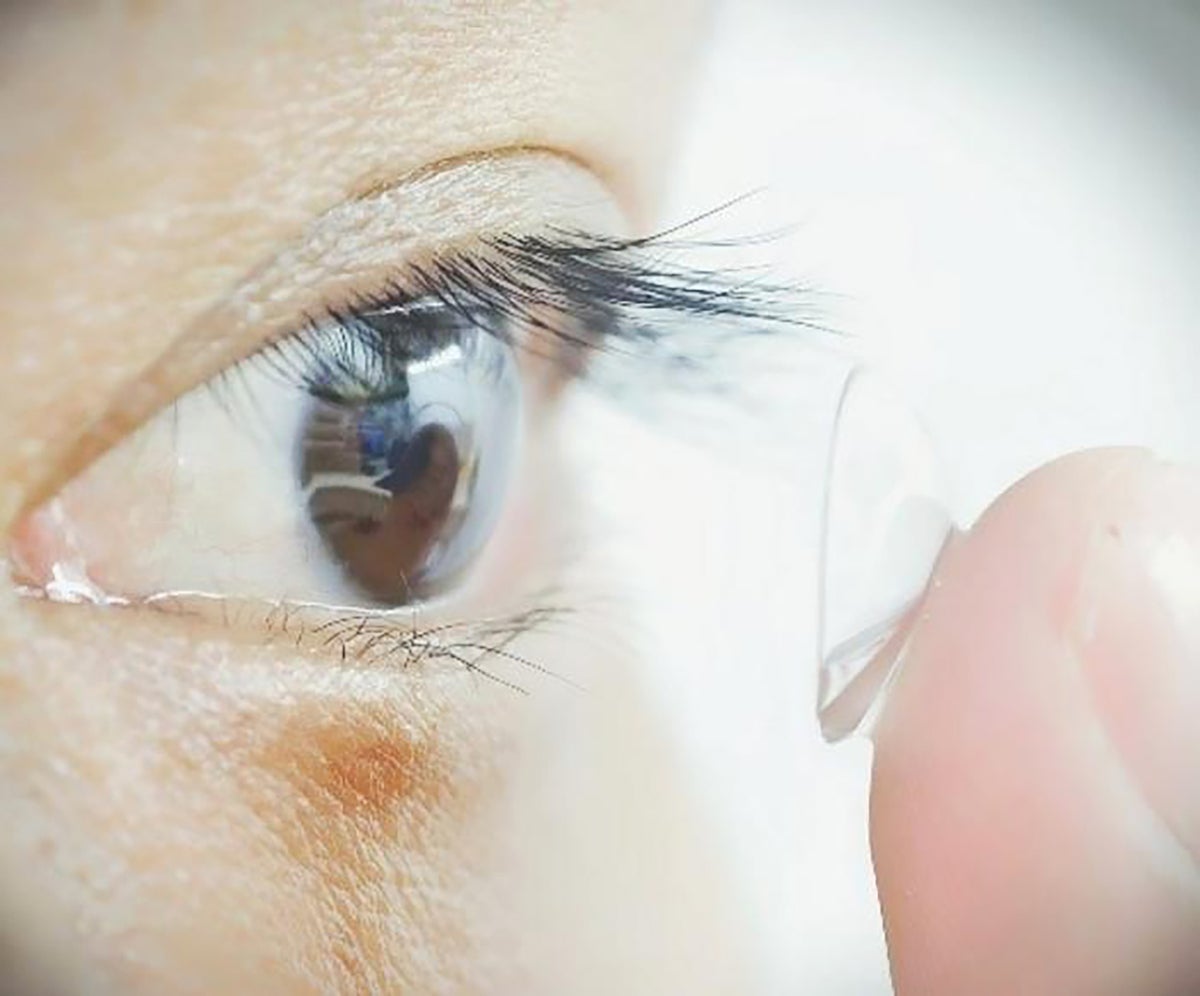
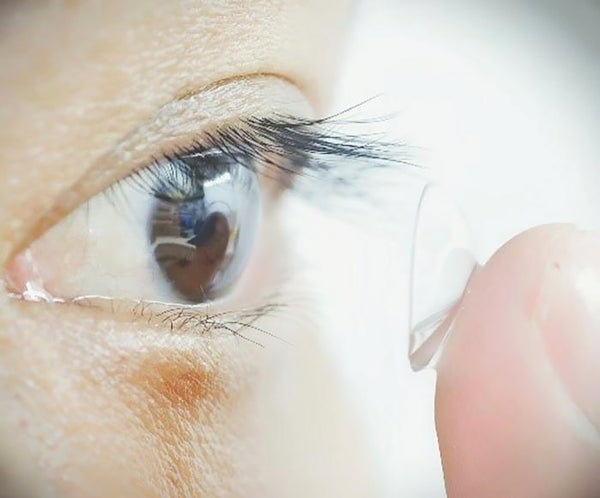
    Study participant putting contacts in

    People who tested a new type of designer contact lens could see flashing infrared signals from a light source.

    Humans have a new way of seeing infrared light, without the need for clunky night-vision goggles. Researchers have made the first contact lenses to convey infrared vision — and the devices work even when people have their eyes closed.

    The team behind the invention, led by scientists at the University of Science and Technology of China (USTC) in Hefei, gave the lenses their power by infusing them with nanoparticles that convert near-infrared light in the 800–1,600-nanometre range into shorter-wavelength, visible light that humans can see, in the 400–700-nanometre range. The researchers estimate that the lenses cost around US$200 per pair to make.

    The technology, which was detailed in Cell on 22 May, “is incredibly cool, just like something out of a science-fiction movie”, says Xiaomin Li, a chemist at Fudan University in Shanghai, China. It opens up “new possibilities for understanding the world around us”, he adds.


    On supporting science journalism

    If you’re enjoying this article, consider supporting our award-winning journalism by subscribing. By purchasing a subscription you are helping to ensure the future of impactful stories about the discoveries and ideas shaping our world today.


    Pros and cons

    Near-infrared light sits just outside the range of wavelengths that humans can normally detect. Some animals can sense infrared light, although probably not well enough to form images.

    Night-vision goggles enable humans to see infrared radiation, but they are bulky and require a power source to work. The new lenses avoid these limitations while also offering richer, multi-coloured infrared images that night-vision goggles, which operate on a monochrome green scale, typically do not.

    However, the lenses do have their own shortcomings. Because the embedded nanoparticles scatter light, the images the lenses create are blurry. The team partially corrected this by putting the technology into glasses with additional lenses that redirect the light. Moreover, unlike night-vision goggles, which amplify light to detect low-level infrared signals, the lenses allow users to see only intense infrared signals, such as those emitted by light-emitting diodes (LEDs).

    For these reasons, some critics don’t think the lenses will prove useful. “I cannot think of any application that would not be fundamentally simpler with infrared goggles,” says Glen Jeffery, a neuroscientist at University College London who specializes in eye health. “Evolution has avoided this for a good reason.”

    Nevertheless, the authors think that their lenses can be further optimized and foresee several possible uses for the invention. For instance, wearers would be able to read anti-counterfeit marks that emit infrared wavelengths but are otherwise invisible to the human eye, says co-author Yuqian Ma, a neuroscientist at the USTC.

    Li, who was not involved in the work, offers another possibility: the lenses might be worn by doctors conducting near-infrared fluorescence surgery, to directly detect and remove cancerous lesions “without relying on bulky traditional equipment”.

    ‘An exhilarating moment’

    To create the contact lenses, the scientists built on previous research in which they gave mice infrared vision by injecting nanoparticles into the animals’ retinas. This time, they took a less invasive approach and added nanoparticles made of rare-earth metals including ytterbium and erbium to a soup of polymer building blocks to form the soft lenses, and then tested them for safety.

    The main challenge, Ma says, was to pack enough nanoparticles into the lenses to convert sufficient infrared light into detectable visible light, while not otherwise altering the lenses’ optical properties, including their transparency.

    Tests in mice showed that animals wearing the lenses tended to choose a dark box that was considered ‘safe’ over one lit up by infrared light, whereas mice without the lenses showed no preference for either box. Humans wearing the lenses could see flickering infrared light from an LED well enough to both pick up Morse code signals and sense which direction the signals were coming from. The lenses’ performance even improved when participants closed their eyes, because near-infrared light easily penetrates the eyelids, whereas visible light, which could have interfered with image formation, does so to a lesser degree.

    “Witnessing people wearing contact lenses and successfully seeing infrared flashes was undoubtedly an exhilarating moment,” Ma says.

    The team now plans to find ways to cram more nanoparticles into the lenses and hopes to develop particles that can convert light with higher efficiency, to improve the technology’s sensitivity. “We have overcome the physiological limitations of human vision, as if opening a brand-new window onto the world,” Ma says.

    This article is reproduced with permission and was first published on May 22, 2025.


    Original Source Link

    Share. Facebook Twitter Pinterest LinkedIn WhatsApp Email Reddit Telegram
    Previous ArticleHoney Don’t! – first-look review
    Next Article Anker Nebula X1 Home Projector Review: Gorgeous Anywhere

    RELATED POSTS

    Scientists Used AI to Create 16 New Viruses

    August 7, 2026

    OpenAI’s latest math breakthroughs commit research misconduct, experts say

    August 7, 2026

    Meteor Showers, Eclipses, and More Are on the August 2026 Astronomical Calendar

    August 6, 2026

    Trump CDC pick Erica Schwartz confirmed to lead nation’s top public health agency

    August 6, 2026

    Gene-Edited Puppies Will Melt Your Heart—but Won’t Trigger Your Allergies

    August 5, 2026

    Wormholes could be the key to time travel

    August 5, 2026
    latest posts

    Madonna and Blur Producer Was 69

    William Orbit, the electronic musician and producer best known for his work with Madonna and…

    How SpaceX’s most-feared trading day turned into a 6% rally

    August 7, 2026

    Trump Turns On Pete Hegseth As His Administration Is Collapsing

    August 7, 2026

    Chris Russo blasts Cubs star Pete Crow-Armstrong over Babe Ruth theory

    August 7, 2026

    Host your own piece of Disrupt: Apply to run a Side Event at TechCrunch Disrupt 2026

    August 7, 2026

    Scientists Used AI to Create 16 New Viruses

    August 7, 2026

    John Waters on Turning 80, Dirty Jokes, Hosting Mosswood Meltdown

    August 7, 2026
    Categories
    • Books (1,411)
    • Business (6,315)
    • Cover Story (9)
    • Film (6,254)
    • Lifestyle (4,314)
    • Music (6,325)
    • Politics (6,297)
    • Science (5,664)
    • Technology (6,249)
    • Television (5,945)
    • Uncategorized (3)
    • US News (6,300)
    popular posts

    How to Repair, Strengthen, and Care for Your Nails

    We may receive a portion of sales if you purchase a product through a link…

    U.S. Places Top Chinese Memory Chip Maker on Export Blacklist

    December 15, 2022

    The Journey of Starting a Successful Veterinary Practice

    May 6, 2023

    Slayer Release ‘Seasons in the Abyss’

    October 9, 2022
    Archives
    Browse By Category
    • Books (1,411)
    • Business (6,315)
    • Cover Story (9)
    • Film (6,254)
    • Lifestyle (4,314)
    • Music (6,325)
    • Politics (6,297)
    • Science (5,664)
    • Technology (6,249)
    • Television (5,945)
    • Uncategorized (3)
    • US News (6,300)
    About Us

    We are a creativity led international team with a digital soul. Our work is a custom built by the storytellers and strategists with a flair for exploiting the latest advancements in media and technology.

    Most of all, we stand behind our ideas and believe in creativity as the most powerful force in business.

    What makes us Different

    We care. We collaborate. We do great work. And we do it with a smile, because we’re pretty damn excited to do what we do. If you would like details on what else we can do visit out Contact page.

    Our Picks

    Scientists Used AI to Create 16 New Viruses

    August 7, 2026

    John Waters on Turning 80, Dirty Jokes, Hosting Mosswood Meltdown

    August 7, 2026

    ‘Baywatch’ Star Erika Eleniak Announces Return to Acting: ‘Something Is Coming’

    August 7, 2026
    © 2026 Beverly Hills Examiner. All rights reserved. All articles, images, product names, logos, and brands are property of their respective owners. All company, product and service names used in this website are for identification purposes only. Use of these names, logos, and brands does not imply endorsement unless specified. By using this site, you agree to the Terms & Conditions and Privacy Policy.

    Type above and press Enter to search. Press Esc to cancel.

    We use cookies on our website to give you the most relevant experience by remembering your preferences and repeat visits. By clicking “Accept All”, you consent to the use of ALL the cookies. However, you may visit "Cookie Settings" to provide a controlled consent.
    Cookie SettingsAccept All
    Manage consent

    Privacy Overview

    This website uses cookies to improve your experience while you navigate through the website. Out of these, the cookies that are categorized as necessary are stored on your browser as they are essential for the working of basic functionalities of the website. We also use third-party cookies that help us analyze and understand how you use this website. These cookies will be stored in your browser only with your consent. You also have the option to opt-out of these cookies. But opting out of some of these cookies may affect your browsing experience.
    Necessary
    Always Enabled
    Necessary cookies are absolutely essential for the website to function properly. These cookies ensure basic functionalities and security features of the website, anonymously.
    CookieDurationDescription
    cookielawinfo-checkbox-analytics11 monthsThis cookie is set by GDPR Cookie Consent plugin. The cookie is used to store the user consent for the cookies in the category "Analytics".
    cookielawinfo-checkbox-functional11 monthsThe cookie is set by GDPR cookie consent to record the user consent for the cookies in the category "Functional".
    cookielawinfo-checkbox-necessary11 monthsThis cookie is set by GDPR Cookie Consent plugin. The cookies is used to store the user consent for the cookies in the category "Necessary".
    cookielawinfo-checkbox-others11 monthsThis cookie is set by GDPR Cookie Consent plugin. The cookie is used to store the user consent for the cookies in the category "Other.
    cookielawinfo-checkbox-performance11 monthsThis cookie is set by GDPR Cookie Consent plugin. The cookie is used to store the user consent for the cookies in the category "Performance".
    viewed_cookie_policy11 monthsThe cookie is set by the GDPR Cookie Consent plugin and is used to store whether or not user has consented to the use of cookies. It does not store any personal data.
    Functional
    Functional cookies help to perform certain functionalities like sharing the content of the website on social media platforms, collect feedbacks, and other third-party features.
    Performance
    Performance cookies are used to understand and analyze the key performance indexes of the website which helps in delivering a better user experience for the visitors.
    Analytics
    Analytical cookies are used to understand how visitors interact with the website. These cookies help provide information on metrics the number of visitors, bounce rate, traffic source, etc.
    Advertisement
    Advertisement cookies are used to provide visitors with relevant ads and marketing campaigns. These cookies track visitors across websites and collect information to provide customized ads.
    Others
    Other uncategorized cookies are those that are being analyzed and have not been classified into a category as yet.
    SAVE & ACCEPT