
Editor’s Note (5/23/23): On May 22 Arizona, California and Nevada agreed to reduce their water draws from the Colorado River after months of negotiations. This opinion piece from April 2023 takes a holistic view on protecting the Colorado River Basin and its people.
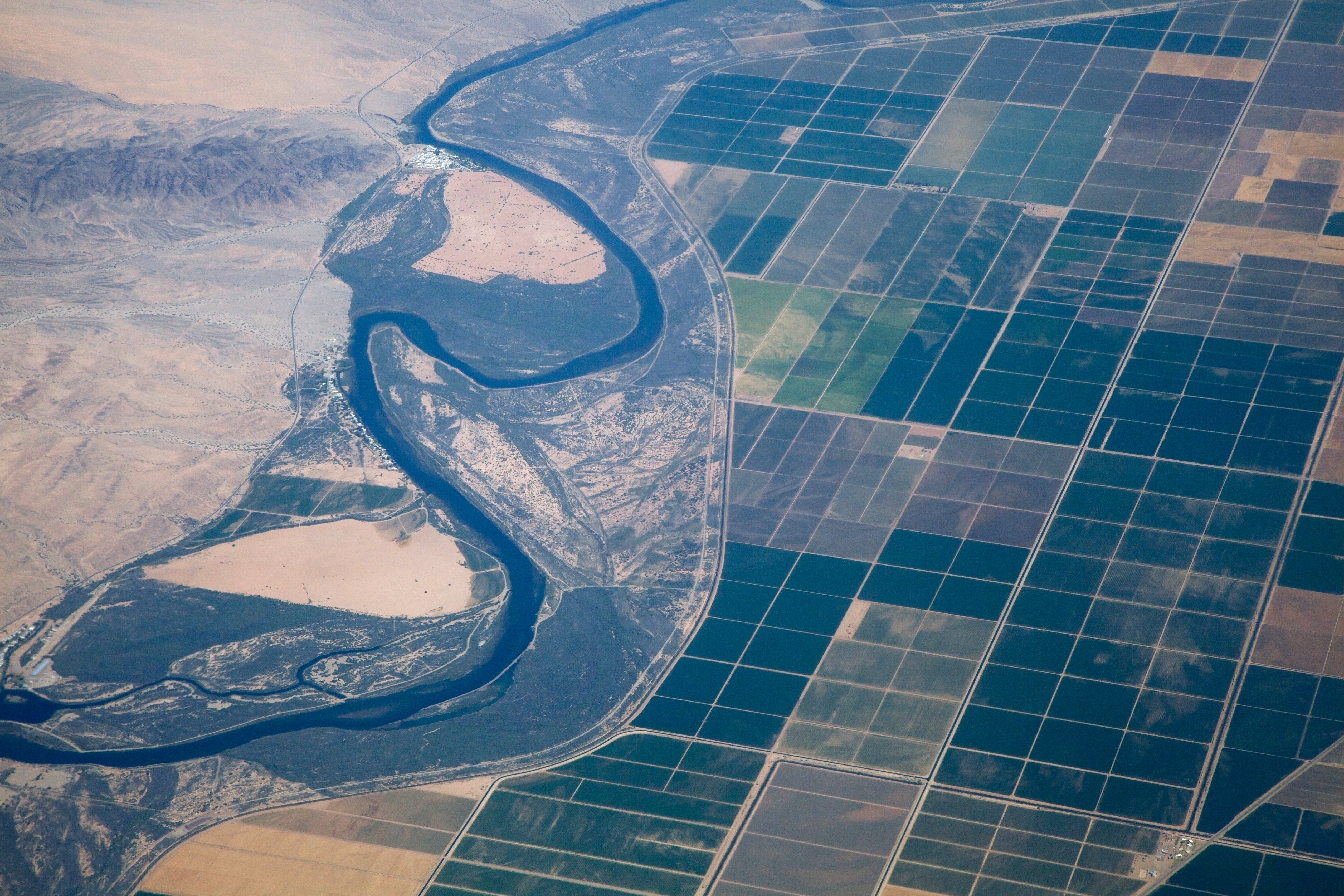
The water shortage in the Colorado River basin threatens 40 million people and five million acres of farmland from Mexico to Wyoming. Many people are calling this a disaster, but that makes it seem like a force majure. It’s not just climate change that’s causing low flows: industrial agriculture, urban sprawl and the concrete infrastructure designed to control water are worsening the region’s water problems. And bringing in water from elsewhere won’t fix it.
Summer is coming, and the Biden Administration’s recent proposed limits on water draws along the river demonstrates the gravity of the situation; after decades of drought and states’ inability to compromise on much needed cuts, the feds may actually step in.
In researching my book Water Always Wins: Thriving in an Age of Drought and Deluge, I met people around the world who showed me that, if we respect water’s agency and collaborate with it, we can buffer ourselves against these extremes. Because Euro-American culture myopically focuses on human welfare, we tend to view water as either a commodity or a flood threat. We try to fix those problems with single-focus projects like dams and levees, a manifestation of the cultural drive to control our environment. This characteristic, globalized by colonialism and capitalism, has disrupted the water cycle, worsening flooding and drought nearly everywhere. Instead, we need to view water as a living system and ask: What does water want?
Water wants what development has disrupted: its slow phases in wetlands, floodplains, meadows and forests. Historically, many now-seasonal streams ran year-round, fed by healthy aquifers refilled by lingering surface water. By returning space for these slow phases, we can make the most of water. I have come to think of this approach as the “slow water movement.” In slow water, solutions are systems-oriented, equitable, decentralized and community-driven or -facing. Slow water projects address flood and drought, store carbon dioxide, retain soil, reduce the need for irrigation and support myriad lifeforms, including humans.
Not all people see water as something to be controlled. Many cultures instead think of water as a friend or a relative. This view, held by groups ranging from Indigenous peoples in North America, to Kenyan government officials, to Tamil people in South India, is similar to perspectives held by some ecologists, landscape architects (including one I met in China), urban planners and environmental engineers around the world. I call these people “water detectives.” Water detectives make space for the complex relationships water has with all elements of ecosystems, including humans, understanding that with the right to water comes responsibility for its care. In turn, those healthy systems provide for us.
We have broken the water cycle; globally we’ve drained up to 87 percent of wetlands; dammed and diverted about two-thirds of large rivers; and, since 1992, doubled the area of urban pavement. Through this transformation of land and water, plus overpumping, killing beavers, cutting forests, and overgrazing grasslands, we’ve severed the connection between surface and groundwater. Our development in the Colorado River watershed exemplifies these trends and has dried out the land.
In California and Washington flood management strategies are starting to make room for slow water, pushing back levees from riverbanks to give rivers like the Cosumnes and Nooksack access to parts of their floodplains once again. In this strategy, water on floodplains slowly returns to the river, extending the flow into drier months, when farmers most need it.
A lowered water table increases fire risk and reduces rain. Restoring groundwater and raising the water table within reach of plants allows them to transpire water. On average, 40 percent of rainfall over land transpires from plants and evaporates from soil. Networks of plants pass water along via a process called moisture recycling or moisture hopping. Projects around the world, including in the Colorado River basin, are already slowing water on private and public land. For example, one couple in Arizona built thousands of little rock walls across their creek which resulted in 28 percent more water flowing downstream than in a nearby untreated creek.
Another strategy involves beavers; there is no animal as adept at healing water systems. Before trappers nearly drove these animals extinct, about 10 percent of North America was beaver-created wetlands. Their dams slow water and filter it underground; one researcher found beavers stored 75 times more water per 100 meters of stream than in stretches without them. This storage is increasingly important as snowpack and glaciers disappear. Their ponds and the well-hydrated plants near them also act as a firebreak. We can help by learning to live with them instead of killing them. Washington state is a leader in beaver co-existence, and the movement is spreading throughout the west.
Still, many engineers and decision-makers say nature-based solutions including slow water projects can’t be a significant part of the solution. That’s a misunderstanding of scale. Because we’ve done such widespread damage, we need small, distributed projects throughout watersheds where water can linger on the land and move underground.
Another problem is that the cost-benefit analyses we use for gray infrastructure like dams and levees typically ignore the benefits healthy water systems provide, including flood protection, water storage and cleaning, precipitation, cooling, food production, carbon storage. Nor do they deduct the costs of damages to these systems by control-oriented infrastructure.
Our gray infrastructure–centric approach to water is clearly failing. Importing water from elsewhere is not the answer. Sociohydrologists know that just creates more demand—like how adding new lanes on the freeway induces more traffic. The result is human activity has moved to places without sufficient water to support it. Long-distance water transfers are also an environmental justice issue, bringing more water to 20 percent of the world’s population but reducing water available to 24 percent. On the Colorado River, for example, U.S. water claims have drained much of it before it reaches Mexico, where two million people in Tijuana rely on it.
Luckily we can change our ways, as leaders who are deploying slow water projects demonstrate. In addition to the latest move to cut human use of the Colorado River, the Biden administration is potentially allocating money for nature-based solutions, including slow water, via the Infrastructure Investment and Jobs Act and the Inflation Reduction Act. But the scale is still comparatively small, and funding relies on local and state authorities knowing about these solutions and applying for them. The administration’s Nature-Based Solutions Roadmap might help: it calls for new education, science, finance and policy initiatives to better collaborate with nature.
Disasters like today’s water scarcity are opportunities to rethink standard practices and make hard changes. Agriculture consumes 80 percent of human-used water from the Colorado. But the biggest consumers are not critical food, but rather cash crops like alfalfa, almonds and cotton. Water needs to be diverted from profiteering toward the greater good.
In Southwestern cities, landscape irrigation, especially for lawns, uses as much as 70 percent of residential water. But cultures can change. Cities like Los Angeles offer rebates to homeowners who replace their lawns with native and drought-tolerant plants, and 30 water agencies, including those serving Phoenix and Las Vegas, have pledged to remove ornamental lawns. The cultural shift began years ago in Phoenix, and many residents now take pride in their saguaros and palo verde trees, and post snapshots of bobcats and roadrunners in their yards.
While California has ample water from elsewhere this year, other Western states are facing ongoing water stress, and political struggles over sharing the Colorado River remain unresolved. It’s time to replace control with collaboration. When we work with water’s systems, we make ourselves resilient. People worldwide and across the West are already rehydrating, rather than dehydrating, the land. Every bit helps, and the effect is cumulative –like how solar on everyone’s roof yields a lot of electricity. We can start today, at home.
This is an opinion and analysis article, and the views expressed by the author or authors are not necessarily those of Scientific American.