
Close Menu
Beverly Hills Examiner

    Subscribe to Updates

    Get the latest creative news from FooBar about art, design and business.

    What's Hot

    Morrissey pays tribute to late manager Peter Katsis: “A world has ended”

    August 11, 2026

    Climate change is threatening Italy’s cheese banks that hold Parmigiano wheels as loan collateral

    August 11, 2026

    Family’s Pet Goose Sounded Alarm With Loud Honks to Let Them Know Their Barn Had Caught Fire (VIDEO) * The Gateway Pundit * by Mike LaChance

    August 11, 2026
    Facebook X (Twitter) Instagram
    Beverly Hills Examiner
    • Home
    • US News
    • Politics
    • Business
    • Science
    • Technology
    • Lifestyle
    • Music
    • Television
    • Film
    • Books
    • Contact
      • About
      • Amazon Disclaimer
      • DMCA / Copyrights Disclaimer
      • Terms and Conditions
      • Privacy Policy
    Beverly Hills Examiner
    Home»Science»Restoring the Planet Will Need More than a Climate Price Tag
    Science

    Restoring the Planet Will Need More than a Climate Price Tag

    By AdminNovember 9, 2023
    Facebook Twitter Pinterest LinkedIn WhatsApp Email Reddit Telegram
    Restoring the Planet Will Need More than a Climate Price Tag


    Restoring the Planet Will Need More than a Climate Price Tag

    In the extraordinary heat of July 2023, the planet perhaps experienced its hottest month in the past 120,000 years. Vast swathes of the world from the U.S. to China endured searing heat waves driven by a lethal combination of anthropogenic climate change and the recurring natural phenomenon known as El Niño. 

    Despite this alarming climate reality, carbon dioxide emissions have continued to surge, matched only by the growing deluge of proposals aimed at achieving “net zero” emissions. But could some of these proposed “solutions” be worse than the problem? 

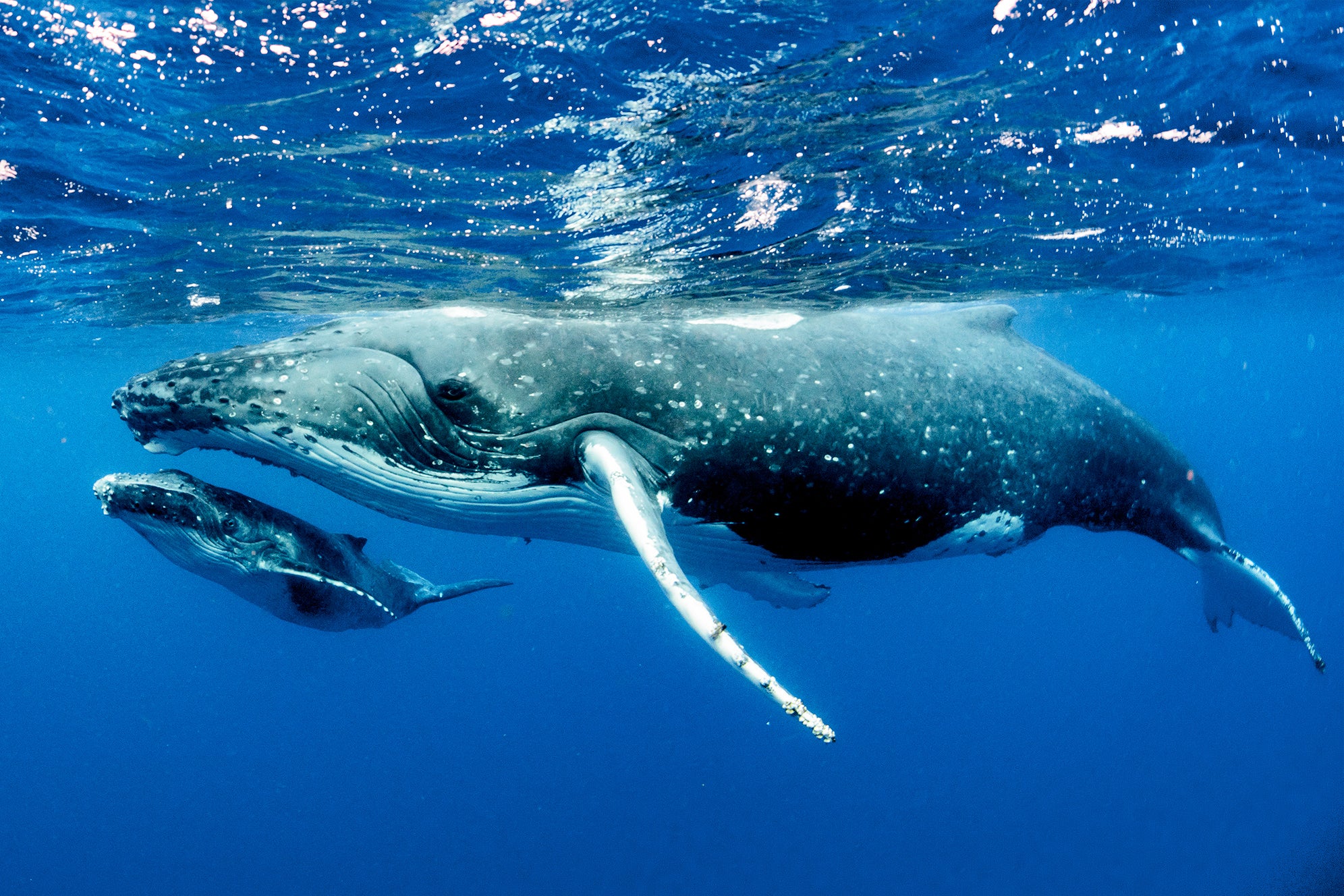
    One problematic approach involves placing a monetary value on living beings. In an illustrative 2022 TED talk about the idea, Ralph Chami, an economist with the International Monetary Fund, said: “This [female whale] looks like a share of stock that pays dividends. Except those dividends are live dividends. They give birth to more dividends.”

    Chami’s reasoning centers on the astonishing role of great whales in regulating the Earth’s climate.

    Whale feces are rich in iron and nitrogen, and they stimulate the growth of phytoplankton on the ocean surface. These microscopic marine algae soak up carbon dioxide from the atmosphere to perform photosynthesis and produce at least half of the world’s oxygen. Then, when the whales die, their enormous bodies sequester over 30 tons of carbon dioxide on average as they sink to the seafloor.

    To remove such a substantial quantity of carbon dioxide from the atmosphere through technological means would require vast financial investment, Chami’s team posited. Therefore, they argued that this removal constituted a sequestration “service” that could be priced. The service of a female whale, they estimated, would be at least $3 million.

    A similar initiative called the Whale Carbon Plus Project puts a $2 million price tag on whale services and seeks to make whale carbon credits available to investors for use in offsetting their carbon emissions. 

    From this perspective, however, an adult whale is worth more than a juvenile, a female more than a male by the virtue of bearing calves, and smaller forms of life are worth progressively less. The value of life is effectively diminished to the amount of carbon it can store. 

    Moreover, should technologies to capture carbon dioxide directly from the atmosphere become efficient enough to capture a great-whale-amount of carbon dioxide at a cost lower than $2 million or $3 million, whale conservation would be priced out by the market.

    As this whale of an example suggests, the reductionist framework has profound consequences. It allows the commodification of living creatures such as whales and trees, which, in turn, enables their homogenization, and therefore mindless substitution of one “service” for another. Whales are then replaceable by any lifeform or technology that can “more efficiently” draw down carbon from the atmosphere. 

    A recent example comes from the Great Nicobar Development Plan in India, which seeks to replace a unique, biodiverse tropical island ecosystem inhabited by tribal peoples, with a massive infrastructure project, including a transnational shipping port. In order to “compensate for” the loss of the forest and numerous endangered species, the project proposes planting trees in the landlocked state of Haryana over 2,500 kilometers away. Needless to say, such measures won’t safeguard the giant leatherback turtles that nest on Great Nicobar Island, nor preserve the heritage and livelihoods of the Indigenous tribal communities who have called it home for millennia.

    These are not isolated efforts. Instead, they are representative of a wider approach toward a monetized, reductive view of nature seen in published articles on ecosystem services over the past decade, spanning disciplines from science and economics to insurance and even global governance bodies such as the United Nations.

    Despite its evident logical and ethical shortcomings, this carbon-reductionist, market-centric approach has achieved widespread credence.

    Today, we face a plethora of interconnected social-environmental crises that include, but are not limited to, climate change. Yet, climate change has overwhelmingly taken center stage in the environmental discourse. As a result, the environmental problem is often narrowly defined as one of carbon pollution. Within this constrained perspective, it becomes logical that solutions must singularly focus on achieving “net-zero” carbon emissions.

    This skewed perspective belies the multiple ways in which human activity and its exploitative systems have wounded the planet. The scope of our destruction is vast—from the mass extermination of wildlife and the birth of ocean dead zones resulting from excessive nutrient pollution, to the contamination of water bodies with heavy metal and plastics, and the 350,000-plus synthetic chemicals bioaccumulating up the food chain. Each of these is eroding the Earth’s ability to support a resilient biosphere. Climate change has served to exacerbate them. 

    The carbon-reductive perspective considers each entity in isolation, failing to recognize the intricate relationships that exist in nature. For instance, trees form mutually beneficial bonds with mycorrhizal fungi: the fungi extend the reach of root systems enabling enhanced nutrient and water absorption, while trees provide the fungi with vital carbohydrates. Similarly, whales, krill and plant phytoplankton share a remarkable relationship: krill (shrimplike creatures) offer sustenance to whales, while whales stimulate the growth of plant phytoplankton that krill feed on. In a healthy forest, high biodiversity enables multiple relationships binding trees, birds, insects and soil microorganisms; that’s in contrast to plantations, where such relationships are much sparser. Yet these synergies find no place in an approach like Chami’s. 

    This raises the question: What is the alternative?

    To address this, we must first consider the major driver of human activity, which is the economy. The entrenched global economic doctrine prioritizes growth at all costs, while ignoring constraints from natural laws and biophysical limits. The insatiable demand for new energy and material resources to service the endless growth paradigm, especially by the superaffluent class, has precipitated an explosive rise in our exploitation of planetary resources, including land, water, biomass, metals, minerals and, of course, fossil fuels.

    In essence, the genesis of climate change and ecological destruction can be traced to the relentless greed of the current “Capitalocene,” which has reduced nature to a monetizable commodity. To escape this destructive way of thinking, we must acknowledge that we are woven into the complex tapestry of life, the resilience of which emerges from its profound interconnectedness. The essential task today is to internalize this truth and to realign our values and the economy with it, before we irreversibly push Earth into a state less congenial to life. The weight of evidence from climate and sustainability science underscores the urgency of changing track within a decade. Making this happen is a task not just for economists but for writers, filmmakers, artists, scientists and lawyers.

    Perhaps the most reliable path to genuine restoration of our planet is to heed the wisdom of Indigenous communities around the world who look upon other life-forms as relatives instead of resources. 

    Rather than putting a price tag on our living planet, we must recognize it as priceless.

    This is an opinion and analysis article, and the views expressed by the author or authors are not necessarily those of Scientific American.


    Original Source Link

    Share. Facebook Twitter Pinterest LinkedIn WhatsApp Email Reddit Telegram
    Previous Article‘Venom 3’ Pushes Release Date to November 2024 as SAG Strike Ends – The Hollywood Reporter
    Next Article Sandworm Hackers Caused Another Blackout in Ukraine—During a Missile Strike

    RELATED POSTS

    A California Program Is Bringing Down the Cost of Heat Pumps by Buying Bulk

    August 11, 2026

    World ocean temperatures hit extreme new record for July

    August 10, 2026

    Spokane Shows What the New Era of Wildfires Looks Like

    August 10, 2026

    Europe’s wildfires are igniting forgotten WWII and Cold War bombs

    August 9, 2026

    Here Are the First Images of the Crater Left on the Moon by SpaceX’s Rocket

    August 9, 2026

    Hank Green AI controversy raises questions for science communicators

    August 8, 2026
    latest posts

    Morrissey pays tribute to late manager Peter Katsis: “A world has ended”

    Morrissey has shared a personal tribute to his late manager Peter Katsis, describing him as…

    Climate change is threatening Italy’s cheese banks that hold Parmigiano wheels as loan collateral

    August 11, 2026

    Family’s Pet Goose Sounded Alarm With Loud Honks to Let Them Know Their Barn Had Caught Fire (VIDEO) * The Gateway Pundit * by Mike LaChance

    August 11, 2026

    DiJonai Carrington, who declared ‘White privilege’ after ejection, plays vs Storm as WNBA remains silent

    August 11, 2026

    Orange Crush: TAG Heuer Drops a Bright Revamp of the Original Metal F1 Watch

    August 11, 2026

    A California Program Is Bringing Down the Cost of Heat Pumps by Buying Bulk

    August 11, 2026

    Tony review – a breezy biopic with little bite

    August 11, 2026
    Categories
    • Books (1,418)
    • Business (6,322)
    • Cover Story (9)
    • Film (6,261)
    • Lifestyle (4,319)
    • Music (6,332)
    • Politics (6,305)
    • Science (5,671)
    • Technology (6,256)
    • Television (5,952)
    • Uncategorized (3)
    • US News (6,307)
    popular posts

    ‘Rutherford Falls’ Team on the Story Behind That ‘Yellowstone’-Esque Episode

    [Warning: The below contains MAJOR spoilers for Season 2 of Rutherford Falls.] Rutherford Falls Season…

    Box Office: ‘Deadpool & Wolverine’ Back on Top as ‘Blink Twice’ Underwhelms and ‘The Crow’ Collapses

    August 26, 2024

    ‘Squid Game’ Stars React to Season 2 Fan Theories & Tease What’s Next (VIDEO)

    September 18, 2024

    Long covid risk with omicron variant may be half what it is with delta

    June 17, 2022
    Archives
    Browse By Category
    • Books (1,418)
    • Business (6,322)
    • Cover Story (9)
    • Film (6,261)
    • Lifestyle (4,319)
    • Music (6,332)
    • Politics (6,305)
    • Science (5,671)
    • Technology (6,256)
    • Television (5,952)
    • Uncategorized (3)
    • US News (6,307)
    About Us

    We are a creativity led international team with a digital soul. Our work is a custom built by the storytellers and strategists with a flair for exploiting the latest advancements in media and technology.

    Most of all, we stand behind our ideas and believe in creativity as the most powerful force in business.

    What makes us Different

    We care. We collaborate. We do great work. And we do it with a smile, because we’re pretty damn excited to do what we do. If you would like details on what else we can do visit out Contact page.

    Our Picks

    A California Program Is Bringing Down the Cost of Heat Pumps by Buying Bulk

    August 11, 2026

    Tony review – a breezy biopic with little bite

    August 11, 2026

    Rosie O’Donnell Ambushed By Fox, Shuts Them Down

    August 11, 2026
    © 2026 Beverly Hills Examiner. All rights reserved. All articles, images, product names, logos, and brands are property of their respective owners. All company, product and service names used in this website are for identification purposes only. Use of these names, logos, and brands does not imply endorsement unless specified. By using this site, you agree to the Terms & Conditions and Privacy Policy.

    Type above and press Enter to search. Press Esc to cancel.

    We use cookies on our website to give you the most relevant experience by remembering your preferences and repeat visits. By clicking “Accept All”, you consent to the use of ALL the cookies. However, you may visit "Cookie Settings" to provide a controlled consent.
    Cookie SettingsAccept All
    Manage consent

    Privacy Overview

    This website uses cookies to improve your experience while you navigate through the website. Out of these, the cookies that are categorized as necessary are stored on your browser as they are essential for the working of basic functionalities of the website. We also use third-party cookies that help us analyze and understand how you use this website. These cookies will be stored in your browser only with your consent. You also have the option to opt-out of these cookies. But opting out of some of these cookies may affect your browsing experience.
    Necessary
    Always Enabled
    Necessary cookies are absolutely essential for the website to function properly. These cookies ensure basic functionalities and security features of the website, anonymously.
    CookieDurationDescription
    cookielawinfo-checkbox-analytics11 monthsThis cookie is set by GDPR Cookie Consent plugin. The cookie is used to store the user consent for the cookies in the category "Analytics".
    cookielawinfo-checkbox-functional11 monthsThe cookie is set by GDPR cookie consent to record the user consent for the cookies in the category "Functional".
    cookielawinfo-checkbox-necessary11 monthsThis cookie is set by GDPR Cookie Consent plugin. The cookies is used to store the user consent for the cookies in the category "Necessary".
    cookielawinfo-checkbox-others11 monthsThis cookie is set by GDPR Cookie Consent plugin. The cookie is used to store the user consent for the cookies in the category "Other.
    cookielawinfo-checkbox-performance11 monthsThis cookie is set by GDPR Cookie Consent plugin. The cookie is used to store the user consent for the cookies in the category "Performance".
    viewed_cookie_policy11 monthsThe cookie is set by the GDPR Cookie Consent plugin and is used to store whether or not user has consented to the use of cookies. It does not store any personal data.
    Functional
    Functional cookies help to perform certain functionalities like sharing the content of the website on social media platforms, collect feedbacks, and other third-party features.
    Performance
    Performance cookies are used to understand and analyze the key performance indexes of the website which helps in delivering a better user experience for the visitors.
    Analytics
    Analytical cookies are used to understand how visitors interact with the website. These cookies help provide information on metrics the number of visitors, bounce rate, traffic source, etc.
    Advertisement
    Advertisement cookies are used to provide visitors with relevant ads and marketing campaigns. These cookies track visitors across websites and collect information to provide customized ads.
    Others
    Other uncategorized cookies are those that are being analyzed and have not been classified into a category as yet.
    SAVE & ACCEPT