
Close Menu
Beverly Hills Examiner

    Subscribe to Updates

    Get the latest creative news from FooBar about art, design and business.

    What's Hot

    Why data centers are at the center of the Big Tech backlash | TechCrunch

    November 22, 2026

    Prince Fleet Easton Guests On “If These Walls Could Talk” With Hosts Wendy Stuart and Tym Moss Wednesday, November 25th, 2026

    November 22, 2026

    Faced with influx, prosecutor in Washington says he lacks resources to defend immigration cases

    November 22, 2026
    Facebook X (Twitter) Instagram
    Beverly Hills Examiner
    • Home
    • US News
    • Politics
    • Business
    • Science
    • Technology
    • Lifestyle
    • Music
    • Television
    • Film
    • Books
    • Contact
      • About
      • Amazon Disclaimer
      • DMCA / Copyrights Disclaimer
      • Terms and Conditions
      • Privacy Policy
    Beverly Hills Examiner
    Home»Science»Russia Is Trying to Leave the Internet and Build Its Own
    Science

    Russia Is Trying to Leave the Internet and Build Its Own

    By AdminJuly 12, 2023
    Facebook Twitter Pinterest LinkedIn WhatsApp Email Reddit Telegram
    Russia Is Trying to Leave the Internet and Build Its Own

    [ad_1]

    Russia Is Trying to Leave the Internet and Build Its Own

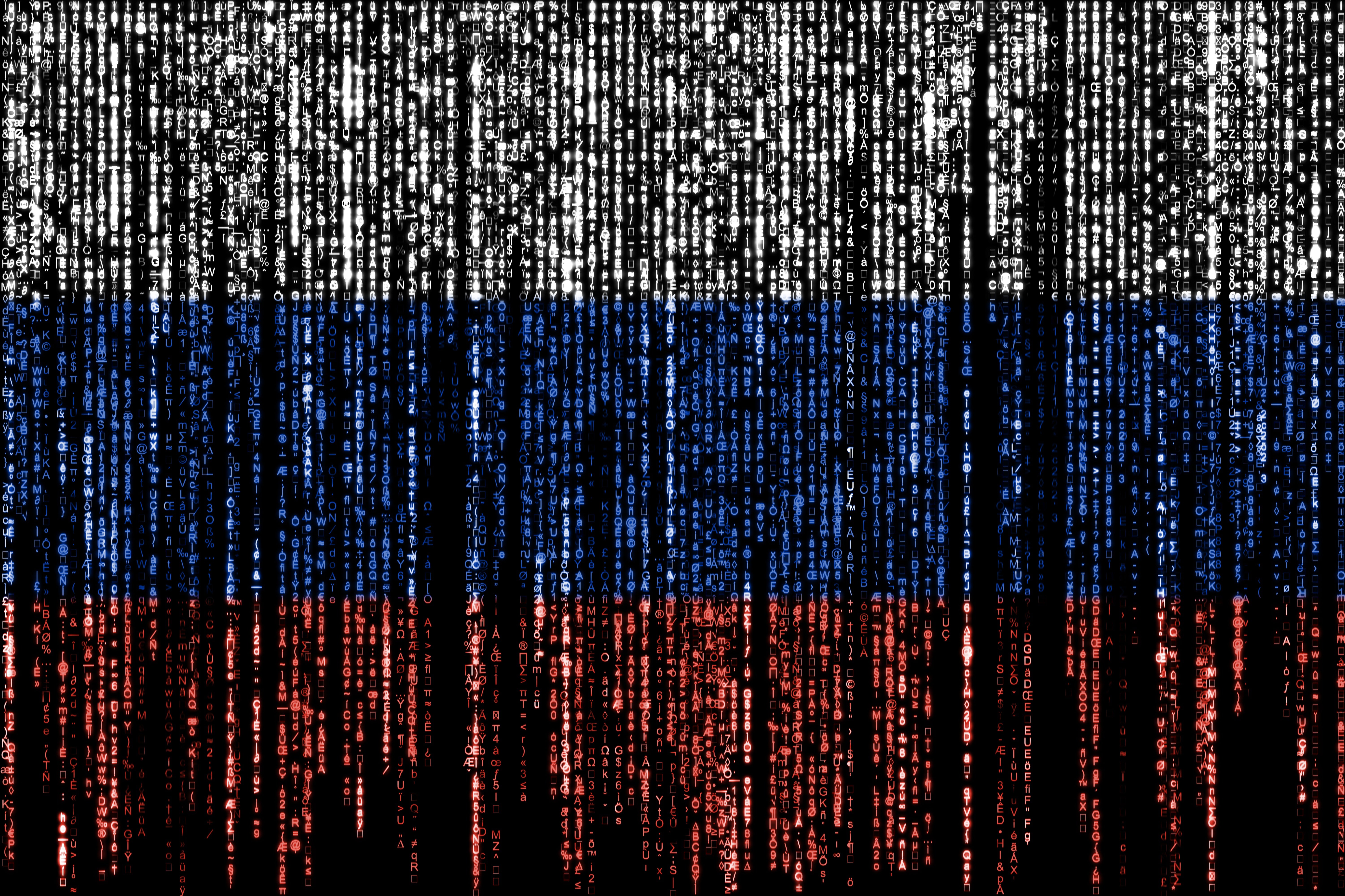
    Last week the Russian government tried to disconnect its Internet infrastructure from the larger global Web. This test of Russia’s “sovereign Internet” seemingly failed, causing outages that suggest the system is not ready for practical use.

    “Sovereign Internet is not really a whole different Internet; it is more like a project that uses various tools,” says Natalia Krapiva, tech-legal counsel at the international digital-rights nonprofit Access Now. “It involves technology like deep packet inspection, which allows major filtering of the Internet and gives governments the ability to throttle certain connections and websites.” By cutting off access to sites such as Western social media platforms, the Russian government could restrict residents from viewing any source of information other than the country’s accepted channels of influence.

    This method of curtailing digital freedom goes beyond Russia: other countries are also attempting to develop their own nationwide Internet. And if successful, these endeavors could fragment the World Wide Web. Scientific American talked with Krapiva over Zoom about the implications of this latest test, the motive behind Russia’s actions and the ways the push for a sovereign Internet affect the digital rights of all users.

    [An edited transcript of the interview follows.]

    Why is Russia trying to create a separate Internet?

    They want to have full control over the Internet space in which Russian users are existing and operating to make sure that they can do away with Western platforms and to move as many users as possible to the Russian platforms. By doing so, they will make it less technically and politically risky to then throttle and cut off service to outside Western platforms. And they want to do this without losing their own government services or the ability to conduct banking and other transactions.

    When did this first begin?

    In [2011–2013] we had one of the biggest protests in Russia since the collapse of the Soviet Union. It was a major challenge to the government’s power that in many ways was facilitated and enabled through the Internet and platforms such as Telegram and others. I think the government was quite scared and considered this a real challenge to their power. This is when they started passing various laws that we’re seeing right now, including the sovereign Internet law.

    Since then Russia has made progress on developing its sovereign Internet: last week the country did a test to disconnect its Internet from the rest of the world. How did that go?

    They say it was successful, but what does [that] really mean? Are they lying or telling the truth? And second, what does it mean to be successful with that? The fact that they knocked out the railway system and another major goods shipping system, it’s telling me that likely something didn’t go as planned. I wouldn’t take the Russian government’s word for it, whatever they say. The same thing happened in 2021 when they were testing it: when they tried to block Twitter, they also blocked Kremlin websites. So it doesn’t sound like they can implement it in a major way without serious disruption to their own operations of their services and websites.

    Why does it matter that regular citizens have access to a global Internet versus a smaller, more tightly controlled Russian one?

    Look at what the Russian government did with TV. We had a very vibrant and free media, and gradually the government took over. And right now every single channel is just heavily controlled by the government. And they want to do the same with the Internet. They want to create their own version of reality for the Russian people—that everything is fine, that [Russian president Vladimir] Putin is in control, that also the people around them are supportive of the government—to create this illusion of unity and stability.

    Say you were in Russia right now. If the government had a sovereign Internet, could they shut down this Zoom call? What sort of disruptions could everyday Russians expect?

    I don’t think they have tried to throttle Zoom, specifically. But yes, they ultimately want to make sure that Russian citizens don’t use Western platforms such as Zoom and WhatsApp and YouTube. They want to throttle and block the access to not only that but also VPNs [virtual private networks] because Russians are using VPNs and other circumvention tools [to access blocked platforms and websites].

    These platforms can be hard to block, which is the reason why, until the war [with Ukraine], we haven’t really seen major efforts [from the Russian government]—until they blocked Instagram and Facebook. The two Meta platforms that they chose to target were some of the most popular platforms for Russians—not just the opposition but everybody. So it was politically risky for the government to just start blocking. They are doing work to make sure the opposition can’t go to those platforms and ultimately to cut off the opposition’s ability to speak to Russian users.

    Is there a timeline for how quickly the nation’s government could implement local Russian versions of these platforms and disconnect from the global ones?

    It doesn’t seem like it will be quickly, but I think they’re [promoting] their own version of YouTube and [may possibly create their own version of] Telegram in the next year or so. YouTube has been just so big in Russia, but now apparently [the nation’s government is] putting a lot of investment into [developing its own version] and even luring some of the popular bloggers onto the new platform. People will still be able to use VPNs, but that will reduce the amount of users in Russia that will be accessing the global platforms. Disconnecting is going to be very difficult because the Russian Internet is so much more integrated and dependent on the global Internet, and so many things will just stop working if they do it.

    Outside of Russia and China, are there a lot of countries trying to create a sovereign Internet? Why do you think there’s a trend toward closed borders rather than decentralization or openness?

    I hear from my colleagues that this idea is finding some sympathizers in Latin America. This whole idea of “We will have our own version of whatever this is, whether that’s a platform or Internet,” it’s definitely resonating. I think we will see more and more of this going forward. It will have ramifications for the entire world and will definitely impact and weaken the infrastructure of the Internet.

    I think governments are afraid [because] the Internet empowers people. It challenges the monopoly of governments, and they want to control it. They’re scared of it and see that the Internet is bringing the ability to organize, communicate, raise money, raise support. Powerful states don’t like this challenge, and so they’re trying to surveil and control and censor their people, civil society, opposition, and so on. But I think it’s something that more and more states realize they want: to exert influence in that space because it’s a major challenge to their power.


    [ad_2]

    Original Source Link

    Share. Facebook Twitter Pinterest LinkedIn WhatsApp Email Reddit Telegram
    Previous ArticleImpossible Dead Reckoning Earns $7M in Box Office Previews – The Hollywood Reporter
    Next Article Google’s latest art project recruits an animated bird — and AI — to play the cello

    RELATED POSTS

    Voyager 1 Beat the Odds and Is Still Working a Light-Day Away From Earth

    November 18, 2026

    The Dark Side of the Moon Was the Brightest Part of 2026

    November 17, 2026

    Just 400 US Data Centers Use More Electricity Than Michigan

    November 16, 2026

    The EPAs Chemical-Detecting Plane Isnt Doing Its Job Anymore

    November 16, 2026

    Its Getting Too Dry for Even Cactuses to Survive

    November 15, 2026

    New Species of Giant Fungus Discovered in China Grows up to 20 Inches Tall

    November 15, 2026
    latest posts

    Why data centers are at the center of the Big Tech backlash | TechCrunch

    In his new book “Hyperscale,” journalist Paris Marx investigates the impact of data centers and…

    Prince Fleet Easton Guests On “If These Walls Could Talk” With Hosts Wendy Stuart and Tym Moss Wednesday, November 25th, 2026

    November 22, 2026

    Faced with influx, prosecutor in Washington says he lacks resources to defend immigration cases

    November 22, 2026

    We lead MITs FutureTech program on the economics of AI: Dont ask if AI can do the job, ask how much it costs | Fortune

    November 22, 2026

    Heres Where to Watch the Miami Dolphins vs. Buffalo Bills Game Live Online

    November 22, 2026

    Senate advances sweeping energy legislation in first major action since midterm elections

    November 22, 2026

    The Expedia breach shows why companies must stop holding data they do not need | Fortune

    November 22, 2026
    Categories
    • Books (1,623)
    • Business (6,528)
    • Cover Story (18)
    • Film (6,462)
    • Lifestyle (4,502)
    • Music (6,538)
    • Politics (6,514)
    • Science (5,868)
    • Technology (6,466)
    • Television (6,160)
    • Uncategorized (3)
    • US News (6,511)
    popular posts

    Book Riot’s Deals of the Day for May 10, 2025

    [ad_1] Book Deals The best book deals of the day, curated by Book Riot. This…

    US sends South Korea investigators to probe deadly plane crash

    December 30, 2024

    Why conglomerates fail

    February 17, 2025

    Air monitoring station records biggest ever jump in atmospheric CO2

    January 17, 2025
    Archives
    Browse By Category
    • Books (1,623)
    • Business (6,528)
    • Cover Story (18)
    • Film (6,462)
    • Lifestyle (4,502)
    • Music (6,538)
    • Politics (6,514)
    • Science (5,868)
    • Technology (6,466)
    • Television (6,160)
    • Uncategorized (3)
    • US News (6,511)
    About Us

    We are a creativity led international team with a digital soul. Our work is a custom built by the storytellers and strategists with a flair for exploiting the latest advancements in media and technology.

    Most of all, we stand behind our ideas and believe in creativity as the most powerful force in business.

    What makes us Different

    We care. We collaborate. We do great work. And we do it with a smile, because we’re pretty damn excited to do what we do. If you would like details on what else we can do visit out Contact page.

    Our Picks

    Senate advances sweeping energy legislation in first major action since midterm elections

    November 22, 2026

    The Expedia breach shows why companies must stop holding data they do not need | Fortune

    November 22, 2026

    You Can See Everything review – stranger than fiction

    November 22, 2026
    © 2026 Beverly Hills Examiner. All rights reserved. All articles, images, product names, logos, and brands are property of their respective owners. All company, product and service names used in this website are for identification purposes only. Use of these names, logos, and brands does not imply endorsement unless specified. By using this site, you agree to the Terms & Conditions and Privacy Policy.

    Type above and press Enter to search. Press Esc to cancel.

    We use cookies on our website to give you the most relevant experience by remembering your preferences and repeat visits. By clicking “Accept All”, you consent to the use of ALL the cookies. However, you may visit "Cookie Settings" to provide a controlled consent.
    Cookie SettingsAccept All
    Manage consent

    Privacy Overview

    This website uses cookies to improve your experience while you navigate through the website. Out of these, the cookies that are categorized as necessary are stored on your browser as they are essential for the working of basic functionalities of the website. We also use third-party cookies that help us analyze and understand how you use this website. These cookies will be stored in your browser only with your consent. You also have the option to opt-out of these cookies. But opting out of some of these cookies may affect your browsing experience.
    Necessary
    Always Enabled
    Necessary cookies are absolutely essential for the website to function properly. These cookies ensure basic functionalities and security features of the website, anonymously.
    CookieDurationDescription
    cookielawinfo-checkbox-analytics11 monthsThis cookie is set by GDPR Cookie Consent plugin. The cookie is used to store the user consent for the cookies in the category "Analytics".
    cookielawinfo-checkbox-functional11 monthsThe cookie is set by GDPR cookie consent to record the user consent for the cookies in the category "Functional".
    cookielawinfo-checkbox-necessary11 monthsThis cookie is set by GDPR Cookie Consent plugin. The cookies is used to store the user consent for the cookies in the category "Necessary".
    cookielawinfo-checkbox-others11 monthsThis cookie is set by GDPR Cookie Consent plugin. The cookie is used to store the user consent for the cookies in the category "Other.
    cookielawinfo-checkbox-performance11 monthsThis cookie is set by GDPR Cookie Consent plugin. The cookie is used to store the user consent for the cookies in the category "Performance".
    viewed_cookie_policy11 monthsThe cookie is set by the GDPR Cookie Consent plugin and is used to store whether or not user has consented to the use of cookies. It does not store any personal data.
    Functional
    Functional cookies help to perform certain functionalities like sharing the content of the website on social media platforms, collect feedbacks, and other third-party features.
    Performance
    Performance cookies are used to understand and analyze the key performance indexes of the website which helps in delivering a better user experience for the visitors.
    Analytics
    Analytical cookies are used to understand how visitors interact with the website. These cookies help provide information on metrics the number of visitors, bounce rate, traffic source, etc.
    Advertisement
    Advertisement cookies are used to provide visitors with relevant ads and marketing campaigns. These cookies track visitors across websites and collect information to provide customized ads.
    Others
    Other uncategorized cookies are those that are being analyzed and have not been classified into a category as yet.
    SAVE & ACCEPT