Close Menu
Beverly Hills Examiner

    Subscribe to Updates

    Get the latest creative news from FooBar about art, design and business.

    What's Hot

    Bowie: The Final Act review – revisiting the…

    December 31, 2025

    ’90 Day Fiance’ Debbie Johnson Shares Devastating Family Death

    December 31, 2025

    Savory Breakfast Bowl with Sweet Potato & Jammy Egg

    December 31, 2025
    Facebook X (Twitter) Instagram
    Beverly Hills Examiner
    • Home
    • US News
    • Politics
    • Business
    • Science
    • Technology
    • Lifestyle
    • Music
    • Television
    • Film
    • Books
    • Contact
      • About
      • Amazon Disclaimer
      • DMCA / Copyrights Disclaimer
      • Terms and Conditions
      • Privacy Policy
    Beverly Hills Examiner
    Home»Science»SCOTUS Hears a Case with Broad Implications for the Clean Water Act
    Science

    SCOTUS Hears a Case with Broad Implications for the Clean Water Act

    By AdminOctober 5, 2022
    Facebook Twitter Pinterest LinkedIn WhatsApp Email Reddit Telegram
    SCOTUS Hears a Case with Broad Implications for the Clean Water Act


    The following essay is reprinted with permission from The ConversationThe Conversation, an online publication covering the latest research.

    The U.S. Supreme Court opens its new session on Oct. 3, 2022, with a high-profile case that could fundamentally alter the federal government’s ability to address water pollution. Sackett v. EPA turns on a question that courts and regulators have struggled to answer for several decades: Which wetlands and bodies of water can the federal government regulate under the 1972 Clean Water Act?

    Under this keystone environmental law, federal agencies take the lead in regulating water pollution, while state and local governments regulate land use. Wetlands are areas where land is wet for all or part of the year, so they straddle this division of authority.

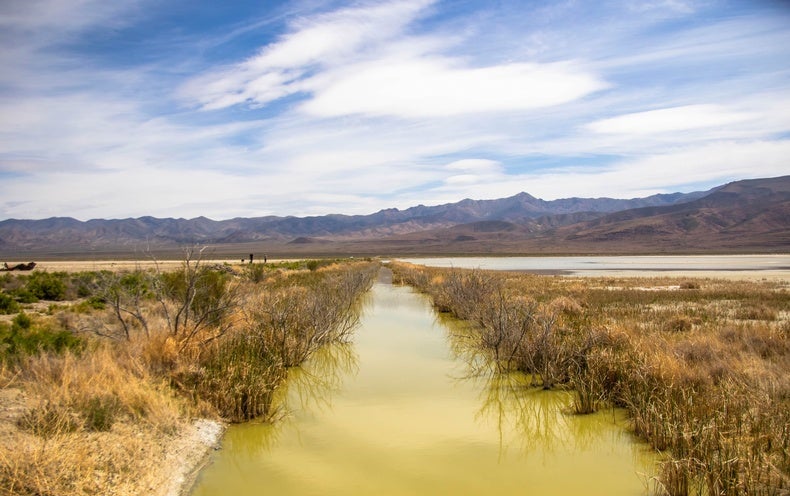
    Swamps, bogs, marshes and other wetlands provide valuable ecological services, such as filtering pollutants and soaking up floodwaters. Landowners must obtain permits to discharge dredged or fill material, such as dirt, sand or rock, in a protected wetland. This can be time-consuming and expensive, which is why the case is of keen interest to developers, farmers and ranchers, along with conservationists and the agencies that administer the Clean Water Act—the Environmental Protection Agency and the U.S. Army Corps of Engineers.

    The Supreme Court has already shown a willingness to curb federal regulatory power on environmental issues. From my work as an environmental law scholar, I expect the court’s decision in this case to cut back on the types of wetlands that qualify for federal protection. The U.S. has already lost more than half of its original wetlands, mainly because of development and pollution.

    The Sackett case

    Idaho residents Chantell and Mike Sackett own a parcel of land located 300 feet from Priest Lake, one of the state’s largest lakes. The parcel once was part of a large wetland complex. Today, even after the Sacketts cleared the lot, it still has some wetland characteristics, such as saturation and ponding in areas where soil was removed. Indeed, it is still hydrologically connected to the lake and neighboring wetlands by water that flows at a shallow depth underground.

    In preparation to build a house, the Sacketts had fill material placed on the site without obtaining a Clean Water Act permit. The EPA issued an order in 2007 stating that the land contained wetlands subject to the law and requiring the Sacketts to restore the site. The Sacketts sued, arguing that their property was not a wetland.

    In 2012, the Supreme Court held that the Sacketts had the right to challenge EPA’s order and sent the case back to the lower courts. Now, after losing below on the merits, they are back before the Supreme Court. The current issue is whether the Sacketts’ property is federally protected, which in turn raises a broader question: What is the scope of federal regulatory authority under the Clean Water Act?

    What are ‘waters of the United States’?

    The Clean Water Act regulates discharges of pollutants into “waters of the United States.” Lawful discharges may occur if a pollution source obtains a permit under either Section 404 of the Act for dredged or fill material, or Section 402 for other pollutants.

    The Supreme Court has previously recognized that the “waters of the United States” include not only navigable rivers and lakes, but also wetlands and waterways that are connected to navigable bodies of water. However, many wetlands are not wet year-round, or are not connected at the surface to larger water systems, but can still have important ecological connections to larger water bodies.

    In 2006, when the court last took up this issue, no majority was able to agree on how to define “waters of the United States.” Writing for a plurality of four justices in U.S. v. Rapanos, Justice Antonin Scalia defined the term narrowly to include only relatively permanent, standing or continuously flowing bodies of water such as streams, oceans, rivers and lakes. Waters of the U.S., he contended, should not include “ordinarily dry channels through which water occasionally or intermittently flows.”

    Acknowledging that wetlands present a tricky line-drawing problem, Scalia proposed that the Clean Water Act should reach “only those wetlands with a continuous surface connection to bodies that are waters of the United States in their own right.”

    In a concurring opinion, Justice Anthony Kennedy took a very different approach. “Waters of the U.S.,” he wrote, should be interpreted in light of the Clean Water Act’s objective of “restoring and maintaining the chemical, physical, and biological integrity of the Nation’s waters.”

    Accordingly, Kennedy argued, the Clean Water Act should cover wetlands that have a “significant nexus” with navigable waters—“if the wetlands, either alone or in combination with similarly situated lands in the region, significantly affect the chemical, physical, and biological integrity of other covered waters more readily understood as ‘navigable.’”

    Neither Scalia’s nor Kennedy’s opinion attracted a majority, so lower courts have been left to sort out which approach to follow. Most have applied Kennedy’s significant nexus standard, while a few have held that the Clean Water Act applies if either Kennedy’s standard or Scalia’s is satisfied.

    Regulators have also struggled with this question. The Obama administration incorporated Kennedy’s “significant nexus” approach into a 2015 rule that followed an extensive rulemaking process and a comprehensive peer-reviewed scientific assessment. The Trump administration then replaced the 2015 rule with a rule of its own that largely adopted the Scalia approach. The Biden administration has proposed a new rule that would deem waters of the United States present if either a significant nexus or continuous surface connection is present.

    What’s at stake

    The court’s ultimate ruling in Sackett could offer lower courts, regulatory agencies and landowners clear direction on the meaning of “waters of the United States.” And it will likely affect the government’s ability to protect the nation’s waters.

    A broad interpretation could include many agricultural ditches and canals, which might obligate some farmers and ranchers to apply for Section 404 permits. It could also ensure oversight of polluters who discharge pollutants upstream of federally protected waters.

    The Sacketts assert that the permitting process imposes significant costs, delays and potential restrictions on property use. In response, the Biden administration contends that most landowners can proceed under general permits that impose relatively modest costs and burdens.

    In my view, this court’s anti-regulatory bent—and the fact that no other justices joined Kennedy’s concurring Rapanos opinion—suggest that this case will produce a narrow reading of “waters of the United States.” Such an interpretation would undercut clean water protections across the country.

    If the court requires a continuous surface connection, federal protection would no longer apply to many areas that critically affect the water quality of U.S. rivers, lakes and oceans—including seasonal streams and wetlands that are near or intermittently connected to larger water bodies. It might also mean that building a road, levee or other barrier separating a wetland from other nearby waters may be enough to remove an area from federal protection.

    Congress could clarify what the Clean Water Act means by “waters of the United States,” but past efforts to legislate a definition have fizzled. And today’s closely divided Congress is unlikely to fare any better. The court’s ruling in Sackett could offer the final word on this issue for the foreseeable future.

    This article was originally published on The Conversation. Read the original article.


    Original Source Link

    Share. Facebook Twitter Pinterest LinkedIn WhatsApp Email Reddit Telegram
    Previous ArticleStar Trek Reinvents TNG’s Barclay as a Super-Competent Villain
    Next Article A Bold Effort to Cure HIV—Using Crispr

    RELATED POSTS

    The Great Big Power Play

    December 30, 2025

    15 Million Years before the Megalodon, This Giant Ancient Shark Prowled the Oceans

    December 30, 2025

    Mathematicians unified key laws of physics in 2025

    December 29, 2025

    People Who Drink Bottled Water on a Daily Basis Ingest 90,000 More Microplastic Particles Each Year

    December 29, 2025

    Why Active Rest Is Important During the Holidays

    December 28, 2025

    Mathematicians spent 2025 exploring the edge of mathematics

    December 28, 2025
    latest posts

    Bowie: The Final Act review – revisiting the…

    In 2016, David Bowie’s death shook the world like a supernova – a deliberately-staged explosion that collapsed a lifetime…

    ’90 Day Fiance’ Debbie Johnson Shares Devastating Family Death

    December 31, 2025

    Savory Breakfast Bowl with Sweet Potato & Jammy Egg

    December 31, 2025

    The Best Book Deals of the Day for December 30, 2025

    December 31, 2025

    Jack White Blasts U.S. Congressman in Heated Statement

    December 30, 2025

    Meet the Teddy Roosevelt terrier, one of the American Kennel Club’s new dog breeds for 2026

    December 30, 2025

    Rounding up a year that mostly won’t be missed

    December 30, 2025
    Categories
    • Books (968)
    • Business (5,875)
    • Film (5,810)
    • Lifestyle (3,913)
    • Music (5,877)
    • Politics (5,879)
    • Science (5,221)
    • Technology (5,808)
    • Television (5,495)
    • Uncategorized (2)
    • US News (5,860)
    popular posts

    Gary Allan Leaving Longtime Label Home UMG Nashville – Billboard

    Gary Allan is exiting his longtime label home, UMG Nashville. The “Watching Airplanes” hitmaker revealed…

    Washington Post Author Advocates For Kids At ‘Kink’-Filled Pride Parades

    June 16, 2022

    How Much Money Do Universities Waste?

    April 21, 2023

    As Israel Floods Gaza’s Tunnels with Seawater, Scientists Worry about Aquifer Contamination

    February 6, 2024
    Archives
    Browse By Category
    • Books (968)
    • Business (5,875)
    • Film (5,810)
    • Lifestyle (3,913)
    • Music (5,877)
    • Politics (5,879)
    • Science (5,221)
    • Technology (5,808)
    • Television (5,495)
    • Uncategorized (2)
    • US News (5,860)
    About Us

    We are a creativity led international team with a digital soul. Our work is a custom built by the storytellers and strategists with a flair for exploiting the latest advancements in media and technology.

    Most of all, we stand behind our ideas and believe in creativity as the most powerful force in business.

    What makes us Different

    We care. We collaborate. We do great work. And we do it with a smile, because we’re pretty damn excited to do what we do. If you would like details on what else we can do visit out Contact page.

    Our Picks

    Meet the Teddy Roosevelt terrier, one of the American Kennel Club’s new dog breeds for 2026

    December 30, 2025

    Rounding up a year that mostly won’t be missed

    December 30, 2025

    Obamacare subsidies to expire after Congress failed to extend or replace them

    December 30, 2025
    © 2025 Beverly Hills Examiner. All rights reserved. All articles, images, product names, logos, and brands are property of their respective owners. All company, product and service names used in this website are for identification purposes only. Use of these names, logos, and brands does not imply endorsement unless specified. By using this site, you agree to the Terms & Conditions and Privacy Policy.

    Type above and press Enter to search. Press Esc to cancel.

    We use cookies on our website to give you the most relevant experience by remembering your preferences and repeat visits. By clicking “Accept All”, you consent to the use of ALL the cookies. However, you may visit "Cookie Settings" to provide a controlled consent.
    Cookie SettingsAccept All
    Manage consent

    Privacy Overview

    This website uses cookies to improve your experience while you navigate through the website. Out of these, the cookies that are categorized as necessary are stored on your browser as they are essential for the working of basic functionalities of the website. We also use third-party cookies that help us analyze and understand how you use this website. These cookies will be stored in your browser only with your consent. You also have the option to opt-out of these cookies. But opting out of some of these cookies may affect your browsing experience.
    Necessary
    Always Enabled
    Necessary cookies are absolutely essential for the website to function properly. These cookies ensure basic functionalities and security features of the website, anonymously.
    CookieDurationDescription
    cookielawinfo-checkbox-analytics11 monthsThis cookie is set by GDPR Cookie Consent plugin. The cookie is used to store the user consent for the cookies in the category "Analytics".
    cookielawinfo-checkbox-functional11 monthsThe cookie is set by GDPR cookie consent to record the user consent for the cookies in the category "Functional".
    cookielawinfo-checkbox-necessary11 monthsThis cookie is set by GDPR Cookie Consent plugin. The cookies is used to store the user consent for the cookies in the category "Necessary".
    cookielawinfo-checkbox-others11 monthsThis cookie is set by GDPR Cookie Consent plugin. The cookie is used to store the user consent for the cookies in the category "Other.
    cookielawinfo-checkbox-performance11 monthsThis cookie is set by GDPR Cookie Consent plugin. The cookie is used to store the user consent for the cookies in the category "Performance".
    viewed_cookie_policy11 monthsThe cookie is set by the GDPR Cookie Consent plugin and is used to store whether or not user has consented to the use of cookies. It does not store any personal data.
    Functional
    Functional cookies help to perform certain functionalities like sharing the content of the website on social media platforms, collect feedbacks, and other third-party features.
    Performance
    Performance cookies are used to understand and analyze the key performance indexes of the website which helps in delivering a better user experience for the visitors.
    Analytics
    Analytical cookies are used to understand how visitors interact with the website. These cookies help provide information on metrics the number of visitors, bounce rate, traffic source, etc.
    Advertisement
    Advertisement cookies are used to provide visitors with relevant ads and marketing campaigns. These cookies track visitors across websites and collect information to provide customized ads.
    Others
    Other uncategorized cookies are those that are being analyzed and have not been classified into a category as yet.
    SAVE & ACCEPT