
Close Menu
Beverly Hills Examiner

    Subscribe to Updates

    Get the latest creative news from FooBar about art, design and business.

    What's Hot

    Why data centers are at the center of the Big Tech backlash | TechCrunch

    November 22, 2026

    Prince Fleet Easton Guests On “If These Walls Could Talk” With Hosts Wendy Stuart and Tym Moss Wednesday, November 25th, 2026

    November 22, 2026

    Faced with influx, prosecutor in Washington says he lacks resources to defend immigration cases

    November 22, 2026
    Facebook X (Twitter) Instagram
    Beverly Hills Examiner
    • Home
    • US News
    • Politics
    • Business
    • Science
    • Technology
    • Lifestyle
    • Music
    • Television
    • Film
    • Books
    • Contact
      • About
      • Amazon Disclaimer
      • DMCA / Copyrights Disclaimer
      • Terms and Conditions
      • Privacy Policy
    Beverly Hills Examiner
    Home»Science»Should You Get a Blood Test For Alzheimer’s?
    Science

    Should You Get a Blood Test For Alzheimer’s?

    By AdminSeptember 20, 2023
    Facebook Twitter Pinterest LinkedIn WhatsApp Email Reddit Telegram
    Should You Get a Blood Test For Alzheimer’s?

    [ad_1]

    Should You Get a Blood Test For Alzheimer’s?

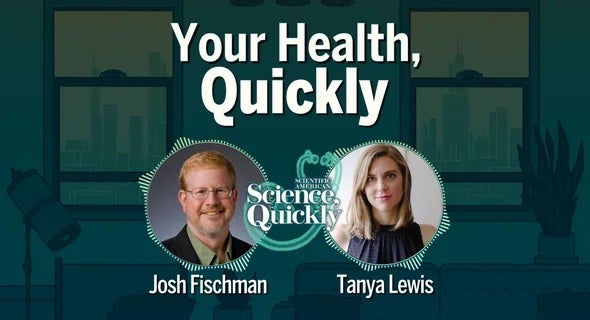
    Tanya Lewis: Hi, this is Your Health, Quickly, a Scientific American podcast series!

    Josh Fischman: We bring you the latest vital health news: Discoveries that affect your body and your mind.  

    Lewis: And we break down the medical research to help you stay healthy. 

    I’m Tanya Lewis.

    Fischman: I’m Josh Fischman.

    Lewis: We’re Scientific American’s senior health editors. 

    Today, we’re talking about a bunch of new blood tests for Alzheimer’s disease. They’re a lot easier than existing diagnostics—but they may not always indicate disease. And some doctors warn that there are still a lot of questions about treatment.  

    [Clip: Show theme music]

    Fischman:  So… Alzheimer’s. About 6 million people in U.S. are afflicted by this type of dementia. It is a thief of minds, a destroyer of memories, and it’s a killer with no cure. I’ve known people who’ve had it, and it’s scary to see what it does. How about you?

    Lewis: I’ve also known someone close to me who has Alzheimer’s, and it is a really devastating disease.

    I mean, it really takes away a sense of your identity and self, and really a part of your personality, to have this disease. So it’s hard to watch somebody go through that. 

    Fischman: Yeah, that thing that you said about like losing your identity, losing your memories of yourself and of the people around you is just a devastating thing.

    And you also lose the ability to, to take care of yourself, to wash yourself, to cook, to bathe, to do all of these things that you’ve done for your entire life. They’ve suddenly become this thing like a puzzle you can’t solve. 

    Lewis: But there are finally some new treatments. 

    One of the hallmarks of Alzheimer’s, physically, is a buildup of this warped protein, amyloid-beta, in the brain. And there are two drugs, Aduhelm and Leqembi, that are designed to clear out these amyloid clumps.

    Fischman: Saying amyloid is a hallmark, though, is different than saying it’s a cause. There’s been a really long debate over causes, and it’s not over. There could be other toxic proteins or lost connections among brain cells that actually cause the disease.

    Lewis: Right. It could even be a combination of all those things.

    But recently, tests with Leqembi suggested that the amyloid-clearing drug slowed down mental decline for several months. So the drug both cleans up amyloid and may help with cognitive problems, at least for a little while.

    Fischman: Right. Now, because there are amyloid-focused treatments— even if they’re not super effective—companies are rushing to bring out diagnostic tests to tell you if you have abnormal amyloid in your brain. Two of the newest look for fragments of these amyloid proteins in your blood.

    Lewis: Simple blood tests sound pretty good. So how accurate are they?

    Fischman: Turns out they’re good, at least at connecting what’s in your blood to what’s in your brain. Amyloid starts in your brain, and some drifts down your spine in your cerebrospinal fluid. From there a little tiny bit leaks out into your blood. 

    One test, called Precivity AD, can detect the proteins with 93 percent accuracy, according to one study. Another test, AD Detect, just launched by the big national diagnostic lab Quest, does it at close to the same rate. That’s compared to the gold standards in Alzheimer’s diagnostic tests.

    Lewis: And those gold standard tests are a lot more complicated to do. One is a lumbar puncture of the spine, using a needle to draw out spinal fluid. The other is a brain scan called PET that uses a special dye to highlight clumps of amyloid in your brain.

    Fischman: Those are the two best at finding amyloid. Though doctors will more often start a diagnosis by giving people sophisticated memory tests.

    Tan: Obtaining a thorough medical history, performing a physical neurologic exam, getting labs, neuroimaging, typically that is how we had diagnosed Alzheimer’s disease.

    Fischman: That is Alzheimer’s expert Zaldy Tan.

    Tan: I’m a memory disorder specialist as well as medical director of the Yona Goldbridge Center for Alzheimer’s disease at Cedars Sinai Medical Center in Los Angeles, California.

    Lewis: Did Tan mention why doctors want blood tests if they already have these lumbar punctures that work well? 

    Fischman: As a matter of fact he did.

    Tan: First of all, patients don’t like it very much when you do that. It involves, you know, a pretty long needle that.. you have to stick in someone’s back and get a sample.

    Lewis: Ouch! That sounds painful.

    Fischman: No kidding. And as for the PET scans, there are not a lot of places around the country that do them, so there’s a long wait. Plus they’re expensive and insurance may not cover them.

    Lewis: I can see why a blood test would be more convenient.

    So the idea is that if tests show you have brain amyloid, you could take drugs that help, right?

    Fischman: Right.

    Lewis: I sense there’s a “but” coming…

    Fischman: Yep. And here it is.

    Tan: We don’t routinely look for amyloid in the workup for someone with memory issues because there’s a subset of individuals who will get amyloid positivity without having disease.

    Lewis: So what he’s saying is, tests for amyloid can be positive, but people can still be fine mentally?

    Fischman: Exactly. He went into more detail.

    Tan: There is a study that’s almost 10 years old now, where they followed close to 3000 individuals.  And what they found was that people who are age 50, who don’t have memory issues, even in formal testing, 10 percent of them will be amyloid positive. And if you look at people who are 90 years old, about 45– 50 percent of them will be amyloid positive. Again, these are people who do not have memory issues, and therefore do not have dementia.

    Lewis: Wow, I’d heard that, but I didn’t realize it was that widespread. So these new blood tests can detect amyloid, but they don’t necessarily mean you’re going to get Alzheimer’s. 

    Fischman: Right. And they’re not cheap. The Quest test—which people can order for themselves—costs $400. And insurance isn’t going to cover it.

    And here’s another thing. The tests aren’t FDA approved for diagnosing Alzheimer’s. It’s legal to put tests like these onto the market for measuring substances in the blood, but not to say that you have or don’t have a disease. 

    Lewis: That’s an important difference. So, say a healthy person takes one of these blood tests, and it says they have high levels of amyloid. Has Tan ever had a patient like that?

    Tan: Not yet. Fortunately. I’m sure that time will come. I’ll ask them whether they have symptoms, whether they have functional losses or difficulty maintaining their social function, etcetera. If they have none of these, I will probably do a cognitive test and if they pass with flying colors I would say let’s just wait and see. Having amyloid positive does not mean that you are going to get Alzheimer’s disease.

    Lewis: So, who should get this test? Like, if you have a family history of Alzheimer’s, should you check it out? 

    Fischman: Maybe if you have close family members who had the disease, plus a few other risk factors. Like if you’re starting to experience some mild cognitive impairment, or you’ve had a concussion or some other traumatic brain injury. 

    If you’re younger than age 50, you probably shouldn’t waste your time or money with the test, Quest says. That is a low risk category.

    Lewis: But what happens if you do get that positive result, and then get a medical workup that confirms Alzheimer’s? Then what can you do? 

    Fischman: It’s tough. Even the newest drugs like Leqembi may offer limited help, just slowing cognitive decline by five months or so. 

    Lewis: Plus a few people in the drug trials had deadly brain bleeds. People taking blood-thinning drugs may be at extra risk for those.

    Fischman: I know. That’s what’s tricky about this whole thing. It’s very personal and difficult. Maybe five more months of remembering how to cook a favorite recipe is worth it. It could be really important to you. 

    Or… since you might forget that recipe a few weeks later you don’t want to risk damaging your brain even more. 

    Lewis: These are really tough choices. But perhaps in the future, if the drugs get better, then an early warning of disease from these blood tests may make more sense. Treatment could start sooner, and it might lead to happier results. 

    [CLIP: Show music]

    Fischman: Your Health Quickly is produced by Tulika Bose, Jeff DelViscio, Kelso Harper, Carin Leong, and by us. It’s edited by Elah Feder and Alexa Lim. Our music is composed by Dominic Smith.

    Lewis: Our show is a part of Scientific American’s podcast, Science, Quickly. Subscribe wherever you get your podcasts. If you like the show, give us a rating or review!

    And if you have ideas for topics we should cover, send us an email at Yourhealthquickly@sciam.com. That’s your health quickly at S-C-I-A-M dot com.

    I’m Tanya Lewis.

    Fischman: I’m Josh Fischman.

    Lewis: We’ll be back soon. Thanks for listening!

    [ad_2]

    Original Source Link

    Share. Facebook Twitter Pinterest LinkedIn WhatsApp Email Reddit Telegram
    Previous ArticleDumb Money review – mildly entertaining economics 101
    Next Article Substack redesigns its mobile app to boost discovery and engagement

    RELATED POSTS

    Voyager 1 Beat the Odds and Is Still Working a Light-Day Away From Earth

    November 18, 2026

    The Dark Side of the Moon Was the Brightest Part of 2026

    November 17, 2026

    Just 400 US Data Centers Use More Electricity Than Michigan

    November 16, 2026

    The EPAs Chemical-Detecting Plane Isnt Doing Its Job Anymore

    November 16, 2026

    Its Getting Too Dry for Even Cactuses to Survive

    November 15, 2026

    New Species of Giant Fungus Discovered in China Grows up to 20 Inches Tall

    November 15, 2026
    latest posts

    Why data centers are at the center of the Big Tech backlash | TechCrunch

    In his new book “Hyperscale,” journalist Paris Marx investigates the impact of data centers and…

    Prince Fleet Easton Guests On “If These Walls Could Talk” With Hosts Wendy Stuart and Tym Moss Wednesday, November 25th, 2026

    November 22, 2026

    Faced with influx, prosecutor in Washington says he lacks resources to defend immigration cases

    November 22, 2026

    We lead MITs FutureTech program on the economics of AI: Dont ask if AI can do the job, ask how much it costs | Fortune

    November 22, 2026

    Heres Where to Watch the Miami Dolphins vs. Buffalo Bills Game Live Online

    November 22, 2026

    Senate advances sweeping energy legislation in first major action since midterm elections

    November 22, 2026

    The Expedia breach shows why companies must stop holding data they do not need | Fortune

    November 22, 2026
    Categories
    • Books (1,623)
    • Business (6,528)
    • Cover Story (18)
    • Film (6,462)
    • Lifestyle (4,502)
    • Music (6,538)
    • Politics (6,514)
    • Science (5,868)
    • Technology (6,466)
    • Television (6,160)
    • Uncategorized (3)
    • US News (6,511)
    popular posts

    How to Escape a Time Loop You Don’t Really Want to Leave

    [ad_1] January 1, 20244 min readA tender novel about savoring quantum memoryBy Amy Brady Credit:…

    This Group May Be Spared the Worst if U.S. Fails to Raise Debt Ceiling

    May 17, 2023

    Families of victims, lawmakers react to 9/11 terrorists making a plea deal

    August 1, 2024

    Folie à Deux Will Be “Mostly a Jukebox Musical”

    March 24, 2024
    Archives
    Browse By Category
    • Books (1,623)
    • Business (6,528)
    • Cover Story (18)
    • Film (6,462)
    • Lifestyle (4,502)
    • Music (6,538)
    • Politics (6,514)
    • Science (5,868)
    • Technology (6,466)
    • Television (6,160)
    • Uncategorized (3)
    • US News (6,511)
    About Us

    We are a creativity led international team with a digital soul. Our work is a custom built by the storytellers and strategists with a flair for exploiting the latest advancements in media and technology.

    Most of all, we stand behind our ideas and believe in creativity as the most powerful force in business.

    What makes us Different

    We care. We collaborate. We do great work. And we do it with a smile, because we’re pretty damn excited to do what we do. If you would like details on what else we can do visit out Contact page.

    Our Picks

    Senate advances sweeping energy legislation in first major action since midterm elections

    November 22, 2026

    The Expedia breach shows why companies must stop holding data they do not need | Fortune

    November 22, 2026

    You Can See Everything review – stranger than fiction

    November 22, 2026
    © 2026 Beverly Hills Examiner. All rights reserved. All articles, images, product names, logos, and brands are property of their respective owners. All company, product and service names used in this website are for identification purposes only. Use of these names, logos, and brands does not imply endorsement unless specified. By using this site, you agree to the Terms & Conditions and Privacy Policy.

    Type above and press Enter to search. Press Esc to cancel.

    We use cookies on our website to give you the most relevant experience by remembering your preferences and repeat visits. By clicking “Accept All”, you consent to the use of ALL the cookies. However, you may visit "Cookie Settings" to provide a controlled consent.
    Cookie SettingsAccept All
    Manage consent

    Privacy Overview

    This website uses cookies to improve your experience while you navigate through the website. Out of these, the cookies that are categorized as necessary are stored on your browser as they are essential for the working of basic functionalities of the website. We also use third-party cookies that help us analyze and understand how you use this website. These cookies will be stored in your browser only with your consent. You also have the option to opt-out of these cookies. But opting out of some of these cookies may affect your browsing experience.
    Necessary
    Always Enabled
    Necessary cookies are absolutely essential for the website to function properly. These cookies ensure basic functionalities and security features of the website, anonymously.
    CookieDurationDescription
    cookielawinfo-checkbox-analytics11 monthsThis cookie is set by GDPR Cookie Consent plugin. The cookie is used to store the user consent for the cookies in the category "Analytics".
    cookielawinfo-checkbox-functional11 monthsThe cookie is set by GDPR cookie consent to record the user consent for the cookies in the category "Functional".
    cookielawinfo-checkbox-necessary11 monthsThis cookie is set by GDPR Cookie Consent plugin. The cookies is used to store the user consent for the cookies in the category "Necessary".
    cookielawinfo-checkbox-others11 monthsThis cookie is set by GDPR Cookie Consent plugin. The cookie is used to store the user consent for the cookies in the category "Other.
    cookielawinfo-checkbox-performance11 monthsThis cookie is set by GDPR Cookie Consent plugin. The cookie is used to store the user consent for the cookies in the category "Performance".
    viewed_cookie_policy11 monthsThe cookie is set by the GDPR Cookie Consent plugin and is used to store whether or not user has consented to the use of cookies. It does not store any personal data.
    Functional
    Functional cookies help to perform certain functionalities like sharing the content of the website on social media platforms, collect feedbacks, and other third-party features.
    Performance
    Performance cookies are used to understand and analyze the key performance indexes of the website which helps in delivering a better user experience for the visitors.
    Analytics
    Analytical cookies are used to understand how visitors interact with the website. These cookies help provide information on metrics the number of visitors, bounce rate, traffic source, etc.
    Advertisement
    Advertisement cookies are used to provide visitors with relevant ads and marketing campaigns. These cookies track visitors across websites and collect information to provide customized ads.
    Others
    Other uncategorized cookies are those that are being analyzed and have not been classified into a category as yet.
    SAVE & ACCEPT