
Close Menu
Beverly Hills Examiner

    Subscribe to Updates

    Get the latest creative news from FooBar about art, design and business.

    What's Hot

    Weezer Play Acoustic Rooftop Set in Venice Beach

    March 29, 2026

    She quit VC to replace the underwire bra. Now she’s Nordstrom’s fastest-growing brand

    March 29, 2026

    Enormous Crowd Of Over 200,000 Show Up For No Kings Protest In Minnesota

    March 29, 2026
    Facebook X (Twitter) Instagram
    Beverly Hills Examiner
    • Home
    • US News
    • Politics
    • Business
    • Science
    • Technology
    • Lifestyle
    • Music
    • Television
    • Film
    • Books
    • Contact
      • About
      • Amazon Disclaimer
      • DMCA / Copyrights Disclaimer
      • Terms and Conditions
      • Privacy Policy
    Beverly Hills Examiner
    Home»Science»The Dire Wolf Isn’t Back—But Here’s What ‘De-Extinction’ Tech Can Actually Do
    Science

    The Dire Wolf Isn’t Back—But Here’s What ‘De-Extinction’ Tech Can Actually Do

    By AdminApril 8, 2025
    Facebook Twitter Pinterest LinkedIn WhatsApp Email Reddit Telegram
    The Dire Wolf Isn’t Back—But Here’s What ‘De-Extinction’ Tech Can Actually Do


    The television series Game of Thrones helped popularize dire wolves, but the creatures don’t just represent a figment of science fiction: the dire wolf was a real animal that went extinct around 10,000 years ago. On Monday Colossal Biosciences, a Dallas, Tex.–based biotechnology company, announced that it brought the species back with the birth of two pups last October and a third this past January.

    (The company had previously announced the development of a “woolly mouse,” or a mouse whose genome was edited to give it brown, shaggy fur like that of the extinct woolly mammoth.)

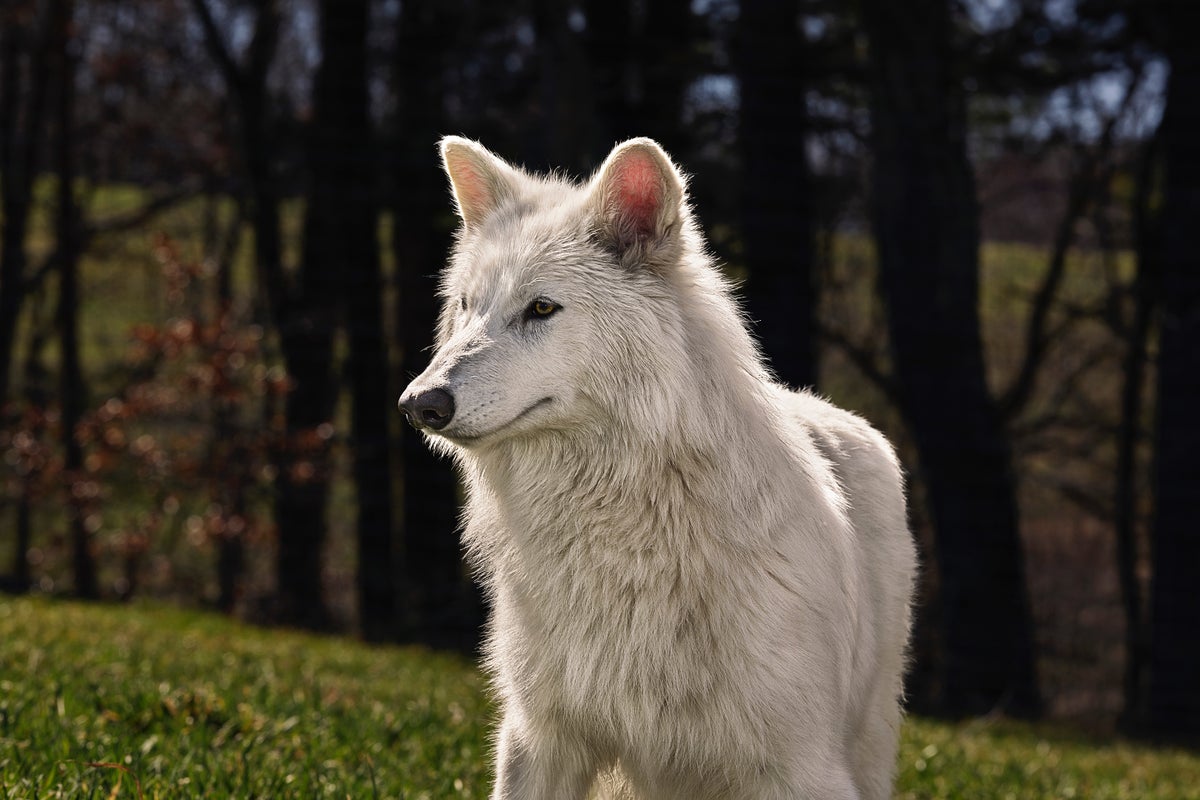
    But many scientists say what Colossal produced this time is not, in fact, the dire wolf. Rather, they say, it is a gray wolf whose genome has been edited to give it some dire-wolf-like traits.


    On supporting science journalism

    If you’re enjoying this article, consider supporting our award-winning journalism by subscribing. By purchasing a subscription you are helping to ensure the future of impactful stories about the discoveries and ideas shaping our world today.


    What were dire wolves?

    Dire wolves (Aenocyon dirus) are an extinct carnivore that lived throughout what are today North and South America during the Pleistocene and early Holocene epochs (about 250,000 to 10,000 years ago). First described in the 1850s, their fossils have been found all over the Americas, perhaps most famously in Los Angeles’ La Brea Tar Pits.

    Two of Colossal's dire wolf pups being held in a person's hands

    Two of Colossal Biosciences’ “dire wolf” pups.

    These predators could grow up to six feet in length, and their large skull and jaws were adapted to take down Pleistocene megafauna such as mastodons and bison. It is thought that dire wolves died out as their prey did.

    Because of skeletal similarities, scientists had thought that dire wolves were relatives of modern gray wolves. But DNA evidence published in a 2021 study found dire wolves belonged to a much older evolutionary lineage of dogs. The resemblance between dire wolves and gray wolves is an example of convergent evolution, when species separately evolve similar adaptations because they lead a similar lifestyle, the study’s researchers said at the time.

    “This is a designer dog. This is a genetically modified gray wolf.”—Jacquelyn Gill, paleoecologist

    Beth Shapiro, who is now Colossal’s chief science officer and was a co-author of the 2021 paper, says the company’s recent work builds on those findings. This time, the scientists were able to extract and sequence DNA from a 13,000-year-old tooth and a 72,000-year-old skull that yielded more complete genomic data than the samples used in the 2021 study. The results, Shapiro says, show the dire wolf was the result of hybridization between two ancient, now extinct canid lineages. Dire wolves’ closest modern relatives are wolves, coyotes and dholes, and the new findings suggest they share 99.5 percent of their DNA with gray wolves. That finding is set to be detailed in a paper that will be posted to the preprint server arXiv.org. (Such preprint studies have not yet been peer-reviewed.)

    What did Colossal Biosciences create?

    After examining the dire wolf genome, Shapiro and her team edited 20 sites on 14 genes in the genome of the modern gray wolf (Canis lupus), introducing what they say are 15 extinct dire wolf variants. No ancient dire wolf genes themselves were directly inserted into the genome, however. The scientists created embryos that were implanted in surrogate dogs.

    Colossal targeted genes that affected phenotype, or the observable characteristics of an organism—in this case, largely its appearance. The company’s scientists edited genes that affect fur color and thickness and body size, as well as ear, skull and facial shape. “We’re using a morphological species concept,” Shapiro says.

    To make something that is genetically identical to an ancient dire wolf through gene editing “is not really possible. We can’t create that many edits at once,” she says. “But it’s also not the goal.” Instead, Shapiro adds, “we want to create functional versions of extinct species. We don’t have to have something that is 100 percent genetically identical.”

    Colossal's dire wolf standing in front of a pile of tree logs

    The “dire wolves” are being kept on a preserve in an undisclosed location.

    Other scientists disagree with this view, however. “This is a designer dog. This is a genetically modified gray wolf,” says Jacquelyn Gill, a paleoecologist at the University of Maine, who has worked with Shapiro in the past but was not involved in this project. “I have more than 14 Neandertal genes in me, and we wouldn’t call me a Neandertal.”

    The pups “don’t have any traits that would allow us to understand the dire wolf any better than we did yesterday,” Gill says, adding that understanding ice age organisms isn’t just a matter of knowing what they looked like or what they ate—but also about knowing what they did in those ancient ecosystems. “Some of those things are coded genetically; some of those are cultural” and passed down from generation to generation.

    At best, this would be an “incremental step” toward de-extinction, she says. And even if scientists could clone a dire wolf that was completely identical to its extinct ancestor, Gill adds, that would raise a very important question: “What are we going to do with it?”

    What are the conservation implications of this work?

    The wolves created by Colossal are being kept on a large preserve in an undisclosed location somewhere in the northern U.S. Colossal has worked with the American Humane Society to ensure the animals’ welfare, and the company says it will be monitoring their health and development.

    “There is cool science here, I just wish it wasn’t getting lost in hype.”—Gill

    It currently has no plans to breed these wolves. For now, it is doing feasibility studies on creating more of the animals to add to the pack—and to perhaps give to Indigenous tribes that Colossal says have expressed interest in keeping the wolves in preserves on tribal land.

    But reintroducing dire wolves to the landscape beyond that is difficult to envision, Gill says. The biggest animals alive today were middle-sized during the Pleistocene. “We have downsized planet Earth,” she says, noting that conservationists already struggle to maintain and support populations of large predators, such as gray wolves. “It’s hard to imagine a practical application here.”

    Colossal’s dire wolves, Romulus and Remus, at three months of age, standing next to each other in a snowy landscape looking off to the left of the camera

    Colossal’s “dire wolves,” Romulus and Remus, at three months of age. Both were born on October 1, 2024.

    There is, however, conservation potential in the gene-editing techniques used by the Colossal team—for a different species: the endangered red wolf. Red wolves, once found from Texas to Pennsylvania, saw their numbers nose-dive in the 20th century because of hunting and habitat loss. Declared extinct in the wild in 1980, they were eventually reintroduced using a captive breeding program.

    But as with many small, endangered populations, the gene pool is limited. There is work with various species to collect genetic material from skin punches to “biobank” genetic material in order to introduce more diversity into extant populations. Shapiro says Colossal’s technique, which uses routine blood draws, yields cells that are easier to reprogram than those that come from skin—and could thus be a better way of diversifying the red wolf gene pool. “It’s actually using technology to prevent species from going extinct,” says Matt James, Colossal’s chief animal officer.

    Gill agrees that this approach is potentially promising. “There is cool science here,” she says. “I just wish it wasn’t getting lost in hype.”


    Original Source Link

    Share. Facebook Twitter Pinterest LinkedIn WhatsApp Email Reddit Telegram
    Previous ArticleDrop review – a first date with no chemistry
    Next Article Deep Cogito emerges from stealth with hybrid AI ‘reasoning’ models

    RELATED POSTS

    At Gaza’s Al-Shifa Hospital, the War Isn’t Over

    March 29, 2026

    How ultraprecise ‘nuclear clocks’ could transform timekeeping

    March 28, 2026

    AI data centres can warm surrounding areas by up to 9.1°C

    March 28, 2026

    One Way or Another, Most of Our Electricity Comes From Solar Power

    March 27, 2026

    Why your psoriasis flares up in the same spots

    March 27, 2026

    Computer finds flaw in major physics paper for first time

    March 26, 2026
    latest posts

    Weezer Play Acoustic Rooftop Set in Venice Beach

    Weezer staged an acoustic rooftop concert in Venice Beach on Friday as part of a…

    She quit VC to replace the underwire bra. Now she’s Nordstrom’s fastest-growing brand

    March 29, 2026

    Enormous Crowd Of Over 200,000 Show Up For No Kings Protest In Minnesota

    March 29, 2026

    Ted Cruz stays neutral in Texas Senate runoff between Cornyn and Paxton

    March 29, 2026

    Bluesky leans into AI with Attie, an app for building custom feeds

    March 29, 2026

    At Gaza’s Al-Shifa Hospital, the War Isn’t Over

    March 29, 2026

    Kim Novak Slams Sydney Sweeney Casting in ‘Scandalous!’ Movie

    March 29, 2026
    Categories
    • Books (1,147)
    • Business (6,054)
    • Cover Story (2)
    • Film (5,990)
    • Lifestyle (4,084)
    • Music (6,060)
    • Politics (6,056)
    • Science (5,402)
    • Technology (5,987)
    • Television (5,678)
    • Uncategorized (3)
    • US News (6,038)
    popular posts

    Mitch McConnell Calls Senate GOP Colleagues As He Recovers From Fall

    Senate Minority Leader Mitch McConnell, who is recovering after suffering a fall at a Washington…

    12 gorgeous honeymoon suites you can book with travel rewards

    May 31, 2022

    Michelle Obama Politicizes Beyoncé’s Country Music Album – Says It’s A Reminder To Vote

    April 7, 2024

    These fortress stocks hold up the most during bear markets and pay a nice dividend

    May 19, 2022
    Archives
    Browse By Category
    • Books (1,147)
    • Business (6,054)
    • Cover Story (2)
    • Film (5,990)
    • Lifestyle (4,084)
    • Music (6,060)
    • Politics (6,056)
    • Science (5,402)
    • Technology (5,987)
    • Television (5,678)
    • Uncategorized (3)
    • US News (6,038)
    About Us

    We are a creativity led international team with a digital soul. Our work is a custom built by the storytellers and strategists with a flair for exploiting the latest advancements in media and technology.

    Most of all, we stand behind our ideas and believe in creativity as the most powerful force in business.

    What makes us Different

    We care. We collaborate. We do great work. And we do it with a smile, because we’re pretty damn excited to do what we do. If you would like details on what else we can do visit out Contact page.

    Our Picks

    At Gaza’s Al-Shifa Hospital, the War Isn’t Over

    March 29, 2026

    Kim Novak Slams Sydney Sweeney Casting in ‘Scandalous!’ Movie

    March 29, 2026

    ‘Duck Dynasty’ Drama as John Luke Robertson Is Cuffed & Stuffed by Cops

    March 29, 2026
    © 2026 Beverly Hills Examiner. All rights reserved. All articles, images, product names, logos, and brands are property of their respective owners. All company, product and service names used in this website are for identification purposes only. Use of these names, logos, and brands does not imply endorsement unless specified. By using this site, you agree to the Terms & Conditions and Privacy Policy.

    Type above and press Enter to search. Press Esc to cancel.

    We use cookies on our website to give you the most relevant experience by remembering your preferences and repeat visits. By clicking “Accept All”, you consent to the use of ALL the cookies. However, you may visit "Cookie Settings" to provide a controlled consent.
    Cookie SettingsAccept All
    Manage consent

    Privacy Overview

    This website uses cookies to improve your experience while you navigate through the website. Out of these, the cookies that are categorized as necessary are stored on your browser as they are essential for the working of basic functionalities of the website. We also use third-party cookies that help us analyze and understand how you use this website. These cookies will be stored in your browser only with your consent. You also have the option to opt-out of these cookies. But opting out of some of these cookies may affect your browsing experience.
    Necessary
    Always Enabled
    Necessary cookies are absolutely essential for the website to function properly. These cookies ensure basic functionalities and security features of the website, anonymously.
    CookieDurationDescription
    cookielawinfo-checkbox-analytics11 monthsThis cookie is set by GDPR Cookie Consent plugin. The cookie is used to store the user consent for the cookies in the category "Analytics".
    cookielawinfo-checkbox-functional11 monthsThe cookie is set by GDPR cookie consent to record the user consent for the cookies in the category "Functional".
    cookielawinfo-checkbox-necessary11 monthsThis cookie is set by GDPR Cookie Consent plugin. The cookies is used to store the user consent for the cookies in the category "Necessary".
    cookielawinfo-checkbox-others11 monthsThis cookie is set by GDPR Cookie Consent plugin. The cookie is used to store the user consent for the cookies in the category "Other.
    cookielawinfo-checkbox-performance11 monthsThis cookie is set by GDPR Cookie Consent plugin. The cookie is used to store the user consent for the cookies in the category "Performance".
    viewed_cookie_policy11 monthsThe cookie is set by the GDPR Cookie Consent plugin and is used to store whether or not user has consented to the use of cookies. It does not store any personal data.
    Functional
    Functional cookies help to perform certain functionalities like sharing the content of the website on social media platforms, collect feedbacks, and other third-party features.
    Performance
    Performance cookies are used to understand and analyze the key performance indexes of the website which helps in delivering a better user experience for the visitors.
    Analytics
    Analytical cookies are used to understand how visitors interact with the website. These cookies help provide information on metrics the number of visitors, bounce rate, traffic source, etc.
    Advertisement
    Advertisement cookies are used to provide visitors with relevant ads and marketing campaigns. These cookies track visitors across websites and collect information to provide customized ads.
    Others
    Other uncategorized cookies are those that are being analyzed and have not been classified into a category as yet.
    SAVE & ACCEPT