
CLIMATEWIRE | This story is part of POLITICO’s COP28 Special Report.
The COP28 climate summit comes at a critical moment for the planet.
A summer that toppled heat records left a trail of disasters around the globe. The world may be just six years away from breaching the Paris Agreement’s temperature target of 1.5 degrees Celsius, setting the stage for much worse calamities to come. And governments are cutting their greenhouse gas pollution far too slowly to head off the problem — and haven’t coughed up the billions of dollars they promised to help poorer countries cope with the damage.
This year’s summit, which starts on Nov. 30 in Dubai, will conclude the first assessment of what countries have achieved since signing the Paris accord in 2015.
The forgone conclusion: They’ve made some progress. But not enough. The real question is what they do in response.
To help understand the stakes, here’s a snapshot of the state of the planet — and global climate efforts — in 10 numbers.
1.3 degrees Celsius
Global warming since the preindustrial era
Human-caused greenhouse gas emissions have been driving global temperatures skyward since the 19th century, when the industrial revolution and the mass burning of fossil fuels began to affect the Earth’s climate. The world has already warmed by about 1.3 degrees Celsius, or 2.3 degrees Fahrenheit, and most of that warming has occurred since the 1970s. In the last 50 years, research suggests, global temperatures have risen at their fastest rate in at least 2,000 years.
This past October concluded the Earth’s hottest 12-month span on record, a recent analysis found. And 2023 is virtually certain to be the hottest calendar year ever observed. It’s continuing a string of recent record-breakers — the world’s five hottest years on record have all occurred since 2015.
Allowing warming to pass 2 degrees Celsius would tip the world into catastrophic changes, scientists have warned, including life-threatening heat extremes, worsening storms and wildfires, crop failures, accelerating sea-level rise and existential threats to some coastal communities and small island nations. Eight years ago in Paris, nearly every nation on Earth agreed to strive to keep temperatures well below that threshold, and under a more ambitious 1.5-degree threshold if at all possible.
But with just fractions of a degree to go, that target is swiftly approaching — and many experts say it’s already all but out of reach.
$4.3 trillion
Global economic losses from climate disasters since 1970
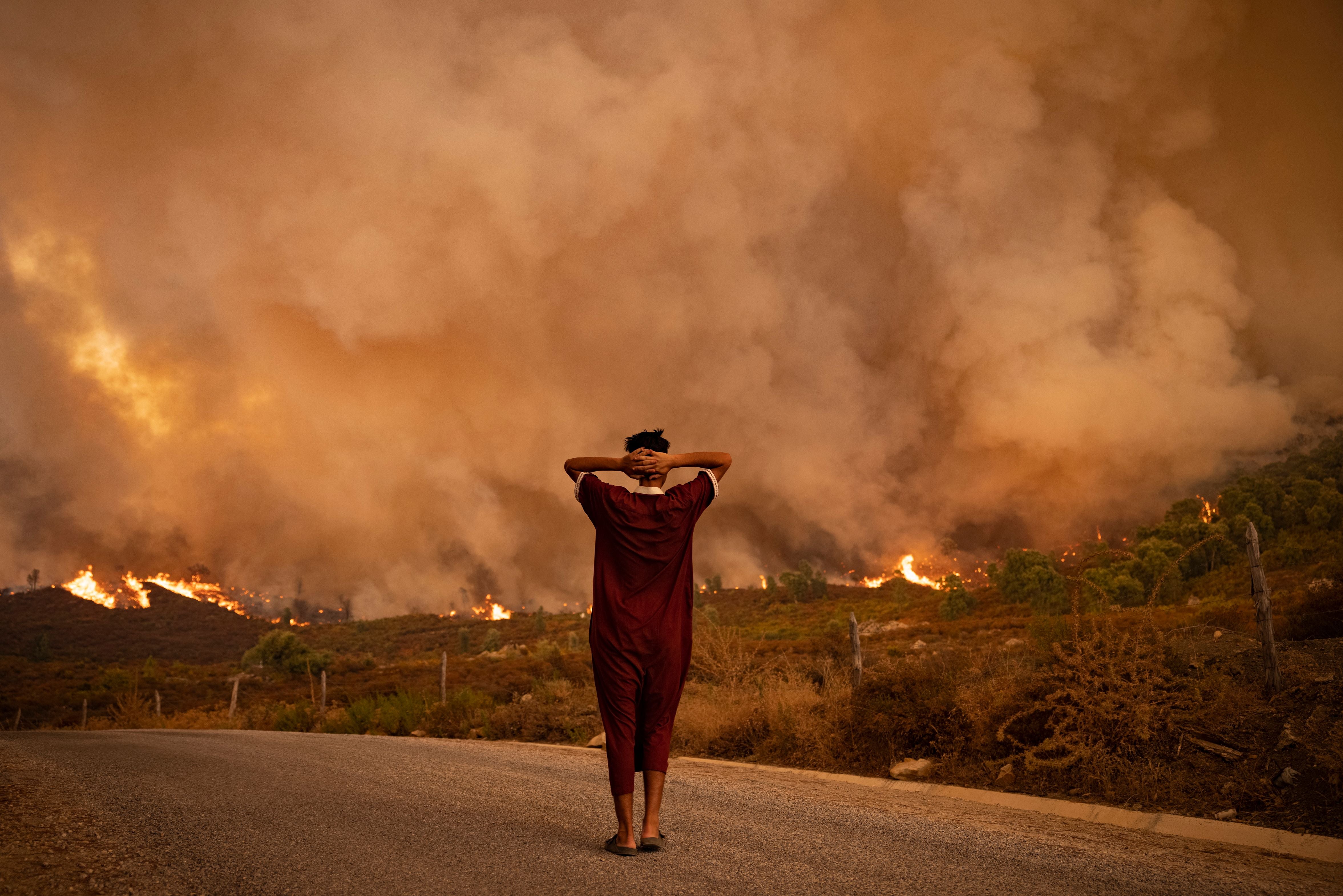
Climate-related disasters are worsening as temperatures rise. Heat waves are intensifying, tropical cyclones are strengthening, floods and droughts are growing more severe and wildfires are blazing bigger. Record-setting events struck all over the planet this year, a harbinger of new extremes to come. Scientists say such events will only accelerate as the world warms.
Nearly 12,000 weather, climate and water-related disasters struck worldwide over the last five decades, the World Meteorological Organization reports. They’ve caused trillions of dollars in damage, and they’ve killed more than 2 million people.
Ninety percent of these deaths have occurred in developing countries. Compared with wealthier nations, these countries have historically contributed little to the greenhouse gas emissions driving global warming — yet they disproportionately suffer the impacts of climate change.
4.4 millimeters
Annual rate of sea-level rise
Global sea levels are rapidly rising as the ice sheets melt and the oceans warm and expand. Scientists estimate that they’re now rising by about 4.4 millimeters, or about 0.17 inches, each year — and that rate is accelerating, increasing by about 1 millimeter every decade.
Those sound like small numbers. They’re not.
The world’s ice sheets and glaciers are losing a whopping 1.2 trillion tons of ice each year. Those losses are also speeding up, accelerating by at least 57 percent since the 1990s. Future sea-level rise mainly depends on future ice melt, which depends on future greenhouse gas emissions. With extreme warming, global sea levels will likely rise as much as 3 feet by the end of this century, enough to swamp many coastal communities, threaten freshwater supplies and submerge some small island nations.
Some places are more vulnerable than others.
“Low-lying islands in the Pacific are on the frontlines of the fight against sea-level rise,” said NASA sea-level expert Benjamin Hamlington. “In the U.S., the Southeast and Gulf Coasts are experiencing some of the highest rates of sea-level rise in the world and have very high future projections of sea level.”
But in the long run, he added, “almost every coastline around the world is going to experience sea-level rise and will feel impacts.”
Less than six years
When the world could breach the 1.5-degree threshold
The world is swiftly running out of time to meet its most ambitious international climate target: keeping global warming below 1.5 degrees Celsius. Humans can emit only another 250 billion metric tons of carbon dioxide and maintain at least even odds of meeting that goal, scientists say.
That pollution threshold could arrive in as little as six years.
That’s the bottom line from at least two recent studies, one published in June and one in October. Humans are pouring about 40 billion tons of carbon dioxide into the atmosphere each year, with each ton eating into the margin of error.
The size of that carbon buffer is smaller than previous estimates have suggested, indicating that time is running out even faster than expected.
“While our research shows it is still physically possible for the world to remain below 1.5C, it’s difficult to see how that will stay the case for long,” said Robin Lamboll, a scientist at Imperial College London and lead author of the most recent study. “Unfortunately, net-zero dates for this target are rapidly approaching, without any sign that we are meeting them.”
43 percent
How much greenhouse gas emissions must fall by 2030 to hit the temperature target
The world would have to undergo a stark transformation during this decade to have any hope of meeting the Paris Agreement’s ambitious 1.5-degree cap.
In a nutshell, global greenhouse gas emissions have to fall 43 percent by 2030, and 60 percent by 2035, before reaching net-zero by mid-century, according to a U.N. report published in September on the progress the world has made since signing the Paris Agreement. That would give the world a 50 percent chance of limiting global warming to 1.5 degrees.
But based on the climate pledges that countries have made to date, greenhouse gas emissions are likely to fall by just 2 percent this decade, according to a U.N. assessment published this month.
Governments are “taking baby steps to avert the climate crisis,” U.N. climate chief Simon Stiell said in a statement this month. “This means COP28 must be a clear turning point.”
$1 trillion a year
Climate funding needs of developing countries
In many ways, U.N. climate summits are all about finance. Cutting industries’ carbon pollution, protecting communities from extreme weather, rebuilding after climate disasters — it all costs money. And developing countries, in particular, don’t have enough of it.
As financing needs grow, pressure is mounting on richer nations such as the U.S. that have produced the bulk of planet-warming emissions to help developing countries cut their own pollution and adapt to a warmer world. They also face growing calls to pay for the destruction wrought by climate change, known as loss and damage in U.N.-speak.
But the flow of money from rich to poor countries has slowed. In October, a pledging conference to replenish the U.N.’s Green Climate Fund raised only $9.3 billion, even less than the $10 billion that countries had promised last time. An overdue promise by developed countries to deliver $100 billion a year by 2020 to help developing countries reduce emissions and adapt to rising temperatures was “likely” met last year, the Organization for Economic Cooperation and Development said this month, while warning that adaptation finance had fallen by 14 percent in 2021.
As a result, the gap between what developing countries need and how much money is flowing in their direction is growing. The OECD report said developing countries will need around $1 trillion a year for climate investments by 2025, “rising to roughly $2.4 trillion each year between 2026 and 2030.”
$7 trillion
Worldwide fossil fuel subsidies in 2022
In stark contrast to the trickle of climate finance, fossil fuel subsidies have surged in recent years. In 2022, total spending on subsidies for oil, natural gas and coal reached a record $7 trillion, the International Monetary Fund said in August. That’s $2 trillion more than in 2020.
Explicit subsidies — direct government support to reduce energy prices — more than doubled since 2020, to $1.3 trillion. But the majority of subsidies are implicit, representing the fact that governments don’t require fossil fuel companies to pay for the health and environmental damage that their products inflict on society.
At the same time, countries continue pumping public and private money into fossil fuel production. This month, a U.N. report found that governments plan to produce more than twice the amount of fossil fuels in 2030 than would be consistent with the 1.5-degree target.
66,000 square kilometers
Gross deforestation worldwide in 2022
At the COP26 climate summit two years ago in Glasgow, Scotland, nations committed to halting global deforestation by 2030. A total of 145 countries have signed the Glasgow Forest Declaration, representing more than 90 percent of global forest cover. Yet global action is still falling short of that target. The annual Forest Declaration Assessment, produced by a collection of research and civil society organizations, estimated that the world lost 66,000 square kilometers of forest last year, or about 25,000 square miles — a swath of territory slightly larger than West Virginia or Lithuania. Most of that loss came from tropical forests.
Halting deforestation is a critical component of global climate action. The U.N.’s Intergovernmental Panel on Climate Change warns that collective contributions from agriculture, forestry and land use compose as much as 21 percent of global human-caused carbon emissions. Deforestation releases large volumes of carbon dioxide back into the atmosphere, and recent research suggests that carbon losses from tropical forests may have doubled since the early 2000s.
Almost 1 billion tons
The annual carbon dioxide removal gap
Given the world’s slow pace in reducing greenhouse gas pollution, scientists say a second approach is essential for slowing the Earth’s warming — removing carbon dioxide from the atmosphere.
The technology for doing this is largely untested at scale, and won’t be cheap.
A landmark report on carbon dioxide removals led by the University of Oxford earlier this year found that keeping warming to 2 degrees Celsius or less would require countries to collectively remove an additional 0.96 billion tons of CO2-equivalent a year by 2030.
About 2 billion tons are now removed every year, but that is largely achieved through the natural absorption capacity of forests.
Removing even more carbon will require countries to massively scale up carbon removal technologies, given the limited capacity of forests to absorb more carbon dioxide.
Carbon removal technologies are in the spotlight at COP28, though some countries and companies want to use them to meet net-zero while continuing to burn fossil fuels. Scientists have been clear that carbon removal cannot be a substitute for steep emissions cuts.
1,000 gigawatts
Annual growth in renewable power capacity needed to keep 1.5 degrees in reach
The shift from fossil fuels to renewables is underway, but the transition is still far too slow to meet the Paris Agreement targets.
To keep 1.5 degrees within reach, the International Renewable Energy Agency estimates that the world needs to add 1,000 gigawatts in renewable energy capacity every year through 2030. By comparison, the United States’ entire utility-scale electricity-generation capacity was about 1,160 gigawatts last year, according to the Department of Energy.
Last year, countries added about 300 gigawatts, according to the agency’s latest World Energy Transitions Outlook published in June.
That shortfall has prompted the EU and the climate summit’s host nation, the United Arab Emirates, to campaign for nations to sign up to a target to triple the world’s renewable capacity by 2030 at COP28, a goal also supported by the U.S. and China.
“The transition to clean energy is happening worldwide and it’s unstoppable,” International Energy Agency boss Fatih Birol said last month. “It’s not a question of ‘if’, it’s just a matter of ‘how soon’ — and the sooner the better for all of us.”
This story is part of POLITICO’s COP28 Special Report.
Reprinted from E&E News with permission from POLITICO, LLC. Copyright 2023. E&E News provides essential news for energy and environment professionals.