
Close Menu
Beverly Hills Examiner

    Subscribe to Updates

    Get the latest creative news from FooBar about art, design and business.

    What's Hot

    Earth, Wind & Fire Drummer John Paris in Induced Coma Following Medical Emergency

    August 16, 2026

    Centcom chief calls carrier’s mission ‘one of the most operationally intense and consequential of the modern era’

    August 16, 2026

    Speaker Mike Johnson Goes On Fox News And Dies A Slow And Painful Death

    August 16, 2026
    Facebook X (Twitter) Instagram
    Beverly Hills Examiner
    • Home
    • US News
    • Politics
    • Business
    • Science
    • Technology
    • Lifestyle
    • Music
    • Television
    • Film
    • Books
    • Contact
      • About
      • Amazon Disclaimer
      • DMCA / Copyrights Disclaimer
      • Terms and Conditions
      • Privacy Policy
    Beverly Hills Examiner
    Home»Science»Tougher AI Policies Could Protect Taylor Swift–And Everyone Else–From Deepfakes
    Science

    Tougher AI Policies Could Protect Taylor Swift–And Everyone Else–From Deepfakes

    By AdminFebruary 9, 2024
    Facebook Twitter Pinterest LinkedIn WhatsApp Email Reddit Telegram
    Tougher AI Policies Could Protect Taylor Swift–And Everyone Else–From Deepfakes


    Tougher AI Policies Could Protect Taylor Swift–And Everyone Else–From Deepfakes

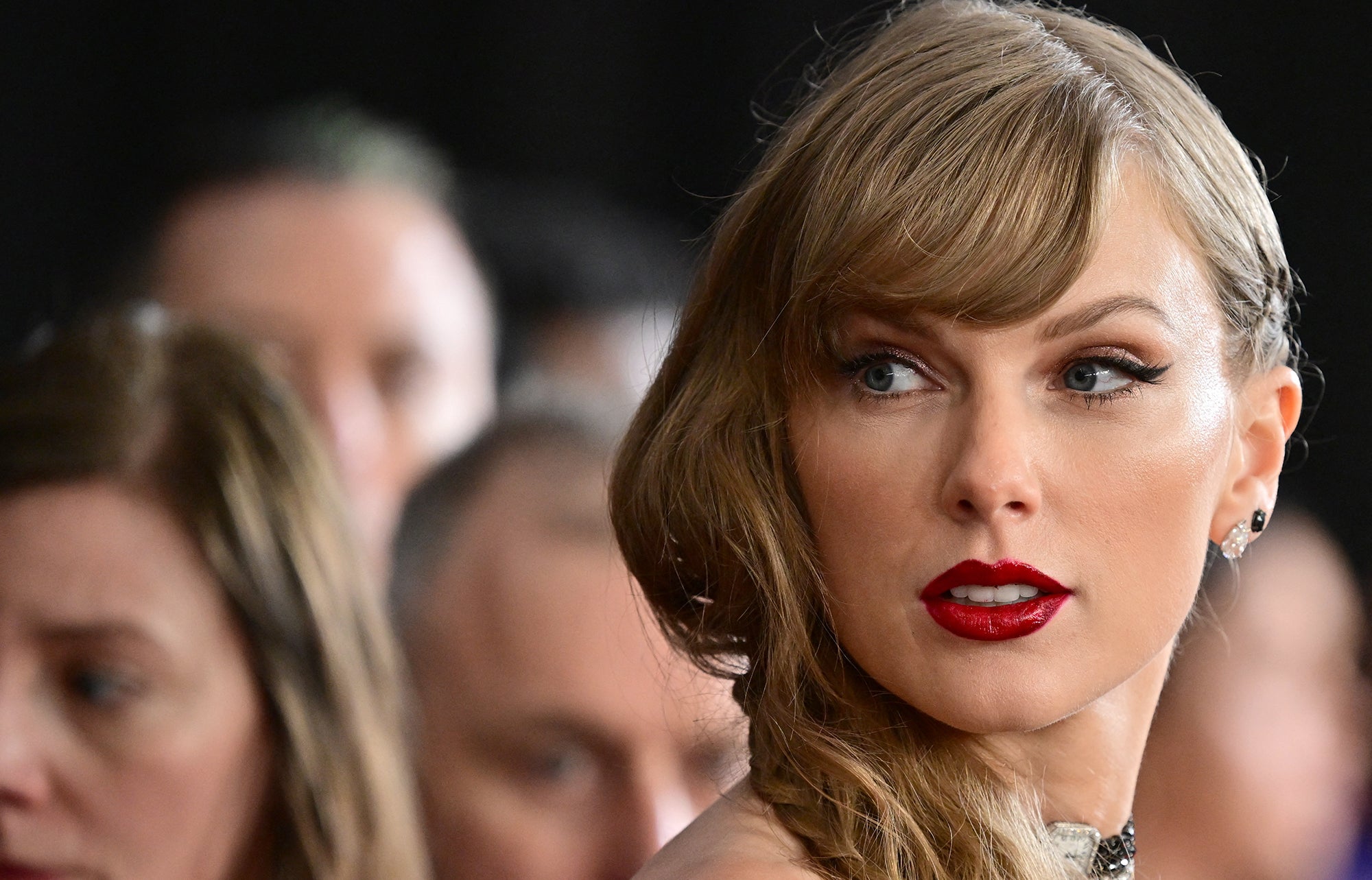
    For Taylor Swift, the last few months of 2023 were triumphant. Her Eras Tour was named the highest-grossing concert tour of all time. She debuted an accompanying concert film that breathed new life into the genre. And to cap it off, Time magazine named her Person of the Year.

    But in late January the megastar made headlines for a far less empowering reason: she had become the latest high-profile target of sexually explicit, nonconsensual deepfake images made using artificial intelligence. Swift’s fans were quick to report the violative content as it circulated on social media platforms, including X (formerly Twitter), which temporarily blocked searches of Swift’s name. It was hardly the first such case—women and girls across the globe have already faced similar abuse. Swift’s cachet helped propel the issue into the public eye, however, and the incident amplified calls for lawmakers to step in.

    “We are too little, too late at this point, but we can still try to mitigate the disaster that’s emerging,” says Mary Anne Franks, a professor at George Washington University Law School and president of the Cyber Civil Rights Initiative. Women are “canaries in the coal mine” when it comes to the abuse of artificial intelligence, she adds. “It’s not just going to be the 14-year-old girl or Taylor Swift. It’s going to be politicians. It’s going to be world leaders. It’s going to be elections.”


    On supporting science journalism

    If you’re enjoying this article, consider supporting our award-winning journalism by subscribing. By purchasing a subscription you are helping to ensure the future of impactful stories about the discoveries and ideas shaping our world today.


    Swift, who recently became a billionaire, might be able to make some progress through individual litigation, Franks says. (Swift’s record label did not respond to a request for comment as to whether the artist will be pursuing lawsuits or supporting efforts to crack down on deepfakes.) Yet what are really needed, the law professor adds, are regulations that specifically ban this sort of content. “If there had been legislation passed years ago, when advocates were saying this is what’s bound to happen with this kind of technology, we might not be in this position,” Franks says. One such bill that could help victims in the same position as Swift, she notes, is the Preventing Deepfakes of Intimate Images Act, which Representative Joe Morelle of New York State introduced last May. If it were to pass into law, the legislation would ban the sharing of nonconsensual deepfake pornography. Another recent proposal in the Senate would let deepfake victims sue such content’s creators and distributors for damages.

    Advocates have been calling for policy solutions to nonconsensual deepfakes for years. A patchwork of state laws exist, yet experts say federal oversight is lacking. “There is a paucity of applicable federal law” around adult deepfake pornography, says Amir Ghavi, lead counsel on AI at the law firm Fried Frank. “There are some laws around the edges, but generally speaking, there is no direct deepfake federal statute.”

    Yet a federal crackdown might not solve the issue, the attorney explains, because a law that criminalizes sexual deepfakes does not address one big problem: whom to charge with a crime. “It’s highly unlikely, practically speaking, that those people will identify themselves,” Ghavi says, noting that forensic studies can’t always prove what software created a given piece of content. And even if law enforcement could identify the images’ provenance, they might run up against something called Section 230—a small but massively influential piece of legislation that says websites aren’t responsible for what their users post. (It’s not yet clear, however, whether Section 230 applies to generative AI.) And human rights groups such as the American Civil Liberties Union have warned that overly broad regulations could also raise First Amendment concerns for the journalists who report on deepfakes or political satirists who wield them.

    The neatest solution would be to adopt policies that would promote “social responsibility” on the part of companies that own generative AI products, says Michael Karanicolas, executive director of the University of California, Los Angeles, Institute for Technology, Law and Policy. But, he adds, “it’s relatively uncommon for companies to respond to anything other than coercive regulatory behavior.” Some platforms have taken steps to stanch the spread of AI-generated misinformation about electoral campaigns, so it’s not unprecedented for them to step in, Karanicolas says—but even technical safeguards are subject to end runs by sophisticated users.

    Digital watermarks, which flag AI-generated content as synthetic, are one possible solution supported by the Biden administration and some members of Congress. And in the coming months, Facebook, Instagram and Threads will begin to label AI-made images posted to those platforms, Meta recently announced. Even if a standardized watermarking regime couldn’t stop individuals from creating deepfakes, it would still help social media platforms take them down or slow their spread. Moderating web content at this kind of scale is possible, says one former policy maker who regularly advises the White House and Congress on AI regulation, pointing at social media companies’ success in limiting the spread of copyrighted media. “Both the legal precedent and the technical precedent exist to slow the spread of this stuff,” says the adviser, who requested anonymity, given the ongoing deliberations around deepfakes. Swift—a public figure with a platform comparable to that of some presidents—could be able to get everyday people to start caring about the issue, the former policy maker adds.

    For now, though, the legal terrain has few clear landmarks, leaving some victims feeling left out in the cold. Caryn Marjorie, a social media influencer and self-described “Swiftie,” who launched her own AI chatbot last year, says she faced an experience similar to Swift’s. About a month ago Marjorie’s fans tipped her off to sexually explicit, AI-generated deepfakes of her that were circulating online.

    The deepfakes made Marjorie feel sick; she had trouble sleeping. But though she repeatedly reported the account that was posting the images, it remained online. “I didn’t get the same treatment as Taylor Swift,” Marjorie says. “It makes me wonder: Do women have to be as famous as Taylor Swift to get these explicit AI images to be taken down?”


    Original Source Link

    Share. Facebook Twitter Pinterest LinkedIn WhatsApp Email Reddit Telegram
    Previous ArticleSeductive and Sobering Spin on Showbiz Fame – The Hollywood Reporter
    Next Article Bootstrapped for 8 years, Xensam has now snapped up $40M for AI that manages software assets

    RELATED POSTS

    Astronomers Discover the Existence of a Black Hole Star

    August 16, 2026

    AI Could Help Fossil Fuel Companies Create More Emissions

    August 16, 2026

    Puerto Rico Is Rationing Water. It Could’ve Avoided It by Harvesting Rainwater

    August 15, 2026

    Big Tech Wants to Harvest Your Thoughts

    August 15, 2026

    Are Electrons Driving Us Crazy? By Howard Bloom

    August 14, 2026

    The Real Reason Data Center Gas Power Plants Are So Dirty

    August 14, 2026
    latest posts

    Earth, Wind & Fire Drummer John Paris in Induced Coma Following Medical Emergency

    Earth, Wind & Fire drummer John Paris has been placed in a medically induced coma…

    Centcom chief calls carrier’s mission ‘one of the most operationally intense and consequential of the modern era’

    August 16, 2026

    Speaker Mike Johnson Goes On Fox News And Dies A Slow And Painful Death

    August 16, 2026

    David Henrie says Latin mass is booming as young people seek faith

    August 16, 2026

    Woman claims her stepfather used Grok to transform childhood photo into explicit imagery

    August 16, 2026

    Astronomers Discover the Existence of a Black Hole Star

    August 16, 2026

    ‘Too Much Music,’ Doc Film on Ghana Keyboardist Kiki Gyan: Open Doors

    August 16, 2026
    Categories
    • Books (1,429)
    • Business (6,333)
    • Cover Story (9)
    • Film (6,272)
    • Lifestyle (4,331)
    • Music (6,343)
    • Politics (6,317)
    • Science (5,683)
    • Technology (6,268)
    • Television (5,964)
    • Uncategorized (3)
    • US News (6,318)
    popular posts

    Power Book II: Ghost Season 3 Episode 1 Review: Your Perception, Your Reality

    It’s been a minute since we’ve been able to talk about a series in…

    Like a child eating candyfloss: see a green turtle tuck into jellyfish

    July 2, 2022

    How the intersection of wealth management and private assets is reshaping global investing

    September 30, 2025

    Researchers Successfully Grow Human Tissue on Robotic Shoulder

    May 28, 2022
    Archives
    Browse By Category
    • Books (1,429)
    • Business (6,333)
    • Cover Story (9)
    • Film (6,272)
    • Lifestyle (4,331)
    • Music (6,343)
    • Politics (6,317)
    • Science (5,683)
    • Technology (6,268)
    • Television (5,964)
    • Uncategorized (3)
    • US News (6,318)
    About Us

    We are a creativity led international team with a digital soul. Our work is a custom built by the storytellers and strategists with a flair for exploiting the latest advancements in media and technology.

    Most of all, we stand behind our ideas and believe in creativity as the most powerful force in business.

    What makes us Different

    We care. We collaborate. We do great work. And we do it with a smile, because we’re pretty damn excited to do what we do. If you would like details on what else we can do visit out Contact page.

    Our Picks

    Astronomers Discover the Existence of a Black Hole Star

    August 16, 2026

    ‘Too Much Music,’ Doc Film on Ghana Keyboardist Kiki Gyan: Open Doors

    August 16, 2026

    HGTV’s Jasmine Roth Reveals ‘Most Ridiculous’ Project She’s Ever Done

    August 16, 2026
    © 2026 Beverly Hills Examiner. All rights reserved. All articles, images, product names, logos, and brands are property of their respective owners. All company, product and service names used in this website are for identification purposes only. Use of these names, logos, and brands does not imply endorsement unless specified. By using this site, you agree to the Terms & Conditions and Privacy Policy.

    Type above and press Enter to search. Press Esc to cancel.

    We use cookies on our website to give you the most relevant experience by remembering your preferences and repeat visits. By clicking “Accept All”, you consent to the use of ALL the cookies. However, you may visit "Cookie Settings" to provide a controlled consent.
    Cookie SettingsAccept All
    Manage consent

    Privacy Overview

    This website uses cookies to improve your experience while you navigate through the website. Out of these, the cookies that are categorized as necessary are stored on your browser as they are essential for the working of basic functionalities of the website. We also use third-party cookies that help us analyze and understand how you use this website. These cookies will be stored in your browser only with your consent. You also have the option to opt-out of these cookies. But opting out of some of these cookies may affect your browsing experience.
    Necessary
    Always Enabled
    Necessary cookies are absolutely essential for the website to function properly. These cookies ensure basic functionalities and security features of the website, anonymously.
    CookieDurationDescription
    cookielawinfo-checkbox-analytics11 monthsThis cookie is set by GDPR Cookie Consent plugin. The cookie is used to store the user consent for the cookies in the category "Analytics".
    cookielawinfo-checkbox-functional11 monthsThe cookie is set by GDPR cookie consent to record the user consent for the cookies in the category "Functional".
    cookielawinfo-checkbox-necessary11 monthsThis cookie is set by GDPR Cookie Consent plugin. The cookies is used to store the user consent for the cookies in the category "Necessary".
    cookielawinfo-checkbox-others11 monthsThis cookie is set by GDPR Cookie Consent plugin. The cookie is used to store the user consent for the cookies in the category "Other.
    cookielawinfo-checkbox-performance11 monthsThis cookie is set by GDPR Cookie Consent plugin. The cookie is used to store the user consent for the cookies in the category "Performance".
    viewed_cookie_policy11 monthsThe cookie is set by the GDPR Cookie Consent plugin and is used to store whether or not user has consented to the use of cookies. It does not store any personal data.
    Functional
    Functional cookies help to perform certain functionalities like sharing the content of the website on social media platforms, collect feedbacks, and other third-party features.
    Performance
    Performance cookies are used to understand and analyze the key performance indexes of the website which helps in delivering a better user experience for the visitors.
    Analytics
    Analytical cookies are used to understand how visitors interact with the website. These cookies help provide information on metrics the number of visitors, bounce rate, traffic source, etc.
    Advertisement
    Advertisement cookies are used to provide visitors with relevant ads and marketing campaigns. These cookies track visitors across websites and collect information to provide customized ads.
    Others
    Other uncategorized cookies are those that are being analyzed and have not been classified into a category as yet.
    SAVE & ACCEPT