
Close Menu
Beverly Hills Examiner

    Subscribe to Updates

    Get the latest creative news from FooBar about art, design and business.

    What's Hot

    Interview with Igor Fostenko, Author of The WAY from Street Kid to Millionaire

    August 9, 2026

    Phoebe Bridgers to make acting debut in A24 drama ‘Primetime’

    August 8, 2026

    GOP senators look to pass Trump’s voting bill in budget package that funds the Iran war and Pentagon

    August 8, 2026
    Facebook X (Twitter) Instagram
    Beverly Hills Examiner
    • Home
    • US News
    • Politics
    • Business
    • Science
    • Technology
    • Lifestyle
    • Music
    • Television
    • Film
    • Books
    • Contact
      • About
      • Amazon Disclaimer
      • DMCA / Copyrights Disclaimer
      • Terms and Conditions
      • Privacy Policy
    Beverly Hills Examiner
    Home»Science»What Genetics Can–and Cannot–Reveal about an Individual’s COVID Risk
    Science

    What Genetics Can–and Cannot–Reveal about an Individual’s COVID Risk

    By AdminMay 18, 2022
    Facebook Twitter Pinterest LinkedIn WhatsApp Email Reddit Telegram
    What Genetics Can–and Cannot–Reveal about an Individual’s COVID Risk


    Imagine taking a genetic test that could tell you your personal risk of developing complications and dying from a particular disease, such as cancer, heart attack or even COVID. A version of such a test exists—albeit an imperfect one.

    Genome-wide association studies (GWAS) are becoming an increasingly common avenue to assess COVID risk. The approach holds potential for fighting the disease by identifying the locations, or loci, on the human genome that put an individual at higher or lower risk for severe disease. Scientists hope it may eventually unlock the door for new forms of treatment.

    “Whole-genome sequencing allows you to check every single base pair in the genome,” says Athanasios Kousathanas, principal genomics data scientist at the London-based company Genomics England. “And this allows you to find the particular genes that might be involved with higher precision.”

    Some experts warn, however, that GWAS alone are insufficient for accurately assessing COVID risk. They say that genomic analysis may be difficult to disentangle from social risk factors and could leave health systems open to discrimination.

    Manuel Ferreira, a researcher at genetics company Regeneron, is part of a team using GWAS to hunt loci related to COVID risk by sifting through thousands of genomes from four aggregated databases. In their most recent study, published in March in Nature Genetics, Ferreira and his co-authors crunched the numbers and found that individuals with a rare variant of the ACE2 gene seemed to be at nearly 40 percent lower risk than the general population of developing severe COVID. It is “what we call a ‘strong effect,’” Ferreira says.

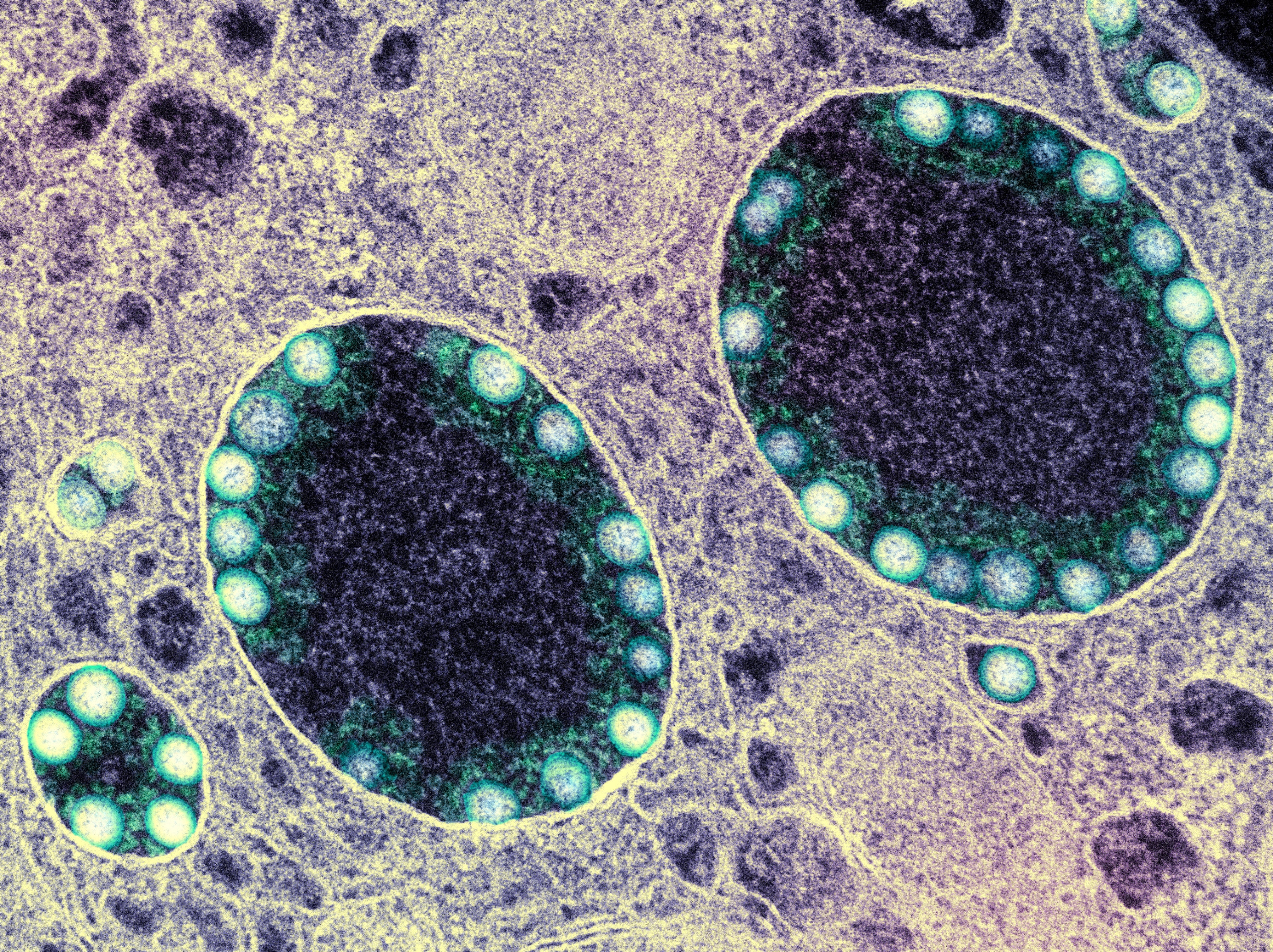
    The ACE2 gene encodes a specialized ACE2 protein located on a cell’s surface. Normally the protein helps to regulate things such as blood pressure and inflammation by allowing specific protein fragments into or out of the cell. But it also gives SARS-CoV-2, the virus that causes COVID, a cellular entry point for infection. When the virus comes into contact with the ACE2 protein, it latches on with its exterior spike protein like a burr snagged on a sock. From there, the virus enters its target cell.

    But Ferreira found that people who carry a specific variant of the ACE2 gene have about 39 percent fewer receptors for the protein studding their cellular surfaces. The researchers hypothesize that, as a result, fewer SARS-CoV-2 viruses are able to gain entry into these individuals’ bodies, significantly reducing their risk of severe COVID. “In a sense, it’s not totally surprising, since we know that the virus requires [these] receptors to get into the cell,” Ferreira says.

    Kenneth Baillie, a research clinician at the University of Edinburgh, recently collaborated with Genomics England’s Kousathanas on a study that identified 16 new loci linked to severe COVID risk. Some, Baillie believes, are potential targets for new drug therapies. “I’m sure there are more that are targets for therapy that we haven’t understood the biology [of] well enough yet,” he says.

    But other researchers caution that when it comes to predicting severe COVID, it is nearly impossible to disentangle genetic risks from social risk factors such as access to health care and working conditions, even using genome-wide analysis.

    Elsie Taveras is a pediatrician at Massachusetts General Hospital. But when the pandemic struck, she—like many others in her field—was pulled onto the intensive care unit floor to help treat the influx of patients. Right away, she noticed a pattern among those with severe COVID: Most were people of color from low-income communities. Many did not speak English.

    “I never would have thought that the most important thing I can bring to a care team wasn’t so much my medical expertise,” Taveras says. “It was being able to be there because I could help that team with my Spanish language.”

    Between navigating language barriers and limited financial resources, many of Taveras’s patients avoided seeking treatment until their illness had worsened. Others lived in multigenerational homes or worked frontline jobs in which isolation was all but impossible. These social pressures put them at higher risk of severe COVID—not because of genetics but simply because of circumstance.

    Geneticists do their best to account for such disparities in their analyses. “Epidemiologically, the way you can better understand the extent to which genetics [versus social risk factors] is driving the severity” of disease, Taveras says, is to “adjust for some of those variables.” By comparing individuals of similar ancestry, socioeconomic status, gender or medical history, scientists can establish a baseline for a patient’s odds of developing severe COVID. But even with these controls in place, “it’s imperfect,” Taveras says.

    An earlier genetic analysis, for example, linked high COVID risk to having type A blood and low risk with blood type O. But subsequent research found the association between type O and COVID risk to be negligible, while the connection to type A blood was nonexistent.

    Ferreira’s research drew from a database containing hundreds of thousands of genomes. These data gave the researchers a clear picture of the subjects’ ancestry and medical records but next to no context for their income level, housing situation or primary language.

    Ferreira and his colleagues found that individuals with European ancestry had about one-in-200 odds of carrying the COVID-risk-reducing ACE2 variant. In people with African ancestry, the odds were around one in 100, whereas people of South Asian descent had about a one-in-25 chance (although this last sample was very small, and the result was not statistically significant). But even these estimates can be fraught.

    “We have this long and complicated history about biological race as a contested category,” says Azita Chellappoo, a philosopher of medicine at the Open University, based in England. “It’s kind of not surprising that that’s been something which geneticists have taken up in the context of COVID-19,” she says, even though ancestral categories often paint incomplete pictures of the diversity within a population. For example, Ferreira’s study looked at the genomes of nearly 45,000 people with European ancestry but only about 2,500 people of African descent and 760 of South Asian descent.

    Furthermore, Chellappoo argues, focusing on individual loci misses the way that genes interact with their environment and one another in context. “My genes don’t do anything by themselves,” she says.

    But other researchers still see enormous value in searching for specific COVID-related loci. “We sort of kick the tires on the analysis,” says Edinburgh’s Baillie, “and we just keep getting the same results. So we’re very confident that these [effects] are real.”

    GWAS have also been used to pinpoint loci associated with loss of taste and smell in COVID patients, as well as markers associated with developing pneumonia after COVID infection. Future GWAS investigations may shed light on the mysteries of the lingering symptoms collectively known as long COVID.

    Ultimately Chellappoo, Baillie and others agree that genomic analysis holds potential for developing the next generation of COVID treatments. Ferreira’s research into the ACE2 protein, for instance, could yield a new avenue for preventing SARS-CoV-2 infection: blocking the receptors rather than attacking the virus itself. Current ACE2-blocking drugs, which are commonly prescribed for blood pressure control, have so far been ineffective against COVID. But Ferreira believes that a blocker specifically developed with COVID in mind could be more viable. “Our genetics suggest that blocking [ACE2] would be useful,” Ferreira says. And with vaccines, antiviral drugs and monoclonal antibodies still in short supply globally, new therapies are desperately needed.

    When it comes to assessing severe COVID risk, the key is balancing internal and external factors. “For sure there’s value in understanding the genetic contribution,” Taveras says, so long as we keep in mind “that there’s also a relative contribution to the severity of illness from these social risk factors that we can’t measure as precisely as a genetic mutation.”


    Original Source Link

    Share. Facebook Twitter Pinterest LinkedIn WhatsApp Email Reddit Telegram
    Previous Article‘GOT’ Actor Pilou Asbæk Stars in Danish WW2 Drama ‘Befrielsen’ – The Hollywood Reporter
    Next Article Plaid officially expands into identity and income verification, fraud prevention and account funding – TechCrunch

    RELATED POSTS

    Hank Green AI controversy raises questions for science communicators

    August 8, 2026

    Latest Pentagon UFO files release includes video of mysterious ‘cold orbs’

    August 8, 2026

    Scientists Used AI to Create 16 New Viruses

    August 7, 2026

    OpenAI’s latest math breakthroughs commit research misconduct, experts say

    August 7, 2026

    Meteor Showers, Eclipses, and More Are on the August 2026 Astronomical Calendar

    August 6, 2026

    Trump CDC pick Erica Schwartz confirmed to lead nation’s top public health agency

    August 6, 2026
    latest posts

    Interview with Igor Fostenko, Author of The WAY from Street Kid to Millionaire

    What’s the story behind the story? What inspired you to write this book? This book…

    Phoebe Bridgers to make acting debut in A24 drama ‘Primetime’

    August 8, 2026

    GOP senators look to pass Trump’s voting bill in budget package that funds the Iran war and Pentagon

    August 8, 2026

    Trump Admits He Is Stealing Things From Government Buildings

    August 8, 2026

    Kwara State hostages freed after 6 months held by jihadi kidnappers

    August 8, 2026

    OpenAI says it slowed Astra model development over security concerns

    August 8, 2026

    Hank Green AI controversy raises questions for science communicators

    August 8, 2026
    Categories
    • Books (1,414)
    • Business (6,317)
    • Cover Story (9)
    • Film (6,256)
    • Lifestyle (4,316)
    • Music (6,327)
    • Politics (6,300)
    • Science (5,666)
    • Technology (6,251)
    • Television (5,947)
    • Uncategorized (3)
    • US News (6,302)
    popular posts

    Survivor 47’s Sam Phalen reveals how he prepped for the show instead of learning to make fire

    Sam Phalen finished as the Survivor 47 runner-up. Pic credit: Robert Voets/CBS The Survivor 47…

    10 MCU Phase Four Heroes, Ranked By How Well They Would’ve Fared Against Thanos

    October 16, 2022

    Laura Poitras Interview for ‘All the Beauty and the Bloodshed’ – The Hollywood Reporter

    January 13, 2023

    ‘Backrooms’ Takes You Deeper Inside the Internet’s Most Uncanny Horror Myth

    May 30, 2026
    Archives
    Browse By Category
    • Books (1,414)
    • Business (6,317)
    • Cover Story (9)
    • Film (6,256)
    • Lifestyle (4,316)
    • Music (6,327)
    • Politics (6,300)
    • Science (5,666)
    • Technology (6,251)
    • Television (5,947)
    • Uncategorized (3)
    • US News (6,302)
    About Us

    We are a creativity led international team with a digital soul. Our work is a custom built by the storytellers and strategists with a flair for exploiting the latest advancements in media and technology.

    Most of all, we stand behind our ideas and believe in creativity as the most powerful force in business.

    What makes us Different

    We care. We collaborate. We do great work. And we do it with a smile, because we’re pretty damn excited to do what we do. If you would like details on what else we can do visit out Contact page.

    Our Picks

    OpenAI says it slowed Astra model development over security concerns

    August 8, 2026

    Hank Green AI controversy raises questions for science communicators

    August 8, 2026

    Stephen King’s 6 Most Underrated TV Shows

    August 8, 2026
    © 2026 Beverly Hills Examiner. All rights reserved. All articles, images, product names, logos, and brands are property of their respective owners. All company, product and service names used in this website are for identification purposes only. Use of these names, logos, and brands does not imply endorsement unless specified. By using this site, you agree to the Terms & Conditions and Privacy Policy.

    Type above and press Enter to search. Press Esc to cancel.

    We use cookies on our website to give you the most relevant experience by remembering your preferences and repeat visits. By clicking “Accept All”, you consent to the use of ALL the cookies. However, you may visit "Cookie Settings" to provide a controlled consent.
    Cookie SettingsAccept All
    Manage consent

    Privacy Overview

    This website uses cookies to improve your experience while you navigate through the website. Out of these, the cookies that are categorized as necessary are stored on your browser as they are essential for the working of basic functionalities of the website. We also use third-party cookies that help us analyze and understand how you use this website. These cookies will be stored in your browser only with your consent. You also have the option to opt-out of these cookies. But opting out of some of these cookies may affect your browsing experience.
    Necessary
    Always Enabled
    Necessary cookies are absolutely essential for the website to function properly. These cookies ensure basic functionalities and security features of the website, anonymously.
    CookieDurationDescription
    cookielawinfo-checkbox-analytics11 monthsThis cookie is set by GDPR Cookie Consent plugin. The cookie is used to store the user consent for the cookies in the category "Analytics".
    cookielawinfo-checkbox-functional11 monthsThe cookie is set by GDPR cookie consent to record the user consent for the cookies in the category "Functional".
    cookielawinfo-checkbox-necessary11 monthsThis cookie is set by GDPR Cookie Consent plugin. The cookies is used to store the user consent for the cookies in the category "Necessary".
    cookielawinfo-checkbox-others11 monthsThis cookie is set by GDPR Cookie Consent plugin. The cookie is used to store the user consent for the cookies in the category "Other.
    cookielawinfo-checkbox-performance11 monthsThis cookie is set by GDPR Cookie Consent plugin. The cookie is used to store the user consent for the cookies in the category "Performance".
    viewed_cookie_policy11 monthsThe cookie is set by the GDPR Cookie Consent plugin and is used to store whether or not user has consented to the use of cookies. It does not store any personal data.
    Functional
    Functional cookies help to perform certain functionalities like sharing the content of the website on social media platforms, collect feedbacks, and other third-party features.
    Performance
    Performance cookies are used to understand and analyze the key performance indexes of the website which helps in delivering a better user experience for the visitors.
    Analytics
    Analytical cookies are used to understand how visitors interact with the website. These cookies help provide information on metrics the number of visitors, bounce rate, traffic source, etc.
    Advertisement
    Advertisement cookies are used to provide visitors with relevant ads and marketing campaigns. These cookies track visitors across websites and collect information to provide customized ads.
    Others
    Other uncategorized cookies are those that are being analyzed and have not been classified into a category as yet.
    SAVE & ACCEPT