
Close Menu
Beverly Hills Examiner

    Subscribe to Updates

    Get the latest creative news from FooBar about art, design and business.

    What's Hot

    Senate advances sweeping energy legislation in first major action since midterm elections

    November 22, 2026

    The Expedia breach shows why companies must stop holding data they do not need | Fortune

    November 22, 2026

    You Can See Everything review – stranger than fiction

    November 22, 2026
    Facebook X (Twitter) Instagram
    Beverly Hills Examiner
    • Home
    • US News
    • Politics
    • Business
    • Science
    • Technology
    • Lifestyle
    • Music
    • Television
    • Film
    • Books
    • Contact
      • About
      • Amazon Disclaimer
      • DMCA / Copyrights Disclaimer
      • Terms and Conditions
      • Privacy Policy
    Beverly Hills Examiner
    Home»Science»What Makes the Eastern U.S. Drought Different from the West’s
    Science

    What Makes the Eastern U.S. Drought Different from the West’s

    By AdminNovember 27, 2024
    Facebook Twitter Pinterest LinkedIn WhatsApp Email Reddit Telegram
    What Makes the Eastern U.S. Drought Different from the West’s

    [ad_1]

    November 27, 2024

    4 min read

    What Makes the Eastern U.S. Drought Different from the West’s

    Drought is more synonymous with the western U.S., but the eastern part of the country can descend into such conditions surprisingly quickly
    By Andrea Thompson

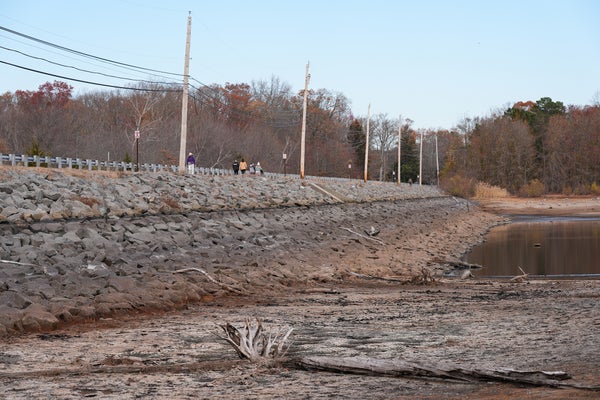
    Dried-up resevoir

    The Manasquan Reservoir in New Jersey, which supplies drinking water to 1.2 million people, dropped below half empty in mid-November.

    Lokman Vural Elibol/Anadolu via Getty Images

    Water levels are dropping in reservoirs. Multiple wildfires have ignited tinder-dry brush, exposing people across the region to harmful air pollution levels. It has barely rained for weeks.

    This time we’re not talking about the frequently drought-plagued western U.S. but rather the typically wetter eastern portion of the country—where an unusually severe drought has triggered water restrictions, damaged crops and fed as many fires in six weeks as New Jersey typically sees in six months. Some of the effects resemble those of dry periods out West, but drought in the East is a bit of a different beast.

    The two halves of the country have very different climates. Much of the West has distinct wet and dry seasons: rain and snow fall from late autumn through early spring, and that’s mostly it for the year. Snow on the high western mountain peaks gradually melts during spring and summer, keeping streams topped up and vegetation sufficiently watered when all goes well. But when winter precipitation is paltry or a hot spring and summer cause rapid snowmelt, there is less to keep reservoirs filled. Western states manage these resources to help gird against a dry year, but repeated years of failed rains and hot weather can usher in disastrous drought. This happened in California a decade ago, when hot weather officially pushed more than half the state into “exceptional” drought status—the highest category used by the U.S. Drought Monitor.


    On supporting science journalism

    If you’re enjoying this article, consider supporting our award-winning journalism by subscribing. By purchasing a subscription you are helping to ensure the future of impactful stories about the discoveries and ideas shaping our world today.


    Much of the East Coast, on the other hand, can—and usually does—see precipitation every month of the year. Dry periods there “tend to be shorter-lived and not these same major disasters as in western North America,” says Benjamin Cook, a climate scientist at Columbia University’s Lamont-Doherty Earth Observatory, who studies drought.

    Map of the contiguous 48 states shows where drought is occurring and how severe it is in each area.

    The U.S. Drought Monitor is jointly produced by the National Drought Mitigation Center at the University of Nebraska-Lincoln, the United States Department of Agriculture, and the National Oceanic and Atmospheric Administration. Map courtesy of NDMC.

    But when a few weeks go by between rainstorms, drought can develop very quickly. This has particularly been the case this fall in the Northeast. After an extremely wet winter and spring, many areas there saw six weeks with very little or no rain and unusually warm temperatures. And hotter temperatures increase evaporation, drying out the ground and plants even faster. “What’s wild is how far we’ve fallen down” in terms of water in the Northeast, says David Boutt, a hydrologist at the University of Massachusetts Amherst. “All these lakes and streams are feet lower than they’re supposed to be.”

    Wells are running dry in Connecticut. Officials in Philadelphia are closely monitoring the Delaware River’s “salt front”—where its fresh river water meets the salty water of the ocean—in case the ocean water pushes farther up the lowered river and threatens drinking water supplies. New York City has declared its first drought warning in 22 years, asking residents to take various steps to voluntarily cut back on water use. “It’s just not something that the Northeast typically deals with, so it’s shocking to read about,” says Denise Gutzmer, a drought impact specialist at the National Drought Mitigation Center.

    It could be worse. The drought of record in southern New England hit in the 1960s after years of below-normal rainfall. If those same conditions occurred now, with all the population and infrastructure growth since then, “we would be in really bad shape,” Boutt says. “Most places would be out of water or barely hanging on.”

    The East Coast’s current dry conditions have also made fall wildfires much worse than usual; they are igniting more readily, and they are burning hotter and longer. “We’re used to having some kind of reliable rain, and that helps put our fires out,” says Michael Gallagher, a U.S. Forest Service research ecologist, who studies wildfires. This year, though, “the fires keep popping up in more and more atypical places,” including Prospect Park in the heart of Brooklyn, N.Y., and small green spaces in Manhattan.

    One small thing that is keeping the drought from being worse is that it is happening in the fall, when both people and plants need less water and there is generally less evaporation than in the heat of summer. But the seasonal timing is also contributing to other wildfire-worsening factors: for example, deciduous trees are dropping leaves, adding more potential fuel for any spark.

    A few storms have brought a small amount of rain and snow to the region last week and this week, tamping down on fires and reducing the risk of further blazes. But they won’t end the drought; it will still take time for those rains to add up to enough to erase the current deficit. “We’re not just one rainstorm away from everything being better again,” Gallagher says. Boutt concurs, saying, “The soils are just so dry” that it’s probably going to take precipitation amounts of 10 inches, distributed over the next few months, to get water levels back up to normal.

    Exactly what the weather will bring for the rest of the fall and winter is uncertain. Reliable weather forecasts only extend about seven days into the future, and seasonal forecasts just give the relative odds of what the weather over the next few months will be. For the Northeast, the odds currently favor warmer-than-normal weather— but roughly equal chances of wetter or drier conditions.

    Looking ahead even further, as the climate continues to change with rising temperatures, the work Boutt and others have done suggests that vacillations between wet and dry periods in the Northeast are occurring more frequently, on the order of every two to four years.

    For the rest of this year, the wildfire risk should at least diminish a little as the days get shorter and nights get colder. “It just doesn’t burn as well when it’s really cold out,” Gallagher says. This is particularly so when there is an overnight frost because it takes time for that frost’s moisture to evaporate when the sun rises. Gallagher does caution, though, that major Northeast wildfires have occurred in every season. If a dry, windy weather pattern takes hold again, fire activity could resume.

    And even if there is some rain and snow in the next few months and fire danger remains low, there is a certain amount of “memory’ in the water table, streams, rivers and lakes—it takes time for them to recover, Boutt says. “We’re going to be feeling this into spring and summer,” he adds.

    [ad_2]

    Original Source Link

    Share. Facebook Twitter Pinterest LinkedIn WhatsApp Email Reddit Telegram
    Previous ArticleYoung Sheldon’s Only Thanksgiving Episode Created A Weird ‘80s Pop Culture Paradox
    Next Article Uber’s subscription service reportedly target of FTC probe

    RELATED POSTS

    Voyager 1 Beat the Odds and Is Still Working a Light-Day Away From Earth

    November 18, 2026

    The Dark Side of the Moon Was the Brightest Part of 2026

    November 17, 2026

    Just 400 US Data Centers Use More Electricity Than Michigan

    November 16, 2026

    The EPAs Chemical-Detecting Plane Isnt Doing Its Job Anymore

    November 16, 2026

    Its Getting Too Dry for Even Cactuses to Survive

    November 15, 2026

    New Species of Giant Fungus Discovered in China Grows up to 20 Inches Tall

    November 15, 2026
    latest posts

    Senate advances sweeping energy legislation in first major action since midterm elections

    WASHINGTON — The Senate on Monday advanced bipartisan legislation aimed at speeding up permitting reviews…

    The Expedia breach shows why companies must stop holding data they do not need | Fortune

    November 22, 2026

    You Can See Everything review – stranger than fiction

    November 22, 2026

    Signal restricts mobile screenshots as it confronts existential threat of AI surveillance | TechCrunch

    November 21, 2026

    Here are the top AI agents that can live in your text messages  | TechCrunch

    November 21, 2026

    You either take the wheel, or were going to run into the wall: The founder who sold Wrike for $2.25 billion forced his engineers to build around AI | Fortune

    November 21, 2026

    Book Riots Deals of the Day for November 21, 2026

    November 21, 2026
    Categories
    • Books (1,622)
    • Business (6,527)
    • Cover Story (17)
    • Film (6,461)
    • Lifestyle (4,501)
    • Music (6,537)
    • Politics (6,513)
    • Science (5,867)
    • Technology (6,465)
    • Television (6,158)
    • Uncategorized (3)
    • US News (6,510)
    popular posts

    Canada wildfires: How long does wildfire smoke last and is it dangerous?

    [ad_1] Smoke from wildfires in Canada has descended onto cities such as New YorkREUTERS/Amr Alfiky…

    Foo Fighters Reveal All-Star Guest List

    June 15, 2022

    How China’s EV Boom Caught Western Car Companies Asleep at the Wheel

    October 14, 2023

    ‘Murina’ Review – The Hollywood Reporter

    July 15, 2022
    Archives
    Browse By Category
    • Books (1,622)
    • Business (6,527)
    • Cover Story (17)
    • Film (6,461)
    • Lifestyle (4,501)
    • Music (6,537)
    • Politics (6,513)
    • Science (5,867)
    • Technology (6,465)
    • Television (6,158)
    • Uncategorized (3)
    • US News (6,510)
    About Us

    We are a creativity led international team with a digital soul. Our work is a custom built by the storytellers and strategists with a flair for exploiting the latest advancements in media and technology.

    Most of all, we stand behind our ideas and believe in creativity as the most powerful force in business.

    What makes us Different

    We care. We collaborate. We do great work. And we do it with a smile, because we’re pretty damn excited to do what we do. If you would like details on what else we can do visit out Contact page.

    Our Picks

    You either take the wheel, or were going to run into the wall: The founder who sold Wrike for $2.25 billion forced his engineers to build around AI | Fortune

    November 21, 2026

    Book Riots Deals of the Day for November 21, 2026

    November 21, 2026

    Startup sues Apple in India over tap-to-share contacts feature | TechCrunch

    November 21, 2026
    © 2026 Beverly Hills Examiner. All rights reserved. All articles, images, product names, logos, and brands are property of their respective owners. All company, product and service names used in this website are for identification purposes only. Use of these names, logos, and brands does not imply endorsement unless specified. By using this site, you agree to the Terms & Conditions and Privacy Policy.

    Type above and press Enter to search. Press Esc to cancel.

    We use cookies on our website to give you the most relevant experience by remembering your preferences and repeat visits. By clicking “Accept All”, you consent to the use of ALL the cookies. However, you may visit "Cookie Settings" to provide a controlled consent.
    Cookie SettingsAccept All
    Manage consent

    Privacy Overview

    This website uses cookies to improve your experience while you navigate through the website. Out of these, the cookies that are categorized as necessary are stored on your browser as they are essential for the working of basic functionalities of the website. We also use third-party cookies that help us analyze and understand how you use this website. These cookies will be stored in your browser only with your consent. You also have the option to opt-out of these cookies. But opting out of some of these cookies may affect your browsing experience.
    Necessary
    Always Enabled
    Necessary cookies are absolutely essential for the website to function properly. These cookies ensure basic functionalities and security features of the website, anonymously.
    CookieDurationDescription
    cookielawinfo-checkbox-analytics11 monthsThis cookie is set by GDPR Cookie Consent plugin. The cookie is used to store the user consent for the cookies in the category "Analytics".
    cookielawinfo-checkbox-functional11 monthsThe cookie is set by GDPR cookie consent to record the user consent for the cookies in the category "Functional".
    cookielawinfo-checkbox-necessary11 monthsThis cookie is set by GDPR Cookie Consent plugin. The cookies is used to store the user consent for the cookies in the category "Necessary".
    cookielawinfo-checkbox-others11 monthsThis cookie is set by GDPR Cookie Consent plugin. The cookie is used to store the user consent for the cookies in the category "Other.
    cookielawinfo-checkbox-performance11 monthsThis cookie is set by GDPR Cookie Consent plugin. The cookie is used to store the user consent for the cookies in the category "Performance".
    viewed_cookie_policy11 monthsThe cookie is set by the GDPR Cookie Consent plugin and is used to store whether or not user has consented to the use of cookies. It does not store any personal data.
    Functional
    Functional cookies help to perform certain functionalities like sharing the content of the website on social media platforms, collect feedbacks, and other third-party features.
    Performance
    Performance cookies are used to understand and analyze the key performance indexes of the website which helps in delivering a better user experience for the visitors.
    Analytics
    Analytical cookies are used to understand how visitors interact with the website. These cookies help provide information on metrics the number of visitors, bounce rate, traffic source, etc.
    Advertisement
    Advertisement cookies are used to provide visitors with relevant ads and marketing campaigns. These cookies track visitors across websites and collect information to provide customized ads.
    Others
    Other uncategorized cookies are those that are being analyzed and have not been classified into a category as yet.
    SAVE & ACCEPT