
Close Menu
Beverly Hills Examiner

    Subscribe to Updates

    Get the latest creative news from FooBar about art, design and business.

    What's Hot

    Love Meets Its Dark Side in Award-Winning Short Story Collection

    October 6, 2026

    Soul Train Awards 2026 Nominees List

    October 5, 2026

    U.S. shale executives have no idea when the oil market will go off a cliff

    October 5, 2026
    Facebook X (Twitter) Instagram
    Beverly Hills Examiner
    • Home
    • US News
    • Politics
    • Business
    • Science
    • Technology
    • Lifestyle
    • Music
    • Television
    • Film
    • Books
    • Contact
      • About
      • Amazon Disclaimer
      • DMCA / Copyrights Disclaimer
      • Terms and Conditions
      • Privacy Policy
    Beverly Hills Examiner
    Home»Science»What the U.S. Can Learn from Brazil’s Successful COVID Vaccination Campaign
    Science

    What the U.S. Can Learn from Brazil’s Successful COVID Vaccination Campaign

    By AdminMay 19, 2022
    Facebook Twitter Pinterest LinkedIn WhatsApp Email Reddit Telegram
    What the U.S. Can Learn from Brazil’s Successful COVID Vaccination Campaign


    During the course of the COVID-19 pandemic, media outlets, health experts and scholars have explained the COVID-19 vaccine divide in the U.S. as partisan, educational, racial or socioeconomic. As it stands, the overall U.S. adult vaccination rate has hovered around 65 percent for months now. But this division may go back to the founding ideals of democracy in the U.S.: Americans simply aren’t accustomed to expecting much from their government.

    Vaccinating everyone depends on more than the availability of vaccines; it depends on health infrastructure woven into the fabric of society. If preventing further pandemics is truly a goal of the U.S. public health system, then instead of investing in private health care and subsidizing private research for vaccine development, the U.S. should invest in the development of public health systems and develop strategies to include social rights in the principles of its democracy.

    Brazil, our homeland, is a prime example of how that can be done and how vaccine acceptance can become a matter of course.

    In July 2021, a group of drug traffickers approached the staff of a public vaccination site in a slum of Rio de Janeiro called Maré. A friend of ours who works in Maré shared the story: Armed with shotguns, the drug dealers demanded to be vaccinated against COVID-19, even though at that time, Rio was only vaccinating people above 50 years old (most drug traffickers are in their teens or 20s).

    “We know there is this Delta variant going around, and we want to be protected,” they told the vaccination staff, who had no choice but to vaccinate everyone.

    At first, the drug traffickers’ eagerness to get vaccinated might seem surprising, but the truth is, Brazilians from all walks of life welcome vaccines as a public health right. In the 2020 H1N1 pandemic, for example, Brazil vaccinated more people than any other country. Citizens are used to lining up in public health centers for routine vaccinations, despite the anti-vax attitude of its president, Jair Bolsonaro.

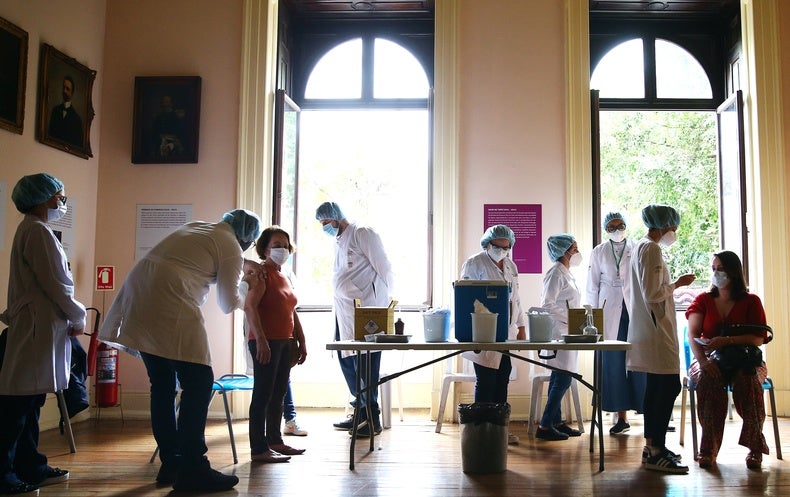
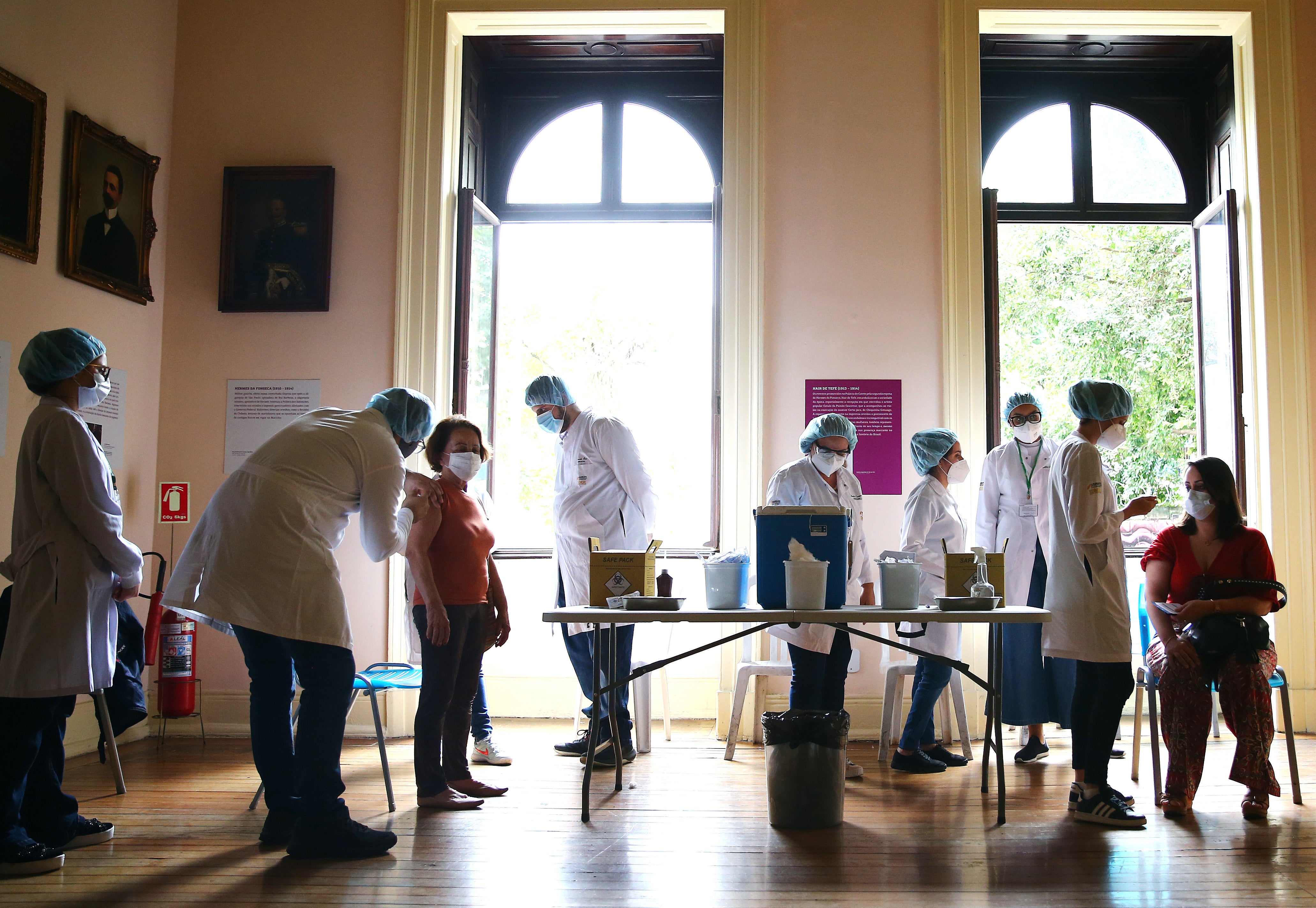
    Although COVID-19 vaccines were slow to arrive in Brazil, as of March 2022, virtually 100 percent of the adult population in Rio and São Paulo are fully vaccinated. This is a stark difference from the U.S. In New York, one of the most vaccinated megacities, 78.2 percent of the adult population has received two doses—despite having no shortage of vaccines. Brazil has about two thirds the population of the U.S., but in November 2021, Brazil surpassed the U.S. in the share of its population that is fully vaccinated. And that gap keeps increasing.

    The reason most Brazilians embrace vaccines, and about a quarter of Americans resist them, is deeply rooted in how these two democracies developed.

    Since the 19th century, political analysts, such as Alexis de Tocqueville, have remarked on the decentralized democratic structure in the U.S., which has pushed the role of the state to the periphery and heavily relied on associations among civil society. During the formation of the U.S., there was a focus on civil and political rights, with an emphasis on individual liberty and freedom.

    While Brazil is also a democracy and a federation, with grassroots political associations of its own, Brazilian political history has emphasized the role of the state in ensuring social rights. In short, Brazilians expect health and other services to come from the government. Even before the current 1988 constitution, which establishes public health as a human right, previous governments ensured labor rights and social welfare for everyone in the country.

    The development of the Brazilian democratic process created the infrastructure for a free nationwide public health system. This, in turn, has supported people’s acceptance of top-down public health measures—even among drug traffickers. Even if this system is often precarious, and at risk of dismantlement by Bolsonaro’s government, people still expect the government to provide free health care. This is very different from the U.S., where government-funded health care is directed mainly to people living below the poverty line and to seniors.

    Years ago, when one of us (Araujo) worked as a teacher in Rio’s Vidigal slum, his students used to share stories about stopping by the public health care center to greet the doctor on their way to school. This daily interaction created a relationship of trust. When someone felt ill, they did not hesitate to ask for help; help was inside their community. This trust in the public health system has now translated to public acceptance of COVID-19 vaccines.

    These health care providers are part of SUS, Brazil’s public health system, created in 1988 as a human right with the intent to serve everyone in the country. The service, which includes a decentralized network of providers, including doctors, hospitals and urgent care centers, is free. Most of the favela and low-income population in Brazil depend entirely on the SUS for health care, and many middle-class citizens use SUS for routine vaccinations and emergency care.

    SUS is not perfect. Public hospitals, for example, deal with funding shortages and long waiting lines for treatment. But everyone has access to basic health care. SUS providers represent a continuously present institution and are often members of the community themselves. More than an inconvenient step to getting a prescription, SUS providers are trusted liaisons, connecting community members with health researchers, government officials and grassroots interventions.

    The U.S. has no such system. For many Americans, regular health care is financially out of reach. Half of Americans carry medical debt—and the government has little role in ensuring access to health care. Health care is, explicitly, a luxury, rather than a right.

    It has been clear for months throughout this pandemic that vaccine acceptance is not only a scientific issue, but also a public health and communication problem. What has been less clear, however, is how the acceptance of public health measures is deeply rooted in each country’s own historical political process. We cannot change history, but we can learn from it in order to implement policy changes that improve people’s lives.

    This is an opinion and analysis article, and the views expressed by the author or authors are not necessarily those of Scientific American.


    Original Source Link

    Share. Facebook Twitter Pinterest LinkedIn WhatsApp Email Reddit Telegram
    Previous ArticleHow to Get The Gumshoe Title in Destiny 2
    Next Article Platypod Platyball Elite Review: A Bold Tripod Head Experiment

    RELATED POSTS

    Elusive ‘Geoneutrinos’ Are Building a New Map of Earth’s Volatile Interior

    October 5, 2026

    How attachment theory can help us understand AI relationships

    October 5, 2026

    Rural Data Centers Are in for a Big Federal Tax Break

    October 4, 2026

    How the brain uses memory to imagine what might have been

    October 4, 2026

    A Decade-Long Experiment Is Unlocking the Mysteries of the Ocean’s ‘Deep Reefs’

    October 3, 2026

    Could a giant iceberg really break off Greenland? Scientists check Tom Cruise’s new movie Digger

    October 3, 2026
    latest posts

    Love Meets Its Dark Side in Award-Winning Short Story Collection

    Murder & Other Love Stories: Thought-Provoking Suspense by Bruce A. Hanson Chock-full of…

    Soul Train Awards 2026 Nominees List

    October 5, 2026

    U.S. shale executives have no idea when the oil market will go off a cliff

    October 5, 2026

    Jack Smith’s FBI Ran a Secret ‘Pen Register’ on Susie Wiles’ Phone — Tracked Calls With 21 Trump Lawyers, Campaign Advisers, and at Least Five Journalists

    October 5, 2026

    Country boys in Kentucky hear knocks in woods at night before one catches glimpse of Bigfoot with spotlight

    October 5, 2026

    HackerRank’s AI interviewer offers a glimpse into what job interviews could become

    October 5, 2026

    Elusive ‘Geoneutrinos’ Are Building a New Map of Earth’s Volatile Interior

    October 5, 2026
    Categories
    • Books (1,530)
    • Business (6,433)
    • Cover Story (14)
    • Film (6,370)
    • Lifestyle (4,418)
    • Music (6,443)
    • Politics (6,420)
    • Science (5,783)
    • Technology (6,369)
    • Television (6,069)
    • Uncategorized (3)
    • US News (6,418)
    popular posts

    Nelly to Headline Trump-Hosted White House Correspondents’ Dinner Party

    Nelly is reportedly gearing up to perform at a members-only club owned by the president’s…

    Navy plans to buy 15 costly Trump-class battleships by 2055

    May 11, 2026

    Ole Miss beats Georgia 39-34 in thrilling Sugar Bowl game victory

    January 2, 2026

    WATCH: Crockett TEASES Senate Run Against Ted Cruz — Says She’s Coming for His Seat!

    November 13, 2025
    Archives
    Browse By Category
    • Books (1,530)
    • Business (6,433)
    • Cover Story (14)
    • Film (6,370)
    • Lifestyle (4,418)
    • Music (6,443)
    • Politics (6,420)
    • Science (5,783)
    • Technology (6,369)
    • Television (6,069)
    • Uncategorized (3)
    • US News (6,418)
    About Us

    We are a creativity led international team with a digital soul. Our work is a custom built by the storytellers and strategists with a flair for exploiting the latest advancements in media and technology.

    Most of all, we stand behind our ideas and believe in creativity as the most powerful force in business.

    What makes us Different

    We care. We collaborate. We do great work. And we do it with a smile, because we’re pretty damn excited to do what we do. If you would like details on what else we can do visit out Contact page.

    Our Picks

    HackerRank’s AI interviewer offers a glimpse into what job interviews could become

    October 5, 2026

    Elusive ‘Geoneutrinos’ Are Building a New Map of Earth’s Volatile Interior

    October 5, 2026

    The Lost Children Of Tuam review – a sombre…

    October 5, 2026
    © 2026 Beverly Hills Examiner. All rights reserved. All articles, images, product names, logos, and brands are property of their respective owners. All company, product and service names used in this website are for identification purposes only. Use of these names, logos, and brands does not imply endorsement unless specified. By using this site, you agree to the Terms & Conditions and Privacy Policy.

    Type above and press Enter to search. Press Esc to cancel.

    We use cookies on our website to give you the most relevant experience by remembering your preferences and repeat visits. By clicking “Accept All”, you consent to the use of ALL the cookies. However, you may visit "Cookie Settings" to provide a controlled consent.
    Cookie SettingsAccept All
    Manage consent

    Privacy Overview

    This website uses cookies to improve your experience while you navigate through the website. Out of these, the cookies that are categorized as necessary are stored on your browser as they are essential for the working of basic functionalities of the website. We also use third-party cookies that help us analyze and understand how you use this website. These cookies will be stored in your browser only with your consent. You also have the option to opt-out of these cookies. But opting out of some of these cookies may affect your browsing experience.
    Necessary
    Always Enabled
    Necessary cookies are absolutely essential for the website to function properly. These cookies ensure basic functionalities and security features of the website, anonymously.
    CookieDurationDescription
    cookielawinfo-checkbox-analytics11 monthsThis cookie is set by GDPR Cookie Consent plugin. The cookie is used to store the user consent for the cookies in the category "Analytics".
    cookielawinfo-checkbox-functional11 monthsThe cookie is set by GDPR cookie consent to record the user consent for the cookies in the category "Functional".
    cookielawinfo-checkbox-necessary11 monthsThis cookie is set by GDPR Cookie Consent plugin. The cookies is used to store the user consent for the cookies in the category "Necessary".
    cookielawinfo-checkbox-others11 monthsThis cookie is set by GDPR Cookie Consent plugin. The cookie is used to store the user consent for the cookies in the category "Other.
    cookielawinfo-checkbox-performance11 monthsThis cookie is set by GDPR Cookie Consent plugin. The cookie is used to store the user consent for the cookies in the category "Performance".
    viewed_cookie_policy11 monthsThe cookie is set by the GDPR Cookie Consent plugin and is used to store whether or not user has consented to the use of cookies. It does not store any personal data.
    Functional
    Functional cookies help to perform certain functionalities like sharing the content of the website on social media platforms, collect feedbacks, and other third-party features.
    Performance
    Performance cookies are used to understand and analyze the key performance indexes of the website which helps in delivering a better user experience for the visitors.
    Analytics
    Analytical cookies are used to understand how visitors interact with the website. These cookies help provide information on metrics the number of visitors, bounce rate, traffic source, etc.
    Advertisement
    Advertisement cookies are used to provide visitors with relevant ads and marketing campaigns. These cookies track visitors across websites and collect information to provide customized ads.
    Others
    Other uncategorized cookies are those that are being analyzed and have not been classified into a category as yet.
    SAVE & ACCEPT