
Close Menu
Beverly Hills Examiner

    Subscribe to Updates

    Get the latest creative news from FooBar about art, design and business.

    What's Hot

    Current price of oil as of Nov. 19, 2026 | Fortune

    November 25, 2026

    Yales Sonnenfeld: Nvidia is a detriment to US industrial might — not a champion | TechCrunch

    November 25, 2026

    Ninajirachi Drops I Love My Computer Remix Album

    November 24, 2026
    Facebook X (Twitter) Instagram
    Beverly Hills Examiner
    • Home
    • US News
    • Politics
    • Business
    • Science
    • Technology
    • Lifestyle
    • Music
    • Television
    • Film
    • Books
    • Contact
      • About
      • Amazon Disclaimer
      • DMCA / Copyrights Disclaimer
      • Terms and Conditions
      • Privacy Policy
    Beverly Hills Examiner
    Home»Science»What We Know about Artificial Food Dyes and Health as RFK, Jr., Declares a U.S. Ban
    Science

    What We Know about Artificial Food Dyes and Health as RFK, Jr., Declares a U.S. Ban

    By AdminApril 23, 2025
    Facebook Twitter Pinterest LinkedIn WhatsApp Email Reddit Telegram
    What We Know about Artificial Food Dyes and Health as RFK, Jr., Declares a U.S. Ban

    [ad_1]

    What We Know about Artificial Food Dyes and Health as RFK, Jr., Declares a U.S. Ban

    This week the secretary of health and human services announced plans to remove eight more food dyes from the U.S.’s food system
    By Lauren J. Young edited by Dean Visser

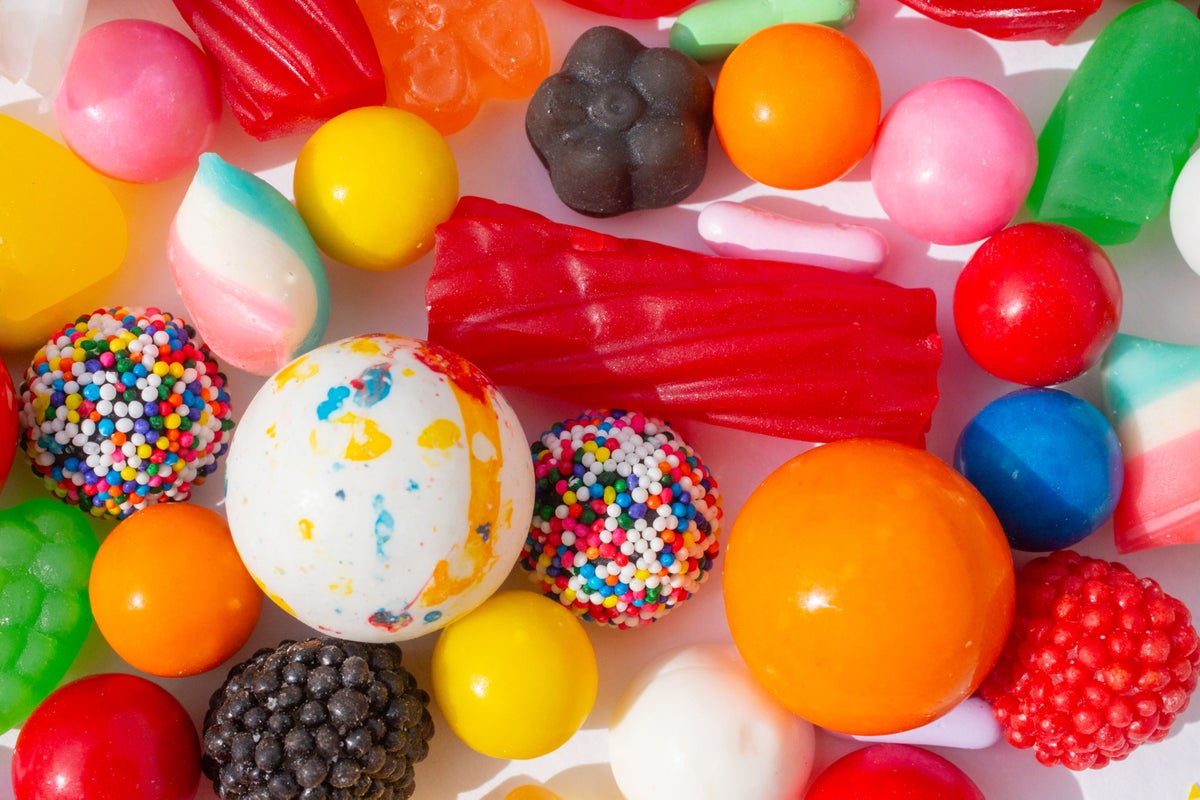
    Colorful candy candy closeup in variety of shapes and colors.

    On Tuesday Robert F. Kennedy, Jr., announced plans to order the U.S. food industry to eliminate eight petroleum-based food dyes within the next two years, based on some evidence that links them to health risks.

    The move by Kennedy, the Trump administration’s secretary of the Department of Health and Human Services, follows his earlier promises to ban various chemical food additives—including artificial colorings that are commonly used to brighten rainbow-colored cereals, pastries, chips, candies and other processed foods. Individual states, such as California and West Virginia, have also independently pushed legislation to ban certain food dyes and preservatives this year. At today’s press event, Kennedy discussed the directive and various claims about the nutritional value of foods alongside Food and Drug Administration director Marty Makary, National Institutes of Health director Jay Bhattacharya and other public officials. Makary said they will establish a timeline for the food industry transition to “natural alternatives.”

    “There’s no reason not to remove [such artificial food dyes] if they’re there just for visual appeal. If there’s no health-promoting purpose, and there’s actually even the slightest risk of detriments to health, then why not remove them?” says Kathleen Melanson, a nutritional scientist at the University of Rhode Island. She adds, however, that these chemical dyes are likely only part of the problem. “There’s so much more to food than single factors,” Melanson says.


    On supporting science journalism

    If you’re enjoying this article, consider supporting our award-winning journalism by subscribing. By purchasing a subscription you are helping to ensure the future of impactful stories about the discoveries and ideas shaping our world today.


    What It Means

    The FDA currently certifies nine color additives for use in foods. By this past January the outgoing Biden administration had already started the process to ban one of them, Red No. 3. Kennedy will target the other eight artificial food dyes, such as Yellow No. 5, Blue No. 1 and Red No. 40.

    The decision to ban Red No. 3 was based on a study in which male rats developed thyroid tumors after being exposed to high levels of the substance. Even though other studies in humans and animals failed to show similar results, the dye was banned under the Federal Food, Drug and Cosmetics Act’s Delaney Clause, explains Tracy Crane, an associate professor of medical oncology at the Sylvester Comprehensive Cancer Center, part of the University of Miami Miller School of Medicine and the University of Miami Health System.

    “In the Delaney Clause, [proponents of the ban] were able to state that anything that caused cancer in humans or animals could be eliminated from the diet, and that’s what happened with Red No. 3,” says Crane, who had wondered if other food dyes would experience the same fate. “There are definitely studies for some of these [dyes] that are on the list that have shown cancer-causing properties in mice.”

    What the Evidence Says

    Older animal studies have associated some blue, yellow and red dyes with risks of tumor development and neurotoxicity. Some research suggests the neurotoxicity may contribute to attention deficit hyperactivity disorder. Melanson calls the evidence “mixed,” however. Direct exposure has only been tested in animals. Human data have been mostly limited to population or epidemiological studies—in which participants have been asked to recall and self-report the foods they’ve eaten. This has led some scientists to say there is not enough information to make conclusions about food dyes’ potential health threats.

    An FDA research review on food dyes’ potential effects on children’s behavior also concluded that most children didn’t experience adverse effects, though some individuals may be sensitive to some dyes. The FDA states that color additives are safe to consume when they are used according to the agency’s regulations. And the International Association of Color Manufacturers, a group representing the global color industry, has previously said that the small levels of artificial food dyes that humans typically eat are generally safe. (At press time, the association has not responded to a request for comment from Scientific American.)

    “The danger is always in the dose,” Melanson says.

    A Wall Street Journal analysis evaluated U.S. Department of Agriculture data for more than 450,000 food products and found that 10 percent contained at least one artificial dye—and that more than 40 percent had multiple dyes. “When food additives are approved, they’re generally tested one at a time,” Melanson says. “We don’t know what happens with interactions.”

    Consuming a food with multiple dyes makes it difficult to know the total dose that has been ingested, Melanson says. The accumulative effects of a whole diet comprised of many different foods with artificial dyes, consumed over a lifetime, is even harder to assess. A disease like cancer takes a long time develop, Crane says, noting, “It’s very hard for us to really know what the direct impact of these food diets is.” She adds that not all the dyes are made the same and each may be processed in the body differently.

    Melanson and Crane agree that food dyes are just one ingredient that may contribute to health risks.

    “It’s not just about one type of ingredients; it’s about every ingredient that’s in there,” Melanson says. “If it’s all tunnel vision on one factor without considering these other potential risk factors—the excess of sodium and sugar and processing, lack of fiber, lack of fortifying nutrients—then we might be missing some aspects.”

    More details are pending, but it’s expected that food manufacturers may have to alter their production practices or consider alternative coloring additives. Natural, food-based sources such as turmeric, paprika, pumpkin or carrot have been used as well. But it’s unclear what the transition will cost manufacturers and federal agencies, Melanson says. Currently, manufacturers have until 2027 to remove Red No. 3 from food products and until 2028 to remove it from medicines. At today’s press briefing, however, RFK, Jr., and other health officials asserted that this dye and the others need to be removed sooner, though no official timeline was presented.

    “I know these procedures take time, and food manufacturers have to reformulate,” Melanson says. “But in the meantime, Americans can consider backing off ultraprocessed foods—the ones that are obviously at the high end of the spectrum of processing and formulation.”

    [ad_2]

    Original Source Link

    Share. Facebook Twitter Pinterest LinkedIn WhatsApp Email Reddit Telegram
    Previous ArticleJohn Garfield Retrospective at Karlovy Vary Film Festival: KVIFF 2025
    Next Article Cynomi cinches $37M for its AI-based ‘virtual CISO’ for SMB cybersecurity

    RELATED POSTS

    Voyager 1 Beat the Odds and Is Still Working a Light-Day Away From Earth

    November 18, 2026

    The Dark Side of the Moon Was the Brightest Part of 2026

    November 17, 2026

    Just 400 US Data Centers Use More Electricity Than Michigan

    November 16, 2026

    The EPAs Chemical-Detecting Plane Isnt Doing Its Job Anymore

    November 16, 2026

    Its Getting Too Dry for Even Cactuses to Survive

    November 15, 2026

    New Species of Giant Fungus Discovered in China Grows up to 20 Inches Tall

    November 15, 2026
    latest posts

    Current price of oil as of Nov. 19, 2026 | Fortune

    By 6 a.m. Eastern Time on November 19, 2026, oil had reached $93.41 per barrel,…

    Yales Sonnenfeld: Nvidia is a detriment to US industrial might — not a champion | TechCrunch

    November 25, 2026

    Ninajirachi Drops I Love My Computer Remix Album

    November 24, 2026

    Alaska ends voter data agreement with Justice Department, which had been searching for noncitizens

    November 24, 2026

    PEN Writes US Emerges as Free Speech Group For Writers, by Writers

    November 24, 2026

    Anthropic shares fall below IPO price, a worrying sign for AI startups | TechCrunch

    November 24, 2026

    From losing it all to a $1 billion valuation: How Motorways CEO bounced back from failure | Fortune

    November 24, 2026
    Categories
    • Books (1,627)
    • Business (6,533)
    • Cover Story (18)
    • Film (6,467)
    • Lifestyle (4,502)
    • Music (6,543)
    • Politics (6,519)
    • Science (5,873)
    • Technology (6,471)
    • Television (6,165)
    • Uncategorized (3)
    • US News (6,516)
    popular posts

    Mayor Responds to Jason Aldean’s ‘Try That in a Small Town’ Video – Billboard

    [ad_1] Amid the ongoing debate and controversy surrounding Jason Aldean’s “Try That in a Small…

    Trump says he would let Fed’s Powell finish term if he wins: report

    July 17, 2024

    All the News Book Riot Covered This Week

    September 7, 2024

    Death Anniversary Quotes: Finding Comfort And Love

    February 10, 2024
    Archives
    Browse By Category
    • Books (1,627)
    • Business (6,533)
    • Cover Story (18)
    • Film (6,467)
    • Lifestyle (4,502)
    • Music (6,543)
    • Politics (6,519)
    • Science (5,873)
    • Technology (6,471)
    • Television (6,165)
    • Uncategorized (3)
    • US News (6,516)
    About Us

    We are a creativity led international team with a digital soul. Our work is a custom built by the storytellers and strategists with a flair for exploiting the latest advancements in media and technology.

    Most of all, we stand behind our ideas and believe in creativity as the most powerful force in business.

    What makes us Different

    We care. We collaborate. We do great work. And we do it with a smile, because we’re pretty damn excited to do what we do. If you would like details on what else we can do visit out Contact page.

    Our Picks

    Anthropic shares fall below IPO price, a worrying sign for AI startups | TechCrunch

    November 24, 2026

    From losing it all to a $1 billion valuation: How Motorways CEO bounced back from failure | Fortune

    November 24, 2026

    Heres How to Watch ESPN Online for Free

    November 24, 2026
    © 2026 Beverly Hills Examiner. All rights reserved. All articles, images, product names, logos, and brands are property of their respective owners. All company, product and service names used in this website are for identification purposes only. Use of these names, logos, and brands does not imply endorsement unless specified. By using this site, you agree to the Terms & Conditions and Privacy Policy.

    Type above and press Enter to search. Press Esc to cancel.

    We use cookies on our website to give you the most relevant experience by remembering your preferences and repeat visits. By clicking “Accept All”, you consent to the use of ALL the cookies. However, you may visit "Cookie Settings" to provide a controlled consent.
    Cookie SettingsAccept All
    Manage consent

    Privacy Overview

    This website uses cookies to improve your experience while you navigate through the website. Out of these, the cookies that are categorized as necessary are stored on your browser as they are essential for the working of basic functionalities of the website. We also use third-party cookies that help us analyze and understand how you use this website. These cookies will be stored in your browser only with your consent. You also have the option to opt-out of these cookies. But opting out of some of these cookies may affect your browsing experience.
    Necessary
    Always Enabled
    Necessary cookies are absolutely essential for the website to function properly. These cookies ensure basic functionalities and security features of the website, anonymously.
    CookieDurationDescription
    cookielawinfo-checkbox-analytics11 monthsThis cookie is set by GDPR Cookie Consent plugin. The cookie is used to store the user consent for the cookies in the category "Analytics".
    cookielawinfo-checkbox-functional11 monthsThe cookie is set by GDPR cookie consent to record the user consent for the cookies in the category "Functional".
    cookielawinfo-checkbox-necessary11 monthsThis cookie is set by GDPR Cookie Consent plugin. The cookies is used to store the user consent for the cookies in the category "Necessary".
    cookielawinfo-checkbox-others11 monthsThis cookie is set by GDPR Cookie Consent plugin. The cookie is used to store the user consent for the cookies in the category "Other.
    cookielawinfo-checkbox-performance11 monthsThis cookie is set by GDPR Cookie Consent plugin. The cookie is used to store the user consent for the cookies in the category "Performance".
    viewed_cookie_policy11 monthsThe cookie is set by the GDPR Cookie Consent plugin and is used to store whether or not user has consented to the use of cookies. It does not store any personal data.
    Functional
    Functional cookies help to perform certain functionalities like sharing the content of the website on social media platforms, collect feedbacks, and other third-party features.
    Performance
    Performance cookies are used to understand and analyze the key performance indexes of the website which helps in delivering a better user experience for the visitors.
    Analytics
    Analytical cookies are used to understand how visitors interact with the website. These cookies help provide information on metrics the number of visitors, bounce rate, traffic source, etc.
    Advertisement
    Advertisement cookies are used to provide visitors with relevant ads and marketing campaigns. These cookies track visitors across websites and collect information to provide customized ads.
    Others
    Other uncategorized cookies are those that are being analyzed and have not been classified into a category as yet.
    SAVE & ACCEPT