
Close Menu
Beverly Hills Examiner

    Subscribe to Updates

    Get the latest creative news from FooBar about art, design and business.

    What's Hot

    Matt Damon Debuts Rap Song for Water.org Get Blue Campaign

    June 27, 2026

    Nobel laureate economist warns AI jobs apocalypse fears could become a self-fulfilling prophesy

    June 27, 2026

    Speaker Mike Johnson Admits That He Is Running A Protection Racket For Trump

    June 27, 2026
    Facebook X (Twitter) Instagram
    Beverly Hills Examiner
    • Home
    • US News
    • Politics
    • Business
    • Science
    • Technology
    • Lifestyle
    • Music
    • Television
    • Film
    • Books
    • Contact
      • About
      • Amazon Disclaimer
      • DMCA / Copyrights Disclaimer
      • Terms and Conditions
      • Privacy Policy
    Beverly Hills Examiner
    Home»Science»Why Women Earn Less Than Men: Economic Historian Wins Nobel for Work on Gender Pay Gap
    Science

    Why Women Earn Less Than Men: Economic Historian Wins Nobel for Work on Gender Pay Gap

    By AdminOctober 11, 2023
    Facebook Twitter Pinterest LinkedIn WhatsApp Email Reddit Telegram
    Why Women Earn Less Than Men: Economic Historian Wins Nobel for Work on Gender Pay Gap


    Why Women Earn Less Than Men: Economic Historian Wins Nobel for Work on Gender Pay Gap

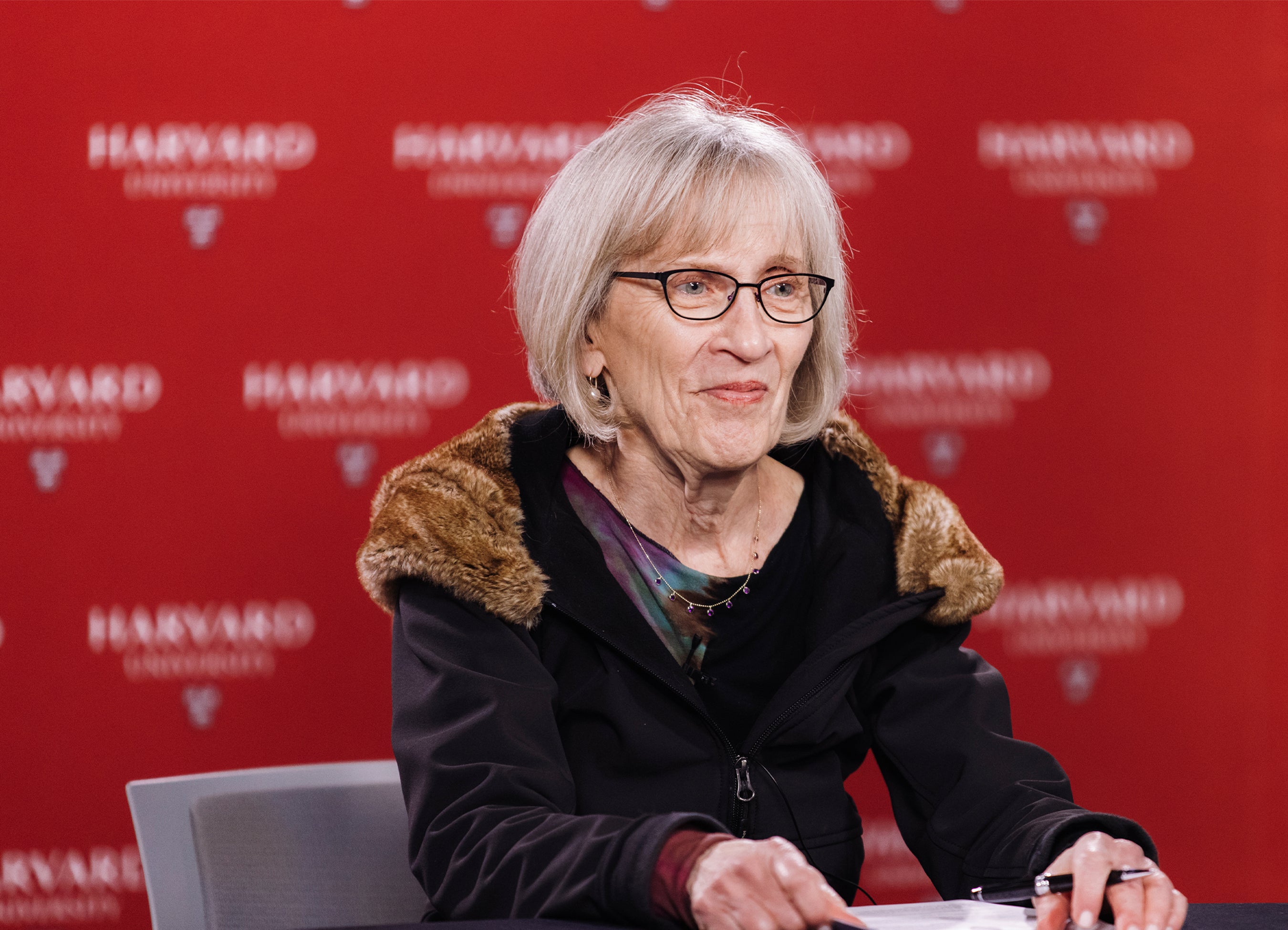
    The 2023 Sveriges Riksbank Prize in Economic Sciences — the ‘economics Nobel’ — has been awarded to economic historian Claudia Goldin at Harvard University in Cambridge, Massachusetts, “for having advanced our understanding of women’s labour market outcomes.”

    Goldin’s work has helped to explain why women have been under-represented in the labour market for at least the past two centuries, and why even today they continue to earn less than men on average (by around 13%).

    Although such inequalities are widely recognized, they present a puzzle for economic models because they represent not just a potential injustice, but also what economists call a market inefficiency. Women seem to be both under-utilized and under-incentivized in the labour force, even though those in high-income countries typically now have a higher educational level than do men.

    Goldin brought history to bear on this question through rigorous forensic analysis of how changes in women’s participation in the labour force have been influenced by social, political and technological change over the past two centuries.

    “The strength of her work comes from combining careful and innovative historical data with insights from economic theories of wage determination, employment, discrimination and the political economy,” says economist Claudia Olivetti at Dartmouth College in Hanover, New Hampshire.

    “I am delighted to see Claudia’s work recognized,” Olivetti says. “She has been such an inspiration to many women and young researchers. Leading with passion, curiosity, integrity, she taught us to be brave and go for the big questions.”

    More growth; low pay

    Before Goldin’s studies, it was widely thought that the increase in the proportion of women in work over the course of the twentieth century was a reflection of economic growth — higher growth meant more women in employment. But by looking back carefully at older historical records, Goldin showed that the proportion of married women involved in paid work (for example in agriculture or textiles manufacturing) was at least as high in the late eighteenth century, when economic growth rates were much lower, as it is today. This industry was generally hidden behind an opaque census designation of ‘wife.’

    Goldin showed that industrialization disrupted this pattern by making it harder for women to work from home. Her identification of a U-shaped curve in women’s labour participation over 200 years, published in her 1990 book Understanding the Gender Gap, demolished the notion of a simplistic link to economic growth.

    Goldin also demonstrated that, although work opportunities for women expanded in the twentieth century, especially in societies in which children leave the parental home, they were not exploited as much as they could have been.

    Goldin explained this shortfall as being down to expectations. Influenced by what they saw in their parents’ generation, young women tended to make educational choices that did not reflect an expectation of future career prospects. Only by the 1970s did women anticipate how much they might be able to work and invest their efforts accordingly. As Goldin showed in collaboration with economist Lawrence Katz, that situation was boosted by access to the contraceptive pill from the 1960s, which gave women more control in planning for the future.

    Goldin has also shown how gender inequalities in pay have not followed a simple relationship with economic growth, either. The pay gap was smaller during the industrial revolution of 1820–50, for example, because demand for clerical services increased, but changed little between 1930 and 1980, when rewards for uninterrupted careers promoted de facto wage discrimination. Goldin and Katz, with economist Marianne Bertrand, showed in 2010 that parenthood has a key role in maintaining pay inequality, largely through loss of earnings when women suspend or restrict work in favour of child-rearing.

    Goldin’s research has dismantled simple ideas about how gender inequalities in labour markets have changed and the reasons for these changes. Although she has tended not to make policy recommendations for how the problems might be addressed, her scrupulous work in looking at the issues through the lens of history can help to show which interventions are more or less likely to succeed.

    “Goldin has been saying for many years that the way work is organized in many professions is especially female-unfriendly,” says Barbara Petrongolo, an economist at the University of Oxford, UK. Petrongolo says that companies are now starting to change their practices with the introduction of flexible, family-friendly working arrangements and the provision of on-site creches. Some of these changes have happened as a result of policy interventions, but some are coming bottom-up from firms that see the advantages of attracting female talent.

    However, not all of these ideas and solutions will have universal applicability. Naila Kabeer, who studies gender in international development at the London School of Economics, points out, for example, that the U-shaped curve in female labour-force participation has not proved to hold globally.

    “It was based on the idea that developing countries would go through the same processes as did advanced industrialized ones,” she says, “and did not take account that globalization would allow countries to move from farming to female-intensive industrialization processes quite as fast as they did.”

    This article is reproduced with permission and was first published on October 9, 2023.


    Original Source Link

    Share. Facebook Twitter Pinterest LinkedIn WhatsApp Email Reddit Telegram
    Previous Article8 Reasons The Exorcist: Believer’s Ending Doesn’t Work
    Next Article 16 Best Prime Day Espresso Machine Deals (2023)

    RELATED POSTS

    I have a 100 per cent chance of getting cancer due to a rare gene

    June 27, 2026

    How to See the Giant Asteroid That Will Pass by Earth This Weekend

    June 27, 2026

    How Mbappe, Haaland and Messi use psychology to stay sharp at the World Cup

    June 26, 2026

    Can home batteries help save the climate and save you money?

    June 26, 2026

    Two Massive Earthquakes Struck Venezuela. Thousands Are Feared Dead

    June 25, 2026

    Top quantum computer expert claims Microsoft’s ‘topological qubit’ doesn’t hold up

    June 25, 2026
    latest posts

    Matt Damon Debuts Rap Song for Water.org Get Blue Campaign

    All products and services featured are independently chosen by editors. However, Billboard may receive a…

    Nobel laureate economist warns AI jobs apocalypse fears could become a self-fulfilling prophesy

    June 27, 2026

    Speaker Mike Johnson Admits That He Is Running A Protection Racket For Trump

    June 27, 2026

    Blood test detects 90% of aggressive prostate cancer cases compared to standard screenings

    June 27, 2026

    Asian AI startups launch Mythos-like models as Anthropic’s export ban drags on

    June 27, 2026

    I have a 100 per cent chance of getting cancer due to a rare gene

    June 27, 2026

    Karlovy Vary Is Proud to Be the World’s Second-Oldest Film Festival

    June 27, 2026
    Categories
    • Books (1,328)
    • Business (6,233)
    • Cover Story (7)
    • Film (6,171)
    • Lifestyle (4,232)
    • Music (6,242)
    • Politics (6,225)
    • Science (5,582)
    • Technology (6,167)
    • Television (5,862)
    • Uncategorized (3)
    • US News (6,218)
    popular posts

    ‘Masters of the Universe’ Movie Eyes Travis Knight as Director – The Hollywood Reporter

    Travis Knight just may have the power. The LAIKA CEO and part-time filmmaker is in…

    Low Testosterone and Fertility: Understanding the Connection

    June 15, 2023

    Jan. 6 committee may subpoena Virginia Thomas, wife of Supreme Court justice

    July 24, 2022

    Trump Commits A War Crime And Impeachable Offense At The Same Time With Easter Iran Threat

    April 5, 2026
    Archives
    Browse By Category
    • Books (1,328)
    • Business (6,233)
    • Cover Story (7)
    • Film (6,171)
    • Lifestyle (4,232)
    • Music (6,242)
    • Politics (6,225)
    • Science (5,582)
    • Technology (6,167)
    • Television (5,862)
    • Uncategorized (3)
    • US News (6,218)
    About Us

    We are a creativity led international team with a digital soul. Our work is a custom built by the storytellers and strategists with a flair for exploiting the latest advancements in media and technology.

    Most of all, we stand behind our ideas and believe in creativity as the most powerful force in business.

    What makes us Different

    We care. We collaborate. We do great work. And we do it with a smile, because we’re pretty damn excited to do what we do. If you would like details on what else we can do visit out Contact page.

    Our Picks

    I have a 100 per cent chance of getting cancer due to a rare gene

    June 27, 2026

    Karlovy Vary Is Proud to Be the World’s Second-Oldest Film Festival

    June 27, 2026

    Bill Maher Tells JD Vance His ‘Vote Is in Play’ for 2028 Election With 1 ‘Dealbreaker’

    June 27, 2026
    © 2026 Beverly Hills Examiner. All rights reserved. All articles, images, product names, logos, and brands are property of their respective owners. All company, product and service names used in this website are for identification purposes only. Use of these names, logos, and brands does not imply endorsement unless specified. By using this site, you agree to the Terms & Conditions and Privacy Policy.

    Type above and press Enter to search. Press Esc to cancel.

    We use cookies on our website to give you the most relevant experience by remembering your preferences and repeat visits. By clicking “Accept All”, you consent to the use of ALL the cookies. However, you may visit "Cookie Settings" to provide a controlled consent.
    Cookie SettingsAccept All
    Manage consent

    Privacy Overview

    This website uses cookies to improve your experience while you navigate through the website. Out of these, the cookies that are categorized as necessary are stored on your browser as they are essential for the working of basic functionalities of the website. We also use third-party cookies that help us analyze and understand how you use this website. These cookies will be stored in your browser only with your consent. You also have the option to opt-out of these cookies. But opting out of some of these cookies may affect your browsing experience.
    Necessary
    Always Enabled
    Necessary cookies are absolutely essential for the website to function properly. These cookies ensure basic functionalities and security features of the website, anonymously.
    CookieDurationDescription
    cookielawinfo-checkbox-analytics11 monthsThis cookie is set by GDPR Cookie Consent plugin. The cookie is used to store the user consent for the cookies in the category "Analytics".
    cookielawinfo-checkbox-functional11 monthsThe cookie is set by GDPR cookie consent to record the user consent for the cookies in the category "Functional".
    cookielawinfo-checkbox-necessary11 monthsThis cookie is set by GDPR Cookie Consent plugin. The cookies is used to store the user consent for the cookies in the category "Necessary".
    cookielawinfo-checkbox-others11 monthsThis cookie is set by GDPR Cookie Consent plugin. The cookie is used to store the user consent for the cookies in the category "Other.
    cookielawinfo-checkbox-performance11 monthsThis cookie is set by GDPR Cookie Consent plugin. The cookie is used to store the user consent for the cookies in the category "Performance".
    viewed_cookie_policy11 monthsThe cookie is set by the GDPR Cookie Consent plugin and is used to store whether or not user has consented to the use of cookies. It does not store any personal data.
    Functional
    Functional cookies help to perform certain functionalities like sharing the content of the website on social media platforms, collect feedbacks, and other third-party features.
    Performance
    Performance cookies are used to understand and analyze the key performance indexes of the website which helps in delivering a better user experience for the visitors.
    Analytics
    Analytical cookies are used to understand how visitors interact with the website. These cookies help provide information on metrics the number of visitors, bounce rate, traffic source, etc.
    Advertisement
    Advertisement cookies are used to provide visitors with relevant ads and marketing campaigns. These cookies track visitors across websites and collect information to provide customized ads.
    Others
    Other uncategorized cookies are those that are being analyzed and have not been classified into a category as yet.
    SAVE & ACCEPT