
Close Menu
Beverly Hills Examiner

    Subscribe to Updates

    Get the latest creative news from FooBar about art, design and business.

    What's Hot

    The Cure’s Perry Bamonte Dies at 65

    January 1, 2026

    Copper records biggest annual gain since 2009 on supply bets

    January 1, 2026

    Trump Takes One Final Big Loss In Court Before The End Of The Year

    January 1, 2026
    Facebook X (Twitter) Instagram
    Beverly Hills Examiner
    • Home
    • US News
    • Politics
    • Business
    • Science
    • Technology
    • Lifestyle
    • Music
    • Television
    • Film
    • Books
    • Contact
      • About
      • Amazon Disclaimer
      • DMCA / Copyrights Disclaimer
      • Terms and Conditions
      • Privacy Policy
    Beverly Hills Examiner
    Home»Science»Your Organs Might Be Aging at Different Rates
    Science

    Your Organs Might Be Aging at Different Rates

    By AdminDecember 7, 2023
    Facebook Twitter Pinterest LinkedIn WhatsApp Email Reddit Telegram
    Your Organs Might Be Aging at Different Rates


    Your Organs Might Be Aging at Different Rates

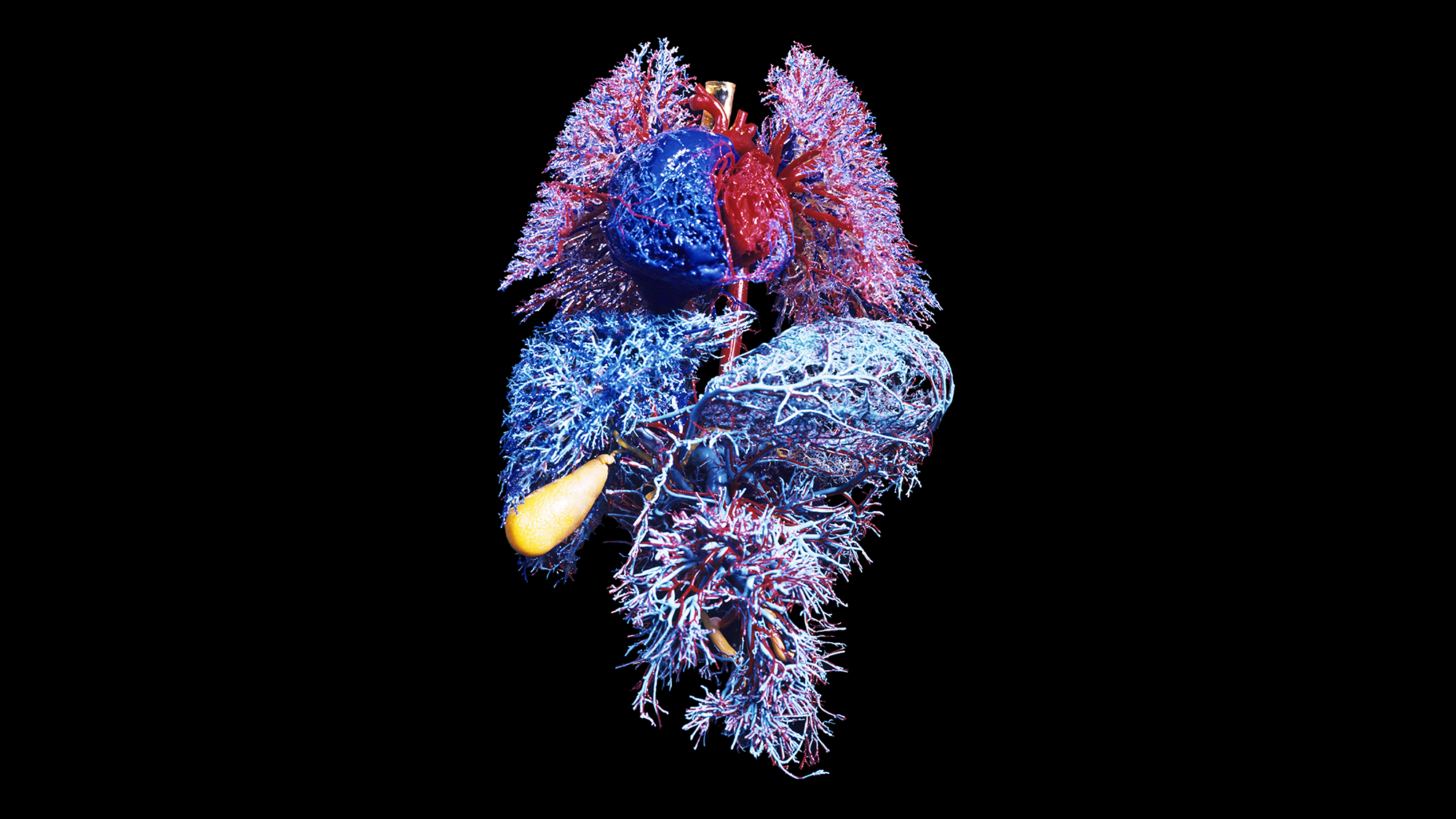
    The number of birthdays you’ve had—better known as your chronological age—now appears to be less important in assessing your health than ever before. A new study shows that bodily organs get “older” at extraordinarily different rates, and each one’s biological age can be at odds with a person’s age on paper.

    The new research, published on Wednesday in Nature, identified about one in five healthy adults older than 50 years old as an “extreme ager”—a person with at least one organ aging at a highly accelerated rate, compared with a cohort of their peers. One in 60 adults had two or more organs that were aging rapidly. The study team measured proteins related to organs, including the brain, heart, immune tissue and kidneys. The researchers hope their findings will lead to a future blood test that can pinpoint rapidly aging organs, letting doctors target them for treatment before disease symptoms begin.

    The team sampled the blood of more than 5,500 people, all with no active disease or clinically abnormal biomarkers, to look for proteins that originated from specific organs. The scientists were able to determine where those proteins came from by measuring their gene activity: when genes for a protein were expressed four times more in one organ, that designated its origin. Next the team measured the concentrations of thousands of proteins in a drop of blood and found that almost 900 of them—about 18 percent of the proteins measured—tended to be specific to a single organ. When those proteins varied from the expected concentration for a particular chronological age, that indicated accelerated aging in the corresponding organ.

    “We could say with reasonable certainty that [a particular protein] likely comes from the brain and somehow ends up in the blood,” explains Tony Wyss-Coray, a professor of neurology at Stanford University and co-author of the new study. If that protein concentration changes in the blood, “it must also likely change in the brain—and [that] tells us something about how the brain ages,” Wyss-Coray says.

    By comparing study participants’ organ-specific proteins, the researchers were able to estimate an age gap—the difference between an organ’s biological age and its chronological age. Depending on the organ involved, participants found to have at least one with accelerated aging had an increased disease and mortality risk over the next 15 years. For example, those whose heart was “older” than usual had more than twice the risk of heart failure than people with a typically aging heart. Aging in the heart was also a strong predictor of heart attack. Similarly, those with a quickly aging brain were more likely to experience cognitive decline. Accelerated aging in the brain and vascular system predicted the progression of Alzheimer’s disease just as strongly as plasma pTau-181—the current clinical blood biomarker for the condition. Extreme aging in the kidneys was a strong predictor of hypertension and diabetes.

    Paul Shiels, a professor of cellular gerontology at the University of Glasgow, who was not involved in the new research, says the study was well powered with sizable cohorts. But the age range of the people included was “a little narrow,” he says. “It only looked at older individuals, and it wasn’t representative of a whole life course.”

    The measurement of biological aging is an evolving science. “Epigenetic clocks,” a leading approach pioneered by Steve Horvath of the biotechnology research start-up Altos Labs, look at DNA changes to determine tissue age more accurately than other existing biological age estimators. When people age, the body begins to accumulate DNA signatures that can indicate how old a cell or organ is; this allows estimates of age. But epigenetic clocks estimate the age of the whole organism instead of an organ-specific age, Wyss-Coray says.

    Other past work by Michael Snyder, a genomicist at Stanford University, has developed “ageotypes” that categorize aging into four distinct pathways: through the kidneys, liver, immune system and general metabolism. Wyss-Coray and his colleagues’ work expands these aging pathways to more organs and body systems.

    Wyss-Coray anticipates this research could lead to a simple blood test that could guide prognostic work—in other words, a test that could help foretell future illness. “You could start to do interventions before that person develops disease,” he says, “and potentially reverse this accelerating aging or slow it down.”

    This research is part of the growing field of personalized diagnostics, which is based on the idea that several biological indicators of organ health can help clinicians target treatment. Blood measurements have traditionally been used to identify illness in the body, with clinicians making a diagnosis only after a person crosses the threshold of a certain set indicator. But as protein markers become more sensitive, “you can actually detect something abnormal before you have clinical manifestations,” Wyss-Coray says. He and his colleagues integrated this research into a recently filed patent tied to their start-up company Teal Omics, which focuses on precision medicine through biomarker testing.

    Some companies, mostly based in California, already offer blood, urine or saliva testing that purports to determine one’s overall biological age. The momentum of commercial epigenetic testing is a “gold rush,” Shiels says. “There is a degree of oversell on what [the tests] can do.”

    A single organ doesn’t tell the whole story of aging because deterioration processes are interconnected and affect an entire organism. “We understand a lot about the aging process on sort of a micro level,” Shiels says. “But a lot of the factors that drive age-related organ dysfunction are environmental. So it’s lifestyle, pollution, what you eat, microbes in your gut.”

    According to Wyss-Coray, each organ is fundamental to overall health. He likens the human body to a car: “If one part doesn’t work well, the other parts start to suffer,” he says. “If you maintain certain parts, you can prolong the life span of the car.”


    Original Source Link

    Share. Facebook Twitter Pinterest LinkedIn WhatsApp Email Reddit Telegram
    Previous ArticleOne DCEU Justice League Member Completely Rejects the League for Another Team
    Next Article Commercial companies to collaborate for DARPA’s new lunar economy study

    RELATED POSTS

    Poor Sleep Quality Accelerates Brain Aging

    January 1, 2026

    NASA Telescopes Capture Colliding Spiral Galaxies in Sparkling Detail

    December 31, 2025

    Star that seemed to vanish more than 130 years ago is found again

    December 31, 2025

    The Great Big Power Play

    December 30, 2025

    15 Million Years before the Megalodon, This Giant Ancient Shark Prowled the Oceans

    December 30, 2025

    Mathematicians unified key laws of physics in 2025

    December 29, 2025
    latest posts

    The Cure’s Perry Bamonte Dies at 65

    Perry Bamonte, the Cure’s longtime guitarist and keyboardist, has died following an undisclosed illness. He…

    Copper records biggest annual gain since 2009 on supply bets

    January 1, 2026

    Trump Takes One Final Big Loss In Court Before The End Of The Year

    January 1, 2026

    Zohran Mamdani sworn in as NYC mayor in midnight ceremony at Old City Hall

    January 1, 2026

    ‘College dropout’ has become the most coveted startup founder credential

    January 1, 2026

    Poor Sleep Quality Accelerates Brain Aging

    January 1, 2026

    Avengers, Toy Story 5, The Odyssey

    January 1, 2026
    Categories
    • Books (970)
    • Business (5,878)
    • Film (5,812)
    • Lifestyle (3,915)
    • Music (5,880)
    • Politics (5,882)
    • Science (5,224)
    • Technology (5,811)
    • Television (5,497)
    • Uncategorized (2)
    • US News (5,863)
    popular posts

    Marjorie Taylor Greene Says She Might Run For Senate Or Be Trump’s VP

    Rep. Marjorie Taylor Greene (R-GA) is telling reporters that…

    Robert Smith Sings The Cure’s “Plainsong” to His Wife: Watch

    June 12, 2023

    Relaxed Fashion Is Here To Stay

    May 10, 2023

    Retirement Planning: Things To Do Before You Retire

    November 8, 2022
    Archives
    Browse By Category
    • Books (970)
    • Business (5,878)
    • Film (5,812)
    • Lifestyle (3,915)
    • Music (5,880)
    • Politics (5,882)
    • Science (5,224)
    • Technology (5,811)
    • Television (5,497)
    • Uncategorized (2)
    • US News (5,863)
    About Us

    We are a creativity led international team with a digital soul. Our work is a custom built by the storytellers and strategists with a flair for exploiting the latest advancements in media and technology.

    Most of all, we stand behind our ideas and believe in creativity as the most powerful force in business.

    What makes us Different

    We care. We collaborate. We do great work. And we do it with a smile, because we’re pretty damn excited to do what we do. If you would like details on what else we can do visit out Contact page.

    Our Picks

    Poor Sleep Quality Accelerates Brain Aging

    January 1, 2026

    Avengers, Toy Story 5, The Odyssey

    January 1, 2026

    ‘The Challenge’ Star Reveals Horrific Accident Blinded Him

    January 1, 2026
    © 2026 Beverly Hills Examiner. All rights reserved. All articles, images, product names, logos, and brands are property of their respective owners. All company, product and service names used in this website are for identification purposes only. Use of these names, logos, and brands does not imply endorsement unless specified. By using this site, you agree to the Terms & Conditions and Privacy Policy.

    Type above and press Enter to search. Press Esc to cancel.

    We use cookies on our website to give you the most relevant experience by remembering your preferences and repeat visits. By clicking “Accept All”, you consent to the use of ALL the cookies. However, you may visit "Cookie Settings" to provide a controlled consent.
    Cookie SettingsAccept All
    Manage consent

    Privacy Overview

    This website uses cookies to improve your experience while you navigate through the website. Out of these, the cookies that are categorized as necessary are stored on your browser as they are essential for the working of basic functionalities of the website. We also use third-party cookies that help us analyze and understand how you use this website. These cookies will be stored in your browser only with your consent. You also have the option to opt-out of these cookies. But opting out of some of these cookies may affect your browsing experience.
    Necessary
    Always Enabled
    Necessary cookies are absolutely essential for the website to function properly. These cookies ensure basic functionalities and security features of the website, anonymously.
    CookieDurationDescription
    cookielawinfo-checkbox-analytics11 monthsThis cookie is set by GDPR Cookie Consent plugin. The cookie is used to store the user consent for the cookies in the category "Analytics".
    cookielawinfo-checkbox-functional11 monthsThe cookie is set by GDPR cookie consent to record the user consent for the cookies in the category "Functional".
    cookielawinfo-checkbox-necessary11 monthsThis cookie is set by GDPR Cookie Consent plugin. The cookies is used to store the user consent for the cookies in the category "Necessary".
    cookielawinfo-checkbox-others11 monthsThis cookie is set by GDPR Cookie Consent plugin. The cookie is used to store the user consent for the cookies in the category "Other.
    cookielawinfo-checkbox-performance11 monthsThis cookie is set by GDPR Cookie Consent plugin. The cookie is used to store the user consent for the cookies in the category "Performance".
    viewed_cookie_policy11 monthsThe cookie is set by the GDPR Cookie Consent plugin and is used to store whether or not user has consented to the use of cookies. It does not store any personal data.
    Functional
    Functional cookies help to perform certain functionalities like sharing the content of the website on social media platforms, collect feedbacks, and other third-party features.
    Performance
    Performance cookies are used to understand and analyze the key performance indexes of the website which helps in delivering a better user experience for the visitors.
    Analytics
    Analytical cookies are used to understand how visitors interact with the website. These cookies help provide information on metrics the number of visitors, bounce rate, traffic source, etc.
    Advertisement
    Advertisement cookies are used to provide visitors with relevant ads and marketing campaigns. These cookies track visitors across websites and collect information to provide customized ads.
    Others
    Other uncategorized cookies are those that are being analyzed and have not been classified into a category as yet.
    SAVE & ACCEPT