
Close Menu
Beverly Hills Examiner

    Subscribe to Updates

    Get the latest creative news from FooBar about art, design and business.

    What's Hot

    Listen to the First Atlas Sound Song in 15 Years

    October 31, 2026

    How Southeast Asia can realize its commercial promise amid geopolitical rivalry

    October 31, 2026

    Iowa High School Football Top 25 Shakes Up in Week 10

    October 31, 2026
    Facebook X (Twitter) Instagram
    Beverly Hills Examiner
    • Home
    • US News
    • Politics
    • Business
    • Science
    • Technology
    • Lifestyle
    • Music
    • Television
    • Film
    • Books
    • Contact
      • About
      • Amazon Disclaimer
      • DMCA / Copyrights Disclaimer
      • Terms and Conditions
      • Privacy Policy
    Beverly Hills Examiner
    Home»Business»How Southeast Asia can realize its commercial promise amid geopolitical rivalry
    Business

    How Southeast Asia can realize its commercial promise amid geopolitical rivalry

    By AdminOctober 31, 2026
    Facebook Twitter Pinterest LinkedIn WhatsApp Email Reddit Telegram
    How Southeast Asia can realize its commercial promise amid geopolitical rivalry


    Keeping Southeast Asia open for business is a geopolitical task as much as a commercial one. Its relationships across geopolitical divides give companies access to competing powers’ markets, capital, and technology. In 2025, ASEAN attracted a record $243.9 billion in foreign direct investment.

    But conflict, U.S.-China strategic competition, and economic nationalism threaten these opportunities. Sustaining them requires protecting the security, supplies, and rules underpinning commerce.

    Governments must de-escalate tensions and, with businesses, understand and address the political objectives behind economic restrictions, assess whether diversification reduces vulnerabilities or creates new ones, and strengthen critical infrastructure. They have a shared interest in defending international law—even when doing so may create friction with the country violating it.

    Conflict and coercion 

    The U.S. war against Iran has disrupted oil and gas supplies to Southeast Asia, which relies heavily on the Middle East. Higher energy prices raise business costs, squeeze household budgets, and increase loan-default risks.

    The Strait of Hormuz has also demonstrated how a strategic waterway can become an instrument of coercion, even for a militarily weaker power.

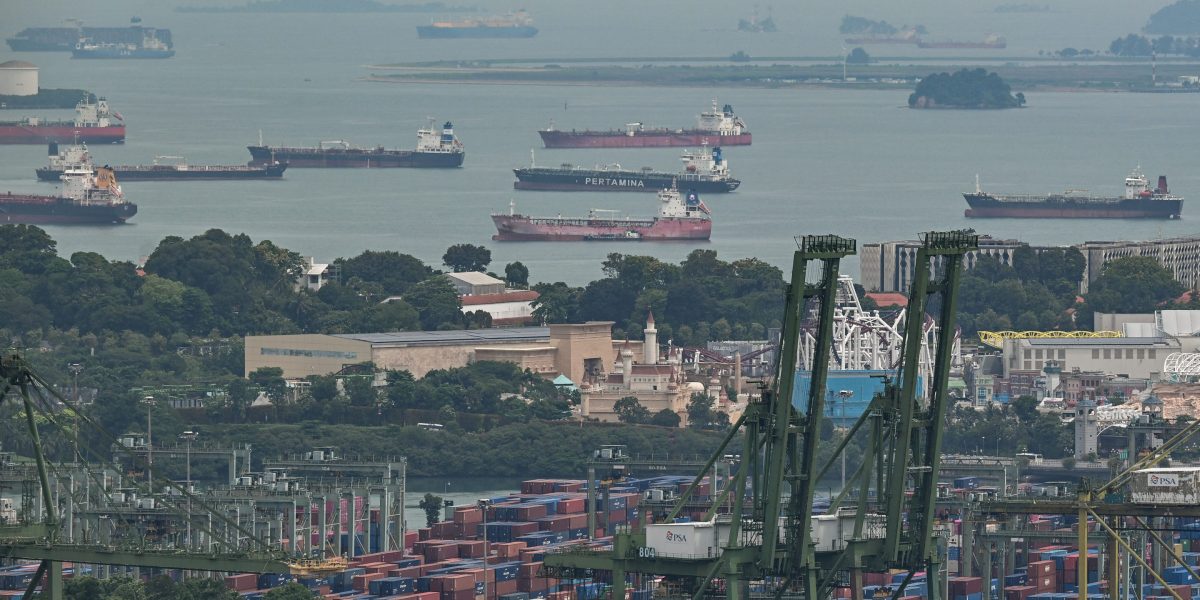
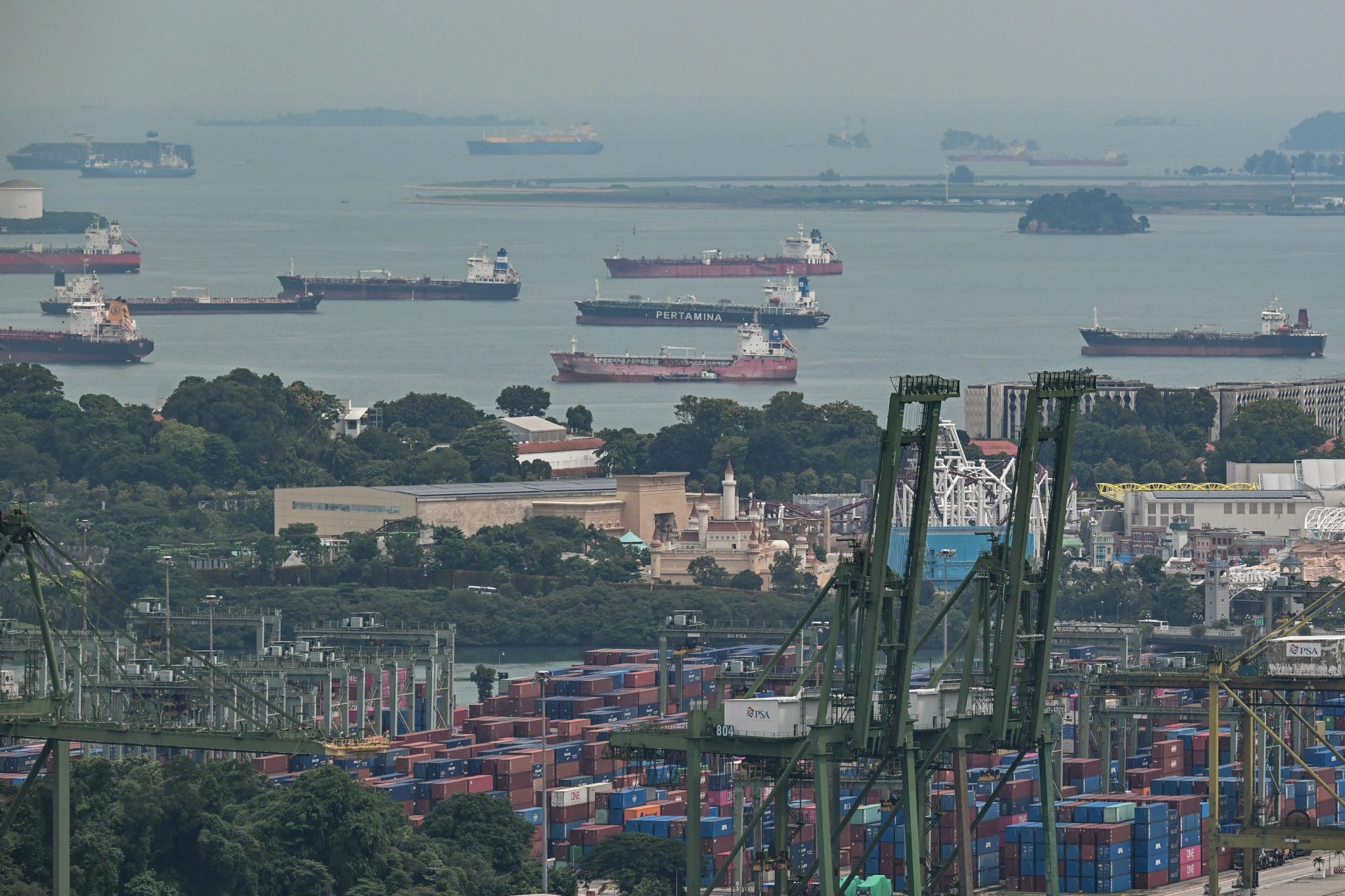
    Developments there serve as a stark warning about the risks of coercion and disruption in the Straits of Malacca and Singapore. In August, Indonesia, Malaysia, and Singapore reaffirmed their commitment to keeping those waterways, which carry nearly a quarter of global seaborne trade, free, open, and safe. That commitment does not preclude a littoral government restricting passage, an outside power pressuring it to do so, or a state or non-state actor disrupting shipping.

    Economic détente between Washington and Beijing could benefit businesses, but if maintaining it diminishes U.S. commitment to regional security, it could weaken deterrence and undermine the stability commerce depends on. In October 2025, China began its first significant island-building in the South China Sea in almost a decade at Antelope Reef, where it is building a runway; the reef is now China’s largest outpost in the disputed Paracel Islands. In September, China announced the opening of a joint military aviation facility in Laos. China has also expanded its presence in the waters east of Taiwan, where Japan and the Philippines have overlapping exclusive economic zones. A shift in the regional balance of power could increase vulnerability to coercion and affect the rules governing trade and investment.

    Strategic rivalry and economic nationalism 

    Strategic rivalry has brought gains for Southeast Asian countries able to maneuver for advantage: higher U.S. tariffs on Chinese goods prompted manufacturers to shift production to the region. But U.S. licensing requirements for shipments of certain advanced chips to China can delay or prevent sales by regional distributors. Malaysia, amid U.S. pressure, introduced its own controls, including 30-day advance notification for specified advanced chips moving through or out of the country.

    U.S. economic nationalism creates a distinct challenge: Washington’s drive to reduce trade deficits and rebuild American manufacturing extends beyond its rivalry with Beijing. Tariffs have applied across Southeast Asia, including to U.S. allies and partners—even Singapore, with which the United States runs goods and services surpluses. Vietnam, which ran a $178.3 billion goods surplus with the U.S. in 2025, has drawn particular scrutiny.

    Legal challenges have not ended this pressure. After the U.S. Supreme Court’s February ruling that the emergency law did not authorize Trump’s “Liberation Day” tariffs, the administration turned to temporary tariff powers and Section 301 investigations into alleged excess manufacturing capacity and failures to adopt or enforce bans on imports made with forced labor. The latter led to July tariffs on all 60 economies investigated, including several in Southeast Asia.

    Understanding Washington’s objectives and priorities helps determine what concessions might achieve. The administration has justified tariffs and other restrictions by citing reciprocity, reducing deficits, protecting domestic industry, raising revenue, reducing strategic dependence, and denying capabilities to a rival. Trade concessions may not remove restrictions designed to deny China strategic capabilities. Nor will moving production from China to Vietnam satisfy demands for production in the United States. Unclear or conflicting priorities will complicate responses.

    Assess dependencies

    Securing multiple suppliers may reduce vulnerabilities, but those suppliers may still rely on the same shipping routes or Taiwanese semiconductor foundries.

    The region remains acutely exposed to energy supply disruptions. Businesses cannot yet count on regional arrangements to secure supplies. The revised ASEAN Framework Agreement on Petroleum Security has yet to enter into force; even once it does, assistance during critical oil and gas shortages will remain voluntary and subject to commercial terms. The ASEAN Power Grid could diversify electricity supplies, but a regional system remains elusive nearly three decades after ASEAN leaders called for it.

    Nuclear power could reduce fossil-fuel dependence for electricity generation. Vietnam has signed an agreement with Russia for its first plant; an Indonesian company has agreed to buy electricity from two Rosatom floating nuclear units. The Philippines has discussed nuclear cooperation with Russia. Russian reactors, however, could create long-term dependence on Moscow for technology, nuclear fuel, spare parts, and technical support.

    Energy insecurity has lent urgency to Philippine-Chinese talks on joint oil and gas development in the South China Sea. Yet any deal’s benefits must be weighed against its implications for Philippine maritime rights and potential dependence on Beijing.

    Strengthen systems and uphold rules

    Resilience can contribute to deterrence by reducing what hostile actors expect to gain from disruption. Governments must work with owners and operators to strengthen critical infrastructure, including subsea cables, ports and data centers. A World Economic Forum report to which I contributed advocates joint vulnerability assessments, standards setting, communication mechanisms, and response planning.

    The rules underpinning commerce also need defending: economic rules provide predictability and recourse, while international law protects freedom of the seas and constrains the use of force. Upholding international law may cause friction, but countries should remain steadfast. Not wanting to choose sides should not be an excuse for failing to defend the rules: this is not about alignment with any country. Keeping Southeast Asia’s commercial options open will require taking a stand to defend rules that support peace and prosperity.

    Lynn Kuok will be speaking at the Southeast Asia 500 Summit on Nov. 3 in Ho Chi Minh City, Vietnam. Join executives from the Fortune Southeast Asia 500, policymakers, and investors to examine the forces reshaping one of the world’s most important growth regions. Apply here.

    The opinions expressed in Fortune.com commentary pieces are solely the views of their authors and do not necessarily reflect the opinions and beliefs of Fortune.


    Original Source Link

    Share. Facebook Twitter Pinterest LinkedIn WhatsApp Email Reddit Telegram
    Previous ArticleIowa High School Football Top 25 Shakes Up in Week 10
    Next Article Listen to the First Atlas Sound Song in 15 Years

    RELATED POSTS

    Spain’s rail safety system went down before a crash killing 69 — minister calls 170 outages ‘normal’

    October 30, 2026

    CNN, MS NOW and Politico say the White House is still defying court orders on Trump’s press pool

    October 30, 2026

    ‘The most European of non-European countries’: Canada looks to become an EU ‘associate member’

    October 29, 2026

    Can Southeast Asia pitch itself as an ‘all-in-one’ chip hub?

    October 29, 2026

    Atlanta Dream says it warned the WNBA 2 months ago about scheduling conflict concerns

    October 28, 2026

    China’s first AI-generated film to get a theatrical release flops at the box office

    October 28, 2026
    latest posts

    Listen to the First Atlas Sound Song in 15 Years

    Bradford Cox’s return to the stage was already cause for celebration. When Atlas Sound, his…

    How Southeast Asia can realize its commercial promise amid geopolitical rivalry

    October 31, 2026

    Iowa High School Football Top 25 Shakes Up in Week 10

    October 31, 2026

    Federal judge blocks Trump admin from threatening election workers

    October 31, 2026

    Wayfair Coupons: Up to 80% Off October 2026

    October 31, 2026

    Math Puzzle: Mysterious pyramid | Scientific American

    October 31, 2026

    ‘Fuxi: Four Tales of Feasting’ Review: Qiu Jiongjiong’s Tasty Latest

    October 31, 2026
    Categories
    • Books (1,581)
    • Business (6,484)
    • Cover Story (16)
    • Film (6,421)
    • Lifestyle (4,469)
    • Music (6,494)
    • Politics (6,473)
    • Science (5,834)
    • Technology (6,420)
    • Television (6,122)
    • Uncategorized (3)
    • US News (6,469)
    popular posts

    Russian forces make little headway despite intense artillery and air strikes, Ukraine military says

    Smoke rises from Severodonetsk, Ukraine, on June 2. (Aris Messinis/AFP via Getty Images)On the 100th…

    AWS re:Invent: Everything Amazon’s announced, from new AI tools to LLM updates and more

    December 1, 2023

    SEAN HANNITY: Hunter’s job was facilitating meetings with Joe

    August 10, 2023

    Alaska Airlines Confronts Challenging Start to Year

    January 25, 2024
    Archives
    Browse By Category
    • Books (1,581)
    • Business (6,484)
    • Cover Story (16)
    • Film (6,421)
    • Lifestyle (4,469)
    • Music (6,494)
    • Politics (6,473)
    • Science (5,834)
    • Technology (6,420)
    • Television (6,122)
    • Uncategorized (3)
    • US News (6,469)
    About Us

    We are a creativity led international team with a digital soul. Our work is a custom built by the storytellers and strategists with a flair for exploiting the latest advancements in media and technology.

    Most of all, we stand behind our ideas and believe in creativity as the most powerful force in business.

    What makes us Different

    We care. We collaborate. We do great work. And we do it with a smile, because we’re pretty damn excited to do what we do. If you would like details on what else we can do visit out Contact page.

    Our Picks

    Math Puzzle: Mysterious pyramid | Scientific American

    October 31, 2026

    ‘Fuxi: Four Tales of Feasting’ Review: Qiu Jiongjiong’s Tasty Latest

    October 31, 2026

     A Parent’s Guide to Choosing the Right Toys

    October 31, 2026
    © 2026 Beverly Hills Examiner. All rights reserved. All articles, images, product names, logos, and brands are property of their respective owners. All company, product and service names used in this website are for identification purposes only. Use of these names, logos, and brands does not imply endorsement unless specified. By using this site, you agree to the Terms & Conditions and Privacy Policy.

    Type above and press Enter to search. Press Esc to cancel.

    We use cookies on our website to give you the most relevant experience by remembering your preferences and repeat visits. By clicking “Accept All”, you consent to the use of ALL the cookies. However, you may visit "Cookie Settings" to provide a controlled consent.
    Cookie SettingsAccept All
    Manage consent

    Privacy Overview

    This website uses cookies to improve your experience while you navigate through the website. Out of these, the cookies that are categorized as necessary are stored on your browser as they are essential for the working of basic functionalities of the website. We also use third-party cookies that help us analyze and understand how you use this website. These cookies will be stored in your browser only with your consent. You also have the option to opt-out of these cookies. But opting out of some of these cookies may affect your browsing experience.
    Necessary
    Always Enabled
    Necessary cookies are absolutely essential for the website to function properly. These cookies ensure basic functionalities and security features of the website, anonymously.
    CookieDurationDescription
    cookielawinfo-checkbox-analytics11 monthsThis cookie is set by GDPR Cookie Consent plugin. The cookie is used to store the user consent for the cookies in the category "Analytics".
    cookielawinfo-checkbox-functional11 monthsThe cookie is set by GDPR cookie consent to record the user consent for the cookies in the category "Functional".
    cookielawinfo-checkbox-necessary11 monthsThis cookie is set by GDPR Cookie Consent plugin. The cookies is used to store the user consent for the cookies in the category "Necessary".
    cookielawinfo-checkbox-others11 monthsThis cookie is set by GDPR Cookie Consent plugin. The cookie is used to store the user consent for the cookies in the category "Other.
    cookielawinfo-checkbox-performance11 monthsThis cookie is set by GDPR Cookie Consent plugin. The cookie is used to store the user consent for the cookies in the category "Performance".
    viewed_cookie_policy11 monthsThe cookie is set by the GDPR Cookie Consent plugin and is used to store whether or not user has consented to the use of cookies. It does not store any personal data.
    Functional
    Functional cookies help to perform certain functionalities like sharing the content of the website on social media platforms, collect feedbacks, and other third-party features.
    Performance
    Performance cookies are used to understand and analyze the key performance indexes of the website which helps in delivering a better user experience for the visitors.
    Analytics
    Analytical cookies are used to understand how visitors interact with the website. These cookies help provide information on metrics the number of visitors, bounce rate, traffic source, etc.
    Advertisement
    Advertisement cookies are used to provide visitors with relevant ads and marketing campaigns. These cookies track visitors across websites and collect information to provide customized ads.
    Others
    Other uncategorized cookies are those that are being analyzed and have not been classified into a category as yet.
    SAVE & ACCEPT