With the horror movies of 1976 turning 50 this year, which of the classic fright flicks is the best of the best? Horror was in an interesting place in the 1970s, and it was a genre on the cusp of a cultural explosion. With moral strictures lessening across the board, horror began to push boundaries.
Films like The Texas Chainsaw Massacre were made as a response to the horrors of the Vietnam War, and the gruesome real-life images on the nightly news had surpassed what cinema could produce. Horror was no longer a cheap entertainment, but a legitimate outlet to make social commentary. It had also become big business thanks to blockbusters like The Exorcist.
However, things had begun to slow down a bit by 1976. Hollywood failed to produce a ton of terrifying hits that year, and many of the mainstream horror movies were lackluster at best. Filling the void was a slew of gritty low-budget films that blurred the line between fiction and reality.
The best horror films of 1976 were all over the board. Most had supernatural elements, but others opted for the aforementioned realism. 1976 also saw the cinematic debut of Stephen King, a wordsmith who would continue to influence horror cinema for decades. Though it wasn’t the greatest year in horror history, 1976 produced some classics that will live forever.
5
God Told Me To (1976)

Larry Cohen might not be a household name, but his horror films, like God Told Me To, inspired a generation. The plot concerns a New York City police detective who is investigating a series of random murders supposedly spurred by god himself. It takes a series of weird turns, including cults and aliens.
The beauty of Cohen’s filmmaking is his ability to capture the grit and grime of the city, even in a bonkers horror story like God Told Me To. Eschewing the slick Hollywood productions of other 1970s horror films, God Told Me To is a bit rougher around the edges. Even if it doesn’t always land, it’s an effective chiller nonetheless.
With real-life crime on the rise, Cohen’s over-the-top sci-fi horror story is a clever way to deal with a growing sense of outrage and fear. It transforms actual concerns into engaging fiction, something that the best horror films often do. It isn’t the most remembered horror film of 1976, but it deserves a lot more credit as a cult classic.
4
Burnt Offerings (1976)

Old-fashioned ghost movies never go out of style, and Burnt Offerings is the overlooked classic of the 1970s supernatural genre. Adapting the Robert Marasco novel, the story involves a couple who slowly begin to fall under the sway of their creepy summer rental home. With Oliver Reed and Bette Davis in the cast, Burnt Offerings is an Old Hollywood throwback.
The movie’s slow pace and deliberate plotting might be a turnoff for some, but it’s effective at building tension. What’s more, it has a few truly creepy visual moments that are sure to haunt the viewer. Dan Curtis (of Dark Shadows fame) is deft at crafting a sinister mood through the cinematography, and it reflects the psychology of the story.
Burnt Offerings is often overlooked because of how many great supernatural horror films were released in the 1970s. The fact that it isn’t even the best supernatural horror of 1976 means it is bound to be a hidden gem. That said, it stands out from the crowded field because of its performances and abundant cinematic style.
3
Alice Sweet Alice (1976)

Though it’s mostly remembered as an early role for Brooke Shields, Alice Sweet Alice is actually one of the formative slasher films. An emotionally unstable young girl is the prime suspect in her sister’s murder, but a series of twists lead suspicion away from the child. The movie isn’t afraid to go there, and pushes a lot of boundaries.
It has many of the classic slasher tropes, including a masked killer and a body count. However, it’s also a much more cerebral experience than the usual slasher movie. It tackles the deterioration of the American family, and examines the implications of a broken home. Even though its analysis is surface-level, it’s unique for a hack-and-slash horror flick.
What keeps Alice Sweet Alice from being the best horror film of 1976 is its pacing. The highlights are quite exciting, but the movie also has frequent low points that drag it down. Nevertheless, it’s still an endlessly creepy movie that manages to scare 50 years after its debut.
Black Christmas, Texas Chainsaw, and Halloween are often touted as the precursors to the slasher boom, but Alice Sweet Alice should be in that conversation as well. It isn’t afraid to be taboo, something that even the grittiest of its successors shy away from. With a few minor tweaks, it would be one of the all-time greats.
2
The Omen (1976)
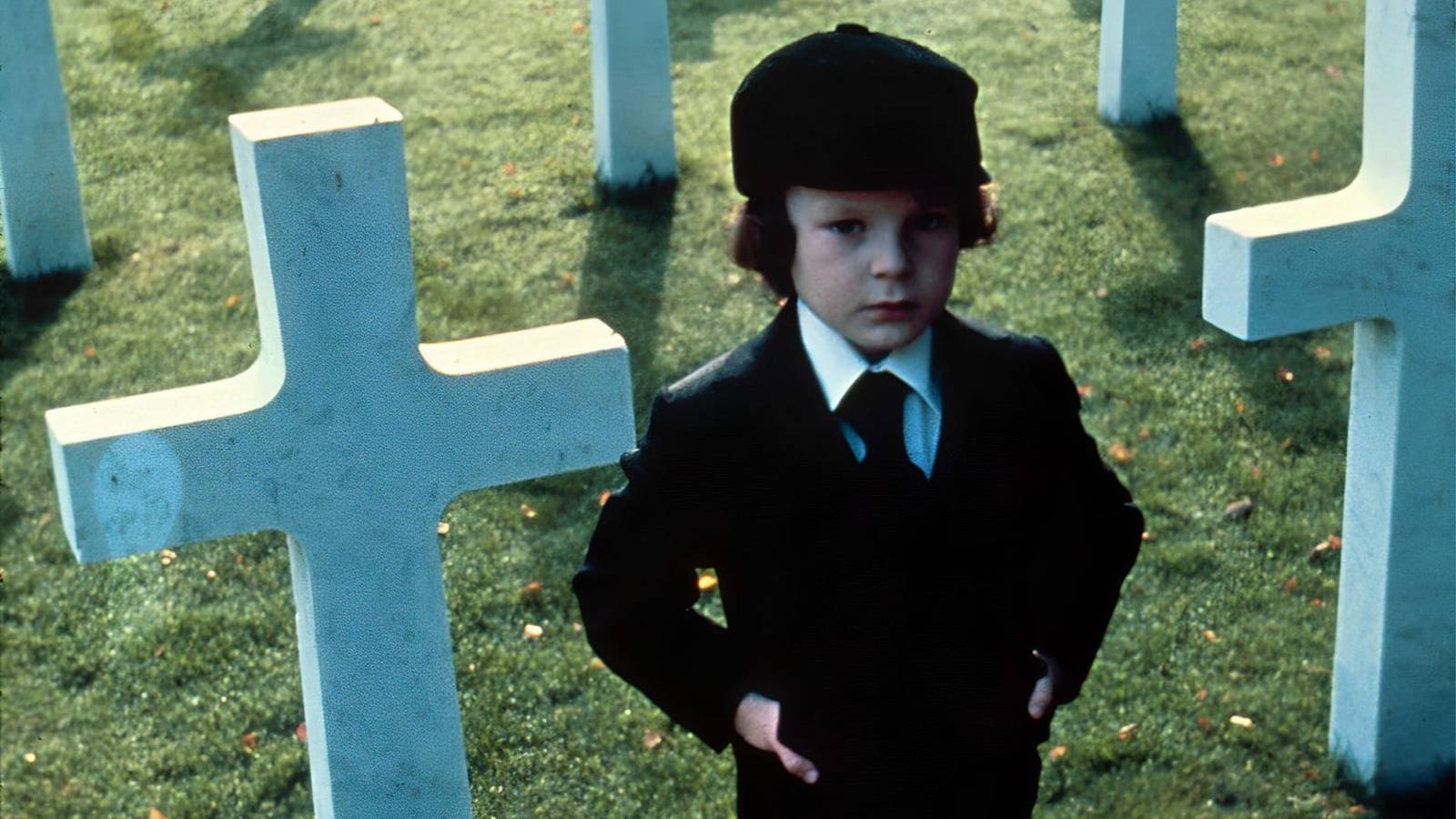
Richard Donner’s The Omen is the big prestige horror release of 1976, and it delivers a lot of scares. The Thorn family adopts a young boy named Damien, but the kiddo might be the spawn of Satan himself. The ultimate creepy kid movie, The Omen plays on deeper fears than simple satanic panic.
It features some of the most striking images in horror history, often juxtaposing a beautifully composed shot with a moment of abject terror. The birthday party scene alone is enough to cement the film as a classic, but there are so many other memorable and striking scares. Despite being mainstream, The Omen has a sharp edge.
Gregory Peck adds a sense of importance to the cast, and supporting stars like David Warner and Patrick Troughton have an impact. However, the real star of the show is young Harvey Spencer Stephens, who is absolutely horrifying as Damien Thorn. The acting is top-notch across the board, and the film even snagged an Oscar for its score.
It’s a meticulous movie, but Donner’s brilliant direction keeps the pace flowing just right. The Omen earns the slow-burn moniker, but shows how a well-paced horror movie should look. It’s also cinematic, with a vibrant score and opulent design. The big-budget blockbuster is the best of what Hollywood could do with its vast resources.
1
Carrie (1976)

There is no doubt that Carrie is the best horror film turning 50 in 2026. It adapts Stephen King’s debut novel about a bullied teen who discovers she has telekinetic powers. Brian De Palma is the perfect man for the job, and he brings his Hitchcockian style to the distinctly ’70s horror story.
King’s prose is maintained, and the adaptation takes all the little details and runs with them. There’s an exaggerated reality to the whole affair, a tone that most King adaptations struggle to reckon with. The whole film builds to the climax, a moment that is forever etched in horror history. Carrie is to prom what Jaws is to the ocean.
Sissy Spacek’s doe-eyed performance sells the film’s story, and she speaks volumes without having to say a single word. The rest of the cast is as over-the-top as the script demands, furthering King’s almost dreamlike approach to storytelling. The small changes from the book are all necessary, and don’t take away from what the author was originally trying to say.
Carrie is one of King’s best movies, and is one of the best films of the ’70s. It’s the quintessential horror flick of 1976 because of how well it encapsulates its era. The nightmare of growing up is symbolized as an actual nightmare, a trend that continues in the genre today. Besides all that, Carrie is simply a terrifying movie.