
Close Menu
Beverly Hills Examiner

    Subscribe to Updates

    Get the latest creative news from FooBar about art, design and business.

    What's Hot

    Elvis Costello Announces My Aim Is True 49th Anniversary Box Set

    August 4, 2026

    Your AI agent can be a teammate. But it still needs a boss

    August 4, 2026

    Trump Has A Complete Cognitive Meltdown In Front Of Reporters Over Reflecting Pool

    August 4, 2026
    Facebook X (Twitter) Instagram
    Beverly Hills Examiner
    • Home
    • US News
    • Politics
    • Business
    • Science
    • Technology
    • Lifestyle
    • Music
    • Television
    • Film
    • Books
    • Contact
      • About
      • Amazon Disclaimer
      • DMCA / Copyrights Disclaimer
      • Terms and Conditions
      • Privacy Policy
    Beverly Hills Examiner
    Home»Science»Ancient DNA Reveals New Diseases behind Napoleon’s 1812 Russian Retreat
    Science

    Ancient DNA Reveals New Diseases behind Napoleon’s 1812 Russian Retreat

    By AdminOctober 25, 2025
    Facebook Twitter Pinterest LinkedIn WhatsApp Email Reddit Telegram
    Ancient DNA Reveals New Diseases behind Napoleon’s 1812 Russian Retreat


    October 24, 2025

    3 min read

    Napoleon’s Defeat in Russia Was Aided by Two Surprising Deadly Diseases

    Disease-causing bacteria that have been recently discovered in the teeth of Napoleonic soldiers may have spurred the massive infantry’s demise during its retreat from Russia
    By Andrea Tamayo edited by Dan Vergano

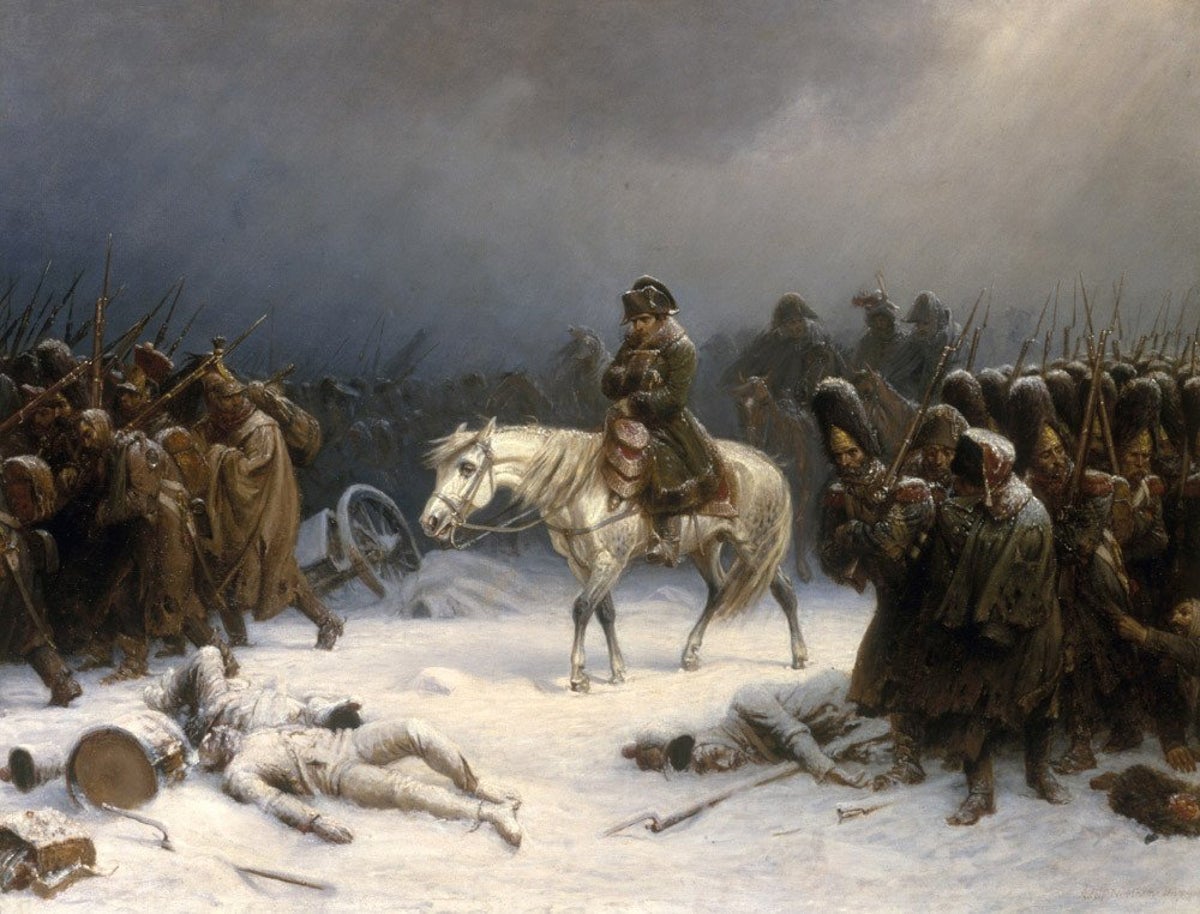
    A man on white horse trudges on a snowy field amid brown robed downcast soldiers.

    Napoleon’s retreat from Moscow.

    Adolph Northen; Public Domain

    In 1812 Napoleon Bonaparte invaded Russia with one of the largest armies in history—the “Grande Armée” of about half a million men. But when they were forced to retreat, harsh winter conditions, starvation and disease decimated the invaders. Historians estimate that around 300,000 of these men died.

    Historical accounts, early DNA studies and remains of body lice found on the soldiers support the idea that typhus and trench fever contributed to the fall of the army. Larger debate over the French retreat and the role of disease still festers, however.

    “It’s one of the biggest mysteries in history because ‘Why [did] Napoleon lose?’” says Rémi Barbieri, a postdoctoral researcher at the Institute of Genomics at the University of Tartu in Estonia.


    On supporting science journalism

    If you’re enjoying this article, consider supporting our award-winning journalism by subscribing. By purchasing a subscription you are helping to ensure the future of impactful stories about the discoveries and ideas shaping our world today.


    Ancient DNA holds a clue. Genetic material recovered from historical fossils, skeletons and mummies has unearthed mysteries of our ancestors trapped in time. In a new study in the journal Current Biology, Barbieri and his colleagues suggest that two previously unsuspected pathogens struck Napoleon’s massive army: Salmonella enterica, a bacterium that causes paratyphoid fever, and Borrelia recurrentis, a bacterium that is spread by body lice and causes relapsing fever. Both could have been deadly among soldiers suffering from starvation and severe cold.

    “We were expecting to find the pathogens that have been already reported,” says geneticist Nicolás Rascovan, a study co-author and head of the Microbial Paleogenomics Unit at the Pasteur Institute in France. But when the researchers analyzed the DNA of the 13 Napoleonic soldiers’ teeth, they did not find the bacteria that cause either typhus or trench fever, two diseases that have previously been associated with skeletons from the site. Though the team didn’t detect those diseases, that doesn’t mean that they didn’t plague Napoleon’s army, Rascovan emphasizes.

    “What [the study] shows is that there was a whole range of diseases that were affecting these people,” he says.

    “The study is very sound,” says Marcela Sandoval-Velasco, an assistant professor at the Center for Genome Sciences of the National Autonomous University of Mexico, who studies molecular biology to answer questions about our past. Though the team only had 13 samples to work with, she appreciated how the researchers clearly laid out their limitations.
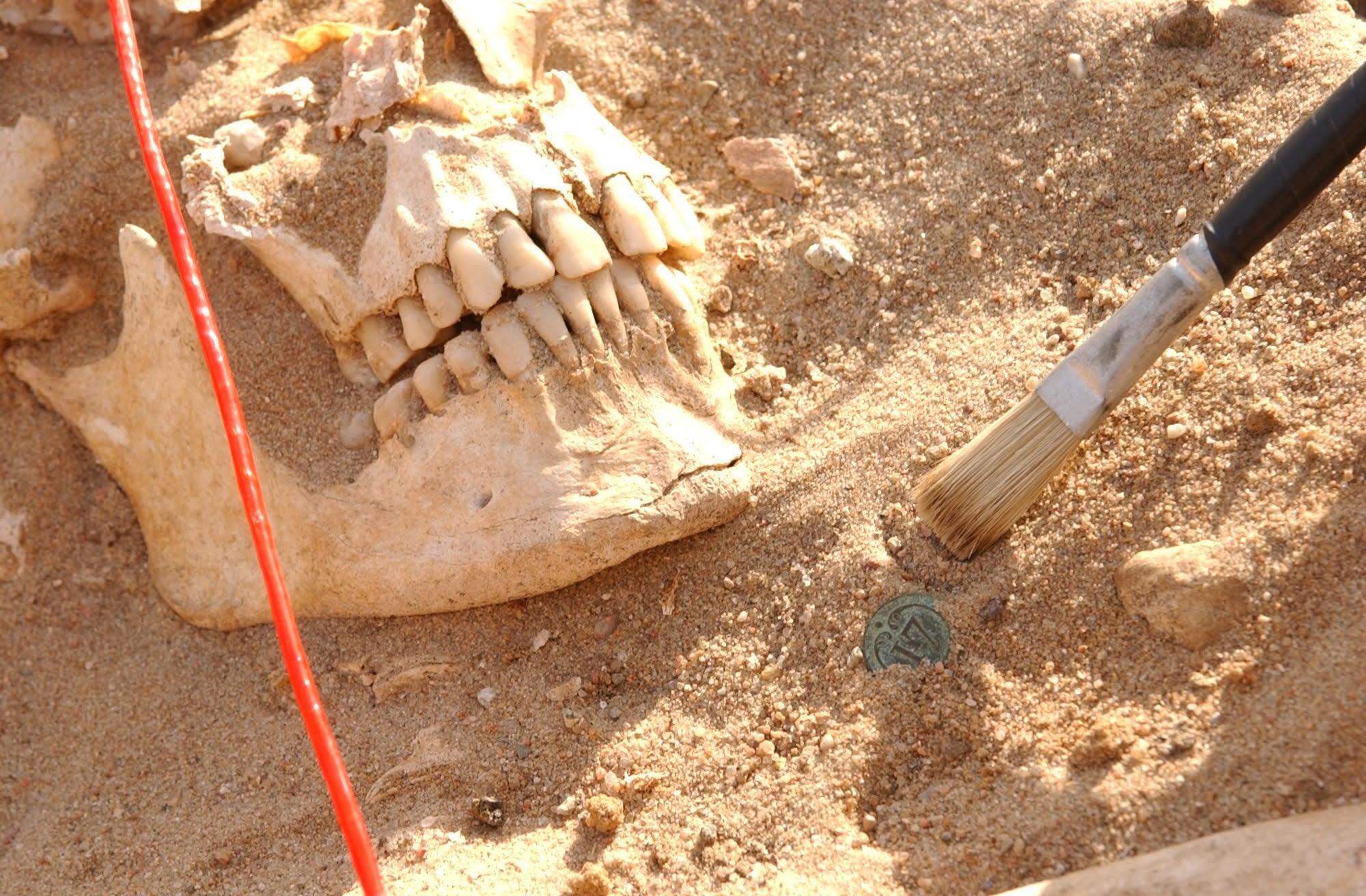
    A buried skull with a paintbrush whisking away sand covering its face.

    Skull of a soldier from Napoleon’s army.

    Michel Signoli, Aix-Marseille Université

    In 2002 researchers excavated a site with a mass grave of 2,000 to 3,000 people in Vilnius, Lithuania. Napoleonic artifacts lay scattered around the skeletons. These included old buttons and belts, suggesting that the remains represented soldiers of Napoleon’s army who had retreated from Russia in 1812. Rascovan and his colleagues only selected 13 individuals to preserve as many skeletons as they could. The researchers also chose this small number because they needed teeth that were in the best condition.

    In the lab, the team pried the soldiers’ teeth open. They put scraped dental pulp into a DNA sequencing machine. Once sequenced, the scientists sorted the DNA results for disease-causing bacteria. They compared suspected pathogen DNA to known genome sequences and then matched it to the two bacteria.

    “By just reading historical accounts, [it] was impossible to suspect these two pathogens,” Barbieri says. But in developing this new methodology, the researchers could identify the bacteria from small fragments of DNA. “Personally, I’m very excited also by the methodology.”

    Looking ahead, the researchers plan to keep uncovering the role pathogens played in history, albeit in different locations. While Rascovan will focus on infectious diseases in the Americas, Barbieri will continue to home in on European history.

    It’s Time to Stand Up for Science

    If you enjoyed this article, I’d like to ask for your support. Scientific American has served as an advocate for science and industry for 180 years, and right now may be the most critical moment in that two-century history.

    I’ve been a Scientific American subscriber since I was 12 years old, and it helped shape the way I look at the world. SciAm always educates and delights me, and inspires a sense of awe for our vast, beautiful universe. I hope it does that for you, too.

    If you subscribe to Scientific American, you help ensure that our coverage is centered on meaningful research and discovery; that we have the resources to report on the decisions that threaten labs across the U.S.; and that we support both budding and working scientists at a time when the value of science itself too often goes unrecognized.

    In return, you get essential news, captivating podcasts, brilliant infographics, can’t-miss newsletters, must-watch videos, challenging games, and the science world’s best writing and reporting. You can even gift someone a subscription.

    There has never been a more important time for us to stand up and show why science matters. I hope you’ll support us in that mission.


    Original Source Link

    Share. Facebook Twitter Pinterest LinkedIn WhatsApp Email Reddit Telegram
    Previous Article‘Chainsaw Man’ Soaring to Surprise No. 1 Finish
    Next Article Baseus Inspire XC1 Review: Excellent Open Earbuds

    RELATED POSTS

    How Data Centers Broke American Politics

    August 4, 2026

    The U.S. military needs tungsten, but pristine NASA site may stand in the way

    August 4, 2026

    There Are 2 Eclipses This August. Here’s How to See Them

    August 3, 2026

    Eating less protein could help you live longer

    August 3, 2026

    The James Webb Telescope Is Changing Astronomers’ Understanding of the Ancient Cosmos

    August 2, 2026

    AI helped produce two proofs for the same cryptography problem

    August 2, 2026
    latest posts

    Elvis Costello Announces My Aim Is True 49th Anniversary Box Set

    “I thought the whole idea of celebrating a 50th Anniversary was preposterous” Original Source Link

    Your AI agent can be a teammate. But it still needs a boss

    August 4, 2026

    Trump Has A Complete Cognitive Meltdown In Front Of Reporters Over Reflecting Pool

    August 4, 2026

    DOJ alleges Philadelphia Medicare and Medicaid fraud

    August 4, 2026

    Apple says more ex-employees may have taken confidential data to OpenAI

    August 4, 2026

    How Data Centers Broke American Politics

    August 4, 2026

    Scary News International Auteur Directors Looking Inwards at Toronto

    August 4, 2026
    Categories
    • Books (1,405)
    • Business (6,309)
    • Cover Story (9)
    • Film (6,248)
    • Lifestyle (4,308)
    • Music (6,319)
    • Politics (6,291)
    • Science (5,658)
    • Technology (6,243)
    • Television (5,939)
    • Uncategorized (3)
    • US News (6,294)
    popular posts

    Stacey Abrams Goes to Nigeria As An Election Observer And Disaster Strikes (VIDEO)

    Two-time election loser and conspiracy theorist Stacey Abrams went to Nigeria as a part of…

    Kenya directs all banks to stop dealing with Chipper Cash, Flutterwave, saying they are unlicensed – TechCrunch

    July 30, 2022

    Rivian to Use Tesla's EV Charging Standard

    June 20, 2023

    Further 20% fall in U.S. stocks ‘certainly possible’: IMF director

    October 12, 2022
    Archives
    Browse By Category
    • Books (1,405)
    • Business (6,309)
    • Cover Story (9)
    • Film (6,248)
    • Lifestyle (4,308)
    • Music (6,319)
    • Politics (6,291)
    • Science (5,658)
    • Technology (6,243)
    • Television (5,939)
    • Uncategorized (3)
    • US News (6,294)
    About Us

    We are a creativity led international team with a digital soul. Our work is a custom built by the storytellers and strategists with a flair for exploiting the latest advancements in media and technology.

    Most of all, we stand behind our ideas and believe in creativity as the most powerful force in business.

    What makes us Different

    We care. We collaborate. We do great work. And we do it with a smile, because we’re pretty damn excited to do what we do. If you would like details on what else we can do visit out Contact page.

    Our Picks

    How Data Centers Broke American Politics

    August 4, 2026

    Scary News International Auteur Directors Looking Inwards at Toronto

    August 4, 2026

    Broadcast TV Shows Potentially at Risk in 2026–2027 Season

    August 4, 2026
    © 2026 Beverly Hills Examiner. All rights reserved. All articles, images, product names, logos, and brands are property of their respective owners. All company, product and service names used in this website are for identification purposes only. Use of these names, logos, and brands does not imply endorsement unless specified. By using this site, you agree to the Terms & Conditions and Privacy Policy.

    Type above and press Enter to search. Press Esc to cancel.

    We use cookies on our website to give you the most relevant experience by remembering your preferences and repeat visits. By clicking “Accept All”, you consent to the use of ALL the cookies. However, you may visit "Cookie Settings" to provide a controlled consent.
    Cookie SettingsAccept All
    Manage consent

    Privacy Overview

    This website uses cookies to improve your experience while you navigate through the website. Out of these, the cookies that are categorized as necessary are stored on your browser as they are essential for the working of basic functionalities of the website. We also use third-party cookies that help us analyze and understand how you use this website. These cookies will be stored in your browser only with your consent. You also have the option to opt-out of these cookies. But opting out of some of these cookies may affect your browsing experience.
    Necessary
    Always Enabled
    Necessary cookies are absolutely essential for the website to function properly. These cookies ensure basic functionalities and security features of the website, anonymously.
    CookieDurationDescription
    cookielawinfo-checkbox-analytics11 monthsThis cookie is set by GDPR Cookie Consent plugin. The cookie is used to store the user consent for the cookies in the category "Analytics".
    cookielawinfo-checkbox-functional11 monthsThe cookie is set by GDPR cookie consent to record the user consent for the cookies in the category "Functional".
    cookielawinfo-checkbox-necessary11 monthsThis cookie is set by GDPR Cookie Consent plugin. The cookies is used to store the user consent for the cookies in the category "Necessary".
    cookielawinfo-checkbox-others11 monthsThis cookie is set by GDPR Cookie Consent plugin. The cookie is used to store the user consent for the cookies in the category "Other.
    cookielawinfo-checkbox-performance11 monthsThis cookie is set by GDPR Cookie Consent plugin. The cookie is used to store the user consent for the cookies in the category "Performance".
    viewed_cookie_policy11 monthsThe cookie is set by the GDPR Cookie Consent plugin and is used to store whether or not user has consented to the use of cookies. It does not store any personal data.
    Functional
    Functional cookies help to perform certain functionalities like sharing the content of the website on social media platforms, collect feedbacks, and other third-party features.
    Performance
    Performance cookies are used to understand and analyze the key performance indexes of the website which helps in delivering a better user experience for the visitors.
    Analytics
    Analytical cookies are used to understand how visitors interact with the website. These cookies help provide information on metrics the number of visitors, bounce rate, traffic source, etc.
    Advertisement
    Advertisement cookies are used to provide visitors with relevant ads and marketing campaigns. These cookies track visitors across websites and collect information to provide customized ads.
    Others
    Other uncategorized cookies are those that are being analyzed and have not been classified into a category as yet.
    SAVE & ACCEPT