
Close Menu
Beverly Hills Examiner

    Subscribe to Updates

    Get the latest creative news from FooBar about art, design and business.

    What's Hot

    Someone did the math on the Democrats first 100-day agenda: It saves $30 billion on the Iran war but ultimately adds $4.1 trillion to national debt | Fortune

    November 23, 2026

    How Notable Capital, GIC, and Baillie Gifford bet big on Anthropic before its IPO | TechCrunch

    November 23, 2026

    Why data centers are at the center of the Big Tech backlash | TechCrunch

    November 22, 2026
    Facebook X (Twitter) Instagram
    Beverly Hills Examiner
    • Home
    • US News
    • Politics
    • Business
    • Science
    • Technology
    • Lifestyle
    • Music
    • Television
    • Film
    • Books
    • Contact
      • About
      • Amazon Disclaimer
      • DMCA / Copyrights Disclaimer
      • Terms and Conditions
      • Privacy Policy
    Beverly Hills Examiner
    Home»Science»Boeing’s Starliner Crew Mission Returns to Earth, but Its Astronauts Are Still in Space
    Science

    Boeing’s Starliner Crew Mission Returns to Earth, but Its Astronauts Are Still in Space

    By AdminSeptember 7, 2024
    Facebook Twitter Pinterest LinkedIn WhatsApp Email Reddit Telegram
    Boeing’s Starliner Crew Mission Returns to Earth, but Its Astronauts Are Still in Space

    [ad_1]

    September 7, 2024

    5 min read

    Starliner Spacecraft Safely Returns to Earth, sans Astronauts

    Starliner’s first crewed test flight has concluded with a successful touchdown—and two astronauts still in orbit awaiting a different ride home
    By Lee Billings

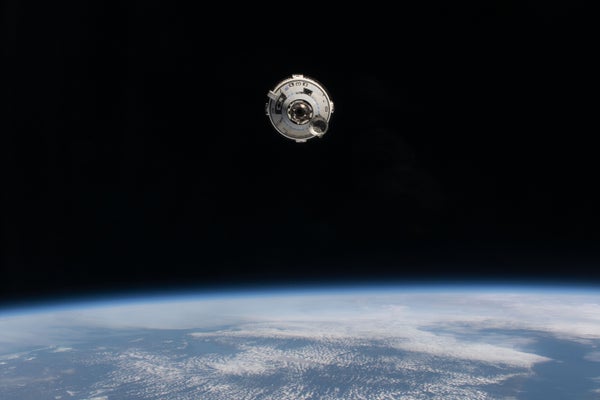
    Boeing’s Starliner spacecraft on NASA’s Crew Flight Test approaches the International Space Station while orbiting 263 miles above Quebec, Canada

    A view of Boeing’s Starliner spacecraft as it approached the International Space Station (ISS) in early June 2024. The spacecraft’s crew, NASA astronauts Butch Wilmore and Suni Williams, are expected to stay on the ISS until February 2025.

    After three agonizing months in space, an orbital mission that was originally intended to span scarcely more than a week has concluded with a parachute-slowed, airbag-cushioned autonomous landing shortly after midnight EDT at NASA’s White Sands Space Harbor in New Mexico.

    Starliner—the Boeing-built spacecraft that began a troubled test flight to the International Space Station (ISS) in June—is at last back on Earth. The same can’t be said for its crew, however: NASA astronauts Butch Wilmore and Suni Williams remain onboard the ISS. Last month officials at the space agency, citing safety concerns, opted to instead fly them home in February 2025 via a tried-and-true Dragon spacecraft built and operated by Boeing’s aerospace competitor SpaceX. Accommodating that change required that two other NASA astronauts, Zena Cardman and Stephanie Wilson, be booted from SpaceX’s next scheduled Dragon flight to the ISS: the Crew 9 mission, which is slated to launch later this month. This leaves two open seats for Wilmore and Williams when that Dragon returns to Earth next February.

    “It was a great day to return Starliner, and it was great to have a successful undock, deorbit and landing of the vehicle,” said Steve Stich, program manager for NASA’s Commercial Crew Program, during a postlanding press conference in which he summarized the spacecraft’s “darn near-flawless” performance. “I am thrilled for our Boeing team, and all of our colleagues that worked this mission across the country on the NASA team and the Boeing team…. It’s a testament to those people that we got the vehicle back today.”

    Chasing the Dragon


    On supporting science journalism

    If you’re enjoying this article, consider supporting our award-winning journalism by subscribing. By purchasing a subscription you are helping to ensure the future of impactful stories about the discoveries and ideas shaping our world today.


    The successful landing—Starliner’s third—means Boeing’s program has survived to fly another day. But much of what happens next is still up in the air.

    This test flight was meant to be the final stage in certifying Starliner’s readiness for once-per-year astronaut-toting trips to the ISS. But the spacecraft’s failure to return with its crew could trigger NASA to demand additional test flights before awarding that certification—at Boeing’s expense. When the space agency selected Boeing and SpaceX to develop crewed spacecraft in 2014, both companies signed “fixed price” contracts under which they, rather than NASA, would cover cost overruns. Further, payments from NASA would be contingent on each company hitting certain set milestones. The space agency allotted a total of $2.6 billion to SpaceX—and $4.2 billion to Boeing. SpaceX flew its first crewed Dragon to the ISS in May 2020 and has been fulfilling its contractual obligations to NASA ever since. In contrast, technical missteps and delays have plagued Boeing’s Starliner program, and quarterly filings from late June revealed the company has lost $1.6 billion—so far—on the effort.

    At a press conference last month that announced the switch to Dragon as Wilmore and Williams’s return vehicle, NASA administrator Bill Nelson offered “100 percent” certainty that Starliner would fly crews again and noted that he had recently spoken with Boeing’s new CEO, Kelly Ortberg. “He expressed to me an intention that they will continue to work the problems once Starliner is back safely,” Nelson said.

    It’s still unclear exactly how and when Starliner will return to crewed flight—as well as what assurances other spacefaring nations that are partnered with NASA on the ISS might request before flying their own personnel on Boeing’s vehicle. But this much is certain: time is running short for the company to make good on its obligations to NASA. The space agency intends to deorbit the ISS in 2031—and recently announced it had hired SpaceX to do the deed using a heavily modified Dragon.
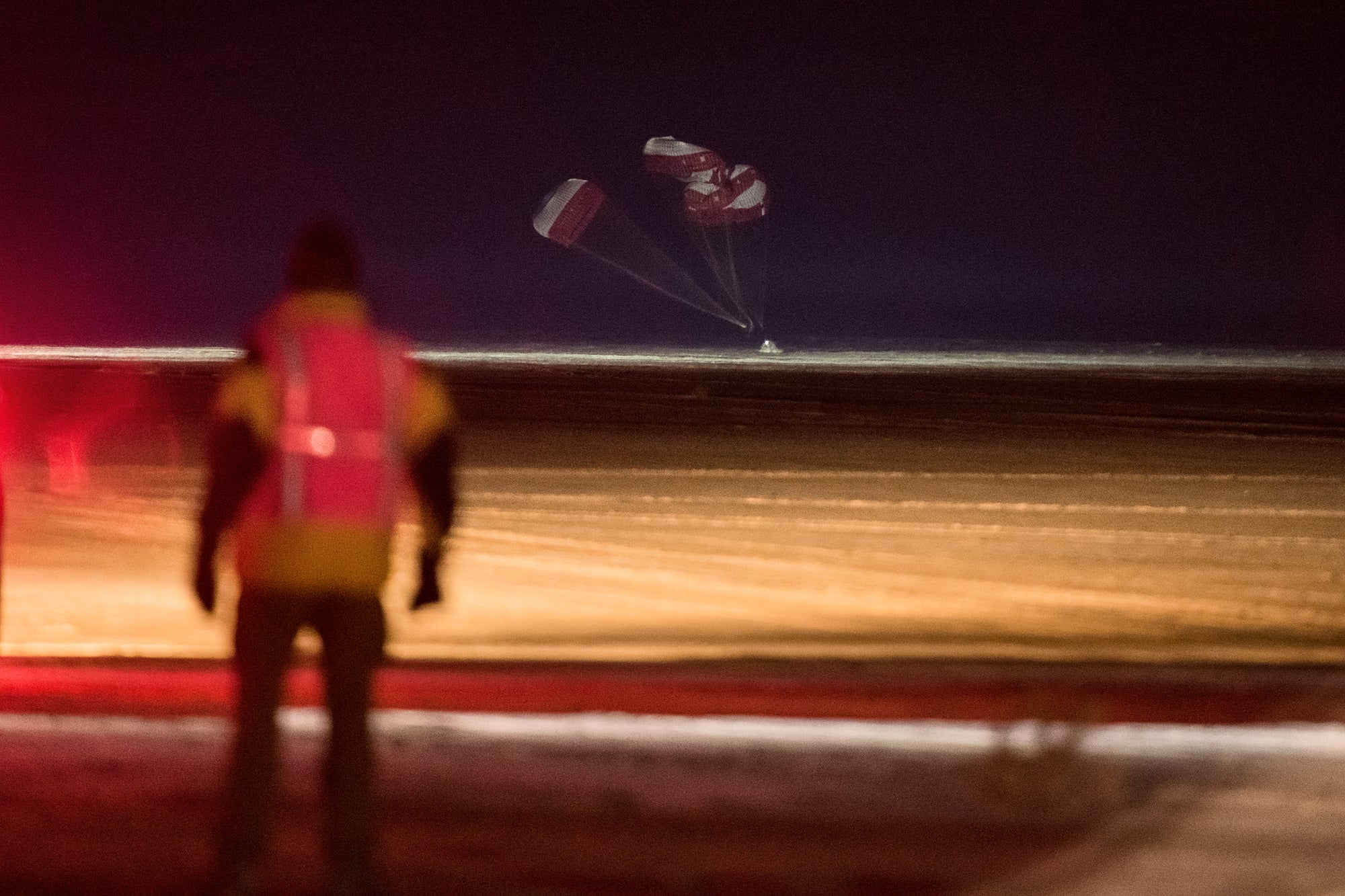
    Parachutes descending to the ground after the landing of Boeing's Starliner in New Mexico during a 2019 test flight. In the foreground, a person stands with their back to the camera watching the spacecraft land.

    An uncrewed Starliner spacecraft lands beneath billowing parachutes in White Sands, New Mexico at the conclusion of NASA’s Orbital Flight Test on December 22, 2019.

    The Long Goodbye

    Wilmore and Williams closed Starliner’s hatch at 1:29 P.M. EDT on Thursday to prepare for the uncrewed departure. The vehicle—nicknamed Calypso—undocked from the ISS at 6:04 P.M. EDT on Friday, leaving the astronauts behind as the ISS passed over central China. Moments after undocking, the spacecraft executed a “breakout burn,” a dozen sequences of pulses from its auxiliary thrusters to maneuver up and away from the ISS to avoid bumping into the orbital habitat. As Calypso shrank to a dot barely visible through the ISS’s viewports, Williams radioed a simple, almost-wistful declaration to flight controllers: “She’s on her way home.”

    For the next few hours the spacecraft underwent a series of diagnostic tests as it drifted to a distance of 90 kilometers from the ISS. Then, at 11:17 P.M. EDT Calypso began its “deorbit burn,” using auxiliary thrusters to orient itself as beefier main thrusters fired to send it plunging through our planet’s atmosphere. During that descent, another burst of firings from auxiliary thrusters ensured that Calypso’s empty crew module separated from the service module, which burned up at high altitude as planned.

    The service module’s fiery end, which was necessary to expose a protective heatshield for Starliner’s homecoming, has been a fundamental stumbling block for troubleshooting the spacecraft’s most concerning glitches. This disposable module contains 28 auxiliary thrusters, five of which failed during Starliner’s approach and rendezvous with the ISS on June 6. It’s also where Starliner had repeatedly sprung multiple small leaks of helium, an inert gas used to push propellant through thrusters. But with the faulty hardware destined for lofty destruction rather than retrieval and study, the only option had been to analyze it from afar, gathering as much data as possible in hopes of finding causes—and remedies—before the service module incinerated in Earth’s skies.

    In the Doghouse

    From those remote investigations, as well as ground-based testing of identical thrusters, NASA and Boeing engineers traced the five service module thrusters’ failure to overheating during their operation. The service module’s auxiliary thrusters are mounted in four propulsion pods called “doghouses,” which investigators determined retain more heat than expected as the thrusters fire, exacerbating the problem. The overheating likely caused Teflon seals to swell and constrict the flow of propellant, ultimately leading to the failures. In worst-case scenarios, such malfunctions could result in disasters such as Starliner colliding with and breaching the ISS or tumbling to disintegrate in a fireball during atmospheric reentry.

    Although the engineers had found the likely cause for the thruster issues, lingering uncertainties remained. For example, four of Starliner’s five failed thrusters had subsequently recovered—but no one could fully explain how. In discussions with NASA, Boeing officials nonetheless argued that it was safe to fly the two astronauts home on the spacecraft—a key objective that, if left unfulfilled, would probably require yet another budget-busting future crewed test flight. But with no way to thoroughly examine the thrusters on-orbit to ensure their performance, NASA ultimately deemed it safer to send Starliner back without Wilmore and Williams.

    During the final meeting on the matter, there was “some tension in the room,” Stich acknowledged in a predeparture press conference on Wednesday. “Boeing believed in the model that they had created that tried to predict thruster degradation for the rest of the flight…. The NASA team looked at the model and saw some limitations, and it really had to do with ‘Do we have confidence in the thrusters—and how much we could predict their degradation—from undock to the deorbit burn?’ And [we] could not get comfortable with that.”

    Even so, Stich maintained during Wednesday’s press conference that “we have confidence in the vehicle…. We’ve had two good [uncrewed] landings with Starliner so far, and we’re expecting another one Friday.”

    With this nearly flawless (but not exactly triumphant) reentry and touchdown now on the books, all expectations are for Boeing to redouble its efforts to recover from its spaceflight setbacks and restore Starliner’s tarnished reputation. Whether NASA—or anyone else—should still be expected to have confidence in those efforts, however, is another matter entirely.

    [ad_2]

    Original Source Link

    Share. Facebook Twitter Pinterest LinkedIn WhatsApp Email Reddit Telegram
    Previous ArticleRed Rooms review – a claustrophobic tech-tinged nightmare
    Next Article Second Byju’s auditor exits in a year amid bankruptcy proceedings

    RELATED POSTS

    Voyager 1 Beat the Odds and Is Still Working a Light-Day Away From Earth

    November 18, 2026

    The Dark Side of the Moon Was the Brightest Part of 2026

    November 17, 2026

    Just 400 US Data Centers Use More Electricity Than Michigan

    November 16, 2026

    The EPAs Chemical-Detecting Plane Isnt Doing Its Job Anymore

    November 16, 2026

    Its Getting Too Dry for Even Cactuses to Survive

    November 15, 2026

    New Species of Giant Fungus Discovered in China Grows up to 20 Inches Tall

    November 15, 2026
    latest posts

    Someone did the math on the Democrats first 100-day agenda: It saves $30 billion on the Iran war but ultimately adds $4.1 trillion to national debt | Fortune

    While it’s the responsibility of the U.S. Department of the Treasury to finance the interest…

    How Notable Capital, GIC, and Baillie Gifford bet big on Anthropic before its IPO | TechCrunch

    November 23, 2026

    Why data centers are at the center of the Big Tech backlash | TechCrunch

    November 22, 2026

    Prince Fleet Easton Guests On “If These Walls Could Talk” With Hosts Wendy Stuart and Tym Moss Wednesday, November 25th, 2026

    November 22, 2026

    Faced with influx, prosecutor in Washington says he lacks resources to defend immigration cases

    November 22, 2026

    We lead MITs FutureTech program on the economics of AI: Dont ask if AI can do the job, ask how much it costs | Fortune

    November 22, 2026

    Heres Where to Watch the Miami Dolphins vs. Buffalo Bills Game Live Online

    November 22, 2026
    Categories
    • Books (1,624)
    • Business (6,529)
    • Cover Story (18)
    • Film (6,463)
    • Lifestyle (4,502)
    • Music (6,539)
    • Politics (6,515)
    • Science (5,869)
    • Technology (6,467)
    • Television (6,161)
    • Uncategorized (3)
    • US News (6,512)
    popular posts

    Asghar Farhadi President of Competition Jury – The Hollywood Reporter

    [ad_1] Two-time Oscar-winning Iranian director Asghar Farhadi will head up the competition jury for the…

    Book Riot’s Deals of the Day for July 7, 2026

    July 8, 2026

    The best emergency radios in 2022, tried and tested

    June 28, 2022

    Elissa Slotkin Drops A Truth Bomb On Republican Hypocrites Supporting Troops In LA

    June 19, 2025
    Archives
    Browse By Category
    • Books (1,624)
    • Business (6,529)
    • Cover Story (18)
    • Film (6,463)
    • Lifestyle (4,502)
    • Music (6,539)
    • Politics (6,515)
    • Science (5,869)
    • Technology (6,467)
    • Television (6,161)
    • Uncategorized (3)
    • US News (6,512)
    About Us

    We are a creativity led international team with a digital soul. Our work is a custom built by the storytellers and strategists with a flair for exploiting the latest advancements in media and technology.

    Most of all, we stand behind our ideas and believe in creativity as the most powerful force in business.

    What makes us Different

    We care. We collaborate. We do great work. And we do it with a smile, because we’re pretty damn excited to do what we do. If you would like details on what else we can do visit out Contact page.

    Our Picks

    We lead MITs FutureTech program on the economics of AI: Dont ask if AI can do the job, ask how much it costs | Fortune

    November 22, 2026

    Heres Where to Watch the Miami Dolphins vs. Buffalo Bills Game Live Online

    November 22, 2026

    Book Riots Deals of the Day for November 22, 2026

    November 22, 2026
    © 2026 Beverly Hills Examiner. All rights reserved. All articles, images, product names, logos, and brands are property of their respective owners. All company, product and service names used in this website are for identification purposes only. Use of these names, logos, and brands does not imply endorsement unless specified. By using this site, you agree to the Terms & Conditions and Privacy Policy.

    Type above and press Enter to search. Press Esc to cancel.

    We use cookies on our website to give you the most relevant experience by remembering your preferences and repeat visits. By clicking “Accept All”, you consent to the use of ALL the cookies. However, you may visit "Cookie Settings" to provide a controlled consent.
    Cookie SettingsAccept All
    Manage consent

    Privacy Overview

    This website uses cookies to improve your experience while you navigate through the website. Out of these, the cookies that are categorized as necessary are stored on your browser as they are essential for the working of basic functionalities of the website. We also use third-party cookies that help us analyze and understand how you use this website. These cookies will be stored in your browser only with your consent. You also have the option to opt-out of these cookies. But opting out of some of these cookies may affect your browsing experience.
    Necessary
    Always Enabled
    Necessary cookies are absolutely essential for the website to function properly. These cookies ensure basic functionalities and security features of the website, anonymously.
    CookieDurationDescription
    cookielawinfo-checkbox-analytics11 monthsThis cookie is set by GDPR Cookie Consent plugin. The cookie is used to store the user consent for the cookies in the category "Analytics".
    cookielawinfo-checkbox-functional11 monthsThe cookie is set by GDPR cookie consent to record the user consent for the cookies in the category "Functional".
    cookielawinfo-checkbox-necessary11 monthsThis cookie is set by GDPR Cookie Consent plugin. The cookies is used to store the user consent for the cookies in the category "Necessary".
    cookielawinfo-checkbox-others11 monthsThis cookie is set by GDPR Cookie Consent plugin. The cookie is used to store the user consent for the cookies in the category "Other.
    cookielawinfo-checkbox-performance11 monthsThis cookie is set by GDPR Cookie Consent plugin. The cookie is used to store the user consent for the cookies in the category "Performance".
    viewed_cookie_policy11 monthsThe cookie is set by the GDPR Cookie Consent plugin and is used to store whether or not user has consented to the use of cookies. It does not store any personal data.
    Functional
    Functional cookies help to perform certain functionalities like sharing the content of the website on social media platforms, collect feedbacks, and other third-party features.
    Performance
    Performance cookies are used to understand and analyze the key performance indexes of the website which helps in delivering a better user experience for the visitors.
    Analytics
    Analytical cookies are used to understand how visitors interact with the website. These cookies help provide information on metrics the number of visitors, bounce rate, traffic source, etc.
    Advertisement
    Advertisement cookies are used to provide visitors with relevant ads and marketing campaigns. These cookies track visitors across websites and collect information to provide customized ads.
    Others
    Other uncategorized cookies are those that are being analyzed and have not been classified into a category as yet.
    SAVE & ACCEPT