
Close Menu
Beverly Hills Examiner

    Subscribe to Updates

    Get the latest creative news from FooBar about art, design and business.

    What's Hot

    My experience was not what the world has seen

    March 26, 2026

    Jay-Z calls billionaire hate ‘a cop-out’. 1 in 5 Americans say it’s ‘morally wrong’ to be that rich

    March 26, 2026

    Democrats Now Have Their Biggest Lead On The Midterm Ballot

    March 26, 2026
    Facebook X (Twitter) Instagram
    Beverly Hills Examiner
    • Home
    • US News
    • Politics
    • Business
    • Science
    • Technology
    • Lifestyle
    • Music
    • Television
    • Film
    • Books
    • Contact
      • About
      • Amazon Disclaimer
      • DMCA / Copyrights Disclaimer
      • Terms and Conditions
      • Privacy Policy
    Beverly Hills Examiner
    Home»Science»Earth’s magnetic field may be more powerful than we thought
    Science

    Earth’s magnetic field may be more powerful than we thought

    By AdminMarch 25, 2026
    Facebook Twitter Pinterest LinkedIn WhatsApp Email Reddit Telegram
    Earth’s magnetic field may be more powerful than we thought


    March 25, 2026

    3 min read

    Google Logo Add Us On GoogleAdd SciAm

    Earth’s magnetic field may be more powerful than we thought

    A major defense against everything space throws at us, Earth’s magnetic field may even protect the moon from damaging galactic cosmic rays
    By K. R. Callaway edited by Claire Cameron

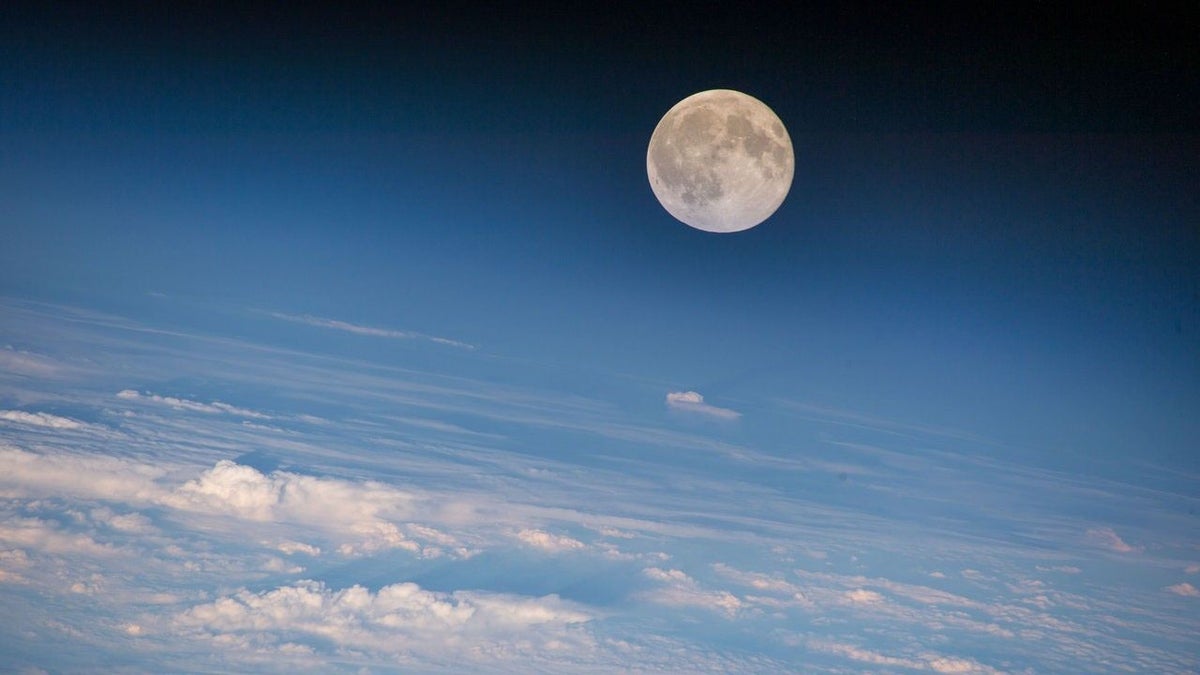
    This image shows the moon as seen from the International Space Station.

    Though it is far from Earth’s magnetic core, the moon feels even more of the core’s effects than scientists previously thought.

    Barreling through the universe with incredible power and speed, galactic cosmic rays are a major source of radiation in space. But thanks to Earth’s strong magnetic field, these charged particles don’t usually make it directly to our planet, so we are protected from the radiation’s damaging effects. This field may be doing much more: new data collected by China’s Chang’e 4 lunar lander shows that our magnetic field’s influence is so powerful that it extends farther into space than previously believed—stretching even beyond the moon.

    In a study published on Wednesday in Science Advances, researchers describe a “cavity” in space between Earth and the moon where cosmic rays are deflected by Earth’s magnetic field. This suggests that the effects of our planet’s magnetism are present much farther from us than anyone could have expected.

    This graphic shows the shaded region where gravitational cosmic rays are deflected by Earth’s magnetic influence.

    Gravitational cosmic rays spiral through the heliosphere, but Earth’s magnetic influence shields a large area of space from some of the particles.

    From “A Galactic Cosmic Ray Cavity in Earth-Moon Space,” by Wensai Shang et al., in Science Advances, Vol. 12, No. 13; March 25, 2026


    On supporting science journalism

    If you’re enjoying this article, consider supporting our award-winning journalism by subscribing. By purchasing a subscription you are helping to ensure the future of impactful stories about the discoveries and ideas shaping our world today.


    Launched in 2018, Chang’e 4 was the first spacecraft to land on the far side of the moon. Among the many scientific instruments onboard was the Lunar Lander Neutron and Dosimetry experiment, which was designed to measure the radiation future astronauts might experience if they were to land there. Scientists had long assumed most of the moon lay beyond the protection of Earth’s magnetic field, but in 2019 scientists began noticing something odd about the experiment’s data that suggested the moon was somewhat protected from galactic cosmic rays.

    The finding came as “a surprise,” says Robert Wimmer-Schweingruber, a co-author of the study and a physicist at Kiel University in Germany. “Personally, I didn’t believe it for a long, long time. I thought it was an artifact in the data until we did a lot of statistical tests.”

    Galactic cosmic rays originate from a variety of sources in space, such as stars, supernovae and black holes. These diverse origins mean that by the time the rays get near Earth, they don’t all carry the same level of energy. The highest-energy particles move quickly through the solar system, while some of the weaker particles linger—and their radiation could affect astronauts, Wimmer-Schweingruber says.

    “These low-energy particles weren’t that interesting to us until we saw this effect, and then we realized this is actually important for the skin dose of astronauts,” he says.

    Shielding astronauts from the dangers of radiation is critical to ensuring a human presence in space. This means creating materials that are light enough to bring into space but protective enough to keep radiation at bay, says Philip Metzger, a professor of planetary science and space technology at the University of Central Florida, who was not involved in the new study. Knowing more about the distribution of radiation in space, and especially between the moon and Earth, could help scientists plan safer missions.

    For example, if NASA’s plan to put humans on the moon in a semipermanent capacity comes to pass, then it may make sense for astronauts to schedule activities outside any sheltered habitats while the moon is within the influence of Earth’s magnetic field.

    “It is brilliant research, and it just shows us that the more we study phenomena outside of our planet, the more we discover we don’t know,” Metzger says. “That’s why we need to do space missions.”

    It’s Time to Stand Up for Science

    If you enjoyed this article, I’d like to ask for your support. Scientific American has served as an advocate for science and industry for 180 years, and right now may be the most critical moment in that two-century history.

    I’ve been a Scientific American subscriber since I was 12 years old, and it helped shape the way I look at the world. SciAm always educates and delights me, and inspires a sense of awe for our vast, beautiful universe. I hope it does that for you, too.

    If you subscribe to Scientific American, you help ensure that our coverage is centered on meaningful research and discovery; that we have the resources to report on the decisions that threaten labs across the U.S.; and that we support both budding and working scientists at a time when the value of science itself too often goes unrecognized.

    In return, you get essential news, captivating podcasts, brilliant infographics, can’t-miss newsletters, must-watch videos, challenging games, and the science world’s best writing and reporting. You can even gift someone a subscription.

    There has never been a more important time for us to stand up and show why science matters. I hope you’ll support us in that mission.


    Original Source Link

    Share. Facebook Twitter Pinterest LinkedIn WhatsApp Email Reddit Telegram
    Previous ArticleHarry Potter’s Confirmed 2026 Release Is Officially Keeping A Franchise Tradition Alive
    Next Article Amazon Spring Sale Deal: The Typhur Dome 2 Air Fryer Is 30% Off

    RELATED POSTS

    Japan Approves the World’s First Treatment Made With Reprogrammed Human Cells

    March 26, 2026

    Earth may have formed from two separate rings around the sun

    March 25, 2026

    The Trip to the Far Side of the Moon

    March 24, 2026

    Why the LaGuardia plane crash was so destructive

    March 24, 2026

    The simple questions cracking the hard problem of consciousness

    March 23, 2026

    China Approves the First Brain Chips for Sale—and Has a Plan to Dominate the Industry

    March 23, 2026
    latest posts

    My experience was not what the world has seen

    Usher has claimed disgraced mogul Diddy has been “misrepresented”, adding he has nothing “negative” to…

    Jay-Z calls billionaire hate ‘a cop-out’. 1 in 5 Americans say it’s ‘morally wrong’ to be that rich

    March 26, 2026

    Democrats Now Have Their Biggest Lead On The Midterm Ballot

    March 26, 2026

    ‘Revenge Book’ About My Mom: How We Became Closer

    March 26, 2026

    A little-known Croatian startup is coming for the robotaxi market with help from Uber

    March 26, 2026

    Japan Approves the World’s First Treatment Made With Reprogrammed Human Cells

    March 26, 2026

    H.E.R., Liza Soberano Get Emotional About Trailer

    March 26, 2026
    Categories
    • Books (1,141)
    • Business (6,048)
    • Cover Story (2)
    • Film (5,984)
    • Lifestyle (4,078)
    • Music (6,054)
    • Politics (6,050)
    • Science (5,396)
    • Technology (5,981)
    • Television (5,672)
    • Uncategorized (3)
    • US News (6,032)
    popular posts

    The 5 Best Mesh Wi-Fi Routers (2022): For Large Homes and Small Budgets

    The mobile app has a wealth of options, and the web interface is even more…

    26 best patio chairs of 2022

    June 25, 2022

    Alabama police seeking two misdemeanor charges against Carlee Russell, prosecutor says

    July 27, 2023

    HEROish: Flynn Guide (Best Deck Builds & Upgrades)

    July 31, 2022
    Archives
    Browse By Category
    • Books (1,141)
    • Business (6,048)
    • Cover Story (2)
    • Film (5,984)
    • Lifestyle (4,078)
    • Music (6,054)
    • Politics (6,050)
    • Science (5,396)
    • Technology (5,981)
    • Television (5,672)
    • Uncategorized (3)
    • US News (6,032)
    About Us

    We are a creativity led international team with a digital soul. Our work is a custom built by the storytellers and strategists with a flair for exploiting the latest advancements in media and technology.

    Most of all, we stand behind our ideas and believe in creativity as the most powerful force in business.

    What makes us Different

    We care. We collaborate. We do great work. And we do it with a smile, because we’re pretty damn excited to do what we do. If you would like details on what else we can do visit out Contact page.

    Our Picks

    Japan Approves the World’s First Treatment Made With Reprogrammed Human Cells

    March 26, 2026

    H.E.R., Liza Soberano Get Emotional About Trailer

    March 26, 2026

    Don Brewer & Calum Landry Capture Giant Legendary Gator

    March 26, 2026
    © 2026 Beverly Hills Examiner. All rights reserved. All articles, images, product names, logos, and brands are property of their respective owners. All company, product and service names used in this website are for identification purposes only. Use of these names, logos, and brands does not imply endorsement unless specified. By using this site, you agree to the Terms & Conditions and Privacy Policy.

    Type above and press Enter to search. Press Esc to cancel.

    We use cookies on our website to give you the most relevant experience by remembering your preferences and repeat visits. By clicking “Accept All”, you consent to the use of ALL the cookies. However, you may visit "Cookie Settings" to provide a controlled consent.
    Cookie SettingsAccept All
    Manage consent

    Privacy Overview

    This website uses cookies to improve your experience while you navigate through the website. Out of these, the cookies that are categorized as necessary are stored on your browser as they are essential for the working of basic functionalities of the website. We also use third-party cookies that help us analyze and understand how you use this website. These cookies will be stored in your browser only with your consent. You also have the option to opt-out of these cookies. But opting out of some of these cookies may affect your browsing experience.
    Necessary
    Always Enabled
    Necessary cookies are absolutely essential for the website to function properly. These cookies ensure basic functionalities and security features of the website, anonymously.
    CookieDurationDescription
    cookielawinfo-checkbox-analytics11 monthsThis cookie is set by GDPR Cookie Consent plugin. The cookie is used to store the user consent for the cookies in the category "Analytics".
    cookielawinfo-checkbox-functional11 monthsThe cookie is set by GDPR cookie consent to record the user consent for the cookies in the category "Functional".
    cookielawinfo-checkbox-necessary11 monthsThis cookie is set by GDPR Cookie Consent plugin. The cookies is used to store the user consent for the cookies in the category "Necessary".
    cookielawinfo-checkbox-others11 monthsThis cookie is set by GDPR Cookie Consent plugin. The cookie is used to store the user consent for the cookies in the category "Other.
    cookielawinfo-checkbox-performance11 monthsThis cookie is set by GDPR Cookie Consent plugin. The cookie is used to store the user consent for the cookies in the category "Performance".
    viewed_cookie_policy11 monthsThe cookie is set by the GDPR Cookie Consent plugin and is used to store whether or not user has consented to the use of cookies. It does not store any personal data.
    Functional
    Functional cookies help to perform certain functionalities like sharing the content of the website on social media platforms, collect feedbacks, and other third-party features.
    Performance
    Performance cookies are used to understand and analyze the key performance indexes of the website which helps in delivering a better user experience for the visitors.
    Analytics
    Analytical cookies are used to understand how visitors interact with the website. These cookies help provide information on metrics the number of visitors, bounce rate, traffic source, etc.
    Advertisement
    Advertisement cookies are used to provide visitors with relevant ads and marketing campaigns. These cookies track visitors across websites and collect information to provide customized ads.
    Others
    Other uncategorized cookies are those that are being analyzed and have not been classified into a category as yet.
    SAVE & ACCEPT