
Close Menu
Beverly Hills Examiner

    Subscribe to Updates

    Get the latest creative news from FooBar about art, design and business.

    What's Hot

    Tom Hardy Revives His Bane Voice on New Rap Album

    August 30, 2026

    Singapore has overhauled its baby bonus scheme. Will it work to boost birth rates this time?

    August 30, 2026

    Trump Mentally Collapses Over Report He Refuses To Go To Ground Zero On 9/11

    August 30, 2026
    Facebook X (Twitter) Instagram
    Beverly Hills Examiner
    • Home
    • US News
    • Politics
    • Business
    • Science
    • Technology
    • Lifestyle
    • Music
    • Television
    • Film
    • Books
    • Contact
      • About
      • Amazon Disclaimer
      • DMCA / Copyrights Disclaimer
      • Terms and Conditions
      • Privacy Policy
    Beverly Hills Examiner
    Home»Science»NASA’s Roman Space Telescope could find alien Earths—but not like you think
    Science

    NASA’s Roman Space Telescope could find alien Earths—but not like you think

    By AdminAugust 30, 2026
    Facebook Twitter Pinterest LinkedIn WhatsApp Email Reddit Telegram
    NASA’s Roman Space Telescope could find alien Earths—but not like you think


    When a SpaceX Falcon Heavy rocket blasts off from Kennedy Space Center as early as Sunday morning, it will be carrying a crucial steppingstone toward astronomers’ grand goal of finding Earth-like exoplanets in the Milky Way.

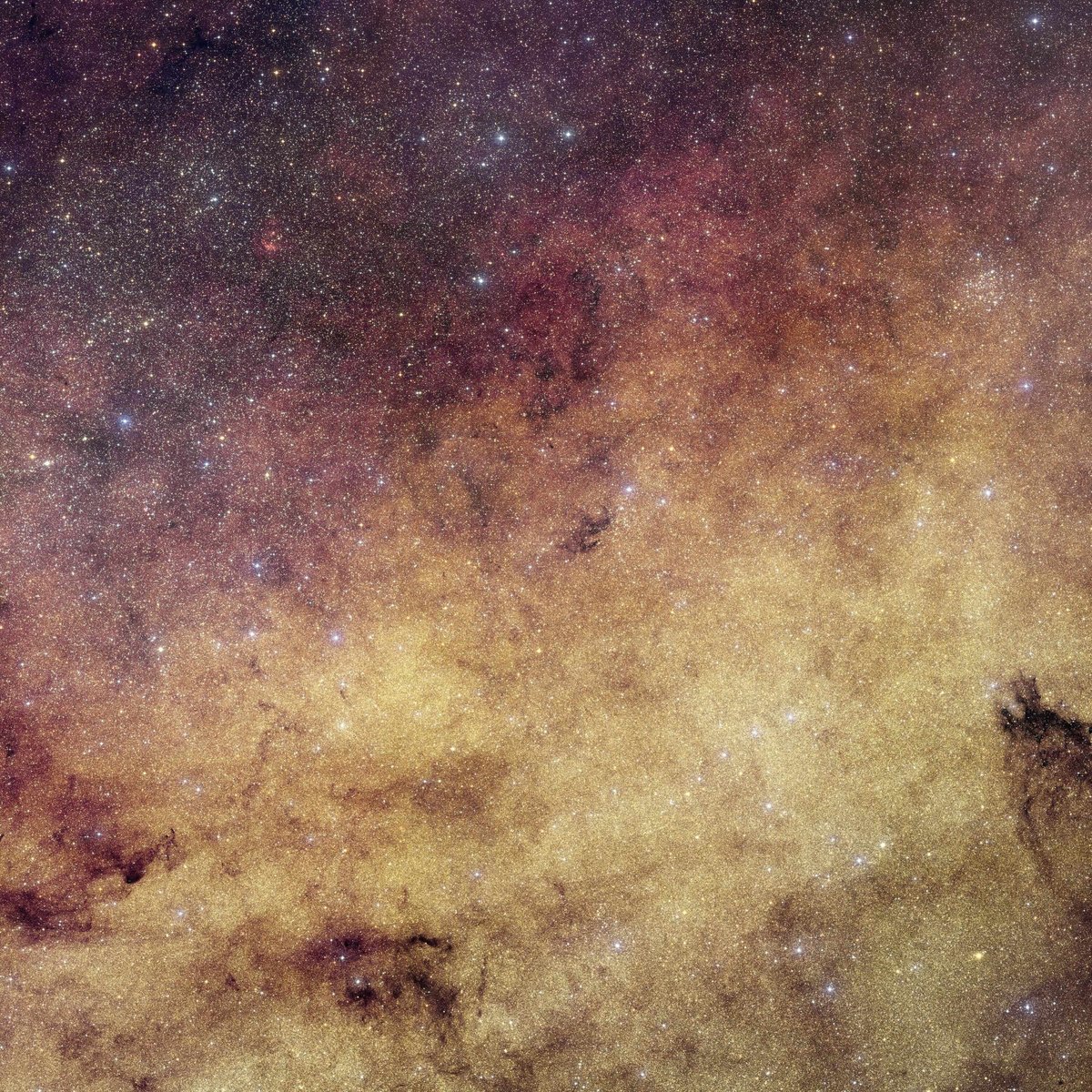
    NASA’s Nancy Grace Roman Space Telescope was designed for several high-priority studies of far-distant galaxies, but one of its key tasks closer to home will be an unprecedentedly long stare into the star-packed heart of our galaxy known as the galactic bulge. Roman will spend more than a quarter of its planned five-year primary mission observing this 10,000-light-year-wide region, which is so sprawling and thick with stars that previous telescopes have scarcely probed its depths.

    Called the Galactic Bulge Time-Domain Survey, this project will focus on a rather narrow band of the Milky Way’s center, a region that’s roughly eight full moons in the Earth’s night sky in size. Anything larger would’ve been biting off more than even mighty Roman, with its panoramic field of view, could readily chew.


    On supporting science journalism

    If you’re enjoying this article, consider supporting our award-winning journalism by subscribing. By purchasing a subscription you are helping to ensure the future of impactful stories about the discoveries and ideas shaping our world today.


    “We’re not going to see that much of the bulge, but we’re going to see very deep into the bulge, and in fact, all the way to the other side of the galaxy,” says Scott Gaudi, an astronomer at Ohio State University and a member of the telescope’s commissioning team.

    Even so, astronomers should still discern hundreds of millions of stars within that relatively small slice of sky, explains Kristen McQuinn, leader of the Roman Space Telescope’s mission office.

    Monitoring stars by the hundreds of millions is necessary for the rare and fleeting events Roman’s bulge survey is most primed to find. The telescope’s optics are designed to pick up a phenomenon called microlensing, in which a background star’s light is briefly warped and amplified by the gravitational fields of “foreground” objects that happen to drift through our solar system’s line-of-sight. Other stars are the typical foreground objects—and when they host planets, those worlds can impart their own smaller blips to the microlensing signal, too. The technique is even sensitive to exoplanets with Earth-like dimensions, potentially allowing astronomers to suss out whether such objects are, galactically speaking, common or rare.

    “The reason we’ve never done a lot of microlensing in the past is because microlensing events themselves are quite rare,” says McQuinn. “In order to see one per year you’d have to look at 10,000 stars. You’ve got to kiss a lot of frogs, as they say, but with Roman we’re going to have hundreds of millions of stars, and so what is rare for another observatory is going to be quite common for Roman.”

    The downside to microlensing, however, is that each chance alignment is a one-off event, meaning that few if any found worlds will ever be amenable to follow-up studies.

    In its bulge survey, which records an image every 12 minutes, the telescope will also be looking for other planet-induced fluctuations in starlight—shadowy “transits” of worlds periodically flitting across the faces of their stars. These couldn’t be more different from microlensing’s one-time blips, as they recur again and again, allowing transiting systems to be studied more over time. Transits are what revealed most of the more than 6,000 exoplanets now known, and Roman’s planners expect the bulge’s target-rich environment to yield on order of 100,000 more. The bulkier a world is and the closer it is to its star, the bigger the shadow it casts, biasing the technique toward finding massive exoplanets. But Roman’s sensitivity is such that the telescope is likely to bag even planets as small as the moon.

    “Pretty much anything that that moves or bumps or flickers, we’ll be able to detect it,” Gaudi says.

    “It’s not just how many planets are there, but how many Earth-like planets are there, how many planets are actually bound to a star, and others that are just free-floating through our galaxy,” McQuinn adds.

    Taken together, this one-two punch of planet-hunting means the Milky Way’s faraway bulge will be a data bonanza. Besides a bevy of exoplanets to help guide our search for Earth-like worlds around nearby stars, scientists are anticipating the discovery of much more: myriad new stars and brown dwarfs, and even a few stellar-mass black holes, neutron stars and other astrophysical exotica. (Roman also carries a starlight-blocking coronagraph—the best-yet flown in space—that will allow it to take actual pictures of Jupiter-sized exoplanets that may lurk in neighboring star systems.)

    The results won’t just give tally of the stars and planets, either; think of the survey as more of a population census that reveals demographic trends, like how, when, and where different types of objects formed. Meredith Joyce, an assistant professor at the Rochester Institute of Technology, says she’s particularly excited to find out how old the stars in the bulge really are. While it’s believed to be one of the Milky Way’s most ancient regions—nearly as old as the universe itself—the bulge could harbor some younger stars as well.

    “I’m on the side of thinking that it’s uniformly old, but the truth is that we don’t know,” she says. Either way, Roman “is going to finally put this issue to rest.”

    While the launch is Sunday, it’s expected the telescope’s commissioning in space will take some time. Once fully operational—a milestone targeted for January 2027—Roman’s science observations should finally begin.

    That has astronomers eagerly awaiting what can be seen as the shroud over the heart of the Milky Way gets at least partially lifted.

    “A lot of people have worked on this for a lot of time,” says McQuinn. “It’s pretty exciting.”


    Original Source Link

    Share. Facebook Twitter Pinterest LinkedIn WhatsApp Email Reddit Telegram
    Previous ArticleChris Hansen on Robert Pattinson’s ‘Pretty Good Imitation’ in Primetime
    Next Article Soundcore Liberty 5 Pro Review: Master of Phone Calls

    RELATED POSTS

    NASA’s Nancy Grace Roman Space Telescope Has a Hidden Technological Leap

    August 29, 2026

    Where are all the aliens? A new book explores possible answers

    August 29, 2026

    There Are So Many Conspiracy Theories About Dolly Parton and Vaccines

    August 28, 2026

    Tropical Storm Dolly forms in the Atlantic

    August 28, 2026

    Submit Your Questions: The Great Data Center Backlash

    August 27, 2026

    Is there a ‘window of opportunity’ to prevent Alzheimer’s in women?

    August 27, 2026
    latest posts

    Tom Hardy Revives His Bane Voice on New Rap Album

    Under his Frankie Pulitzer alias, Tom Hardy has teamed with Czarface — the underground rap…

    Singapore has overhauled its baby bonus scheme. Will it work to boost birth rates this time?

    August 30, 2026

    Trump Mentally Collapses Over Report He Refuses To Go To Ground Zero On 9/11

    August 30, 2026

    Port Authority police retirees urge Mamdani, Hochul to skip 9/11 ceremony

    August 30, 2026

    Soundcore Liberty 5 Pro Review: Master of Phone Calls

    August 30, 2026

    NASA’s Roman Space Telescope could find alien Earths—but not like you think

    August 30, 2026

    Chris Hansen on Robert Pattinson’s ‘Pretty Good Imitation’ in Primetime

    August 30, 2026
    Categories
    • Books (1,456)
    • Business (6,360)
    • Cover Story (10)
    • Film (6,297)
    • Lifestyle (4,355)
    • Music (6,370)
    • Politics (6,344)
    • Science (5,708)
    • Technology (6,294)
    • Television (5,993)
    • Uncategorized (3)
    • US News (6,345)
    popular posts

    Map of the immune system changing with age may help optimise vaccines

    The map of the immune system, with each dot representing an immune cell and dots…

    Rare whisky auction could see sales top $2 million

    April 28, 2023

    Germany, France, Romania, Poland, Lithuania… Farmers All Over Europe Take a Stand Against Crippling ‘Green’ Policies | The Gateway Pundit

    January 24, 2024

    17 Best Men’s Ear Piercings: Top Styles and Types in 2025

    May 21, 2025
    Archives
    Browse By Category
    • Books (1,456)
    • Business (6,360)
    • Cover Story (10)
    • Film (6,297)
    • Lifestyle (4,355)
    • Music (6,370)
    • Politics (6,344)
    • Science (5,708)
    • Technology (6,294)
    • Television (5,993)
    • Uncategorized (3)
    • US News (6,345)
    About Us

    We are a creativity led international team with a digital soul. Our work is a custom built by the storytellers and strategists with a flair for exploiting the latest advancements in media and technology.

    Most of all, we stand behind our ideas and believe in creativity as the most powerful force in business.

    What makes us Different

    We care. We collaborate. We do great work. And we do it with a smile, because we’re pretty damn excited to do what we do. If you would like details on what else we can do visit out Contact page.

    Our Picks

    NASA’s Roman Space Telescope could find alien Earths—but not like you think

    August 30, 2026

    Chris Hansen on Robert Pattinson’s ‘Pretty Good Imitation’ in Primetime

    August 30, 2026

    Why Does My Room Smell Musty? 9 Simple Ways to Fix It

    August 30, 2026
    © 2026 Beverly Hills Examiner. All rights reserved. All articles, images, product names, logos, and brands are property of their respective owners. All company, product and service names used in this website are for identification purposes only. Use of these names, logos, and brands does not imply endorsement unless specified. By using this site, you agree to the Terms & Conditions and Privacy Policy.

    Type above and press Enter to search. Press Esc to cancel.

    We use cookies on our website to give you the most relevant experience by remembering your preferences and repeat visits. By clicking “Accept All”, you consent to the use of ALL the cookies. However, you may visit "Cookie Settings" to provide a controlled consent.
    Cookie SettingsAccept All
    Manage consent

    Privacy Overview

    This website uses cookies to improve your experience while you navigate through the website. Out of these, the cookies that are categorized as necessary are stored on your browser as they are essential for the working of basic functionalities of the website. We also use third-party cookies that help us analyze and understand how you use this website. These cookies will be stored in your browser only with your consent. You also have the option to opt-out of these cookies. But opting out of some of these cookies may affect your browsing experience.
    Necessary
    Always Enabled
    Necessary cookies are absolutely essential for the website to function properly. These cookies ensure basic functionalities and security features of the website, anonymously.
    CookieDurationDescription
    cookielawinfo-checkbox-analytics11 monthsThis cookie is set by GDPR Cookie Consent plugin. The cookie is used to store the user consent for the cookies in the category "Analytics".
    cookielawinfo-checkbox-functional11 monthsThe cookie is set by GDPR cookie consent to record the user consent for the cookies in the category "Functional".
    cookielawinfo-checkbox-necessary11 monthsThis cookie is set by GDPR Cookie Consent plugin. The cookies is used to store the user consent for the cookies in the category "Necessary".
    cookielawinfo-checkbox-others11 monthsThis cookie is set by GDPR Cookie Consent plugin. The cookie is used to store the user consent for the cookies in the category "Other.
    cookielawinfo-checkbox-performance11 monthsThis cookie is set by GDPR Cookie Consent plugin. The cookie is used to store the user consent for the cookies in the category "Performance".
    viewed_cookie_policy11 monthsThe cookie is set by the GDPR Cookie Consent plugin and is used to store whether or not user has consented to the use of cookies. It does not store any personal data.
    Functional
    Functional cookies help to perform certain functionalities like sharing the content of the website on social media platforms, collect feedbacks, and other third-party features.
    Performance
    Performance cookies are used to understand and analyze the key performance indexes of the website which helps in delivering a better user experience for the visitors.
    Analytics
    Analytical cookies are used to understand how visitors interact with the website. These cookies help provide information on metrics the number of visitors, bounce rate, traffic source, etc.
    Advertisement
    Advertisement cookies are used to provide visitors with relevant ads and marketing campaigns. These cookies track visitors across websites and collect information to provide customized ads.
    Others
    Other uncategorized cookies are those that are being analyzed and have not been classified into a category as yet.
    SAVE & ACCEPT