

Close Menu
Beverly Hills Examiner

    Subscribe to Updates

    Get the latest creative news from FooBar about art, design and business.

    What's Hot

    Watch Placebo debut ‘Helen Keller’ and dust off rarities and deep cuts on 30th anniversary tour

    October 2, 2026

    Top ServiceNow exec on clients delivering ‘life-changing’ results with AI agents

    October 2, 2026

    Elderly Woman Dies After SAVAGE Daytime Assault and Robbery in Baltimore by Suspect with Long Rap Sheet (VIDEO)

    October 2, 2026
    Facebook X (Twitter) Instagram
    Beverly Hills Examiner
    • Home
    • US News
    • Politics
    • Business
    • Science
    • Technology
    • Lifestyle
    • Music
    • Television
    • Film
    • Books
    • Contact
      • About
      • Amazon Disclaimer
      • DMCA / Copyrights Disclaimer
      • Terms and Conditions
      • Privacy Policy
    Beverly Hills Examiner
    Home»Science»Outdoor Air Conditioning Cools the World Cup–But Is It Sustainable?
    Science

    Outdoor Air Conditioning Cools the World Cup–But Is It Sustainable?

    By AdminNovember 27, 2022
    Facebook Twitter Pinterest LinkedIn WhatsApp Email Reddit Telegram
    Outdoor Air Conditioning Cools the World Cup–But Is It Sustainable?


    In 2009, when Qatar placed its bid to host the men’s World Cup, many wondered how a country so hot—summer temperatures can exceed 110 degrees Fahrenheit—could host a soccer tournament. To quell those concerns, Qatar built air-conditioned outdoor stadiums. This move could inspire other sporting venues to use such technology to protect the health of athletes and fans. But this is a flawed solution that is not environmentally sustainable, experts say, despite efforts to power AC systems with green energy sources.

    The idea of putting energy-guzzling air-conditioning into open-air, roofless stadiums has added to Qatar’s long list of controversies (ranging from alleged bribery to reported human rights abuses). The host country promises that the AC systems now in use in seven of its eight World Cup stadiums have been built with sustainability in mind. According to the International Federation of Association Football (FIFA), global soccer’s governing body, the outdoor ACs will draw energy from solar panels and shoot cool air only to the parts of the stadium that need it the most—namely, the seats and the field.

    But experts doubt that AC systems in outdoor stadiums could ever truly be sustainable. Shelie Miller, a sustainability expert at the University of Michigan, who has studied refrigeration and air-conditioning systems, says that air-conditioning is a major source of global greenhouse gas emissions. This is linked to both its strain on the electricity grid and faulty AC units that leak refrigerant chemicals—which are potent greenhouse gasses. This emissions problem is likely to get worse over time because the global use of indoor air-conditioning is expanding rapidly. With outdoor AC tech readily available, it may sound like an easy fix for heat-related illnesses at athletic competitions, an issue that plagued the 2020 Tokyo Olympics and will affect more events as the climate crisis continues. But “from an energy perspective, that’s a pretty bad idea,” Miller says, because much of the cold air escapes into the open environment. “There’s a reason that we close our windows when we run our air conditioners.”

    One way to make stadium AC more efficient would be to employ it only in closed stadiums, not ones with open-air roofs like Qatar’s, says Jessica Murfree, a sport ecologist at Texas A&M University. But “it’s hard to imagine a world where all sport exists indoors,” she admits. “It’s hard for me to think about a football season or baseball season without rain, without snow, without direct sunlight, without the occasional bird landing on the field.”

    Miller acknowledges that Qatar’s engineers have tried to make the AC systems more energy efficient by employing “spot cooling” to direct cool air only to the areas that need it. But “improving the energy efficiency of a huge load of electricity still means you have a huge load of electricity,” she says.

    And although Qatar promises that its AC systems will use solar power, Miller thinks that isn’t good enough. “The materials that renewable energy technologies are made of are not infinite—so there are still planetary limits on our being able to produce energy” with renewable technology, she says. “Just because we have access to renewable technologies doesn’t give us a blank check to spend energy wherever.” A spokesperson for FIFA contacted by Scientific American was unable to clarify whether the AC systems for Qatar’s stadiums run entirely on solar power or just partially.

    Still, cooling technology is appealing for a World Cup hosted in one of the world’s hottest countries. Although FIFA decided to break with tradition and move the men’s World Cup from Qatar’s scorching summer months to its cooler winter, temperatures in Doha, Qatar, in the coming weeks are expected to be fairly hot, in the 70s and 80s of degrees F. Even warm temperatures can put people at risk of heat illness, says Stephen Lewandowski, an expert in environmental health and risk assessment at the Uniformed Services University.

    Lewandowski says that heat illness exists along a spectrum, where every increase in degrees F brings a greater risk of more severe ailments. At the lower end of the spectrum, physical exercise in warm temperatures can put pressure on the cardiovascular system and cause kidney stress, he explains. On the more extreme side, “the body becomes unable to compensate for the heat and the core body temperature rises. And that’s where you get to the really dangerous conditions, moving from heat exhaustion into potential heat stroke,” Lewandowski says.
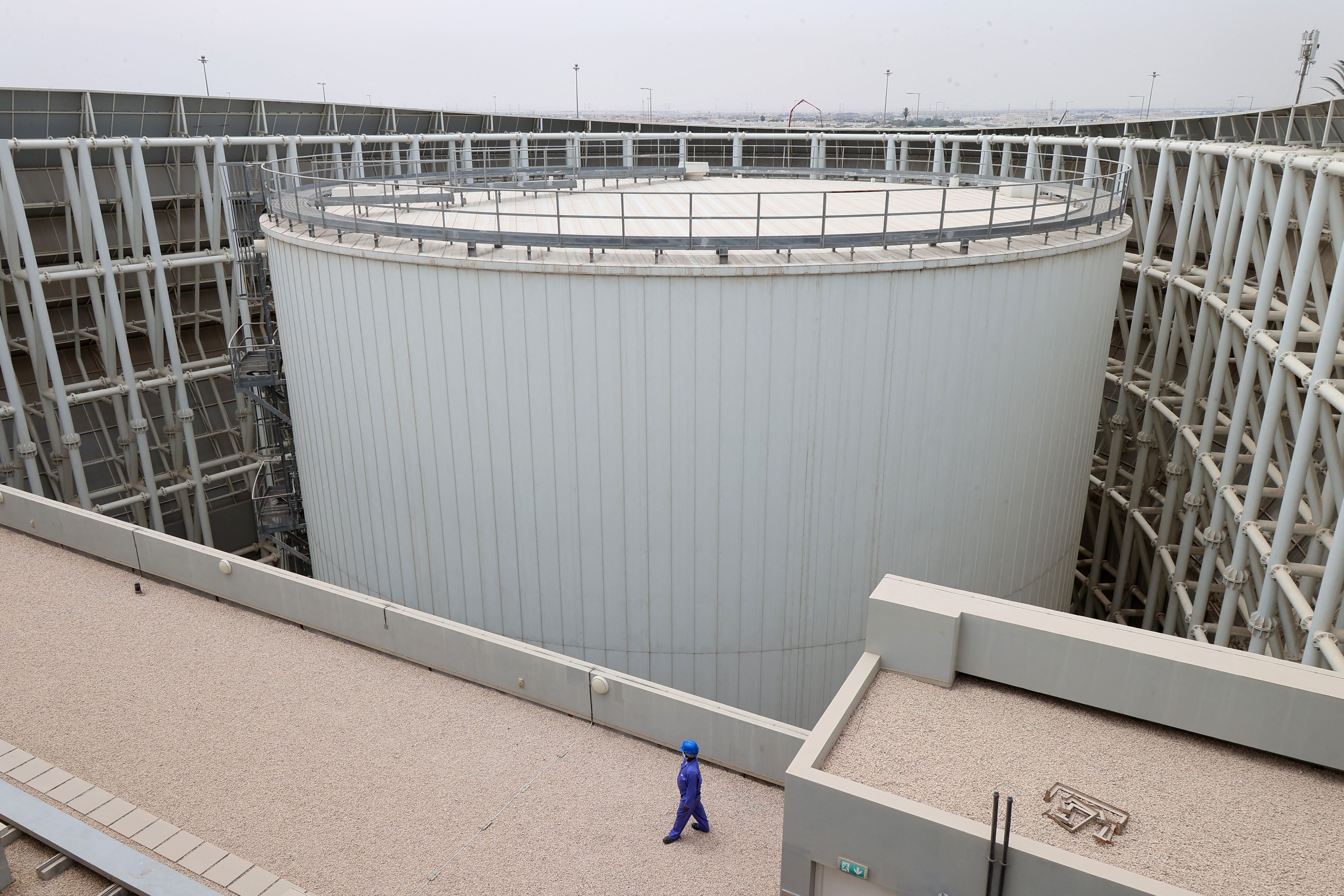
    A picture shows parts of the cooling system at the al-Janoub Stadium on April 20, 2022 in Doha, which will host matches of the FIFA football World Cup 2022.
    A picture shows parts of the cooling system at the al-Janoub Stadium on April 20, 2022 in Doha, which will host matches of the FIFA football World Cup 2022. Credit: KARIM JAAFAR/AFP via Getty Images

    He points out, however, that soccer players are physically fit and therefore have fewer risk factors for heat illness than the average person. Soccer fans in the stands, particularly young children, the elderly and people with underlying health conditions, could be more vulnerable to heat risks than players are. “Having that air-conditioning in the stadium, which can lower the temperature, along with possibly providing a bit more air movement along the field, can protect the athletes from heat stress” and create a more comfortable environment for fans and stadium workers, Lewandowski says. “Each degree cooler can reduce the risk of heat illness.”

    Besides keeping people safe, stadium air-conditioning may also allow players to perform better, says Carl James, a sports scientist and physiologist at the Hong Kong Sports Institute. “There’s plenty of evidence that, in warmer climates, [soccer players’] physical performance is impaired,” he says. This can lead to tactical changes: “players undertake fewer sprints, they elect to pass the ball more, and passes are generally shorter.” Using air-conditioning should lead to faster-paced games where players have the bodily confidence to sprint more and take greater risks, James suggests. “In really hot conditions, you just can’t afford to expend that sort of energy because you’ll feel terrible for the next part of the game,” he says. But James adds that those results would depend on the efficiency of Qatar’s stadium AC systems. He would want to know “How consistent is the airflow across the [field]?” and “How significant is the temperature reduction?” he says. When contacted for comment by Scientific American, FIFA spokespeople didn’t offer specific answers to these questions.

    These advantages come at a high price: using outdoor AC as a response to a warming world is very expensive. Such solutions, Murfree says, are only likely to make sports less accessible. Climate control technology like air-conditioning “demands more resources and money and time to manage and maintain, so fewer and fewer people will have access to [sports],” she says, if these technologies become the norm for competition at an advanced level.

    There are less costly—and more sustainable—alternatives to keep sports players safe from heat stress. One significant (and simple) option is to give players time to acclimate to hot temperatures, James says. The human body is resilient, and spending some time living and training in the heat prior to a tournament can go a long way toward protecting players from heat illness. Unfortunately, many players didn’t get much of an acclimation period leading into the World Cup this November. “Because this World Cup is happening smack bang in the middle of the usual European playing season…, you’ve got people coming from a cold European winter straight into a warmer climate,” James says.

    A less time-intensive option, Lewandowski suggests, would be adding more breaks into games when high heat becomes a real concern. He also points to a number of other simple fixes that can help players manage heat stress. Cooling vests and similar garments use ice packs or the circulation of chilly liquids to keep wearers cool, although Lewandowski thinks these might be too bulky to be used during soccer matches. Then there’s “extremity cooling, like dipping your arms in cold water before you go into an event, which can help keep you cool and maintain performance,” he explains. And, of course, hydration is key: there’s ongoing research into what types of liquids (such as ice slurries) might best keep the body cool.

    In other words, there are lots of potential methods to help players beat the heat. Stadium air-conditioning, theoretically, is one of them—but it comes at a high cost to the environment. Miller describes “this huge positive feedback loop” where “air-conditioning is causing climate change, and we need air-conditioning to respond to climate change.” Bringing massive outdoor stadiums into that equation would only make the problem worse.

    “If we really are trying to obtain a sustainable future, the cooling of open-air stadiums is not how we get there,” Miller says.


    Original Source Link

    Share. Facebook Twitter Pinterest LinkedIn WhatsApp Email Reddit Telegram
    Previous ArticleKylie Jenner’s Awkward Red Carpet Exchange With Christine Quinn Goes Viral
    Next Article Has the FTX mess iced venture interest in crypto? • TechCrunch

    RELATED POSTS

    There Are Plenty of Reasons to Be Concerned About Bioweapons Development—Even Without AI

    October 2, 2026

    Google’s Project Suncatcher AI data center test has officially launched to space onboard SpaceX rocket

    October 2, 2026

    AI Apocalypse? By Howard Bloom

    October 2, 2026

    Measles Is Forcing Hospitals to Adapt to a New Normal

    October 1, 2026

    NASA directive might increase the odds of contaminating Mars

    October 1, 2026

    A Biotech Founder Makes the Moral Case for Gene-Editing Human Embryos

    September 30, 2026
    latest posts

    Watch Placebo debut ‘Helen Keller’ and dust off rarities and deep cuts on 30th anniversary tour

    Placebo have kicked off their 30th anniversary tour by dusting off some tracks for the…

    Top ServiceNow exec on clients delivering ‘life-changing’ results with AI agents

    October 2, 2026

    Elderly Woman Dies After SAVAGE Daytime Assault and Robbery in Baltimore by Suspect with Long Rap Sheet (VIDEO)

    October 2, 2026

    Hasan Piker says he’ll hold Talarico accountable to far left if he wins Texas

    October 2, 2026

    Circuit Breaker Labs hopes to make AI safer for your kids (and you)

    October 2, 2026

    There Are Plenty of Reasons to Be Concerned About Bioweapons Development—Even Without AI

    October 2, 2026

    The Weight review – gold in them hills

    October 2, 2026
    Categories
    • Books (1,523)
    • Business (6,427)
    • Cover Story (14)
    • Film (6,364)
    • Lifestyle (4,412)
    • Music (6,437)
    • Politics (6,414)
    • Science (5,777)
    • Technology (6,363)
    • Television (6,063)
    • Uncategorized (3)
    • US News (6,412)
    popular posts

    FOR YOUR BENEFIT | Kirkus Reviews

    by Kathy Reichs ‧ RELEASE DATE: March 17, 2020 Forget about solving all these crimes;…

    Interview with CJ Holmes, Author of Labyrinthine

    May 16, 2026

    The Antibiotic Resistance Crisis Has a Troubling Twist

    February 8, 2023

    Stories of Weather, Warnings and the Cost of Waiting

    February 6, 2026
    Archives
    Browse By Category
    • Books (1,523)
    • Business (6,427)
    • Cover Story (14)
    • Film (6,364)
    • Lifestyle (4,412)
    • Music (6,437)
    • Politics (6,414)
    • Science (5,777)
    • Technology (6,363)
    • Television (6,063)
    • Uncategorized (3)
    • US News (6,412)
    About Us

    We are a creativity led international team with a digital soul. Our work is a custom built by the storytellers and strategists with a flair for exploiting the latest advancements in media and technology.

    Most of all, we stand behind our ideas and believe in creativity as the most powerful force in business.

    What makes us Different

    We care. We collaborate. We do great work. And we do it with a smile, because we’re pretty damn excited to do what we do. If you would like details on what else we can do visit out Contact page.

    Our Picks

    There Are Plenty of Reasons to Be Concerned About Bioweapons Development—Even Without AI

    October 2, 2026

    The Weight review – gold in them hills

    October 2, 2026

    Chia Seed Pudding Ratio: Never Runny Again

    October 2, 2026
    © 2026 Beverly Hills Examiner. All rights reserved. All articles, images, product names, logos, and brands are property of their respective owners. All company, product and service names used in this website are for identification purposes only. Use of these names, logos, and brands does not imply endorsement unless specified. By using this site, you agree to the Terms & Conditions and Privacy Policy.

    Type above and press Enter to search. Press Esc to cancel.

    We use cookies on our website to give you the most relevant experience by remembering your preferences and repeat visits. By clicking “Accept All”, you consent to the use of ALL the cookies. However, you may visit "Cookie Settings" to provide a controlled consent.
    Cookie SettingsAccept All
    Manage consent

    Privacy Overview

    This website uses cookies to improve your experience while you navigate through the website. Out of these, the cookies that are categorized as necessary are stored on your browser as they are essential for the working of basic functionalities of the website. We also use third-party cookies that help us analyze and understand how you use this website. These cookies will be stored in your browser only with your consent. You also have the option to opt-out of these cookies. But opting out of some of these cookies may affect your browsing experience.
    Necessary
    Always Enabled
    Necessary cookies are absolutely essential for the website to function properly. These cookies ensure basic functionalities and security features of the website, anonymously.
    CookieDurationDescription
    cookielawinfo-checkbox-analytics11 monthsThis cookie is set by GDPR Cookie Consent plugin. The cookie is used to store the user consent for the cookies in the category "Analytics".
    cookielawinfo-checkbox-functional11 monthsThe cookie is set by GDPR cookie consent to record the user consent for the cookies in the category "Functional".
    cookielawinfo-checkbox-necessary11 monthsThis cookie is set by GDPR Cookie Consent plugin. The cookies is used to store the user consent for the cookies in the category "Necessary".
    cookielawinfo-checkbox-others11 monthsThis cookie is set by GDPR Cookie Consent plugin. The cookie is used to store the user consent for the cookies in the category "Other.
    cookielawinfo-checkbox-performance11 monthsThis cookie is set by GDPR Cookie Consent plugin. The cookie is used to store the user consent for the cookies in the category "Performance".
    viewed_cookie_policy11 monthsThe cookie is set by the GDPR Cookie Consent plugin and is used to store whether or not user has consented to the use of cookies. It does not store any personal data.
    Functional
    Functional cookies help to perform certain functionalities like sharing the content of the website on social media platforms, collect feedbacks, and other third-party features.
    Performance
    Performance cookies are used to understand and analyze the key performance indexes of the website which helps in delivering a better user experience for the visitors.
    Analytics
    Analytical cookies are used to understand how visitors interact with the website. These cookies help provide information on metrics the number of visitors, bounce rate, traffic source, etc.
    Advertisement
    Advertisement cookies are used to provide visitors with relevant ads and marketing campaigns. These cookies track visitors across websites and collect information to provide customized ads.
    Others
    Other uncategorized cookies are those that are being analyzed and have not been classified into a category as yet.
    SAVE & ACCEPT