
Close Menu
Beverly Hills Examiner

    Subscribe to Updates

    Get the latest creative news from FooBar about art, design and business.

    What's Hot

    Mark Ruffalo: Paramount’s Warner Bros. deal ‘Will stifle creativity, weaken free speech’

    October 3, 2026

    Suburban High School Football Teams Shine in Week 7

    October 3, 2026

    Northwestern Wildcats christen new Ryan Field with impressive win over Penn State Nittany Lions

    October 3, 2026
    Facebook X (Twitter) Instagram
    Beverly Hills Examiner
    • Home
    • US News
    • Politics
    • Business
    • Science
    • Technology
    • Lifestyle
    • Music
    • Television
    • Film
    • Books
    • Contact
      • About
      • Amazon Disclaimer
      • DMCA / Copyrights Disclaimer
      • Terms and Conditions
      • Privacy Policy
    Beverly Hills Examiner
    Home»Science»Readers Respond to the March 2023 Issue
    Science

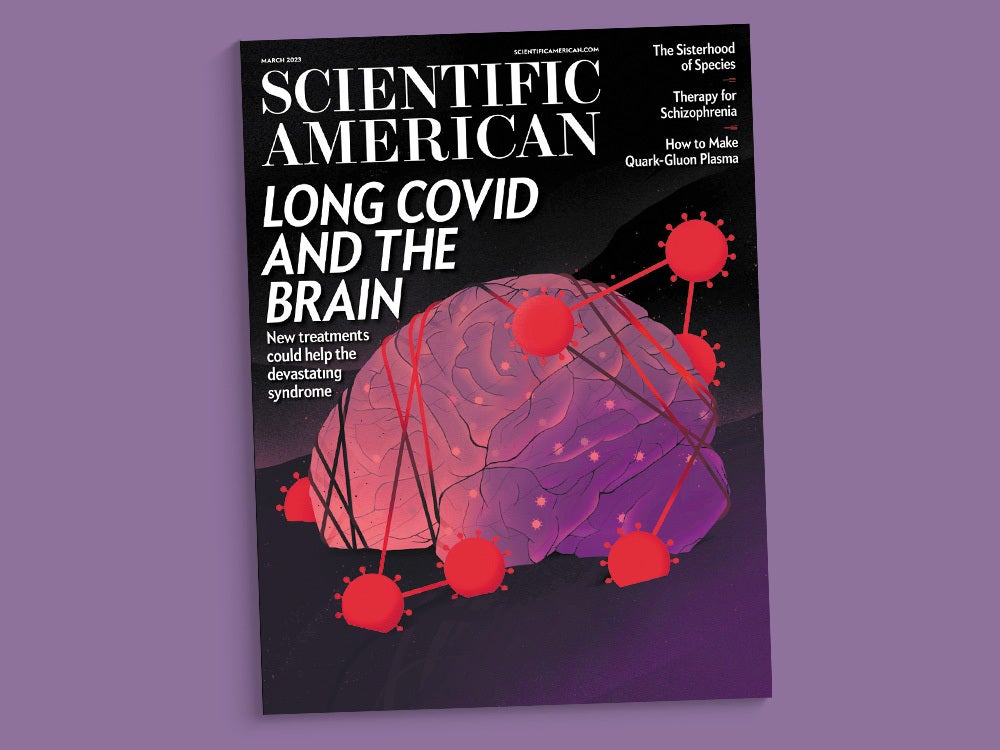
    Readers Respond to the March 2023 Issue

    By AdminJuly 2, 2023
    Facebook Twitter Pinterest LinkedIn WhatsApp Email Reddit Telegram
    Readers Respond to the March 2023 Issue


    Readers Respond to the March 2023 Issue

    COUNTER ARGUMENTS

    In “Born to Count,” Sam Clarke and Jacob Beck present several experiments that they assert demonstrate that humans are born with an innate “number sense.” But not one of them indicates that the concept of, say, “eightness” is innate. What they instead show is that there is an innate inequality sense, an ability to distinguish which of two quantities is larger, provided that the difference between them is large enough.

    JOEL SANET via e-mail

    The various experiments Clarke and Beck describe demonstrate that young children have a concept of order. That is, they can put the elements of a set in order by some criterion. For example, a child may be able to put a golf ball, baseball, softball and soccer ball in order by size. The experiments do not show that these children can count.

    ERIC KLIEBER via e-mail

    It seems that the property of thought that the article describes might better be called “generalized quantity,” “comparative quantity” or “generalized cardinality.” The term “number” doesn’t seem appropriate for research on young children before they have developed either the ability to use a system of symbols or words associated with specific quantities or cardinalities—or at least before they know the sequence of number words “one, two, three …” or something equivalent.

    In my own past research with young children, it seemed to me that their thinking about numbers was more closely related to Giuseppe Peano’s basic concept of “successor” than cardinality or quantity. For example, if a kindergartener responded “five” to the question “How old are you?” the child would certainly not be able to remember far back enough to be conscious of their four birthdays prior to their fifth. To that child, the most important thing about “five” is that it is the successor of “four.”

    GEORGE E. GULLEN III Southgate, Mich.

    THE AUTHORS REPLY: Arguments that seek to debunk the innate number sense are tempting, but they struggle to fully explain the evidence. Sanet and Klieber propose that young children merely represent inequality and order, respectively, not number. Yet neither proposal can explain young children’s ability to add and multiply, as described in our article. Meanwhile Gullen proposes that children merely represent generalized quantity. We were at pains to explain that the number sense is sensitive to properties that are unique to number, however—for instance, the description relativity isolated by Gottlob Frege.

    Gullen observes that when children learn to use number words such as “one, two, three,” they gain a novel appreciation for the successor relation. We agree. But it is a non sequitur to conclude that children don’t represent number beforehand. Just as you can see how far away a tree is (thereby representing distance) before you learn to measure distance precisely with a ruler, you can see how many trees there are (thereby representing number) before you learn to count.

    INEQUITABLE INNOVATION

    In “The Eight-Billion-Person Bomb” [Observatory], Naomi Oreskes argues against cornucopianism, a theoretical framework that asserts that human ingenuity can overcome limited natural resources.

    I would like to offer a point of confirmation that cornucopianism is misguided. On CBC Radio, I recently heard an interview describing the catastrophic effects of finding cobalt, a rare mineral needed for batteries, in the Democratic Republic of the Congo. To me, this illustrates one of the flaws of the cornucopians: they focus on benefits of innovations enjoyed by some while consciously or unconsciously overlooking negatives experienced elsewhere. This is a logical progression of the phenomenon of the past several centuries: global capitalism.

    RICHARD “DICK” FAHLMAN Tla’amin Nation, British Columbia

    NATURAL CAPITAL IDEA

    In “Use Nature as Infrastructure” [Science Agenda, April], the editors lay out the reasons why policy makers should be putting nature on the nation’s balance sheet. The Biden-Harris administration wholeheartedly agrees. In January we released the National Strategy to Develop Statistics for Environmental-Economic Decisions, a historic effort to account for America’s natural assets in our national economic statistics.

    We’re currently working to quantify the economic value of our natural capital, including the ocean and rivers that support our recreation and fishing industries, the forests that clean our air and water, the minerals that power our technology economy and drive the electric vehicle revolution, and much more. By expanding the national economic accounting system to include natural capital and by including services from ecosystems in benefit-cost and regulatory analyses, we will more accurately capture the links between nature and the economy—which will help guide policy and business decisions.

    Both the Inflation Reduction Act and the Bipartisan Infrastructure Law include funding for nature-based solutions to climate change, such as protecting forests and restoring marshes to reduce greenhouse gas emissions, remove carbon from the atmosphere and lower the risks to people from extreme weather. President Joe Biden has taken additional action by signing executive orders that create a National Nature Assessment to better understand how nature is changing in the U.S.; quantify the impacts of climate change in the federal budget; and promote environmental services and opportunities for local economies across the country.

    The Biden-Harris administration is working hard to maintain and invest in natural infrastructure. We’re making sure that ecosystem services are considered at every level of government decision-making.

    ELI FENICHEL, HEATHER TALLIS, SOLOMON HSIANG and JANE LUBCHENCO White House Office of Science and Technology Policy

    EDITOR’S NOTE: Fenichel was at OSTP when this letter was submitted. He is now at Yale University.

    FUNDAMENTALLY WEIRD

    British geneticist J.B.S. Haldane (1892–1964) would have been delighted to read “Primordial Soup,” by Clara Moskowitz. It raises the question of why the universe is so floridly strange and weird at all scales. At large scales, we see stars, galaxies, supernovae and black holes; at medium scale, we see molecules, DNA, proteins, molecular machinery and life itself.

    And now the tiny, pristine sphere of positive charge of my physics education has become a sea of quarks and antiquarks with three valence quarks bobbing on its surface, all held together by gluons. I, too, am delighted.

    JOHN COENRAADS Victoria, British Columbia

    ERRATA

    “A Hidden Variable behind Entanglement,” by Michelle Frank [April], incorrectly gave Emilio Segrè’s first name as “Emile.”

    In “The Sisterhood of Species,” by Barbara Natterson-Horowitz, the box “Under Pressure” incorrectly depicts the right atrium of the heart. The corrected illustrations can be found at https://www.scientificamerican.com/article/what- scientists-are-learning-about-womens- health-from-other-female-animals


    Original Source Link

    Share. Facebook Twitter Pinterest LinkedIn WhatsApp Email Reddit Telegram
    Previous ArticleWatch Both Luffy Actors Meet In Adorable Video
    Next Article Netflix axes its basic plan in Canada, IRL shuts down and Shein’s influencer stunt backfires

    RELATED POSTS

    Could a giant iceberg really break off Greenland? Scientists check Tom Cruise’s new movie Digger

    October 3, 2026

    There Are Plenty of Reasons to Be Concerned About Bioweapons Development—Even Without AI

    October 2, 2026

    Google’s Project Suncatcher AI data center test has officially launched to space onboard SpaceX rocket

    October 2, 2026

    AI Apocalypse? By Howard Bloom

    October 2, 2026

    Measles Is Forcing Hospitals to Adapt to a New Normal

    October 1, 2026

    NASA directive might increase the odds of contaminating Mars

    October 1, 2026
    latest posts

    Mark Ruffalo: Paramount’s Warner Bros. deal ‘Will stifle creativity, weaken free speech’

    Mark Ruffalo isn’t giving up his fight against Paramount Skydance’s takeover of Warner Bros. Discovery,…

    Suburban High School Football Teams Shine in Week 7

    October 3, 2026

    Northwestern Wildcats christen new Ryan Field with impressive win over Penn State Nittany Lions

    October 3, 2026

    20% Off Brooks Promo Code | October 2026

    October 3, 2026

    Could a giant iceberg really break off Greenland? Scientists check Tom Cruise’s new movie Digger

    October 3, 2026

    Blade Runner Is Officially Switching Genres In 2027 In Upcoming Gaming Release

    October 3, 2026

    What We’re Actually Buying in September: Editors’ Favorites

    October 3, 2026
    Categories
    • Books (1,524)
    • Business (6,428)
    • Cover Story (14)
    • Film (6,365)
    • Lifestyle (4,413)
    • Music (6,437)
    • Politics (6,415)
    • Science (5,778)
    • Technology (6,364)
    • Television (6,064)
    • Uncategorized (3)
    • US News (6,413)
    popular posts

    Inside the race to spot wildfires before they spiral out of control

    At the end of the particularly hot and dry summer of 1910, a series of…

    Interview with Tess Manchester, Author of Echoes in Snowfall

    October 2, 2025

    Emerging filmmakers step into the spotlight at the 2022 Karlovy Vary Film Festival

    July 14, 2022

    Daytime Emmy Nominations List 2023: Daytime Drama, Talk Show

    April 26, 2023
    Archives
    Browse By Category
    • Books (1,524)
    • Business (6,428)
    • Cover Story (14)
    • Film (6,365)
    • Lifestyle (4,413)
    • Music (6,437)
    • Politics (6,415)
    • Science (5,778)
    • Technology (6,364)
    • Television (6,064)
    • Uncategorized (3)
    • US News (6,413)
    About Us

    We are a creativity led international team with a digital soul. Our work is a custom built by the storytellers and strategists with a flair for exploiting the latest advancements in media and technology.

    Most of all, we stand behind our ideas and believe in creativity as the most powerful force in business.

    What makes us Different

    We care. We collaborate. We do great work. And we do it with a smile, because we’re pretty damn excited to do what we do. If you would like details on what else we can do visit out Contact page.

    Our Picks

    Blade Runner Is Officially Switching Genres In 2027 In Upcoming Gaming Release

    October 3, 2026

    What We’re Actually Buying in September: Editors’ Favorites

    October 3, 2026

    Pete Davidson Says Kim Kardashian Relationship Was ‘Too Much’

    October 3, 2026
    © 2026 Beverly Hills Examiner. All rights reserved. All articles, images, product names, logos, and brands are property of their respective owners. All company, product and service names used in this website are for identification purposes only. Use of these names, logos, and brands does not imply endorsement unless specified. By using this site, you agree to the Terms & Conditions and Privacy Policy.

    Type above and press Enter to search. Press Esc to cancel.

    We use cookies on our website to give you the most relevant experience by remembering your preferences and repeat visits. By clicking “Accept All”, you consent to the use of ALL the cookies. However, you may visit "Cookie Settings" to provide a controlled consent.
    Cookie SettingsAccept All
    Manage consent

    Privacy Overview

    This website uses cookies to improve your experience while you navigate through the website. Out of these, the cookies that are categorized as necessary are stored on your browser as they are essential for the working of basic functionalities of the website. We also use third-party cookies that help us analyze and understand how you use this website. These cookies will be stored in your browser only with your consent. You also have the option to opt-out of these cookies. But opting out of some of these cookies may affect your browsing experience.
    Necessary
    Always Enabled
    Necessary cookies are absolutely essential for the website to function properly. These cookies ensure basic functionalities and security features of the website, anonymously.
    CookieDurationDescription
    cookielawinfo-checkbox-analytics11 monthsThis cookie is set by GDPR Cookie Consent plugin. The cookie is used to store the user consent for the cookies in the category "Analytics".
    cookielawinfo-checkbox-functional11 monthsThe cookie is set by GDPR cookie consent to record the user consent for the cookies in the category "Functional".
    cookielawinfo-checkbox-necessary11 monthsThis cookie is set by GDPR Cookie Consent plugin. The cookies is used to store the user consent for the cookies in the category "Necessary".
    cookielawinfo-checkbox-others11 monthsThis cookie is set by GDPR Cookie Consent plugin. The cookie is used to store the user consent for the cookies in the category "Other.
    cookielawinfo-checkbox-performance11 monthsThis cookie is set by GDPR Cookie Consent plugin. The cookie is used to store the user consent for the cookies in the category "Performance".
    viewed_cookie_policy11 monthsThe cookie is set by the GDPR Cookie Consent plugin and is used to store whether or not user has consented to the use of cookies. It does not store any personal data.
    Functional
    Functional cookies help to perform certain functionalities like sharing the content of the website on social media platforms, collect feedbacks, and other third-party features.
    Performance
    Performance cookies are used to understand and analyze the key performance indexes of the website which helps in delivering a better user experience for the visitors.
    Analytics
    Analytical cookies are used to understand how visitors interact with the website. These cookies help provide information on metrics the number of visitors, bounce rate, traffic source, etc.
    Advertisement
    Advertisement cookies are used to provide visitors with relevant ads and marketing campaigns. These cookies track visitors across websites and collect information to provide customized ads.
    Others
    Other uncategorized cookies are those that are being analyzed and have not been classified into a category as yet.
    SAVE & ACCEPT