
Close Menu
Beverly Hills Examiner

    Subscribe to Updates

    Get the latest creative news from FooBar about art, design and business.

    What's Hot

    aespa Kicks Off SYNK : COMPLæXITY Tour in Seoul: Best Moments

    August 9, 2026

    Drivers of Mercedes AMG cars claim front-seat logo gets so hot that it literally brands them

    August 9, 2026

    ‘I Don’t Believe Any of Them’ (VIDEO) * The Gateway Pundit * by Mike LaChance

    August 9, 2026
    Facebook X (Twitter) Instagram
    Beverly Hills Examiner
    • Home
    • US News
    • Politics
    • Business
    • Science
    • Technology
    • Lifestyle
    • Music
    • Television
    • Film
    • Books
    • Contact
      • About
      • Amazon Disclaimer
      • DMCA / Copyrights Disclaimer
      • Terms and Conditions
      • Privacy Policy
    Beverly Hills Examiner
    Home»Science»The Clean Air Act Is a Model for Protections We Need More Than Ever
    Science

    The Clean Air Act Is a Model for Protections We Need More Than Ever

    By AdminJuly 16, 2022
    Facebook Twitter Pinterest LinkedIn WhatsApp Email Reddit Telegram
    The Clean Air Act Is a Model for Protections We Need More Than Ever


    With its recent decision in West Virginia v. EPA, which reined in the Environmental Protection Agency’s authority to address climate change, the Supreme Court wrote into precedent an idea that has been gaining traction for years in conservative legal circles. The concept, known as the “major questions” doctrine, holds that regulatory agencies may not take actions with wide-ranging economic impact unless Congress has specifically authorized them to do so.

    The case concerned the powers granted by the Clean Air Act, the landmark 1970 law that— in the absence of legislation specifically dealing with climate change—has been the best tool available for checking greenhouse gas emissions. And while the Court now constrains the federal government’s power to tackle big issues, the Clean Air Act was designed to address just such “major questions”—including, explicitly in its text, questions yet to be understood when it was enacted.

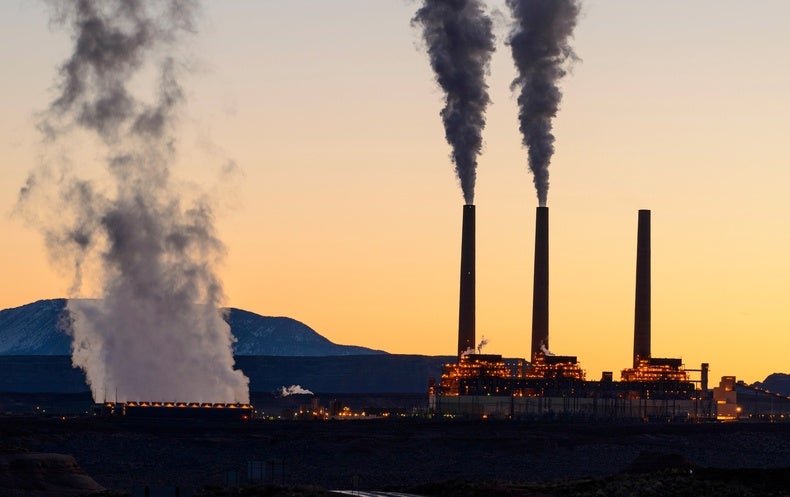
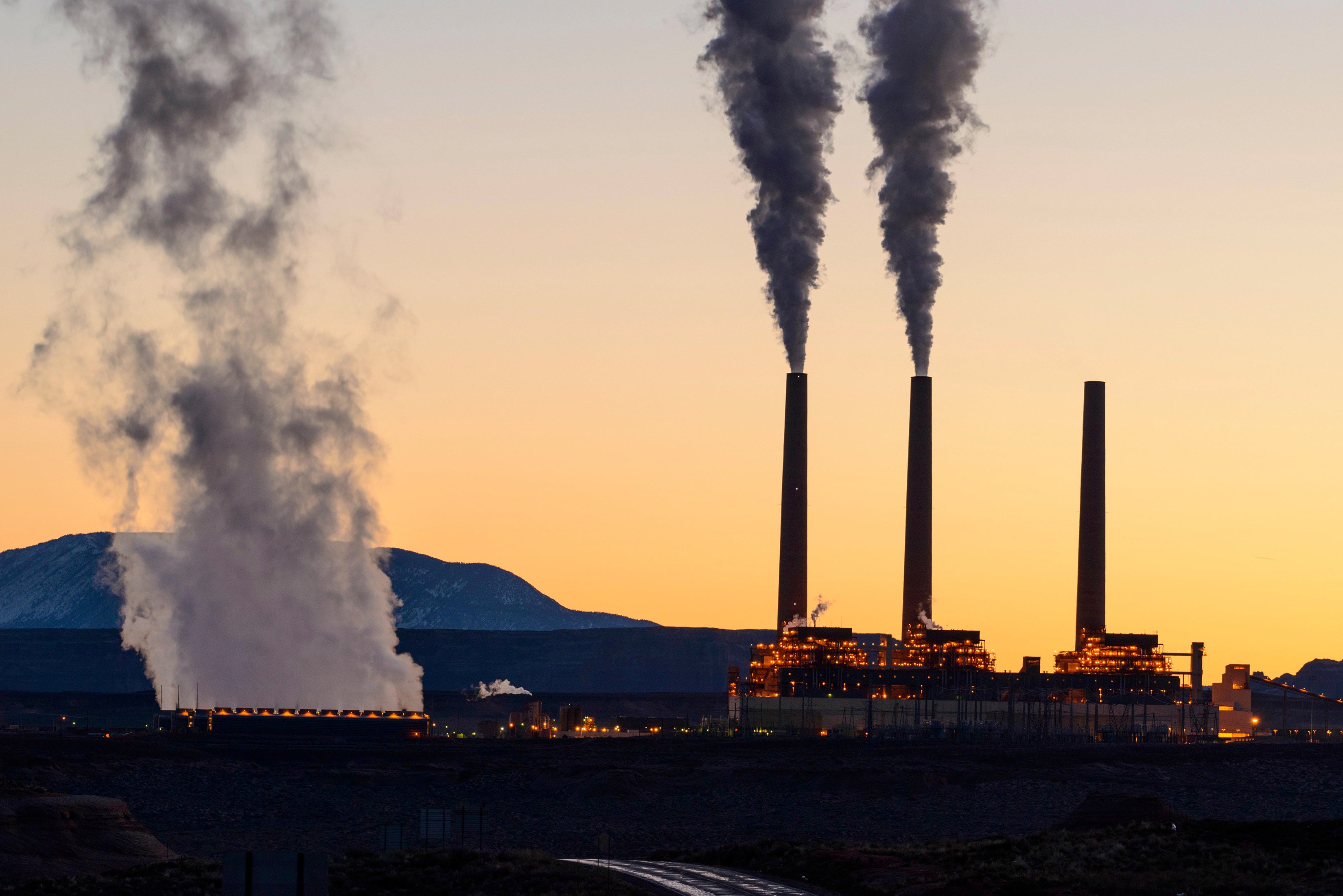
    I explored the act’s remarkable and inspiring history in my book Choked: Life and Breath in the Age of Air Pollution. The legislation was the product of a different time, when Washington—flawed and far from perfect, to be sure—still functioned, and members of Congress felt an obligation to engage with the problems the country faced. Air pollution at the time was so bad it was visible as thick brownish clouds hanging over cities. Soot darkened shirt collars and windowsills—not to mention the lungs of those who breathed it. The Clean Air Act, strengthened in 1990 with an important set of amendments, enabled a decline in air pollution of nearly 80 percent from 1970 to 2020, lengthening millions of American lives and saving trillions of dollars.

    By limiting the Biden administration’s ability to use the Clean Air Act to achieve similar reductions in greenhouse gases, West Virginia v. EPA makes the path to serious climate action steeper than ever. Future rulings from conservative justices eager to further hobble regulators’ power could bring additional obstacles.

    The court’s hostility to aggressive regulatory action, of course, is shared by the radicalized Republican Party that shaped its current membership. A GOP whose politicians routinely reject scientific findings is holding American politics hostage, leaving the federal government with little capacity to tackle the “major questions” that confront us, from climate change and pandemics to brutal inequality and systemic racism.

    The Clean Air Act, though, is proof we once had that capacity—and, perhaps, that we can get it back. As the climate clock ticks louder by the day, and cascading, interconnected crises bear down on Americans, our politicians must again put the public good over the interests of wealthy corporations itching for freedom from the regulations that dent their profits.

    That’s what the Congress that passed the Clean Air Act did. The law’s enduring strength has come from the thoughtful, innovative way it was crafted and its grounding in science. Shepherded into life by Senator Edmund Muskie, a Maine Democrat, it won unanimous Senate approval and passed the House with just one “no” vote. Republican President Richard Nixon had little enthusiasm for environmental causes, but his political sense was sharp, and he could see the public wanted action on smog. So he signed the Clean Air Act into law in December 1970, the same month he created the EPA.

    To tell the story of act’s origins, I interviewed Tom Jorling, who in 1970 was a young lawyer advising the Republican senators on Muskie’s Subcommittee on Air and Water Pollution. The lifelong friendship Jorling forged with his Democratic counterpart, Leon Billings, mirrored the warm relationships among their bosses. The subcommittee boasted some big political names, including Republicans Bob Dole and Howard Baker, both of whom went on to become Senate majority leaders.

    From the beginning, the panel’s consideration of what Congress would have to do to make a real dent in air pollution—and why previous efforts had failed—was a serious process. Its hearings, Jorling told me, were for gathering information and hashing out ideas, not shouting or showboating. The senators asked questions, listened to the answers, joked with one another, and routinely stayed until the end. And while they “each had individual views on certain things, you couldn’t tie that back to a partisanship,” Jorling said.

    The level of trust and cooperation among the members—unimaginable today—was unusual even in that less partisan time. “‘Why?’ is the question that Leon and I continued to ask each other,” Jorling told me. One idea the pair kept returning to was a singular experience all but one of the senators had shared: service in World War II. “They went through something in a way that said, ‘Democrat, Republican, it doesn’t make any difference.’”

    The bill that emerged from the subcommittee was as remarkable as the process that produced it. The Clean Air Act brought about a major expansion of federal regulatory power under a Republican president, aimed above all at protecting Americans’ health. It contained a number of first-of-their-kind provisions, including one known as “citizen suit,” which provides the basis for individuals to sue polluters and governmental entities that fail to adequately enforce the law.

    Crucially, the senators had the foresight to future-proof their bill. They knew scientific understanding of air pollution and its harms was evolving rapidly—too rapidly for Congress to keep up by continually passing new laws. So not only did the act order the EPA to review every five years the limits it set on different pollutants, and update them in accordance with the latest science, it also required the agency to periodically consider whether research had identified any additional pollutants it should regulate.

    That is the basis of the Obama and Biden administrations’ use of the Clean Air Act to undergird regulation of climate-warming gases such as carbon dioxide and methane. In 2007, the Supreme Court ruled that the Clean Air Act covered greenhouse gases. It came as a pleasant surprise to many in the environmental world that last month’s ruling did not reverse that finding. Nonetheless, the decision, which bars regulations aimed at pushing coal from the country’s energy mix, limiting the EPA instead to requiring carbon-cutting measures at individual power plants, will severely curtail the agency’s ability to address climate change.

    Chief Justice John Roberts Jr.’s opinion is vague on what defines a “major question,” so uncertainty will now hang not just over many environmental regulations, but also rules on food and drug safety, financial services and more.

    All of which only adds to the urgency of the reminder the Clean Air Act’s history offers that America, not so long ago, was able to engage substantively with serious problems and craft solutions grounded in scientific evidence. If we are to forestall climate catastrophe—and find answers to the other “major questions” pressing in on us—we need leaders prepared to do so once again.

    This is an opinion and analysis article, and the views expressed by the author or authors are not necessarily those of Scientific American.


    Original Source Link

    Share. Facebook Twitter Pinterest LinkedIn WhatsApp Email Reddit Telegram
    Previous ArticleDiablo Cody Meditates on Movie Post-Roe – The Hollywood Reporter
    Next Article Making sense of the market right now with Danny Rimer of Index Ventures – TechCrunch

    RELATED POSTS

    Here Are the First Images of the Crater Left on the Moon by SpaceX’s Rocket

    August 9, 2026

    Hank Green AI controversy raises questions for science communicators

    August 8, 2026

    Latest Pentagon UFO files release includes video of mysterious ‘cold orbs’

    August 8, 2026

    Scientists Used AI to Create 16 New Viruses

    August 7, 2026

    OpenAI’s latest math breakthroughs commit research misconduct, experts say

    August 7, 2026

    Meteor Showers, Eclipses, and More Are on the August 2026 Astronomical Calendar

    August 6, 2026
    latest posts

    aespa Kicks Off SYNK : COMPLæXITY Tour in Seoul: Best Moments

    The scale of SYNK : COMPLæXITY is apparent from the moment the show begins. Giant…

    Drivers of Mercedes AMG cars claim front-seat logo gets so hot that it literally brands them

    August 9, 2026

    ‘I Don’t Believe Any of Them’ (VIDEO) * The Gateway Pundit * by Mike LaChance

    August 9, 2026

    Freedom 250 fireworks on National Mall set world record with more than 840,000

    August 9, 2026

    Census Proposal Would Stop Counting Undocumented Immigrants—and Ignore Race and Sexual Orientation

    August 9, 2026

    Here Are the First Images of the Crater Left on the Moon by SpaceX’s Rocket

    August 9, 2026

    One Night Only Writer, Producer Talk Movie’s No Premarital Sex Rules

    August 9, 2026
    Categories
    • Books (1,414)
    • Business (6,318)
    • Cover Story (9)
    • Film (6,257)
    • Lifestyle (4,317)
    • Music (6,328)
    • Politics (6,301)
    • Science (5,667)
    • Technology (6,252)
    • Television (5,948)
    • Uncategorized (3)
    • US News (6,303)
    popular posts

    China VC deals plunge, on track for worst pace in more than seven years

    Chinese ride-hailing giant Didi delisted from the New York Stock Exchange just months after its…

    ‘The Good Fight’ Is Ending With Season 6 — Watch Teaser (VIDEO)

    May 30, 2022

    Starbucks told to pay $2.7 million more to ex-manager awarded $25.6 million over firing

    August 20, 2023

    Puppy Bowl 2023: Photos From The Adoption Special

    February 12, 2023
    Archives
    Browse By Category
    • Books (1,414)
    • Business (6,318)
    • Cover Story (9)
    • Film (6,257)
    • Lifestyle (4,317)
    • Music (6,328)
    • Politics (6,301)
    • Science (5,667)
    • Technology (6,252)
    • Television (5,948)
    • Uncategorized (3)
    • US News (6,303)
    About Us

    We are a creativity led international team with a digital soul. Our work is a custom built by the storytellers and strategists with a flair for exploiting the latest advancements in media and technology.

    Most of all, we stand behind our ideas and believe in creativity as the most powerful force in business.

    What makes us Different

    We care. We collaborate. We do great work. And we do it with a smile, because we’re pretty damn excited to do what we do. If you would like details on what else we can do visit out Contact page.

    Our Picks

    Here Are the First Images of the Crater Left on the Moon by SpaceX’s Rocket

    August 9, 2026

    One Night Only Writer, Producer Talk Movie’s No Premarital Sex Rules

    August 9, 2026

    Amanda Knox Criticized Over Meredith Kercher Comedy Routine

    August 9, 2026
    © 2026 Beverly Hills Examiner. All rights reserved. All articles, images, product names, logos, and brands are property of their respective owners. All company, product and service names used in this website are for identification purposes only. Use of these names, logos, and brands does not imply endorsement unless specified. By using this site, you agree to the Terms & Conditions and Privacy Policy.

    Type above and press Enter to search. Press Esc to cancel.

    We use cookies on our website to give you the most relevant experience by remembering your preferences and repeat visits. By clicking “Accept All”, you consent to the use of ALL the cookies. However, you may visit "Cookie Settings" to provide a controlled consent.
    Cookie SettingsAccept All
    Manage consent

    Privacy Overview

    This website uses cookies to improve your experience while you navigate through the website. Out of these, the cookies that are categorized as necessary are stored on your browser as they are essential for the working of basic functionalities of the website. We also use third-party cookies that help us analyze and understand how you use this website. These cookies will be stored in your browser only with your consent. You also have the option to opt-out of these cookies. But opting out of some of these cookies may affect your browsing experience.
    Necessary
    Always Enabled
    Necessary cookies are absolutely essential for the website to function properly. These cookies ensure basic functionalities and security features of the website, anonymously.
    CookieDurationDescription
    cookielawinfo-checkbox-analytics11 monthsThis cookie is set by GDPR Cookie Consent plugin. The cookie is used to store the user consent for the cookies in the category "Analytics".
    cookielawinfo-checkbox-functional11 monthsThe cookie is set by GDPR cookie consent to record the user consent for the cookies in the category "Functional".
    cookielawinfo-checkbox-necessary11 monthsThis cookie is set by GDPR Cookie Consent plugin. The cookies is used to store the user consent for the cookies in the category "Necessary".
    cookielawinfo-checkbox-others11 monthsThis cookie is set by GDPR Cookie Consent plugin. The cookie is used to store the user consent for the cookies in the category "Other.
    cookielawinfo-checkbox-performance11 monthsThis cookie is set by GDPR Cookie Consent plugin. The cookie is used to store the user consent for the cookies in the category "Performance".
    viewed_cookie_policy11 monthsThe cookie is set by the GDPR Cookie Consent plugin and is used to store whether or not user has consented to the use of cookies. It does not store any personal data.
    Functional
    Functional cookies help to perform certain functionalities like sharing the content of the website on social media platforms, collect feedbacks, and other third-party features.
    Performance
    Performance cookies are used to understand and analyze the key performance indexes of the website which helps in delivering a better user experience for the visitors.
    Analytics
    Analytical cookies are used to understand how visitors interact with the website. These cookies help provide information on metrics the number of visitors, bounce rate, traffic source, etc.
    Advertisement
    Advertisement cookies are used to provide visitors with relevant ads and marketing campaigns. These cookies track visitors across websites and collect information to provide customized ads.
    Others
    Other uncategorized cookies are those that are being analyzed and have not been classified into a category as yet.
    SAVE & ACCEPT