
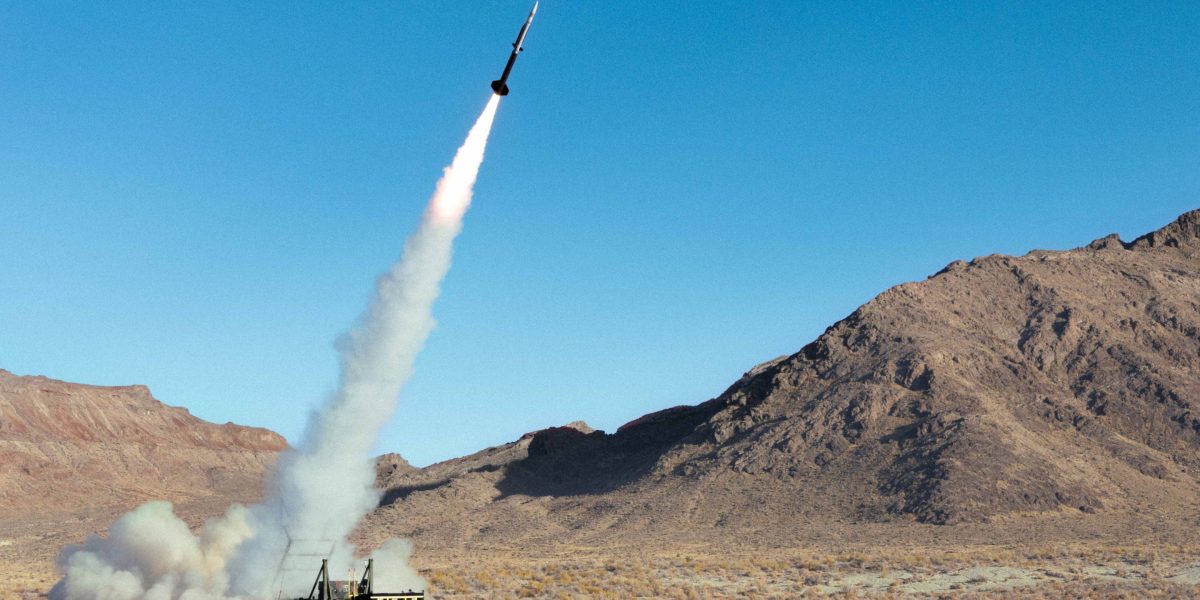
The first thing to know about hypersonic missiles is that they’re air-rippingly fast.
A hypersonic missile, definitionally, moves at least at Mach 5, or five times the speed of sound; one could cross the U.S. coast to coast in under 45 minutes. Unlike ballistic missiles, hypersonics are maneuverable and unpredictable to watchers, with an uncanny ability to fly low, change course, and skirt radar.
The second thing to know about hypersonics is that China and Russia have them, and the U.S. doesn’t—not really. It’s not for lack of trying: Despite years of research costing billions and some successful tests, the U.S. has yet to fully field a hypersonic missile of its own due to testing complications and production issues. The tech’s been around, but it’s been expensive and difficult to produce at scale.
That’s the chasm that startup Castelion, valued at $13 billion, is betting it can close, even if the defense giants have so far fallen short. “Humans have done it, just not Americans,” says Castelion CEO and cofounder Bryon Hargis. “I firmly believe it’s doable.”
The Torrance, Calif.-based startup has become a darling of the defense tech boom, in part because it encapsulates the movement’s raison d’être: The U.S. must rebuild its industrial base faster, cheaper, and with an eye to scale. The war in Iran has crystallized that bleak reality: The U.S. is firing missiles faster than it can replace them, by an order of years.
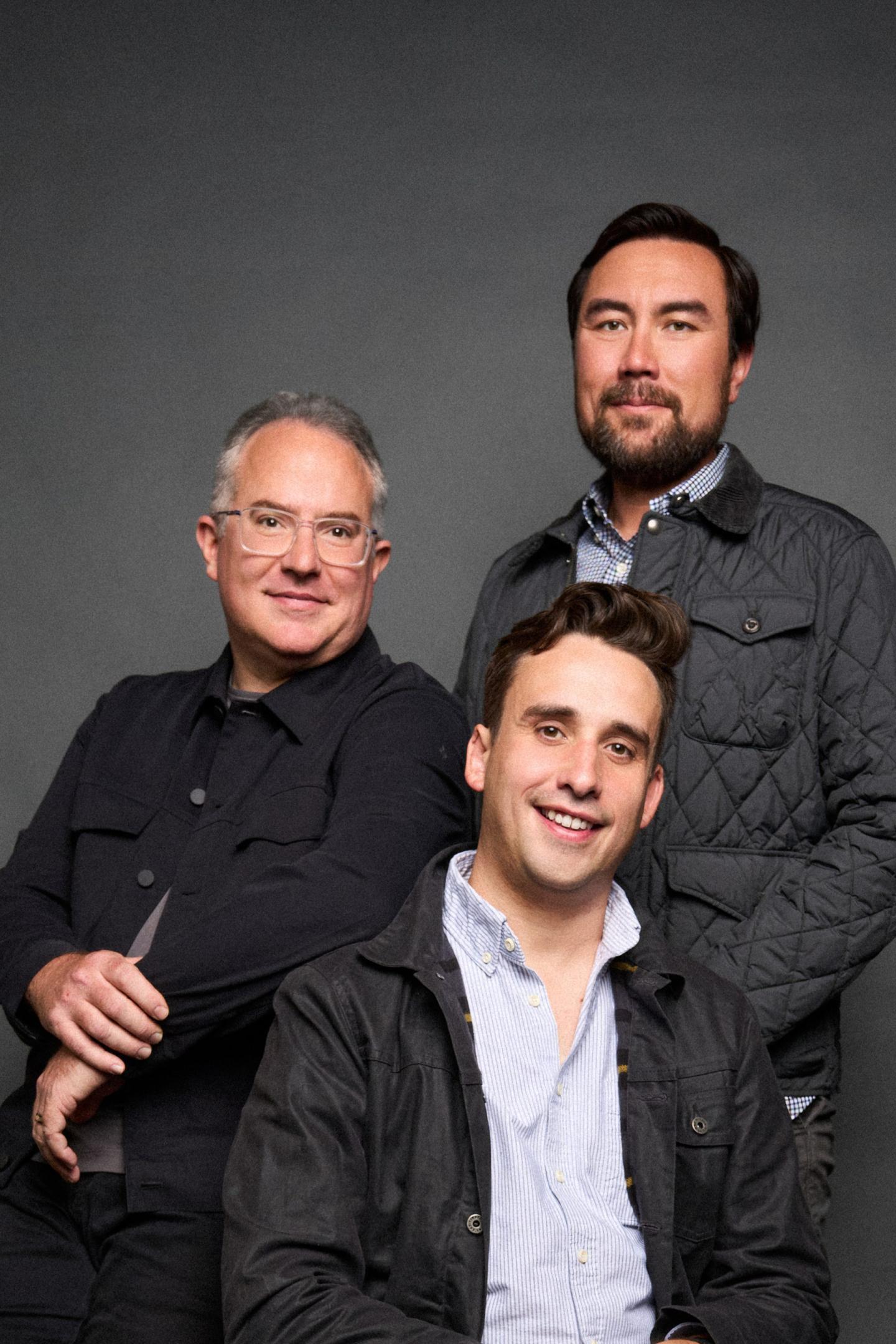
Castelion was founded in 2022 by three former SpaceX executives: Hargis, Andrew Kreitz, and Sean Pitt. (Hargis started the military-grade satellite network Starshield; Kreitz ran classified finance; and Pitt led sales of Falcon 9s in Europe.)
The enterprise got off to an almost comically inauspicious start: In an early Zoom pitch to the Pentagon’s innovation outfit, the founders said they planned to compete with Lockheed Martin at building affordable hypersonics. The room laughed, Pitt recalls.
But the tables have turned: Castelion, in less than two-and-a-half years, took its low-cost hypersonic missile Blackbeard from a drawing to progressing reality—and it’s designated as a “program of record,” the elusive and coveted government budget line that makes (and often breaks) defense sector entrants.
This places Castelion in direct competition with Lockheed, the maker of hypersonic race favorite Dark Eagle, a program that’s been in process since 2017—and is reportedly three years behind schedule. (“Dark Eagle has successfully deployed in support of Indo-Pacific exercises and completed multiple successful flight-test events,” an Army spokesperson said via email. “The Army continues planned operational assessment activities.”)
In September, the U.S. Navy awarded Castelion a contract worth up to $200 million for Blackbeard, which documents say can be made for less than $500,000 each. (In comparison, Tomahawk missiles can cost millions each.) Blackbeards have had successful test flights on fighter jets like the F/A-18 Super Hornet, and the company is currently racing to open its 1,000-acre New Mexico site, which could eventually turn out thousands of Blackbeards each year.
“This capability is needed now, and you have to sprint directly at what the country needs,” says Kreitz, Castelion’s CFO. Hypersonics are effective not just as weapons but, even more essentially, as deterrents, Kreitz argues. “It’s really important we have a credible deterrent that we pass down for generations to come,” adds Hargis. Pitt gestures at a Mad Men-esque poster in Castelion’s mid-century office. “Cheesy as it is, this was the first poster we ever made for the company,” he explains. “You can see the tagline was: ‘Win before it begins.’”
Of course, deterrence only has a chance if the weapons exist. And recent conflicts have created an unmissable urgency, Kreitz says. “This is the capability that will define warfare in the 2030s and beyond,” he said. “The campaign was basically large, sustained volleys of back-and-forth long-range fires. That’s what the future of warfare will look like.”
Build, fly, test, repeat
In 2022, as Hargis, Kreitz, and Pitt were just getting started, they presented to the Defense Innovation Unit, the Pentagon’s tech acceleration division. It didn’t go well. “It was the tailish end of COVID,” said Pitt. “So, it was a video presentation, and we explained ‘we’re here to make low-cost missiles.’ They asked: ‘Are you going to compete with Lockheed?’ We said yes, and it was not a little laugh. There were a good number of people laughing.”
In venture capital, 2022 was the bizarre era of peak metaverse. Defense tech was a novelty and largely seen as controversial or ignored. (Anduril, defense tech’s greatest hardware success, had a skyrocketing 2022, but there was no sense that breakthrough was imitable.) The three founders are all candid about the impasse of the very beginning.
Hargis, who has a forceful warmth and natural deadpan—his father, he says, worked at a nuclear power plant “like Homer Simpson”—doesn’t hold back.
“I was using my retirement to fund my living,” he said. “I was messaging these guys: ‘At what point would they have to call it quits if we didn’t make anything?’”
Courtesy of Castelion
In their first investment contracts, Hargis, Kreitz, and Pitt promised to return the money if they couldn’t raise $1 million. In the end, they cleared that bar through a SpaceX tender offer, in which Hargis and another employee sold shares and invested in the company. Then, in April 2023, Lavrock, a Washington, D.C.-based VC firm, led a seed round of $5.6 million, a shoestring sum for an aspiring missile-maker. But it was enough: The founders went off into the Mojave Desert, near Edwards Air Force Base, to build their first rocket motor.
“The early, early days in the desert were threadbare,” remembers Kreitz, a history buff keenly aware of the lines between past and present. “We all wore Tyvek suits and respirators, helped make propellant and assembled parts, and we were getting hardware built alongside the engineers and techs.”
It took months, funds dwindled, and it was soon time for a Hail Mary: They found a high-speed cameraman to film a static-fire test. The resulting video, of a rumbling firing motor, drew the attention of the VC firm Andreessen Horowitz, which quickly led an $8.6 million seed extension in Castelion.
The race then really began. Building a defense company is an amalgamation of tiny precisions, from the rigamarole of clearances to establishing processes for classified information. The endgame, for Castelion and any defense startup, is selling to the Department of War, a bureaucratic behemoth with labyrinthine fiefdoms. Normal startup challenges—from office setup to engineering game plans—are all magnified by the specifics of hardware and defense.
“What mattered most for us then was finding a customer who was willing to try something new and was willing to be different in how they approach the acquisition cycle,” said Pitt, who’s wryly persuasive and was a SpaceX spokesperson in his 20s. “[The Navy] gave us that initial contract, $3 million. We did what we said we would for $3 million. That led to a $15 million contract, and it all went from there.”
Now, Castelion has a program of record with the U.S. Navy. To Hargis, Kreitz, and Pitt, there’s a sense this has all happened dizzyingly fast. Castelion has gone from 159 employees at the end of 2025 to over 400 employees. And the tougher truth is that, from here, the company needs to keep it up or go even faster. “Can you make enough? Are they cheap enough that the country can buy that many? And can you do that in a time frame of relevance?” said Pitt. “That’s the bar.”
Much of that scaling will happen at Castelion’s Project Ranger site in Rio Rancho, N.M., where some residents have reportedly balked at a missile factory moving in. The company’s held regular community meetings, worked extensively with local authorities, and its chief engineer has moved to town.
“This is going to be the defining production site for Castelion,” said Kreitz. “We, the three of us, will be here all the time. All our senior leadership is going to be there all the time. These are going to be our friends and colleagues. They’re going to be working there. They’re going to be living there. We want this to be safe. We want this to be done correctly.”
Ultimately, there’s a back-to-the-future quality to Castelion’s efforts. They’re careful not to blast the modern defense primes—after all, the Pentagon’s expressed a great need for both high and low-cost hypersonics. But it’s telling that Castelion’s reference points are further in the past, like the Apollo era, which produced humanity’s first moon landings in about a decade.
“In the Apollo era, the country used to build hardware like there was no tomorrow, test it, fly it, iterate and do it all again,” said Hargis.
That’s partly how other nations have moved ahead of the U.S. in the hypersonic race, in Hargis’s telling: “The way it was done was with an iterative approach and a lot of testing. America has moved away from that iterative approach over the past decades, and we’re now reaping the expected benefits from that.”
‘We’re in a sprint’
Castelion could still fall short, it should be said. The company currently has over $500 million in U.S. government contracts, yes, but ultimately they’re in big-swing-or-bust territory. The company, in some sense, is doing a reverse Anduril: The $61 billion defense tech giant started with sentry towers and built out a massive suite of products over time and deals, while Castelion barreled straight into one massive, intractable problem. If they’re right, they’re very right. And if they’re wrong, they’re very wrong. To Pitt, the gamble’s worth it.
“The pure existence of Castelion as a credible threat to the primes significantly benefits the country, because behavior has to change to deal with a competitive entrant that’s offering services at a significantly lower cost,” he said.
Hargis, Kreitz, and Pitt are all acutely aware of the harshest underlying reality of what they do: They are building lethal weapons capable of destroying military targets and infrastructure, and of killing. “You have to think about it and confront the fact that one day it can be used for its intended purpose,” said Kreitz. But, he added, “When we say ‘peace through deterrence,’ when we say ‘deterrence works,’ we really do mean that.”
Hargis pushed back when I raised a common criticism: that building weapons inherently facilitates war. “If you want to deter someone’s actions, they have to feel there’s a consequence to those actions,” he said. “Hypersonics give the country that ability and a level between economic sanctions and nuclear war, which no one wants to happen, ever.”
As an uneasy post-Cold War equilibrium morphs into a more geopolitically volatile world, the question hanging over Castelion—and the entire U.S. defense industry—is utterly urgent: What will the next major conflict look like, and will we be ready?
“We’re in a sprint,” Kreitz said. “We’re going as fast as humanly possible. I want to know how much time we have… We have to act as if it’s tomorrow.”
Correction, Nov. 2, 2026: A previous version of this article misstated the speaker of a quote about a poster at Castelion’s office. The speaker was Sean Pitt.