
Close Menu
Beverly Hills Examiner

    Subscribe to Updates

    Get the latest creative news from FooBar about art, design and business.

    What's Hot

    Woman Got Stuck In A Mud Hole At Lollapalooza + We Talked to Her

    August 5, 2026

    Trump claims — yet again — that a deal to reopen Hormuz is close

    August 5, 2026

    Senate Republicans Ignore Trump And Let SAVE America Act Die

    August 5, 2026
    Facebook X (Twitter) Instagram
    Beverly Hills Examiner
    • Home
    • US News
    • Politics
    • Business
    • Science
    • Technology
    • Lifestyle
    • Music
    • Television
    • Film
    • Books
    • Contact
      • About
      • Amazon Disclaimer
      • DMCA / Copyrights Disclaimer
      • Terms and Conditions
      • Privacy Policy
    Beverly Hills Examiner
    Home»Science»The Brain’s Map of the Body Is Surprisingly Stable—Even after a Limb Is Lost
    Science

    The Brain’s Map of the Body Is Surprisingly Stable—Even after a Limb Is Lost

    By AdminAugust 23, 2025
    Facebook Twitter Pinterest LinkedIn WhatsApp Email Reddit Telegram
    The Brain’s Map of the Body Is Surprisingly Stable—Even after a Limb Is Lost


    August 23, 2025

    3 min read

    The Brain’s Map of the Body Is Surprisingly Stable—Even after a Limb Is Lost

    The brain’s body map doesn’t reorganize itself after limb amputation, a study found, challenging a textbook idea in neuroscience
    By Katie Kavanagh & Nature magazine

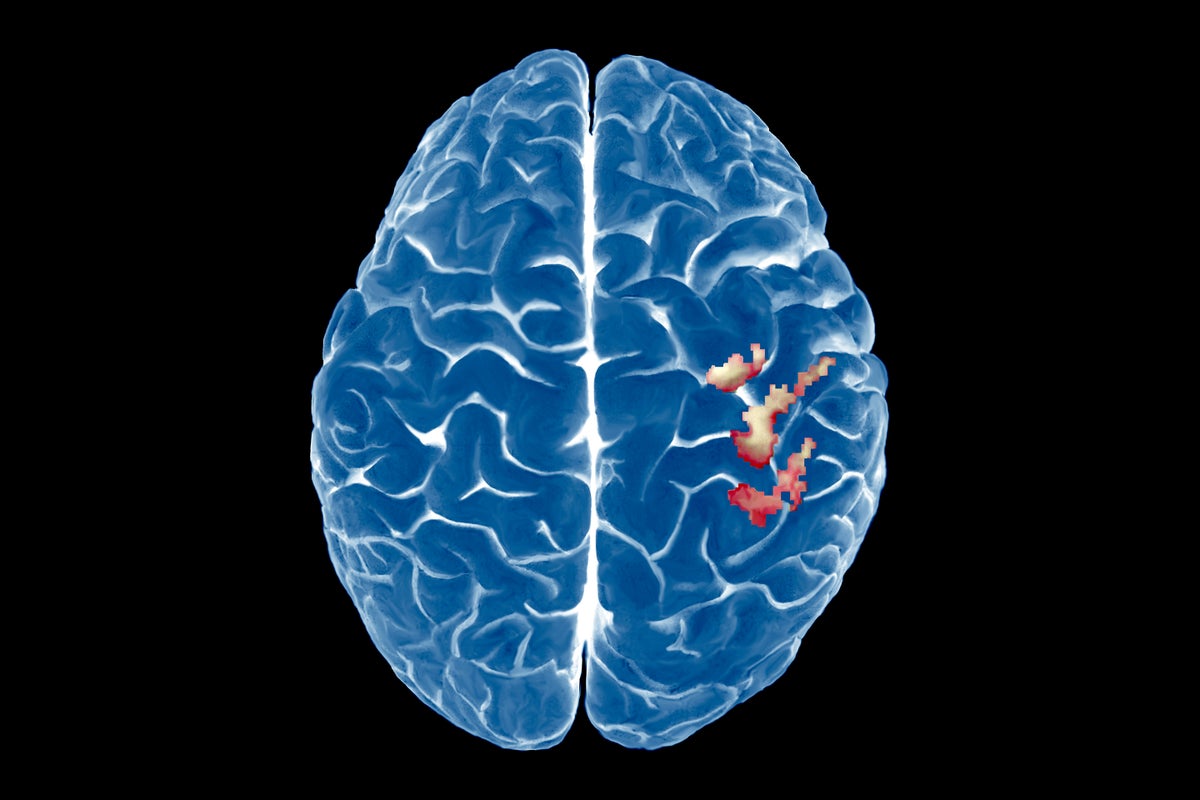
    A 3-D fMRI brain scan with a red/brown area highlighting left hand control brain activity in the right cerebral hemisphere

    The brain’s map of the body in the primary somatosensory cortex remains unchanged after amputation.

    A brain-imaging study of people with amputated arms has upended a long-standing belief: that the brain’s map of the body reorganizes itself to compensate for missing body parts.

    Previous research had suggested that neurons in the brain region holding this internal map, called the primary somatosensory cortex, would grow into the neighbouring area of the cortex that previously sensed the limb.

    But the latest findings, published in Nature Neuroscience on 21 August, reveal that the primary somatosensory cortex stays remarkably constant even years after arm amputation. The study refutes foundational knowledge in the field of neuroscience that losing a limb results in a drastic reorganization of this region, the authors say.


    On supporting science journalism

    If you’re enjoying this article, consider supporting our award-winning journalism by subscribing. By purchasing a subscription you are helping to ensure the future of impactful stories about the discoveries and ideas shaping our world today.


    “Pretty much every neuroscientist has learnt through their textbook that the brain has the capacity for reorganization, and this is demonstrated through studies on amputees,” says study senior author Tamar Makin, a cognitive neuroscientist at the University of Cambridge, UK. But “textbooks can be wrong”, she adds. “We shouldn’t take anything for granted, especially when it comes to brain research.”

    The discovery could lead to the development of better prosthetic devices, or improved treatments for pain in ‘phantom limbs’ — when people continue to sense the amputated limb. It could also help scientists working to restore sensation in people who have had amputations.

    Mapping cortical plasticity

    Study first author Hunter Schone, a neuroscientist at the University of Pittsburgh in Pennsylvania, says that previous reports from some people with amputations had led him and his colleagues to doubt the idea that the brain’s map of the body is reorganized after amputation. These maps are responsible for processing sensory information, such as touch or temperature, at specific body regions. “They would say: ‘I can still feel the limb, I can still move individual fingers of a hand I haven’t had for decades,’” Schone says.

    To investigate this contradiction, the researchers followed three people who were due to undergo amputation of one of their arms. The team used functional magnetic resonance imaging (fMRI) to map the cortical representations of the body before the surgery, and then after the amputation for up to five years. It is the first study to do this.

    Before their amputations, participants performed various movements, such as tapping their fingers, pursing their lips and flexing their toes while inside an fMRI scanner that measured the activity in different parts of the brain. This allowed the researchers to create a cortical ‘map’ showing which regions sensed the hand. To test the idea that neighbouring neurons redistribute in the cortex after amputation, they also made maps of the adjacent cortical area — in this case, the part that processes sensations from the lips. The participants repeated this exercise several times after their amputation, tapping “with their phantom fingers”, says Schone.

    The analysis revealed that the brain’s representation of the body was consistent after the arm was amputated. Even five years after surgery, the cortical map of the missing hand was still activated in the same way as before amputation. There was also no evidence that the cortical representation of the lips had shifted into the hand region following amputation — which is what previous studies suggested would happen.

    Makin says their study is “the most decisive direct evidence” that the brain’s in-built body map remains stable after the loss of a limb. “It just goes against the foundational knowledge of the field,” she says.

    Solaiman Shokur, a neuroengineer at the Sant’anna School of Advanced Studies in Pisa, Italy, says he was surprised to see the evidence shown “in such a clear manner” and that the results “contradict something that is believed in the field, and do so to some extent”.

    Implications for research

    Giacomo Valle, a neuroengineer at Chalmers University of Technology in Gothenburg, Sweden, praised the study’s methodology and says it “puts a final dot — or conclusion — on the debate” about the brain’s map of the body following amputation. “This is important proof,” he adds.

    He says that the findings could have implications for research on prosthetic limbs that are controlled through brain–computer interfaces implanted in the somatosensory cortex. The information is relevant to the recruitment of volunteers in clinical trials of such devices and for potential participants who might benefit from brain–computer interfaces, he says.

    The study authors note that their findings also explain why treatments for phantom limb pain aimed at ‘reversing’ reorganization in the brain’s map have shown limited success. “Researchers may have missed the profound resilience of cortical representations,” they write.

    This article is reproduced with permission and was first published on August 21, 2025.

    It’s Time to Stand Up for Science

    If you enjoyed this article, I’d like to ask for your support. Scientific American has served as an advocate for science and industry for 180 years, and right now may be the most critical moment in that two-century history.

    I’ve been a Scientific American subscriber since I was 12 years old, and it helped shape the way I look at the world. SciAm always educates and delights me, and inspires a sense of awe for our vast, beautiful universe. I hope it does that for you, too.

    If you subscribe to Scientific American, you help ensure that our coverage is centered on meaningful research and discovery; that we have the resources to report on the decisions that threaten labs across the U.S.; and that we support both budding and working scientists at a time when the value of science itself too often goes unrecognized.

    In return, you get essential news, captivating podcasts, brilliant infographics, can’t-miss newsletters, must-watch videos, challenging games, and the science world’s best writing and reporting.

    There has never been a more important time for us to stand up and show why science matters. I hope you’ll support us in that mission.


    Original Source Link

    Share. Facebook Twitter Pinterest LinkedIn WhatsApp Email Reddit Telegram
    Previous ArticleThe extreme vulnerability of Joaquin Phoenix
    Next Article OpenAI warns against SPVs and other ‘unauthorized’ investments

    RELATED POSTS

    Gene-Edited Puppies Will Melt Your Heart—but Won’t Trigger Your Allergies

    August 5, 2026

    Wormholes could be the key to time travel

    August 5, 2026

    How Data Centers Broke American Politics

    August 4, 2026

    The U.S. military needs tungsten, but pristine NASA site may stand in the way

    August 4, 2026

    There Are 2 Eclipses This August. Here’s How to See Them

    August 3, 2026

    Eating less protein could help you live longer

    August 3, 2026
    latest posts

    Woman Got Stuck In A Mud Hole At Lollapalooza + We Talked to Her

    We now know how a Lollapalooza attendee who became stuck in a mudpit up to her…

    Trump claims — yet again — that a deal to reopen Hormuz is close

    August 5, 2026

    Senate Republicans Ignore Trump And Let SAVE America Act Die

    August 5, 2026

    Perez Hilton’s apparent self-harm video prompts involuntary psych hold: source

    August 5, 2026

    Trump EPA wrongly canceled $20B in climate funds, appeals court rules

    August 5, 2026

    Gene-Edited Puppies Will Melt Your Heart—but Won’t Trigger Your Allergies

    August 5, 2026

    Netflix’s Upcoming Stranger Things Replacement Could Last Forever

    August 5, 2026
    Categories
    • Books (1,407)
    • Business (6,311)
    • Cover Story (9)
    • Film (6,250)
    • Lifestyle (4,310)
    • Music (6,321)
    • Politics (6,293)
    • Science (5,660)
    • Technology (6,245)
    • Television (5,941)
    • Uncategorized (3)
    • US News (6,296)
    popular posts

    Judge Refuses To Dismiss Contempt Charges Against Ex-Trump Aide Peter Navarro

    A judge on Thursday denied a motion by Peter Navarro, a former adviser to ex-President…

    2025 ACE Eddie Awards Winners List

    March 15, 2025

    Days Before The Election Trump Melts Down Because He Isn’t Running Against Biden

    November 2, 2024

    Wakanda Forever review – a bold and brilliant sequel

    November 10, 2022
    Archives
    Browse By Category
    • Books (1,407)
    • Business (6,311)
    • Cover Story (9)
    • Film (6,250)
    • Lifestyle (4,310)
    • Music (6,321)
    • Politics (6,293)
    • Science (5,660)
    • Technology (6,245)
    • Television (5,941)
    • Uncategorized (3)
    • US News (6,296)
    About Us

    We are a creativity led international team with a digital soul. Our work is a custom built by the storytellers and strategists with a flair for exploiting the latest advancements in media and technology.

    Most of all, we stand behind our ideas and believe in creativity as the most powerful force in business.

    What makes us Different

    We care. We collaborate. We do great work. And we do it with a smile, because we’re pretty damn excited to do what we do. If you would like details on what else we can do visit out Contact page.

    Our Picks

    Gene-Edited Puppies Will Melt Your Heart—but Won’t Trigger Your Allergies

    August 5, 2026

    Netflix’s Upcoming Stranger Things Replacement Could Last Forever

    August 5, 2026

    His Hospitalization, Past Illness, Surgery, and More

    August 5, 2026
    © 2026 Beverly Hills Examiner. All rights reserved. All articles, images, product names, logos, and brands are property of their respective owners. All company, product and service names used in this website are for identification purposes only. Use of these names, logos, and brands does not imply endorsement unless specified. By using this site, you agree to the Terms & Conditions and Privacy Policy.

    Type above and press Enter to search. Press Esc to cancel.

    We use cookies on our website to give you the most relevant experience by remembering your preferences and repeat visits. By clicking “Accept All”, you consent to the use of ALL the cookies. However, you may visit "Cookie Settings" to provide a controlled consent.
    Cookie SettingsAccept All
    Manage consent

    Privacy Overview

    This website uses cookies to improve your experience while you navigate through the website. Out of these, the cookies that are categorized as necessary are stored on your browser as they are essential for the working of basic functionalities of the website. We also use third-party cookies that help us analyze and understand how you use this website. These cookies will be stored in your browser only with your consent. You also have the option to opt-out of these cookies. But opting out of some of these cookies may affect your browsing experience.
    Necessary
    Always Enabled
    Necessary cookies are absolutely essential for the website to function properly. These cookies ensure basic functionalities and security features of the website, anonymously.
    CookieDurationDescription
    cookielawinfo-checkbox-analytics11 monthsThis cookie is set by GDPR Cookie Consent plugin. The cookie is used to store the user consent for the cookies in the category "Analytics".
    cookielawinfo-checkbox-functional11 monthsThe cookie is set by GDPR cookie consent to record the user consent for the cookies in the category "Functional".
    cookielawinfo-checkbox-necessary11 monthsThis cookie is set by GDPR Cookie Consent plugin. The cookies is used to store the user consent for the cookies in the category "Necessary".
    cookielawinfo-checkbox-others11 monthsThis cookie is set by GDPR Cookie Consent plugin. The cookie is used to store the user consent for the cookies in the category "Other.
    cookielawinfo-checkbox-performance11 monthsThis cookie is set by GDPR Cookie Consent plugin. The cookie is used to store the user consent for the cookies in the category "Performance".
    viewed_cookie_policy11 monthsThe cookie is set by the GDPR Cookie Consent plugin and is used to store whether or not user has consented to the use of cookies. It does not store any personal data.
    Functional
    Functional cookies help to perform certain functionalities like sharing the content of the website on social media platforms, collect feedbacks, and other third-party features.
    Performance
    Performance cookies are used to understand and analyze the key performance indexes of the website which helps in delivering a better user experience for the visitors.
    Analytics
    Analytical cookies are used to understand how visitors interact with the website. These cookies help provide information on metrics the number of visitors, bounce rate, traffic source, etc.
    Advertisement
    Advertisement cookies are used to provide visitors with relevant ads and marketing campaigns. These cookies track visitors across websites and collect information to provide customized ads.
    Others
    Other uncategorized cookies are those that are being analyzed and have not been classified into a category as yet.
    SAVE & ACCEPT