
Close Menu
Beverly Hills Examiner

    Subscribe to Updates

    Get the latest creative news from FooBar about art, design and business.

    What's Hot

    Sully Erna’s Heartfelt Message After Godsmack’s Pol’and’Rock Show

    August 3, 2026

    Trump says negotiations will resume Monday afternoon while Tehran continues Hormuz talks with Oman

    August 3, 2026

    Terrifying Invasive Species Silver-Cheeked Toadfish Is Spreading Throughout the Mediterranean With Its Toxic Flesh and Crushing Bite * The Gateway Pundit * by Paul Serran

    August 3, 2026
    Facebook X (Twitter) Instagram
    Beverly Hills Examiner
    • Home
    • US News
    • Politics
    • Business
    • Science
    • Technology
    • Lifestyle
    • Music
    • Television
    • Film
    • Books
    • Contact
      • About
      • Amazon Disclaimer
      • DMCA / Copyrights Disclaimer
      • Terms and Conditions
      • Privacy Policy
    Beverly Hills Examiner
    Home»Science»Eating less protein could help you live longer
    Science

    Eating less protein could help you live longer

    By AdminAugust 3, 2026
    Facebook Twitter Pinterest LinkedIn WhatsApp Email Reddit Telegram
    Eating less protein could help you live longer


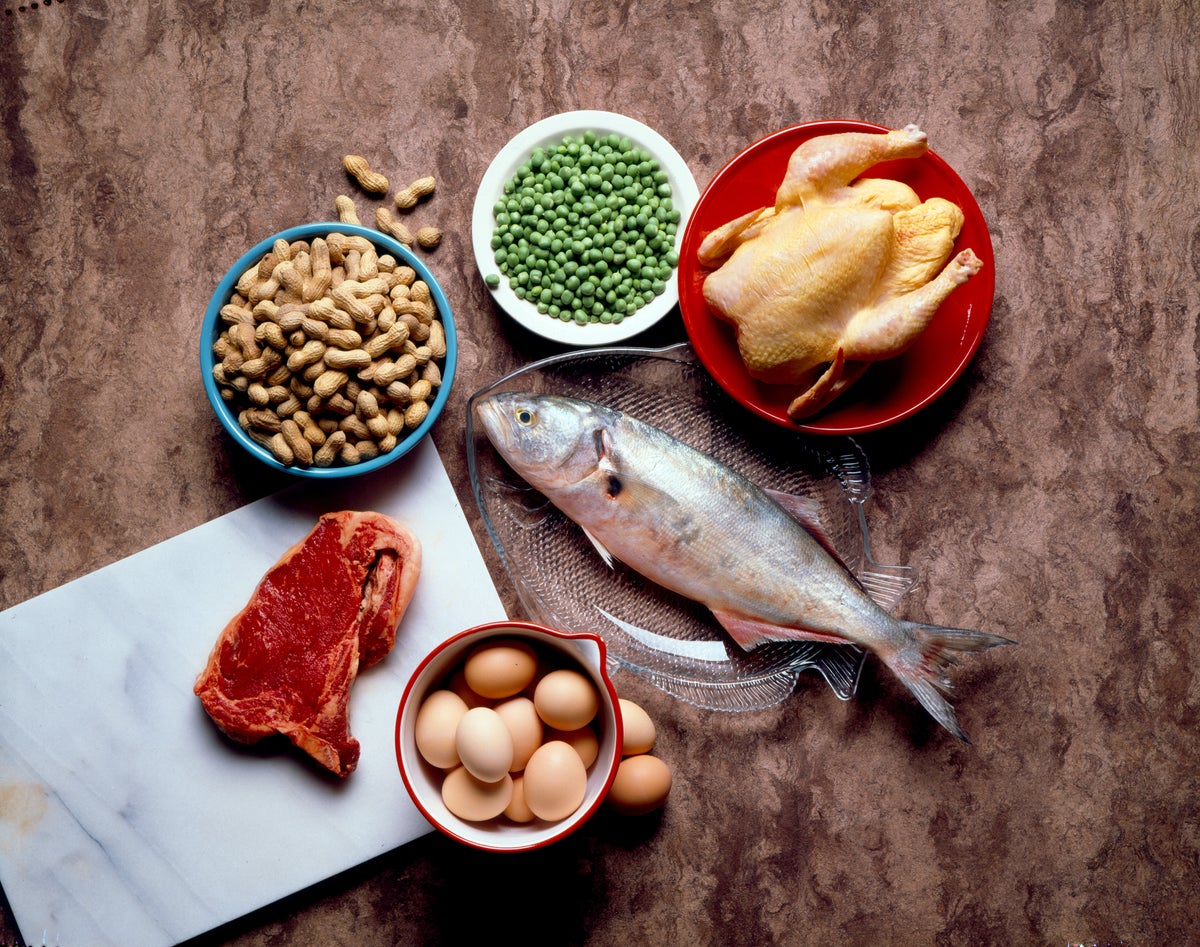
    Some people think that the newest trend of “protein maxxing” will help them live longer and healthier lives, but new research suggests the opposite: reducing protein intake could add years to your lifespan, not to mention dollars to your pocket.

    The popularity of the protein maxxing craze on social media has coincided with a glut of protein-infused products on the market that have ranged from water to Starbucks drinks to Doritos. People may be buying those foods and drinks in the hope bulking up, but studies have shown the majority of Americans are already getting plenty of protein in their diets.

    In a new review published on Friday in Cell Press Blue, researchers summarized findings from more than 350 previous studies and found widespread evidence that when it comes to protein, there can be too much of a good thing.


    On supporting science journalism

    If you’re enjoying this article, consider supporting our award-winning journalism by subscribing. By purchasing a subscription you are helping to ensure the future of impactful stories about the discoveries and ideas shaping our world today.


    “Humans typically, on an average, roughly speaking, eat about 17 percent of their calories from protein,” says Dudley Lamming, a professor at the University of Wisconsin–Madison and the paper’s co-author.

    In summarizing previous research, Lamming says control groups of mice had diets that were about 20 percent protein, and mice that were given far lower amounts of protein, especially in the range of 5 to 8 percent, were found to have longer lifespans.

    Part of the link between higher protein intake and lower lifespan arises from the role of essential amino acids in our diets. Dietary protein is our main source of essential amino acids because our bodies can’t make these molecules on their own. While we need these amino acids to live and grow, Lamming’s research has shown that they can also be harmful in excess. In a paper published on July 24 in Nature Aging, he and his colleagues demonstrated that by cutting down on the amino acid valine, the median lifespan of male mice increased by 23 percent, or half a year. These rodents showed fewer signs of frailty as they aged and less adipose tissue, and fewer of them developed cancer.

    “You need the essential amino acids in protein,” acknowledges Steven Heymsfield, a professor at Louisiana State University, who wasn’t involved in the new review or Lamming’s July 24 study. But after metabolizing a sufficient amount to maintain your muscles, organs and other essential bits, “all the rest is just energy. If you’re eating a ton of protein beyond that essential amino acid need, it’s going to get either converted to something else like fat or … oxidized for calories. So I don’t see the massive protein intake [trend] being anything more than just BS.”

    There have been countless studies showing a link between overall calorie restriction and longer life, but practically speaking, this is hard for people to do. Lamming and other researchers think that perhaps some of the same lifespan extension benefits could come from simply restricting protein. Most studies on the ties between longevity and a protein-restricted diet have been done with animal models such as mice rather than humans because of the challenges of following a person’s diet over the course of their entire life. Still, there are enough similarities between what a mouse and a human eat that the data collected by such studies can still apply. Both humans and mice need roughly the same proportion of protein and rely on the same nine essential amino acids to survive and thrive.

    “Mice are really good for modeling food due to the fact that they basically eat human food, and they use it for the same processes to grow, to reproduce and to maintain themselves,” Lamming says.

    The rodent studies that the researchers analyzed in the new review had varied results and used different species and sexes of mice and rats, but the increase in lifespan on a low-protein diet was as high as 53 percent. For perspective, that would be like a human with an expected lifespan of 80 years living to be older than age 120.

    The lengthened lifespan effect is likely related to a hormone called FGF21, the researchers believe. When humans, or mice, restrict protein, that leads to a boost in the production of FGF21. When that hormone reaches the brain, it triggers a process called sympathetic signaling, in which the nervous system cues white adipose tissue cells to generate more mitochondria. That, in turn, leads to the fat getting burned as fuel.

    “What we actually see in protein-restricted animals—and was actually shown last year in protein-restricted humans as well—is that [those] on protein-restricted diet have higher energy expenditure,” Lamming says.

    Having that excess fat disappear can help reduce the risk of illnesses such as diabetes, heart disease and some cancers.

    Restricting protein intake has other benefits, Heymsfield says. When protein is digested, the end metabolic product, called urea, is produced in the liver, and excess urea can lead to kidney issues. Foods that have a lot of protein can also have a lot of saturated fats, and eating too much of these fats is linked to a higher risk of heart disease, which has led some researchers to criticize the meat-heavy keto diet.

    As for what the optimal level of protein intake is for a human, that’s difficult to say. Until recently, the U.S. Department of Agriculture’s dietary guidelines for Americans recommended a daily intake of 0.8 gram of protein per kilogram of body weight. But in the latest edition, that was upped to 1.2 to 1.6 g/kg daily. (The updated version, which was presented by Secretary of Health Robert F. Kennedy, Jr., in January, has drawn fire from doctors, who have alleged that some people who were responsible for assembling the new guidelines had conflicts of interest.) That recommendation to increase protein intake is at odds with the suggestion there’s benefits to reducing protein intake. And protein needs can vary from person to person: A pregnant person needs more protein than someone who isn’t pregnant. And increased protein intake is also recommended for others who are in particular circumstances, such as someone who is recovering from an injury. Being very physically active could also mean a bump in protein won’t do any harm.

    “Our working model overall is that for people who are exercising, dietary protein is probably beneficial and certainly not harmful,” Lamming says. “But for sedentary people, it’s likely that if you’re eating too much protein, that’s probably going to be bad for you.”


    Original Source Link

    Share. Facebook Twitter Pinterest LinkedIn WhatsApp Email Reddit Telegram
    Previous ArticleBrand New Day’ Box Office Opening at $355M Is Second-Best
    Next Article Best Car Vacuums (2026): Handheld, Cordless, Shopping Tips

    RELATED POSTS

    The James Webb Telescope Is Changing Astronomers’ Understanding of the Ancient Cosmos

    August 2, 2026

    AI helped produce two proofs for the same cryptography problem

    August 2, 2026

    Astronomers Have Detected an Exomoon for the First Time

    August 1, 2026

    Postpartum psychosis is at the center of the Lindsay Clancy trial. What is it?

    August 1, 2026

    The World Is Too Hot. El Niño Is Partly to Blame

    July 31, 2026

    Spacecraft will swarm asteroid Apophis during fateful 2029 Earth flyby

    July 31, 2026
    latest posts

    Sully Erna’s Heartfelt Message After Godsmack’s Pol’and’Rock Show

    Last Thursday (July 30), Godsmack headlined the 32nd annual Pol’and’Rock Festival in Czaplinek, Poland. According…

    Trump says negotiations will resume Monday afternoon while Tehran continues Hormuz talks with Oman

    August 3, 2026

    Terrifying Invasive Species Silver-Cheeked Toadfish Is Spreading Throughout the Mediterranean With Its Toxic Flesh and Crushing Bite * The Gateway Pundit * by Paul Serran

    August 3, 2026

    Cleveland Guardians’ perfect game bid sparks bench-clearing scrum

    August 3, 2026

    Best Car Vacuums (2026): Handheld, Cordless, Shopping Tips

    August 3, 2026

    Eating less protein could help you live longer

    August 3, 2026

    Brand New Day’ Box Office Opening at $355M Is Second-Best

    August 3, 2026
    Categories
    • Books (1,402)
    • Business (6,306)
    • Cover Story (9)
    • Film (6,245)
    • Lifestyle (4,305)
    • Music (6,316)
    • Politics (6,288)
    • Science (5,655)
    • Technology (6,240)
    • Television (5,936)
    • Uncategorized (3)
    • US News (6,291)
    popular posts

    Former FDA Commissioner: U.S. Can Still ‘Catch Up’ On Monkeypox

    Scott Gottlieb, the former commissioner of the Food and Drug Administration, said the U.S. can…

    Ancient Panda ‘Thumb’ Matches Modern Version

    October 10, 2022

    The Fashion Kingdom, an Egyptian fashion e-commerce startup, raises $2.6M in seed funding – TechCrunch

    July 26, 2022

    Fed is likely to consider a 75 basis-point interest rate hike, the biggest since 1994

    June 14, 2022
    Archives
    Browse By Category
    • Books (1,402)
    • Business (6,306)
    • Cover Story (9)
    • Film (6,245)
    • Lifestyle (4,305)
    • Music (6,316)
    • Politics (6,288)
    • Science (5,655)
    • Technology (6,240)
    • Television (5,936)
    • Uncategorized (3)
    • US News (6,291)
    About Us

    We are a creativity led international team with a digital soul. Our work is a custom built by the storytellers and strategists with a flair for exploiting the latest advancements in media and technology.

    Most of all, we stand behind our ideas and believe in creativity as the most powerful force in business.

    What makes us Different

    We care. We collaborate. We do great work. And we do it with a smile, because we’re pretty damn excited to do what we do. If you would like details on what else we can do visit out Contact page.

    Our Picks

    Eating less protein could help you live longer

    August 3, 2026

    Brand New Day’ Box Office Opening at $355M Is Second-Best

    August 3, 2026

    Stephen Baldwin Talks Choosing Faith Over Hollywood

    August 3, 2026
    © 2026 Beverly Hills Examiner. All rights reserved. All articles, images, product names, logos, and brands are property of their respective owners. All company, product and service names used in this website are for identification purposes only. Use of these names, logos, and brands does not imply endorsement unless specified. By using this site, you agree to the Terms & Conditions and Privacy Policy.

    Type above and press Enter to search. Press Esc to cancel.

    We use cookies on our website to give you the most relevant experience by remembering your preferences and repeat visits. By clicking “Accept All”, you consent to the use of ALL the cookies. However, you may visit "Cookie Settings" to provide a controlled consent.
    Cookie SettingsAccept All
    Manage consent

    Privacy Overview

    This website uses cookies to improve your experience while you navigate through the website. Out of these, the cookies that are categorized as necessary are stored on your browser as they are essential for the working of basic functionalities of the website. We also use third-party cookies that help us analyze and understand how you use this website. These cookies will be stored in your browser only with your consent. You also have the option to opt-out of these cookies. But opting out of some of these cookies may affect your browsing experience.
    Necessary
    Always Enabled
    Necessary cookies are absolutely essential for the website to function properly. These cookies ensure basic functionalities and security features of the website, anonymously.
    CookieDurationDescription
    cookielawinfo-checkbox-analytics11 monthsThis cookie is set by GDPR Cookie Consent plugin. The cookie is used to store the user consent for the cookies in the category "Analytics".
    cookielawinfo-checkbox-functional11 monthsThe cookie is set by GDPR cookie consent to record the user consent for the cookies in the category "Functional".
    cookielawinfo-checkbox-necessary11 monthsThis cookie is set by GDPR Cookie Consent plugin. The cookies is used to store the user consent for the cookies in the category "Necessary".
    cookielawinfo-checkbox-others11 monthsThis cookie is set by GDPR Cookie Consent plugin. The cookie is used to store the user consent for the cookies in the category "Other.
    cookielawinfo-checkbox-performance11 monthsThis cookie is set by GDPR Cookie Consent plugin. The cookie is used to store the user consent for the cookies in the category "Performance".
    viewed_cookie_policy11 monthsThe cookie is set by the GDPR Cookie Consent plugin and is used to store whether or not user has consented to the use of cookies. It does not store any personal data.
    Functional
    Functional cookies help to perform certain functionalities like sharing the content of the website on social media platforms, collect feedbacks, and other third-party features.
    Performance
    Performance cookies are used to understand and analyze the key performance indexes of the website which helps in delivering a better user experience for the visitors.
    Analytics
    Analytical cookies are used to understand how visitors interact with the website. These cookies help provide information on metrics the number of visitors, bounce rate, traffic source, etc.
    Advertisement
    Advertisement cookies are used to provide visitors with relevant ads and marketing campaigns. These cookies track visitors across websites and collect information to provide customized ads.
    Others
    Other uncategorized cookies are those that are being analyzed and have not been classified into a category as yet.
    SAVE & ACCEPT