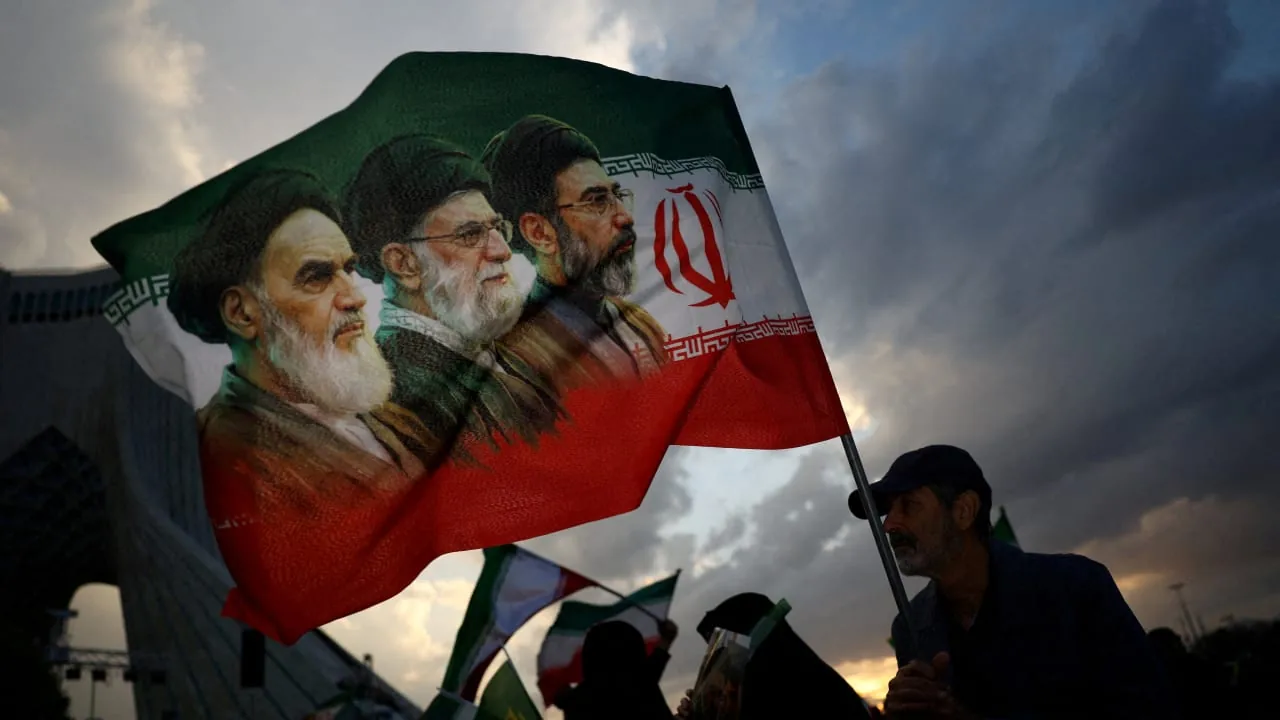
President Donald Trump says America is winning the war with Iran simply because we are choking off Tehran, simply because we are making Iran’s economy suffer. And he’s partly right. Iran is suffering. Its currency has collapsed. Its inflation rate is close to 90% per year. The cost of food has exploded to the point where a two pound plastic bag of rice is nearly unaffordable. The average Iranian makes $100 per month. But it costs $336 a month to survive. So how long could the Iran war last? And in a long war, which country is likely to buckle first, the United States or Iran?
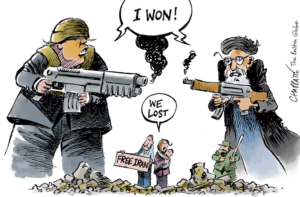
Donald Trump has only two more years in office. If he’s replaced in 2028 by a Democrat, the Democrats say they will end the war. Period. They do not seem to have weighed the cost. The Iranians want over $100 billion dollars in frozen assets, another $270 billion in reparations, and permanent control over the Strait of Hormuz. Nonetheless, America is likely to stop fighting in two years.
That gives Donald Trump 24 months. Can he starve the Iranians into submission in that short amount of time? In all probability, he cannot. Countries under siege don’t just last a few years. They can last decades. And despite the sufferings they endure, they often win.
Let’s go back to ancient history. For fifteen years, from 218 to 201 BC, after the armies of Hannibal the Carthaginian clambered down the Alps with their elephants, the invaders raged up and down the thousand-mile countryside of the Italian boot, besieging cities, destroying crops, and battering the Roman economy. But in the end, the Romans held out. In fact, they drove the Carthaginians out. Then they destroyed Carthage. And they won the war.
For eight years, from 1806 to 1814, Napoleon blockaded Britain, cutting off food, creating massive unemployment, and triggering political turmoil. But the British eventually broke the back of Napoleon’s blockade. And they defeated the mighty French general at Waterloo. In other words, the British won.

Sixty four years ago the United States mounted an economic blockade of Cuba. It was harsh and brutal. But the Cubans are still hanging in there.
Then the West imposed extreme economic sanctions on Iran forty years ago. Iran built what it calls “a resistance economy.” It educated its own scientists. It trained its own engineers and nuclear scientists. It made its own weapons. It manufactured its own industrial equipment. It grew its own food. And it is still hanging in there.
On the other hand, America’s tolerance for pain is brief. The Iranians now exercise control over The Strait of Hormuz, the choke point for 20% of the world’s oil. Shipping through that Iranian gauntlet adds a dollar per gallon to the price of gas. We’ve demonstrated during the past year that this is a price we are not willing to pay.
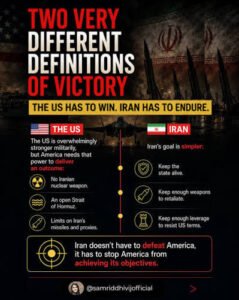
Meanwhile it costs us $47 billion a year to use our military to keep the Strait open. That’s $129 million a day. Plus, for the last 70 years, we have been knifed in the back by our military industrial complex, which gives us amazingly capable weapons, but at unbelievably high prices. To down a $30,000 Iranian drone, we shoot a $4 million dollar missile. For the price of one of our missiles, Iran can launch 133 drones. No wonder we are coming close to running out of missiles. So which country do you think is going to cave first, Iran or the USA?
Then there’s our deadline. If we have normal elections in 2028, Donald Trump will be out of office. And our war with Iran is likely to go with him. So, no, the war with Iran will not last forever. And the country that backs down, the country that loses, is likely to be us.
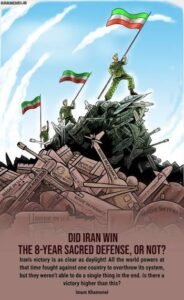
As Iran’s Supreme Leader, Ayatollah Mojtaba Khamenei, sees it, the war has already made Iran “the world’s top power.” And the war has laid the base for “the formation of the New Islamic Civilization.” A civilization to replace the West. In other words, the Ayatollah believes that Iran has won.
______
About the author: Howard Bloom of the Howard Bloom Institute has been called the Einstein, Newton, Darwin, and Freud of the 21st century by Britain’s Channel 4 TV. Bloom’s new book is The Case of the Sexual Cosmos: Everything You Know About Nature is Wrong. Says Harvard’s Ellen Langer of The Case of the Sexual Cosmos, Bloom “argues that we are not savaging the earth as some would have it, but instead are growing the cosmos. A fascinating read.” One of Bloom’s eight previous books–Global Brain—was the subject of a symposium thrown by the Office of the Secretary of Defense including representatives from the State Department, the Energy Department, DARPA, IBM, and MIT. Bloom’s work has been published in The Washington Post, The Wall Street Journal, Wired, Psychology Today, and the Scientific American. Not to mention in scientific journals like Biosystems, New Ideas in Psychology, and PhysicaPlus. Bloom has also appeared on Iranian and Saudi TV over forty times. Says Joseph Chilton Pearce, author of Evolution’s End and The Crack in the Cosmic Egg, “I have finished Howard Bloom’s [first two] books, The Lucifer Principle and Global Brain, in that order, and am seriously awed, near overwhelmed by the magnitude of what he has done. I never expected to see, in any form, from any sector, such an accomplishment. I doubt there is a stronger intellect than Bloom’s on the planet.” For more, see http://howardbloom.net or http://howardbloom.institute
References:
Trump, Donald. “President Trump Gaggles with Press Upon Departure from Palm Beach, FL, Nov. 8, 2026.” Video, November 8, 2026. The White House. https://www.whitehouse.gov/videos/president-trump-gaggles-with-press-upon-departure-from-palm-beach-fl-nov-8-2026/
BlatancyRose. “Mojtaba Khamenei Calls Iran ‘World’s Top Power.’” GETTR, November 2026. https://gettr.com/post/p444aj6e9e4
“Civilizational State in the Viewpoint of Ayatollah Khamenei; Examining the Role of the Islamic Republic Government in the Formation of the New Islamic Civilization.” Journal of Political Studies, University of Tehran, published online June 22, 2026. http://journals.ut.ac.ir/article_107826_7bd2dfc17fb7b462264486946281f4ce.pdf
“Educational and Cultural Drivers for the Formation of a New Islamic Civilization.” SID, n.d. https://www.sid.ir/paper/1150480/en
Bajoghli, Narges, and Vali Nasr. “Iran’s Theory of Victory: Tehran’s Fight for Great-Power Status in the Post-American Middle East.” Foreign Affairs, October 9, 2026. https://www.foreignaffairs.com/iran/irans-theory-victory-tehran-fight-great-power-status.
Press TV. “From Carter to Trump: Iran’s Frozen Assets Top $100bn in 47-Year US Economic War.” April 12, 2026. [https://www.presstv.ir/Detail/2026/04/12/766702/from-carter-trump-iran-frozen-assets-top-100bn-47year-us-economic-war](https://www.presstv.ir/Detail/2026/04/12/766702/from-carter-trump-iran-frozen-assets-top-100bn-47year-us-economic-war?utm_source=chatgpt.com).
Press TV. “Iran Urges ‘Unconditional’ Release of All Its Frozen Assets; US Defies.” May 28, 2026. [https://www.presstv.ir/Detail/2026/05/28/769409/Iran-US-Baqeri-assets](https://www.presstv.ir/Detail/2026/05/28/769409/Iran-US-Baqeri-assets?utm_source=chatgpt.com).
IranWire. “Iran Puts War Losses at $270 Billion, Demands Reparations from Gulf Countries.” April 14, 2026. [https://iranwire.com/en/news/151197-iran-puts-war-losses-at-270-billion-demands-reparations-from-gulf-countries/](https://iranwire.com/en/news/151197-iran-puts-war-losses-at-270-billion-demands-reparations-from-gulf-countries/?utm_source=chatgpt.com).
Iran International. “Iran Says US Must Meet Its Demands Before Hormuz Reopens.” August 8, 2026. [https://www.iranintl.com/en/202608081919](https://www.iranintl.com/en/202608081919?utm_source=chatgpt.com).
Press TV. “Iran Peace Plan Demands War Compensation, Recognition of Sovereignty over Hormuz.” May 10, 2026. [https://www.presstv.ir/Detail/2026/05/10/768402/Iran-peace-plan-demands-war-compensation-recognition-of-sovereignty-over-Hormuz-report](https://www.presstv.ir/Detail/2026/05/10/768402/Iran-peace-plan-demands-war-compensation-recognition-of-sovereignty-over-Hormuz-report?utm_source=chatgpt.com).
Islamic Republic News Agency (IRNA). “Iran Says Countries Using Frozen Assets Would Face Hormuz Transit Ban.” July 28, 2026. Reproduced by GlobalSecurity.org. [https://www.globalsecurity.org/wmd/library/news/iran/2026/07/iran-260728-irna02.htm](https://www.globalsecurity.org/wmd/library/news/iran/2026/07/iran-260728-irna02.htm?utm_source=chatgpt.com).
Iran International. “Iran’s Military Chief Demands War Reparations and Control over Hormuz.” November 3, 2026. [https://www.iranintl.com/en/202611030545](https://www.iranintl.com/en/202611030545?utm_source=chatgpt.com).
Al Jazeera. “Prices Surge, Jobs Disappear as War Strains Iran’s Economy.” 2026.
Bloomberg News. “Missiles and Shahed: Iran Sold Billions of Dollars of Weapons to Russia.” January 12, 2026.
International Monetary Fund. *World Economic Outlook, October 2026*. Washington, DC: International Monetary Fund, 2026.
Iran Focus. “Annual Inflation Hits 76.8% in Iran as Prices Rise 4.4% in October.” November 2026.
Iran Focus. “Iran’s Poverty Line Hits 700 Million Rials as Minimum Living Costs Reach 900 Million.” September 14, 2026.
Iran Focus. “Record-High Inflation Buries Iran’s Economy Under Soaring Prices and Poverty.” November 2026.
Mojdeh Food Industry. “Mojdeh Rice Packaging.” Accessed November 11, 2026.
Reuters. “Iranians Cut Essentials and Put Dreams on Hold as War-Hit Economy Bites.” October 28, 2026.
Reuters. “Iran’s Hidden Web of Military Agencies Is Slipping Hardware Past the US Blockade.” October 29, 2026.
Statistical Center of Iran. *Consumer Price Index, October 2026*. Tehran: Statistical Center of Iran, 2026.
Stockholm International Peace Research Institute. *SIPRI Arms Transfers Database, 2022–2025*. Stockholm: SIPRI, 2026.
Wage.is. “Average Salary & Minimum Wage in Iran (May 2026).” Accessed November 11, 2026.
CityCost. “Cost of Living in Iran — Prices & Expenses. Nov 2026.” Accessed November 11, 2026.
CityCost. “Cost of Living in Tehran — Prices & Expenses. Nov 2026.” Accessed November 9, 2026.
Expatistan. “Cost of Living in Tehran. Updated Prices Nov 2026.” Accessed November 11, 2026.
Iran Focus. “Iran’s Poverty Line Hits 700 Million Rials as Minimum Living Costs Reach 900 Million.” September 14, 2026.
Numbeo. “Cost of Living in Tehran.” Accessed November 11, 2026.
Reuters. “Iranians Cut Essentials and Put Dreams on Hold as War-Hit Economy Bites.” October 28, 2026.
WireIsrael. “Iran Economic Crisis Deepens as Basic Food Costs Outpace Minimum Wage.” November 2, 2026.
Polybius. The Histories. Translated by W. R. Paton. 6 vols. Loeb Classical Library. Cambridge, MA: Harvard University Press, 1922–1927.
Livy. History of Rome. Translated by B. O. Foster et al. 14 vols. Loeb Classical Library. Cambridge, MA: Harvard University Press, 1919–1959.
Fondation Napoléon. “The Continental System or Blockade.” Napoleon.org. [https://www.napoleon.org/en/history-of-the-two-empires/close-up/a-close-up-on-the-continental-system-or-blockade/](https://www.napoleon.org/en/history-of-the-two-empires/close-up/a-close-up-on-the-continental-system-or-blockade/?utm_source=chatgpt.com).
U.S. Department of State, Office of the Historian. “Napoleonic Wars and the United States, 1803–1815.” Milestones in the History of U.S. Foreign Relations. [https://history.state.gov/milestones/1801-1829/napoleonic-wars](https://history.state.gov/milestones/1801-1829/napoleonic-wars?utm_source=chatgpt.com).
National Army Museum. “Battle of Waterloo.” [https://www.nam.ac.uk/explore/battle-waterloo](https://www.nam.ac.uk/explore/battle-waterloo?utm_source=chatgpt.com).
Kennedy, John F. “Proclamation 3447—Embargo on All Trade with Cuba.” February 3, 1962. National Archives. [https://www.archives.gov/federal-register/codification/proclamations/03447.html](https://www.archives.gov/federal-register/codification/proclamations/03447.html?utm_source=chatgpt.com).
Kennedy, John F. “White House Statement Concerning the Embargo on Trade with Cuba.” February 3, 1962. The American Presidency Project. [https://www.presidency.ucsb.edu/documents/white-house-statement-concerning-the-embargo-trade-with-cuba](https://www.presidency.ucsb.edu/documents/white-house-statement-concerning-the-embargo-trade-with-cuba?utm_source=chatgpt.com).
European Parliamentary Research Service. International Sanctions on Iran. Brussels: European Parliament, 2025. [https://www.europarl.europa.eu/thinktank/en/academic/EPRS_BRI%282025%29777928](https://www.europarl.europa.eu/thinktank/en/academic/EPRS_BRI%282025%29777928?utm_source=chatgpt.com).
Congressional Research Service. Achievements of and Outlook for Sanctions on Iran. Report R43492. Washington, DC: Congressional Research Service. [https://www.everycrsreport.com/reports/R43492.html](https://www.everycrsreport.com/reports/R43492.html?utm_source=chatgpt.com).
Center for Strategic and International Studies. “Preventing Iran’s Military Reconstitution.” June 2026. [https://www.csis.org/analysis/preventing-irans-military-reconstitution](https://www.csis.org/analysis/preventing-irans-military-reconstitution?utm_source=chatgpt.com).
Food and Agriculture Organization of the United Nations. “GIEWS Country Brief: Islamic Republic of Iran.” November 10, 2026. [https://www.fao.org/giews/countrybrief/country.jsp?code=IRN](https://www.fao.org/giews/countrybrief/country.jsp?code=IRN\&utm_source=chatgpt.com).
Center for Strategic and International Studies. Missile Defense and Air Defense Cost-Asymmetry Analysis. Washington, DC: CSIS International Security Program, 2024.
Congressional Budget Office. Operation and Support Costs of U.S. Naval Operations and Carrier Strike Group Deployments. Washington, DC: Congressional Budget Office, 2024.
Glover, Richard. Britain at Bay: Defence Against Bonaparte, 1803–14. London: Allen & Unwin, 1973.
Heckscher, Eli F. The Continental System: An Economic Interpretation. Edited by Harald Westergaard. Oxford: Clarendon Press, 1922.
Hopfield, John J. “Neural Networks and Physical Systems with Emergent Collective Computational Abilities.” Proceedings of the National Academy of Sciences 79, no. 8 (1982): 2554–58.
International Energy Agency. Global Oil and Gas Supply Security Tracking. Paris: IEA, 2025.
International Monetary Fund. Middle East and Central Asia Regional Economic Outlook. Washington, DC: International Monetary Fund, 2025.
Polybius. The Histories. Translated by W. R. Paton. Loeb Classical Library. Cambridge, MA: Harvard University Press, 1922.
Ramsauer, Hubert, Bernhard Schäfl, Johannes Lehner, Philipp Seidl, Michael Widrich, Thomas Adler, Lukas Gruber, et al. “Hopfield Networks Is All You Need.” Paper presented at the 9th International Conference on Learning Representations (ICLR), Virtual, May 3–7, 2021.
S&P Global Commodity Insights. War Risk Insurance Surcharges & Persian Gulf Freight Rate Indices. New York: S&P Global, 2025.
Schmitt, Francis O. The Neurosciences Research Program (NRP): An Extraordinary Endeavor. Cambridge, MA: MIT Press, 1990.
Statistical Centre of Iran. Consumer Price Index and Household Income & Expenditure Reports. Tehran: Statistical Centre of Iran, 2025.
U.S. Central Command. Operational Cost Accounting & Force Posture Estimates for Middle East Operations. Report to Congress. Washington, DC: Department of Defense, 2026.
U.S. Energy Information Administration. “What Drives Crude Oil and Gasoline Prices?” Energy Explained. Last modified May 2024. https://www.eia.gov/petroleum/gasoline/.
U.S. Energy Information Administration. World Oil Transit Chokepoints. Washington, DC: U.S. Department of Energy, 2023.
U.S. Naval Sea Systems Command. Budget Justification Books: Weapons Procurement, Navy. Washington, DC: Department of the Navy, 2025.
U.S. President. Proclamation. “Embargo on All Trade with Cuba, Proclamation 3447.” Federal Register 27, no. 26 (February 7, 1962): 1085.
World Bank Group. Iran Economic Monitor: Navigating Economic Headwinds. Washington, DC: World Bank, 2025.